
The $391,245 Bill That Reignited a Fight Over Wealth and Housing
A reported $391,245.85 property-tax surcharge involving President Donald Trump’s Manhattan penthouse has intensified a political dispute over luxury real estate, housing affordability, and economic fairness.
The extraordinary figure emerged amid New York City’s controversial decision to impose additional taxes on expensive residential properties that are not their owners’ primary homes.
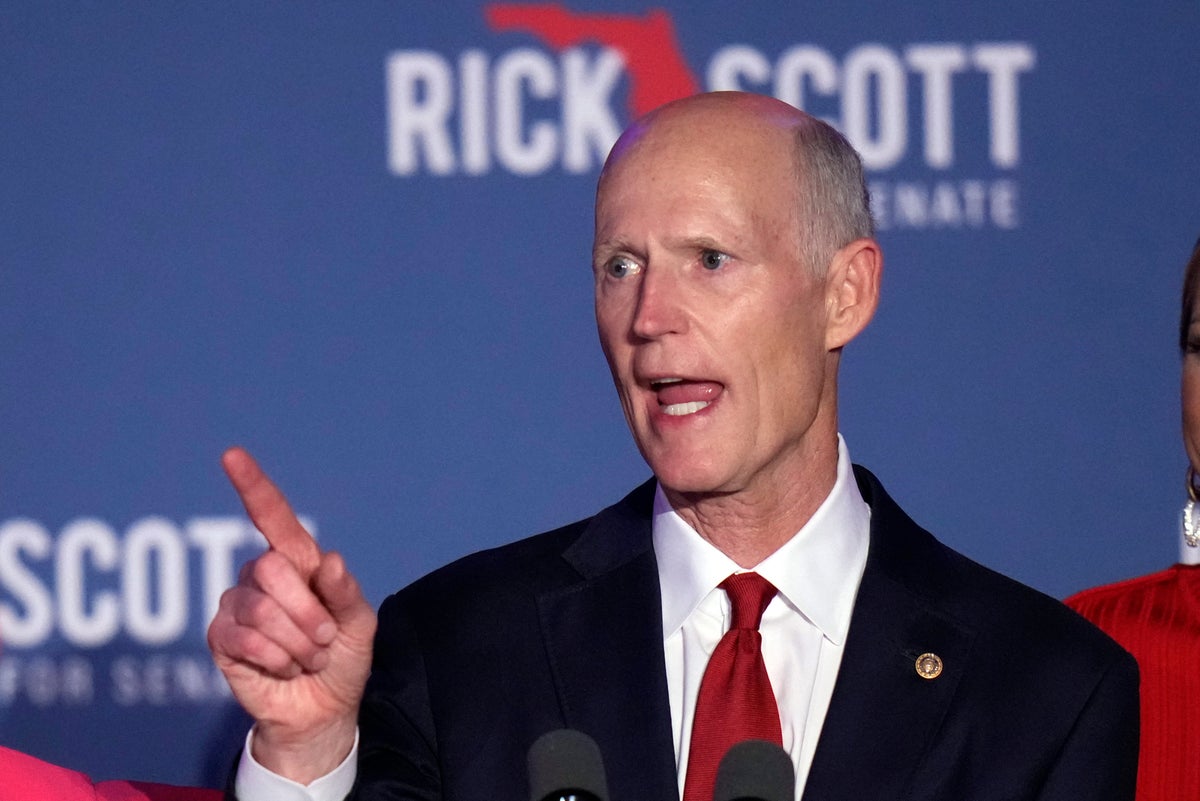
Florida Senator Rick Scott has criticized the city’s approach, warning that aggressive taxation could discourage investment and drive wealthy residents and businesses elsewhere.
But a dramatic circulating account adds another element.
It portrays ABC News anchor David Muir confronting Scott with financial documents and demanding an explanation for defending wealthy second-home owners.
The account describes a tense exchange involving housing discrimination, redlining, rising rents, and the political influence of billionaires.
However, no authenticated interview or hearing transcript reviewed establishes that Muir conducted the confrontation described in that narrative.
The original account also unexpectedly refers to someone named Smith, without establishing who that individual is or what role he played.
That inconsistency raises questions about the reliability of the alleged exchange.
The underlying property-tax controversy, however, is substantial.
Recent reporting identified a $391,245.85 non-primary-residence surcharge associated with Trump’s apartment at 721 Fifth Avenue in Manhattan.
The same account placed the property’s combined annual tax amount at $710,667.29, including its existing property-tax charge.
Those figures concern Trump’s New York property, not a tax imposed on his Mar-a-Lago estate in Florida.
The distinction matters because the dispute involves New York’s treatment of luxury second homes owned by individuals residing elsewhere.
It also raises a question that extends beyond the president’s personal finances.
Should wealthy owners pay additional property taxes when they maintain expensive residences in cities where ordinary families struggle to afford housing?
Scott and supporters of the surcharge approach that question from sharply different economic perspectives.
And the disagreement has become increasingly important as New York attempts to address its financial and housing pressures.
Apartment 66N and the Numbers Behind the Controversy
The property at the center of the reported tax statement is Apartment 66N in Trump Tower.
It occupies part of the building at 721 Fifth Avenue, one of Manhattan’s most recognizable luxury residential addresses.
Trump has long been associated with the property, which served as a prominent symbol of his New York business identity.
But he changed his primary residence to Florida in 2019.
That decision became relevant when New York developed a tax targeting high-value homes not used as primary residences.
Reports published in November 2026 identified a new surcharge attached to the apartment.
The additional amount was listed as $391,245.85.
The existing annual property-tax charge was reported as $319,421.44.
Together, the two figures produced a combined amount of $710,667.29.

The figures attracted attention partly because the additional surcharge exceeded the property’s reported ordinary annual property tax.
But the precise assessment should be distinguished from broader claims about Trump’s personal tax obligations.
A published account of a tax statement does not independently establish whether every amount has been paid, contested, adjusted, or formally challenged.
The underlying city records and any subsequent proceedings would determine those questions.
The reported apartment value also requires careful interpretation.
A property’s taxable or fiscal market value may differ substantially from the amount it could command in an open-market sale.
New York’s assessment rules use classifications and formulas that do not necessarily reproduce ordinary real estate prices.
That distinction matters when calculating taxes on luxury residential property.
The surcharge reflects a specific policy choice rather than an allegation that owning the apartment is unlawful.
Trump is not accused of committing a crime merely because the property is subject to an additional tax.
The controversy concerns whether the city’s taxation framework is justified and how it should apply to owners residing outside New York.
That issue has produced disagreement among political leaders, property owners, business organizations, and housing advocates.
Rick Scott’s Warning About New York’s Economic Future
Rick Scott has been a prominent critic of New York’s efforts to impose additional taxes on wealthy second-home owners.
The Florida Republican argues that states and cities can damage their economies when tax policies make investment and residency less attractive.
His position reflects a broader economic approach emphasizing lower taxation and competition between states.
As Florida’s governor, Scott promoted tax reductions and efforts to attract businesses from higher-tax jurisdictions.
He continued advancing similar arguments after entering the United States Senate.
During the debate over New York’s luxury second-home surcharge, Scott criticized the proposal as economically counterproductive.

His concerns included the possibility that wealthy property owners would reduce investment or shift business activity toward other jurisdictions.
He also argued that additional taxation could create uncertainty for individuals maintaining economic connections across state boundaries.
Those concerns represent a recognizable economic argument.
High tax rates can influence decisions involving residency, investment, and property ownership.
But determining the size of those effects requires evidence rather than assuming that every tax increase produces an immediate departure.
The response of wealthy property owners may depend on property values, personal circumstances, business obligations, and available alternatives.
A substantial surcharge could discourage some purchases.
Other owners may continue maintaining New York properties because of professional, cultural, or family ties.
The long-term effects also depend on how the city uses the additional revenue.
Supporters argue that wealthy second-home owners benefit from municipal infrastructure and services even when they spend relatively little time in the city.
Scott’s criticism emphasizes the potential economic costs of increasing those owners’ obligations.
The disagreement therefore concerns both the distribution of taxation and the behavioral consequences of imposing it.
It does not establish that Scott personally owns one of the affected apartments.
Nor does it establish that he received an improper financial benefit from defending the interests of wealthy property owners.
His stated opposition can be evaluated through the merits of his economic arguments.
That distinction becomes important when dramatic online narratives portray legitimate policy disagreements as evidence of personal corruption.
New York’s Luxury Second-Home Tax Creates a New Political Battlefield
New York’s new surcharge emerged from a broader effort to raise revenue by taxing expensive properties whose owners maintain their primary residences elsewhere.
The policy is commonly described as a pied-à-terre tax, referring to secondary residences maintained for occasional use.
Governor Kathy Hochul and New York City Mayor Zohran Mamdani supported the approach as part of their effort to address municipal financial pressures.
Supporters argued that wealthy property owners should contribute more toward services that sustain the city’s value and daily operations.
They also emphasized the contrast between expensive properties used intermittently and the financial challenges facing full-time residents.
The underlying principle was that ownership of an exceptionally valuable secondary residence demonstrated substantial financial capacity.
Critics questioned whether that principle justified the actual tax structure.
Some argued that the surcharge could affect owners who had already paid significant property taxes.
Others raised concerns about retroactive billing, assessment procedures, and unequal treatment of different property categories.
The dispute also reached the courts.
Property owners challenged aspects of the tax’s implementation, raising legal questions about administration and fairness.
Those challenges should not be confused with a definitive ruling that the entire tax is unconstitutional.
The city continued preparing bills while questions remained about the number of properties affected and the revenue likely to result.
November reporting indicated that approximately 7,500 homeowners could receive assessments, fewer than earlier expectations.
That difference created uncertainty about the city’s projected revenue.
Officials maintained that the tax could still generate substantial funds.
But accurate evaluation requires comparing actual collections with administrative costs, exemptions, adjustments, and potential changes in property ownership.
The revenue question matters because supporters connect the surcharge to broader demands for municipal services and housing affordability.
Yet an additional property tax does not automatically produce affordable housing.
Its consequences depend on how the revenue is collected, allocated, and spent.
That is where the controversy begins to intersect with the concerns raised in the circulating David Muir narrative.
The disagreement is not simply about whether a billionaire can afford an expensive bill.
It also concerns whether the tax meaningfully improves conditions for ordinary residents.
The Housing Crisis Behind the Luxury Tax Argument
New York’s housing affordability problems extend beyond the finances of any particular luxury apartment owner.
Many residents face substantial rent burdens, limited housing availability, and increasing costs for essential household expenses.
The shortage of affordable homes has become a major concern for city officials and community organizations.
Housing advocates argue that financial pressures have disproportionately affected low-income families and communities facing longstanding structural disadvantages.
Those disadvantages include historical patterns of discriminatory lending and unequal access to homeownership.
Redlining, an earlier practice that restricted financial services in particular neighborhoods, contributed to inequalities affecting American housing markets.
Federal fair-housing laws now prohibit specified forms of housing discrimination.
But historical barriers can continue influencing household wealth and access to opportunity.
The circulating confrontation attempts to connect those conditions with the tax treatment of expensive secondary residences.
That comparison raises a legitimate distributional question.
Why should some families struggle to afford stable housing while extremely wealthy individuals maintain costly properties used only occasionally?
However, the comparison does not independently establish that a particular property owner caused the housing shortage.
Nor does it show that collecting additional taxes from wealthy owners will resolve historical discrimination.
Housing affordability depends on numerous factors, including construction, zoning, income growth, financing conditions, and public investment.
Tax policy can influence those conditions, but its effects must be measured rather than assumed.
Supporters of the surcharge view it as one potential source of additional revenue.
Opponents worry that it could discourage development or investment without addressing the underlying supply problem.
Both arguments concern consequences that can be tested using economic evidence.
The important questions include how much revenue the tax produces and whether the proceeds materially improve public services or housing outcomes.
That evaluation is more useful than treating the size of Trump’s tax bill as proof that one side has resolved the housing debate.
The reported amount illustrates the scale of the policy’s impact on a particularly valuable property.
It does not determine whether the policy succeeds.
The Missing David Muir Confrontation Changes the Story
The most dramatic version of the controversy portrays David Muir demanding answers from Scott during a public confrontation.
It describes financial documents being pushed across a desk before an audience falls silent.
But the available reporting does not establish that such an exchange occurred.
There is no authenticated transcript identifying the quoted questions or confirming the described sequence.
The account also switches between Muir and Smith without explaining whether those names refer to different individuals.
That inconsistency prevents the alleged scene from serving as reliable evidence of an actual interview.
Muir is a television journalist who has questioned prominent political figures during his reporting career.
But his professional role does not establish that he personally challenged Scott about this specific tax assessment.
The distinction matters because the underlying policy disagreement already exists independently of the alleged confrontation.
Scott has publicly criticized New York’s luxury second-home tax.
Trump has criticized the measure and discussed potential federal intervention.
New York officials have defended the policy as an effort to make wealthy secondary-property owners contribute additional revenue.
Those documented positions provide a meaningful political conflict.
They do not require inventing an exchange involving a television anchor.
The most important evidence involves the law, the assessed properties, the government’s revenue estimates, and the economic consequences.
A dramatic interview could attract attention.
But only authenticated records can establish what participants actually said.
The absence of verified footage also means there is no basis for claiming Scott was left speechless by Muir’s questioning.
That reaction belongs to the circulating narrative rather than the documented public record.
The controversy remains substantial without it.
The Question That the $710,667 Tax Statement Cannot Answer
The reported assessment involving Trump’s Manhattan apartment offers an unusually specific example of New York’s policy.
A $391,245.85 surcharge represents a substantial additional obligation for a residential property owner.
Combined with the reported ordinary property tax, the annual amount reaches $710,667.29.
Those figures help explain why wealthy property owners and political critics have challenged the measure.
They also explain why supporters believe the policy can generate meaningful revenue from exceptionally valuable residences.
But the amount alone cannot establish economic fairness.
A complete assessment requires examining the tax’s purpose, implementation, distributional effects, and consequences for the broader housing market.
Scott’s criticism emphasizes the possibility that higher taxes could drive investment away from New York.
Supporters emphasize the financial capacity of luxury property owners and the public services supported by municipal revenue.
Both positions identify questions deserving careful analysis.
The city’s actual collections will help determine whether the policy generates the expected funding.
Housing statistics will help reveal whether affordability improves, although many factors beyond the surcharge influence those outcomes.
Property records can also show whether affected owners sell, retain, or change the use of their residences.
Those developments will provide stronger evidence than predictions made during the initial political confrontation.
The legal challenges will determine whether disputed administrative provisions comply with governing law.
And the treatment of individual assessments will clarify how the rules apply in practice.
The central unresolved issue is therefore broader than Trump’s personal property bill or Scott’s criticism.
Can New York collect additional revenue from luxury second homes without creating economic consequences that undermine the policy’s intended benefits?
That question requires evidence from tax collections, housing outcomes, and the behavior of affected property owners.
The reported Trump Tower assessment illustrates how large the financial consequences can become.
It does not establish that the surcharge is unlawful, economically beneficial, or economically destructive.
Those conclusions require separate analysis.
For New York officials, the challenge is demonstrating that the tax achieves its stated objectives.
For Scott and other opponents, the challenge is demonstrating the costs they believe the measure will impose.
For homeowners and renters, the relevant concern is whether public policy produces a more affordable and functional housing market.
The circulating account promises a dramatic confrontation in which one politician cannot answer a journalist’s final question.
The documented record presents a different story.
New York has adopted a controversial tax, prominent Republicans have criticized it, and substantial financial assessments have generated new scrutiny.
The lasting issue is not whether a television audience witnessed an uncomfortable silence.
It is whether the policy’s measurable results ultimately justify the financial obligations it imposes.
That answer will come from the tax’s implementation and documented effects, not from an unverified confrontation.
