
A $391,245 Tax Surcharge Hits Trump’s Manhattan Penthouse as Sheldon Whitehouse’s Wealthy Taxpayer Crusade Puts Ted Cruz’s Republican Tax Philosophy Under Pressure
A new $391,245.85 surcharge has appeared on the New York City property tax statement for Donald Trump’s luxury Manhattan apartment, creating another politically sensitive dispute over wealthy property owners, tax fairness, and the financial responsibilities of America’s richest households.
The November 14, 2026, statement from the New York City Department of Finance identifies the property as Apartment 66N at 721 Fifth Avenue, inside Trump Tower.
The document lists Donald J. Trump as the owner and directs correspondence to his attention through an address at Mar-a-Lago in Palm Beach, Florida.
The distinction is important. The property facing the additional charge is not Mar-a-Lago itself. It is Trump’s Manhattan residence, while the Florida club appears as the billing address.
Nevertheless, the figures are substantial.
The Department of Finance lists an annual property tax charge of $319,421.44 and a separate non-primary residence surcharge of $391,245.85.
Combined, those charges bring the annual amount to $710,667.29.
The new surcharge alone exceeds the apartment’s ordinary annual property tax.
For a city that has spent years debating housing affordability, luxury property ownership, and the contribution wealthy residents make to public services, the figures carry significance beyond one property owner’s financial obligations.
They also bring renewed attention to Sheldon Whitehouse, the Rhode Island Democrat who has repeatedly challenged what he describes as an American tax system that gives wealthy individuals and powerful corporations advantages unavailable to ordinary workers.
Whitehouse has spent years arguing that the country’s tax structure places disproportionate pressure on people who earn ordinary wages while allowing some of the wealthiest Americans to use complicated financial arrangements to reduce their tax liabilities.
His criticism has included billionaires, multinational corporations, private financial interests, and political organizations that influence tax policy.

In a 2023 Senate Budget Committee hearing titled A Rigged System: The Cost of Tax Dodging by the Wealthy and Big Corporations, Whitehouse laid out the central argument behind his campaign.
He contrasted the automatic tax withholding experienced by ordinary employees with the financial opportunities available to wealthy taxpayers who can employ lawyers, accountants, and sophisticated financial advisers.
Whitehouse specifically invoked the example of a Rhode Island teacher or ironworker who might pay a federal tax rate exceeding 20 percent.
His point was that ordinary workers generally have little ability to restructure their income or delay their tax obligations.
Their employers withhold taxes directly from their paychecks, leaving them with limited opportunities to change the amount collected.
The wealthiest Americans, by comparison, can have access to financial arrangements that make their tax situations considerably more complicated.
Whitehouse argued that this difference creates an unfair system in which people with the greatest resources can sometimes face a lower effective tax burden than workers who have far less financial flexibility.
That argument is now particularly relevant to the growing debate over luxury second homes.
New York City’s non-primary residence surcharge, commonly called the pied-à-terre tax, was designed to impose additional charges on certain expensive properties that are not used as their owners’ primary residences.
The measure became law on May 28, 2026, and applies to qualifying properties during the 2026–27 and 2027–28 property tax years.
For condominium and cooperative apartments valued at $5 million or more, the applicable surcharge rate is 6.5 percent of the city’s determined market value.
The Department of Finance lists Trump’s Apartment 66N at an estimated market value of $6,019,167.
Applying the 6.5 percent rate produces the $391,245.85 surcharge appearing on the statement.
The city has established exemptions for qualifying properties used as primary residences by their owners, certain immediate family members, or eligible tenants.
Property owners who disagree with the city’s valuation also have an opportunity to pursue an appeal.
The new charge therefore does not automatically establish wrongdoing by the property owner.
It reflects the application of a recently enacted tax policy to a property the city has classified as a non-primary residence.
But the political implications are difficult to separate from the broader national debate about wealth, taxation, and the responsibilities of people who own expensive property in multiple locations.
Trump has made his primary residence in Florida, where Mar-a-Lago has become closely associated with his political and personal identity.
His Manhattan apartment, meanwhile, remains a valuable property within one of the country’s most expensive real estate markets.
The new surcharge places the financial consequences of that ownership arrangement directly into the city’s property tax system.
And it arrives at a time when New York City is attempting to address significant budget pressures and rising costs for essential municipal services.
Mayor Zohran Mamdani and Governor Kathy Hochul supported the policy as a way to generate additional revenue from high-value residential properties that are not serving as primary homes.
City officials have estimated that the surcharge could eventually generate hundreds of millions of dollars annually.
The revenue is intended to support public services rather than provide a special benefit to individual property owners.
For Whitehouse, the underlying question resembles the argument he has repeatedly made in Washington: whether people with substantial financial resources should contribute according to the economic advantages they enjoy.
However, the appearance of Trump’s tax statement does not establish that Whitehouse confronted Texas Republican Senator Ted Cruz over the matter.
There is no verified Senate hearing transcript documenting the alleged exchange, the supposed presentation of Apartment 66N’s tax statement, or the quoted accusations attributed to Whitehouse.
The financial document is real, but the dramatic confrontation described in the original account is not established by the available public record.
That distinction matters because Whitehouse and Cruz have documented, sharply different positions on taxation.
Cruz has consistently advocated lower taxes, simpler tax rules, and reducing the federal government’s ability to collect and spend money.
His Senate tax policy positions include support for a flat tax, reducing the number of tax brackets, and abolishing several federal taxes.
Cruz argues that Americans should retain more of their earnings and make their own financial decisions rather than surrendering additional money to government agencies.
His position reflects a longstanding Republican economic philosophy that lower taxation can encourage investment, economic growth, and individual financial independence.
Whitehouse approaches the issue from a different direction.
He argues that reducing taxes without addressing loopholes and wealthy taxpayers’ ability to avoid obligations can leave ordinary Americans carrying a disproportionate share of the financial burden.
The disagreement is not simply about whether taxes should be higher or lower.
It concerns which taxpayers should contribute, how the tax system should treat different forms of wealth, and whether existing rules create advantages that undermine economic fairness.
That debate has repeatedly appeared in Senate discussions.
In November 2023, Whitehouse chaired a Budget Committee hearing titled Fairness and Fiscal Responsibility: Cracking Down on Wealthy Tax Cheats.
He argued that many Americans pay their taxes in full and on time while some wealthy individuals exploit weaknesses in the tax system.
He also raised concerns about declining IRS enforcement resources and the government’s ability to investigate complex financial arrangements.
Whitehouse cited figures showing that audit rates for millionaires had fallen substantially following reductions in IRS resources.
His argument was that enforcement should not fall disproportionately on ordinary taxpayers simply because wealthy individuals have access to more sophisticated financial advice.
Cruz’s approach to tax reform has emphasized limiting government taxation and simplifying the rules rather than expanding the government’s ability to collect additional revenue.
Those competing philosophies create a natural political conflict whenever a new tax policy targets expensive properties owned by people whose primary homes are elsewhere.
The Trump Tower statement makes that conflict particularly visible.
The Department of Finance identifies three important figures.
The apartment’s estimated market value is $6,019,167.
Its annual ordinary property tax is $319,421.44.
Its additional non-primary residence surcharge is $391,245.85.
The combined annual amount is $710,667.29.
But there is another important distinction in the document.
The amount listed as immediately payable by January 4, 2027, is $550,750.87.
That is the amount due for the current billing period, not the entire combined annual tax figure.
The difference matters because annual tax calculations and individual quarterly payment statements are not interchangeable.
The document also lists outstanding charges of zero dollars, meaning the statement does not show an existing unpaid balance carried into the billing period.
It does not establish whether Trump has paid the newly listed amount.
Nor does it establish whether he intends to challenge the city’s valuation or pursue any available exemption.
Those decisions remain separate from the public appearance of the statement.
Nevertheless, the new surcharge has placed the issue of luxury second-home taxation back into the political spotlight.
For supporters, the measure represents a straightforward principle: expensive residential properties that are not primary homes should contribute additional revenue toward the city whose infrastructure and public services help sustain their value.
For critics, the measure raises questions about taxation, property rights, the economic consequences of additional charges, and the possibility that wealthy owners may respond by changing how they hold or use their properties.
The disagreement is not unique to Trump.
New York City has thousands of expensive properties owned by individuals who maintain their primary residences elsewhere.
Some are used occasionally by their owners.
Others are held through companies, trusts, or other ownership arrangements that require careful examination to determine whether they qualify for an exemption.
The city has therefore established specific eligibility rules rather than assuming that every expensive apartment automatically owes the surcharge.
A property appearing on a preliminary assessment list does not necessarily mean its owner must pay.
The Department of Finance reviews eligibility, considers exemption applications, and allows owners to challenge certain determinations.
The system is intended to distinguish genuine second homes from qualifying primary residences.
That distinction will become increasingly important as property owners begin responding to the new rules.
For Whitehouse, however, the broader tax debate extends well beyond Manhattan real estate.
He has repeatedly argued that the United States loses substantial public revenue through corporate tax advantages, offshore arrangements, and weaknesses in enforcement.
He has also connected the loss of tax revenue to public services, including education, infrastructure, and healthcare.
His position is that when wealthy individuals and corporations successfully reduce their obligations through complicated financial structures, the government must either collect revenue elsewhere or reduce spending.
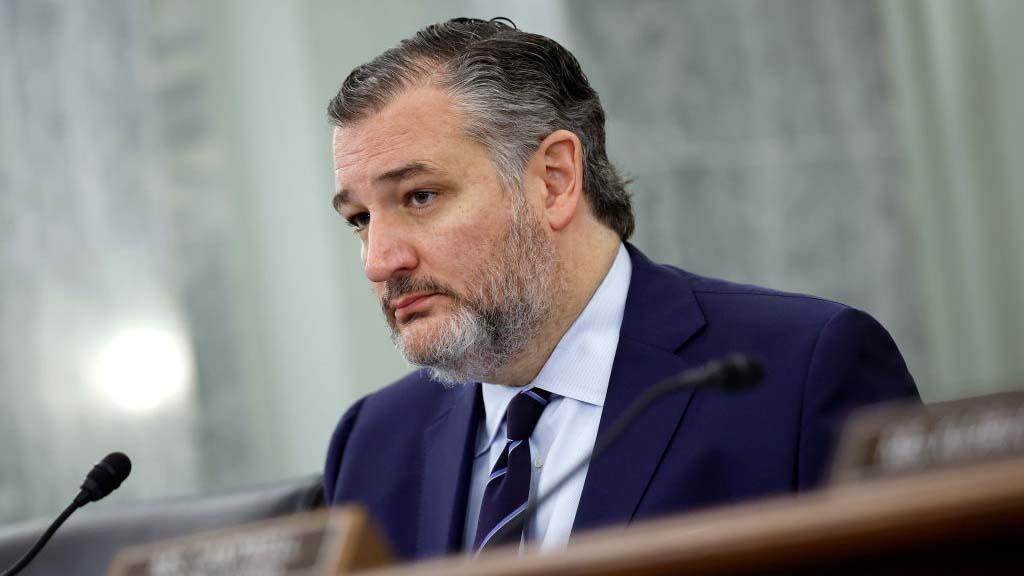
Ordinary workers, he argues, should not be expected to compensate indefinitely for weaknesses in the tax system.
Cruz’s opposing philosophy raises another fundamental question: how much additional revenue should government be permitted to collect, and what protections should exist against excessive taxation?
Republicans frequently argue that governments should examine spending before asking taxpayers for more money.
Democrats counter that responsible budgeting also requires ensuring that people and corporations benefiting most from the economy contribute their legally required share.
The Trump Tower surcharge has become a particularly recognizable example because it involves a property associated with the president and a tax policy aimed at expensive non-primary residences.
It also illustrates the difference between the federal tax debate in Washington and local property taxation in New York.
Whitehouse is a United States senator, but he does not administer New York City’s property tax system.
Cruz is also a federal senator, and neither lawmaker determines whether Trump’s apartment qualifies for the surcharge.
Those responsibilities belong to New York’s legal and administrative framework.
The political debate surrounding the policy, however, is much larger.
At stake is whether major cities can impose additional charges on high-value second homes without driving investment away or creating unintended consequences for housing markets.
The city must also determine whether the expected revenue will materialize and whether the new system can be administered fairly.
For property owners, the issue is whether the government’s valuation and residency determinations are accurate.
For ordinary residents, the question is whether the additional revenue will help support the services on which their communities depend.
Those competing interests are likely to keep the policy under scrutiny throughout its implementation.
And the financial figures attached to Trump’s Manhattan apartment ensure that the discussion will not remain an abstract argument about tax policy.
A surcharge of $391,245.85 is large enough to attract attention even in a city accustomed to expensive real estate.
Its appearance on an official statement also provides a concrete example of how a new law can affect an individual property owner.
The larger annual total of $710,667.29 places the issue into even sharper perspective.
Yet the most consequential part of the controversy may not be the amount listed against one apartment.
It may be the precedent established when governments attempt to distinguish between homes used as primary residences and expensive properties maintained as secondary residences.
As more owners examine the rules, appeals and exemption requests could test how effectively the city can enforce the policy.
Meanwhile, Washington’s debate over tax fairness remains unresolved.
Whitehouse continues to argue that wealthy individuals and powerful corporations should not be able to use financial complexity to escape obligations that ordinary workers cannot avoid.
Cruz continues to advocate a fundamentally different approach, emphasizing lower taxation, reduced government intervention, and greater control over private earnings.
Their disagreement reflects two competing visions of America’s economic future.
One emphasizes collecting sufficient revenue and closing perceived advantages for the wealthy.
The other emphasizes limiting government taxation and allowing individuals to retain more of their money.
Neither position can be reduced to the tax statement attached to Trump’s apartment.
But the document has placed an unusually large number in the middle of an already contentious national conversation.
The question now is whether the new surcharge will withstand legal challenges, generate the revenue New York expects, and establish a lasting model for taxing luxury properties that are not primary residences.
And as the January 4 payment deadline approaches, another question will attract attention: will Trump’s $391,245.85 surcharge become the most visible example of New York’s new tax policy, or will the fight over wealthy second-home owners turn into an even larger confrontation over who really pays for America’s cities?
