
The room fell silent when Senator John Kennedy slid a single sheet of paper across the table toward Representative Ilhan Omar.
He had spent several minutes challenging the relationship between her criticism of America and her continued service in Congress.
His question was pointed: Why hold onto congressional authority and a taxpayer-funded salary while describing serious injustices within the country that provides both?
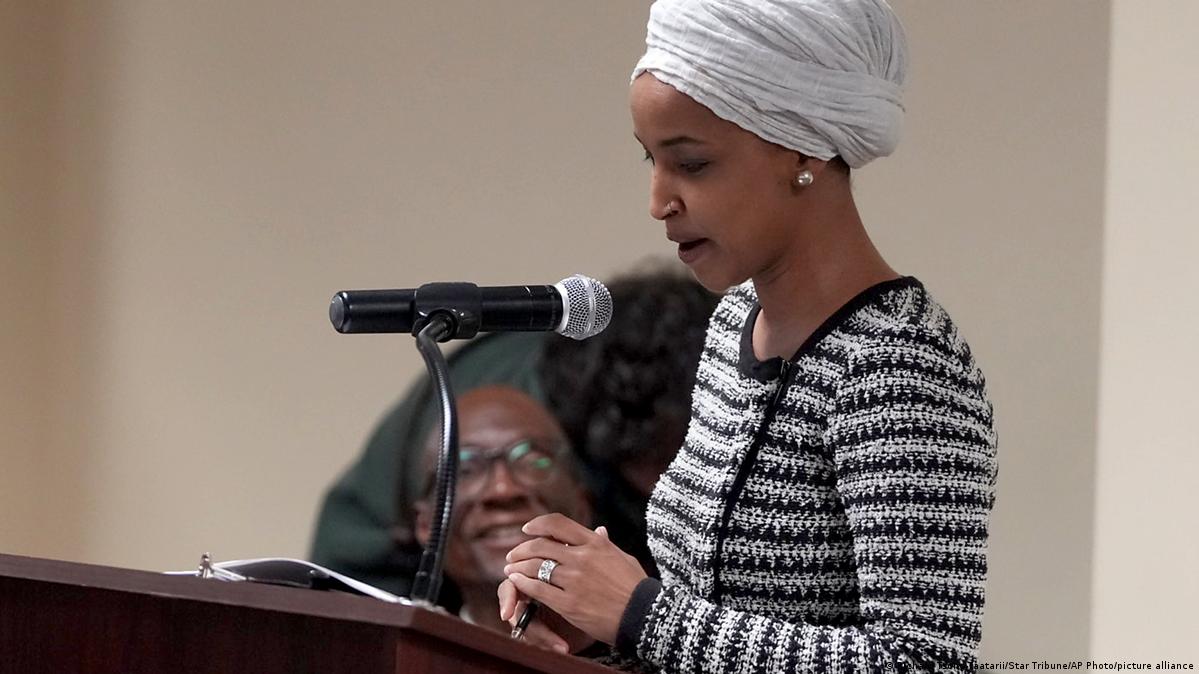 Omar had defended her position, arguing that criticizing government institutions was an essential part of representing constituents.
But Kennedy was not finished.
The paper contained no accusation of financial wrongdoing, no secret intelligence report, and no demand for deportation.
Instead, it presented a challenge that required both politicians to confront the meaning of public service.
And one detail on the reverse side would complicate the argument Kennedy appeared ready to make.
The Question That Changed the Atmosphere
Kennedy leaned toward his microphone without raising his voice.
“Congresswoman, I want to ask you something about the responsibility that comes with holding public office.”
Omar watched him carefully.
“You’re entitled to criticize this country,” Kennedy continued.
“But the American people are also entitled to ask what you intend to accomplish with the authority they’ve entrusted to Congress.”
His opening appeared straightforward.
Kennedy was challenging what he viewed as a contradiction between strongly criticizing American institutions and accepting the privileges of serving within them.
Yet the distinction mattered.
He was not accusing Omar of illegally collecting her salary or claiming she had forfeited any constitutional protection.
He was asking whether her political language matched her responsibilities as an elected representative.
Omar answered without immediately accepting his premise.
“Senator, criticizing failures in government doesn’t mean rejecting the country or the people who live here.”
She argued that demanding institutional improvements was part of her congressional responsibility.
Kennedy interrupted with another question.
“Then tell me where you draw the line between demanding change and undermining confidence in the institutions you’re supposed to serve.”
The confrontation had moved beyond one politician’s language.
It now concerned the standards Americans should apply when judging representatives who criticize the government they help administer.
Omar refused to characterize criticism itself as institutional betrayal.
Kennedy refused to accept that every harsh political statement could escape examination simply by invoking freedom of expression.
Neither position had yet resolved the central question.
Then Kennedy reached for the paper.
The Document Kennedy Placed on the Table
The sheet appeared unusually plain.

There were no photographs, dramatic headlines, confidential markings, or allegations about Omar’s personal finances.
Three short questions occupied its upper half.
The first asked what public obligation comes with congressional compensation.
The second asked how constituents should evaluate criticism of government institutions.
The third asked whether the same standards should apply to every elected official.
Beneath those questions sat a simple statement.
Public compensation creates public responsibilities, but it does not purchase political agreement.
Omar read the sentence twice.
Kennedy allowed the silence to continue.
Finally, he pointed toward the first question.
“Congresswoman, taxpayers help finance this institution, including the compensation paid to its members.”
“Should those taxpayers expect something more specific than criticism when they ask what their representatives are delivering?”
Omar replied that voters should expect legislative work, oversight, constituent services, and accountability.
Kennedy pressed the distinction.
“Then shouldn’t they also expect you to explain how your criticism helps accomplish those things?”
“Absolutely,” Omar answered.
“But they should expect that explanation from every member of Congress, including people whose criticisms you happen to agree with.”
Kennedy glanced toward the paper again.
That response had not ended the confrontation.
It had introduced a second test, one that would become increasingly important as the exchange continued.
Omar Challenges the Premise Behind Kennedy’s Question
Omar leaned forward.
“Senator, you’re asking whether someone can criticize this country while receiving compensation for serving in its government.”
Kennedy nodded.
“I’m asking whether public responsibility places obligations on the way elected officials discuss the institutions they represent.”
Omar responded by separating three issues Kennedy had connected.
The first was her constitutional right to express political criticism.
The second was her responsibility to perform the duties of an elected representative.
The third was whether particular statements accurately reflected government policies and their consequences.
“Those aren’t the same question,” she said.
“An elected official can criticize a policy, fulfill congressional responsibilities, and still believe deeply in representative government.”
Kennedy challenged her again.
“But if you continually tell people their institutions are failing them, don’t you have some responsibility for the distrust that follows?”
Omar rejected the assumption that discussing institutional failures necessarily creates distrust.
She argued that problems could damage public confidence regardless of whether politicians acknowledged them.
“Sometimes the problem isn’t that someone described an injustice,” she said.
“Sometimes the problem is that the injustice existed and people wanted it addressed.”
Kennedy remained unconvinced.
He suggested that language mattered because public officials possessed platforms capable of influencing how citizens viewed their government.
Omar agreed that rhetoric had consequences but disputed who should determine acceptable criticism.
The disagreement had become more precise.
Kennedy wanted public officials to consider whether their language weakened trust in institutions.
Omar wanted those institutions held accountable without allowing appeals to patriotism to restrict legitimate dissent.
The paper remained between them.
Its three questions had not delivered an easy political victory.
Instead, they had created a framework that neither participant could escape without examining the same standards.
The Taxpayer Salary Argument Becomes More Complicated
Kennedy returned to congressional compensation.
“Let’s talk about the people paying for all this,” he said.
“Some Americans work long hours, struggle with rising expenses, and watch Congress argue without seeing meaningful improvements in their lives.”
He asked whether lawmakers owed those citizens measurable results rather than constant political confrontation.
Omar answered that legislative outcomes mattered, but individual members did not control every vote or institutional decision.
Kennedy followed immediately.
“So how should voters separate serious attempts to solve problems from speeches intended mainly to attract attention?”
This was a harder question.
It no longer depended on whether criticism was patriotic.
It required a practical standard for measuring congressional service.
Omar described constituent assistance, legislative proposals, oversight activities, public explanations, and responsiveness to community concerns.
Kennedy countered that activity alone did not demonstrate effectiveness.

A lawmaker could introduce proposals, hold press conferences, and criticize colleagues without securing meaningful results.
Omar acknowledged that measurable outcomes deserved scrutiny.
But she challenged the assumption that unsuccessful legislation automatically represented failed public service.
Congressional work often involved opposition, negotiation, and decisions controlled by larger voting coalitions.
Kennedy then asked what should happen when an official repeatedly attacked institutions while failing to change them.
“Should the public keep paying for speeches that don’t produce results?”
Omar answered with a distinction.
“The public doesn’t have to keep electing anyone whose performance it finds unacceptable.”
She emphasized that voters could examine an incumbent’s record and select another representative.
Kennedy recognized the answer but returned to the original dispute.
Elections provided accountability, he argued, yet they did not eliminate the responsibility to answer difficult questions between elections.
Omar accepted that principle while rejecting the suggestion that her criticism made her less entitled to serve.
The disagreement now had concrete boundaries.
Neither congressional compensation nor controversial rhetoric independently established whether a representative had fulfilled public responsibilities.
That required evaluating specific duties, decisions, and outcomes.
Kennedy Reveals the Question on the Reverse Side
Kennedy finally turned the sheet over.
A second statement appeared beneath a heading about equal standards.
Would this criticism still be considered unacceptable if it came from a politician whose policies you support?
Omar studied the sentence.
Kennedy tapped the paper.
“That’s the question I want answered.”
He explained that political language often received different treatment depending on which party controlled the microphone.
Harsh attacks on government institutions could be celebrated as patriotic resistance by one group and condemned as disloyalty by another.
Omar immediately challenged him.
“Then let’s apply that standard equally.”
She asked whether Kennedy would question the patriotism of a conservative lawmaker who described federal institutions as corrupt or fundamentally broken.
Kennedy replied that such language should also face scrutiny.
“But I would still ask what that lawmaker planned to do about the problems being described,” he added.
Omar pointed toward the reverse side.
“Then you cannot use disagreement with my political conclusions as evidence that I shouldn’t hold office.”
The significance of the paper had changed.
What initially appeared to be a targeted challenge to Omar also imposed a reciprocal obligation on Kennedy.
He could question the relationship between criticism and public responsibility.
But applying that challenge consistently required considering similar rhetoric from politicians across the political spectrum.
Kennedy did not withdraw his concerns.
He insisted that citizens could demand explanations from officials whose statements they believed were destructive.
Omar did not dispute that right.
Instead, she argued that scrutiny must focus on specific arguments and performance rather than assumptions about national loyalty.
The confrontation had reached a turning point.
Kennedy’s question remained legitimate as a political challenge, but its application could no longer depend solely on which politician was speaking.
The Final Line Changes What Both Must Answer
One small paragraph remained at the bottom of the reverse side.
Kennedy drew attention to it.
The text described a distinction between an official’s criticism of government and an official’s failure to discharge public duties.
It then offered a practical three-part test.
Had the official identified a specific problem?
Had the official proposed or pursued a response?
Could constituents examine the official’s actions and hold that person accountable?
Kennedy asked Omar whether she would accept those questions as a fair measure of public service.
She answered that the questions were reasonable, provided they applied consistently and considered the limits of individual congressional authority.
“Then let’s use them,” Kennedy said.
He challenged her to explain particular criticisms through the policies she wanted changed and the work she had pursued.
Omar responded that such an examination should involve actual legislative and constituent records, not generalized claims about her attitude toward America.
Kennedy acknowledged that specific records would be necessary.
Then Omar raised one final objection.
“Senator, if that’s the test, the same information should be available for your work.”
Kennedy looked at her.
“Of course it should.”
Omar continued.
“Then we should examine what each of us has said, what each of us has proposed, and what each of us has accomplished.”
That response changed the immediate stakes.
Kennedy could no longer rely on the contrast between Omar’s criticism and her congressional salary as a complete measure of her performance.
And Omar could not rely on constitutional protections alone to answer questions about the practical results of her service.
Both positions required examination beyond rhetoric.
The paper had revealed no misconduct.
Its importance came from establishing a standard that neither participant could reasonably reserve for the other.
What the Confrontation Ultimately Exposed
The exchange ended without a removal vote, disciplinary finding, or determination that either politician had violated a congressional obligation.
No evidence on the sheet established improper compensation, unlawful behavior, or disqualification from office.
Instead, the confrontation produced a more demanding question about political accountability.
Could lawmakers defend their criticism by connecting it to identifiable problems, meaningful actions, and outcomes that voters could independently evaluate?
Kennedy’s original challenge had focused on the apparent tension between criticizing American institutions and receiving a salary from those institutions.
Omar’s response challenged the premise that forceful criticism diminished a representative’s right to serve.
The document gave both arguments a practical consequence.
It required critics of Omar to identify specific failures of public responsibility rather than treating disagreement as proof of disloyalty.
It also required Omar to defend the substance and effectiveness of her congressional work rather than presenting criticism itself as sufficient evidence of service.
The distinction mattered because congressional salaries compensate members for holding public office and performing its duties.
They do not require ideological loyalty to a particular administration, party, or interpretation of patriotism.
Likewise, the freedom to criticize government does not prevent voters from questioning whether an elected official has served them effectively.
Kennedy gathered the papers in front of him.
Omar left the single sheet resting on the table.
The final consequence was not a personal defeat or an institutional punishment.
It was the exposure of a standard that could challenge both politicians equally.
Kennedy had begun by questioning why Omar retained congressional power while criticizing American institutions.
By the end, the same document demanded that every lawmaker justify the public trust attached to that power.
