
Senator Adam Schiff confronted FBI Director Kash Patel over Jeffrey Epstein’s files during a heated Senate Judiciary Committee hearing, demanding answers about concealed records, influential associates, and the government’s handling of Ghislaine Maxwell.
The California Democrat challenged Patel’s explanation that investigators had found insufficient credible evidence to prosecute additional individuals connected to Epstein’s trafficking operation, questioning whether the FBI had adequately examined potential accomplices.
The confrontation intensified when Schiff pressed Patel about Epstein’s notorious contact book and whether the government possessed information identifying people who might have participated in his criminal activities.
But the hearing’s most contentious moment came when Schiff shifted attention to Maxwell’s transfer to a lower-security prison following an interview with senior Justice Department official Todd Blanche.
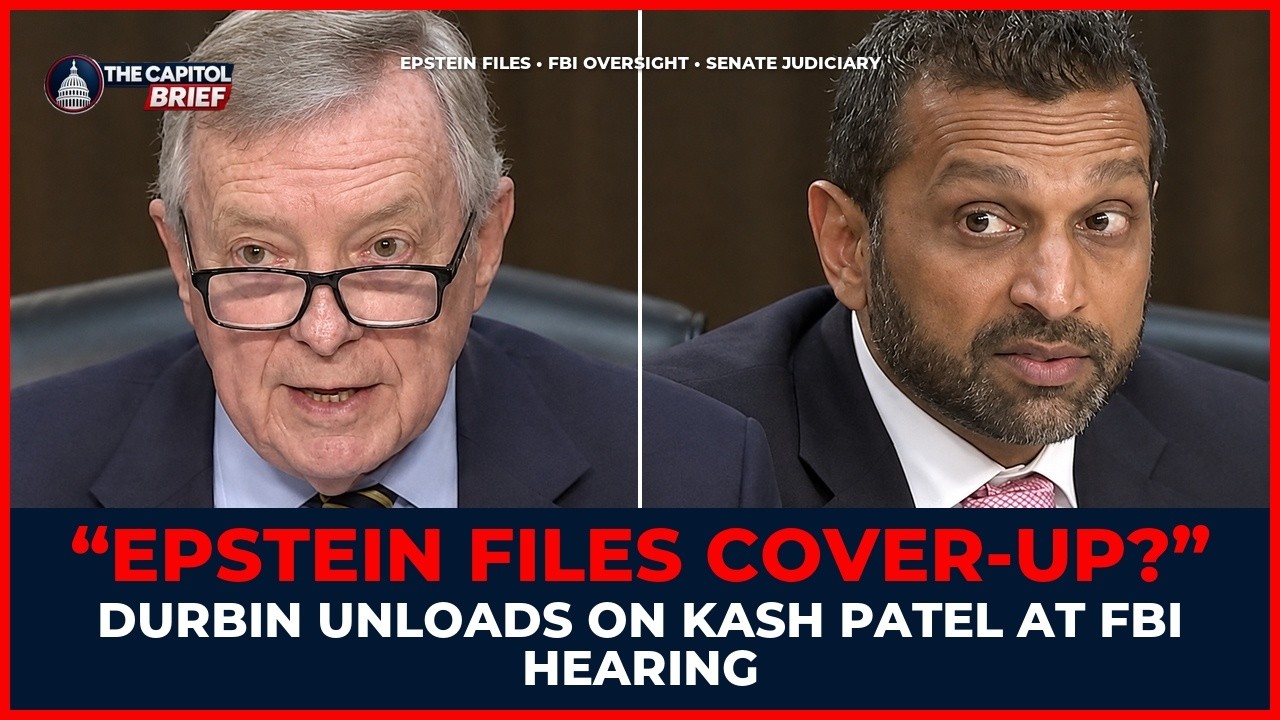
Patel defended the FBI’s handling of the investigation and disputed Schiff’s accusations, while the senator questioned whether the administration was protecting politically connected individuals from scrutiny.
The exchange, which occurred on September 16, 2025, remains relevant as newly released congressional findings in November 2026 raise additional questions about the government’s disclosure of Epstein-related records.
Although dramatic online accounts describe an eleven-word rebuke leaving witnesses visibly shaken, the authenticated transcript documents a heated argument rather than a verified moment of collective humiliation.
The actual confrontation was substantial enough without those embellishments, revealing a disagreement over the meaning of investigative evidence and the government’s obligations to Epstein’s victims.
Schiff began his questioning by addressing allegations that Patel had dismissed FBI employees because they worked on investigations involving President Donald Trump or the January 6 Capitol attack.
Patel rejected the accusation, maintaining that personnel decisions were based on professional standards and misconduct rather than the political identities of investigative subjects.
Schiff repeatedly demanded direct answers, arguing that the director’s explanations failed to address allegations contained in litigation brought by former bureau officials.
Patel refused to accept Schiff’s characterization, accusing the senator of constructing misleading questions designed to create damaging political headlines rather than establish facts.
The disagreement quickly became personal, reflecting longstanding tensions between Schiff and Patel over investigations involving Trump and the FBI’s independence.
Then Schiff turned to Epstein, asking whether Patel had previously represented that the bureau possessed the financier’s notorious black book of contacts.
Patel acknowledged that the FBI had possessed the material and maintained that the relevant contact information had already been released to the public.
That answer did not satisfy Schiff, who moved from the existence of contact records to the more consequential question of whether Epstein trafficked victims to other individuals.
Schiff referenced earlier questioning by Republican Senator John Kennedy, who had pressed Patel about whether investigators possessed credible evidence identifying additional recipients of Epstein’s trafficking activities.
Patel maintained that the evidence reviewed by federal authorities had not produced sufficient credible investigative leads to justify prosecution of additional individuals.
Schiff challenged the implications of that assessment, particularly given public accounts from survivors who alleged that Epstein facilitated abuse involving other powerful men.
The distinction was significant because an investigation’s failure to establish prosecutable evidence does not necessarily mean that no victims made allegations concerning additional perpetrators.
Patel responded that Schiff was misrepresenting his testimony, emphasizing that he had not claimed Epstein was incapable of trafficking victims to other people.
Instead, the director argued that investigators across multiple administrations had examined the available information without establishing sufficient grounds for additional federal prosecutions.
The exchange revealed an important disagreement over the distinction between allegations, investigative leads, corroborated evidence, and the legal standards required to bring criminal charges.
Schiff’s questioning reflected concerns that the government’s conclusions appeared inconsistent with testimony from survivors who had described encounters involving Epstein’s associates.
Patel insisted that federal investigators could not responsibly prosecute individuals merely because their names appeared in records or because allegations circulated publicly.
That position has a legitimate legal foundation: inclusion in Epstein’s contact book does not establish participation in trafficking, sexual abuse, or another criminal offense.
However, Schiff’s argument was that investigators should explain whether credible allegations had been fully examined before concluding that additional prosecutions were unwarranted.
The senator then introduced another consequential issue involving Maxwell, who was convicted of crimes connected to Epstein’s sexual exploitation of underage girls.
Schiff questioned Patel about a July 2025 interview conducted by Blanche, who had previously served as Trump’s personal defense attorney before joining Justice Department leadership.
During that interview, Maxwell discussed prominent individuals who had associated with Epstein, including people she characterized as holding positions within Trump’s administration.
Schiff emphasized that Blanche had not immediately demanded the identities of the Cabinet officials Maxwell appeared to reference during the recorded conversation.
The omission became central to the senator’s argument because identifying potentially relevant witnesses or associates would ordinarily be an important investigative consideration.
Patel did not provide Schiff with the names he requested, maintaining that he would not disclose information beyond what he considered appropriate during the hearing.
Schiff interpreted the refusal as another example of insufficient transparency surrounding the Epstein investigation, while Patel rejected the implication that he was concealing wrongdoing.
The confrontation escalated further when Schiff asked about Maxwell’s transfer to a minimum-security federal prison after her interview with Blanche.
The senator questioned why a convicted sex offender had been moved to a facility that critics argued was inappropriate for someone convicted of Maxwell’s offenses.
Patel responded that the Federal Bureau of Prisons, rather than the FBI director personally, was responsible for decisions concerning federal inmate placement.
Schiff pressed him on whether the transfer had occurred independently of Maxwell’s cooperation with Justice Department officials and whether senior administration figures had influenced the decision.
Patel maintained that he did not supervise individual prison transfers and could not provide detailed answers about the Bureau of Prisons’ administrative decisions.
The senator characterized that explanation as inadequate, suggesting that the timing and circumstances warranted further examination before the public could accept the administration’s assurances.
Patel responded angrily, accusing Schiff of politicizing law enforcement and directing personal insults toward the senator as the questioning period approached its conclusion.
Schiff delivered his own pointed assessment, declaring that the circumstances surrounding Maxwell’s transfer raised serious concerns about the integrity of the government’s handling of the case.
His memorable rebuke, “This stinks to high heaven,” captured the dispute, although it was not the eleven-word statement described in sensational versions of the encounter.
The exchange ended without Patel identifying the Cabinet officials discussed by Maxwell or providing a detailed account of the prison transfer’s administrative history.
It also ended without evidence establishing that the transfer resulted from an improper agreement, a distinction that remains important when evaluating Schiff’s allegations.
The broader controversy has continued because the Epstein investigation involves extensive records collected over many years, including witness interviews, financial documents, photographs, and investigative communications.
The Justice Department previously argued that legal restrictions, victim privacy protections, and evidentiary considerations limited what could responsibly be released to the public.
Critics countered that those explanations did not adequately account for discrepancies between the department’s promises of transparency and the information eventually disclosed.
In December 2025, Schiff joined Democratic Senator Dick Durbin in requesting an independent examination of the department’s handling of Epstein-related evidence.
Their request focused partly on chain-of-custody records documenting which officials possessed investigative materials, when those materials changed hands, and how they were reviewed.
Such records can help investigators determine whether evidence remained intact and whether documents were removed, altered, or withheld during administrative review.
The senators argued that an independent audit could help restore public confidence by establishing whether the government’s disclosure process had complied with applicable legal requirements.
Their concerns reflected reports that large numbers of FBI personnel had been assigned to examine Epstein-related records, including documents containing references to Trump.
The existence of such a review did not independently establish improper manipulation, but Schiff argued that transparency about the process was necessary to address public suspicion.
The dispute evolved further after Congress enacted the Epstein Files Transparency Act, requiring the Justice Department to release specified investigative records subject to legally permitted restrictions.
The department subsequently published millions of pages and additional digital materials, producing one of the largest document releases associated with a federal criminal investigation.
However, the extensive disclosures did not end criticism, particularly concerning missing materials, inconsistent redactions, and the protection of survivors’ personal information.
Some records raised questions about why certain identifying details were withheld while sensitive information concerning victims appeared in other released documents.
Those concerns demonstrated that transparency involves more than simply publishing enormous quantities of information, especially when disclosure decisions affect both accountability and privacy.
On November 11, 2026, the Republican-led House Oversight Committee released a lengthy report examining the federal government’s handling of the Epstein and Maxwell investigations.
The report criticized the Justice Department for missing disclosure deadlines, inadequately protecting victims through redactions, and failing to provide sufficient clarity about certain investigative records.
Its findings were notable because criticism of the administration’s disclosure practices came from a committee controlled by Republicans rather than exclusively from Democratic lawmakers.
The report also revisited Epstein’s controversial 2008 non-prosecution agreement, which allowed him to avoid a federal prosecution under circumstances that later attracted extensive criticism.
Lawmakers examined how earlier prosecutorial decisions affected victims and whether failures across successive administrations contributed to the difficulty of establishing accountability.
The committee’s findings reinforced the importance of distinguishing criticism of federal investigative procedures from allegations that particular prominent individuals committed crimes.
Chairman James Comer emphasized failures affecting Epstein’s victims, while the report also stated that witness testimony supported the conclusion that Trump had not participated in Epstein’s criminal activities.
That conclusion differs from allegations advanced by some Democratic investigators and demonstrates why competing claims must be assessed against specific evidence rather than partisan assertions.
The Justice Department has maintained that investigations remain ongoing where appropriate and has encouraged individuals possessing relevant information to contact federal authorities.
For Schiff, the latest congressional findings bring renewed attention to questions he raised during Patel’s earlier testimony concerning the completeness of investigative records.
They do not, however, establish that Patel knowingly lied during the hearing or personally ordered documents concealed from congressional investigators.
The distinction is essential because proving intentional concealment would require evidence concerning specific records, instructions, decisions, and the officials responsible for those actions.
Patel’s position remains that the FBI must evaluate allegations according to evidentiary standards rather than prosecute people merely because of public pressure.
Schiff maintains that those standards cannot become an excuse for withholding information necessary to determine whether investigators pursued credible leads consistently.
Their disagreement also concerns institutional responsibility, particularly whether the FBI director should possess detailed knowledge of controversial decisions involving important witnesses and investigative materials.
Patel argues that federal agencies have separate administrative responsibilities, while Schiff believes senior officials should answer meaningful questions about cases receiving extraordinary national attention.
The dispute over Maxwell’s prison transfer illustrates that tension because the Bureau of Prisons possesses direct authority over inmate placement, while the Justice Department oversees broader federal law enforcement functions.
A complete assessment would require examining the transfer’s documented justification, any communications among relevant officials, and whether applicable prison policies were followed.
Likewise, questions about Epstein’s contacts require differentiating ordinary social or professional associations from evidence of participation in criminal trafficking activities.
Those distinctions protect both survivors seeking justice and individuals whose names may appear in investigative files without evidence establishing wrongdoing.
As of November 13, the controversy has not produced a verified judicial finding that Patel concealed the identities of criminal accomplices or improperly influenced Maxwell’s treatment.
Nor has the public record established that Schiff’s heated questioning alone compelled the FBI to disclose previously hidden names connected to prosecutable offenses.
What the exchange demonstrated was a serious disagreement over the standards of transparency expected from the nation’s principal federal investigative agency.
The November congressional report adds weight to concerns about how Epstein-related documents were reviewed and released, although it does not resolve every allegation raised during Schiff’s questioning.
For survivors, the consequences are more important than the televised confrontation because incomplete investigations and improper disclosures can affect their privacy, security, and access to justice.
For Congress, the challenge is determining whether federal agencies complied with disclosure laws while protecting sensitive evidence and respecting the rights of individuals who were never charged.
For Patel, continued scrutiny will involve explaining investigative decisions and demonstrating that the bureau applied consistent legal standards to politically sensitive information.
For Schiff, the challenge is turning demands for accountability into specific findings supported by records, testimony, and independent examination rather than relying on accusations alone.
The confrontation remains significant because it captured a dispute that subsequent document releases and congressional investigations have not fully resolved.
Schiff demanded answers about Epstein’s associates, Maxwell’s treatment, and the completeness of federal disclosures, while Patel defended the bureau’s investigative standards and institutional responsibilities.
Their exchange did not establish a political winner, but it underscored the difficulty of restoring public trust when government officials and lawmakers disagree over what evidence has been adequately examined.
The unanswered question is whether further congressional oversight will clarify the investigative decisions behind the Epstein files or reveal additional failures requiring corrective action.
Until those questions are resolved, the lasting importance of Schiff’s confrontation with Patel lies not in an
