
Facing former special counsel Jack Smith, Crockett presented a passage from his final investigative report that raised a consequential question about why the federal election interference case never reached trial.
The Texas Democrat argued that Trump’s return to the White House had effectively prevented prosecutors from presenting evidence they believed could establish his criminal responsibility for efforts to overturn the 2020 election.
But Republican lawmakers challenged the legitimacy of Smith’s appointment, questioned his investigative methods, and accused the former prosecutor of participating in a politically motivated campaign against Trump.
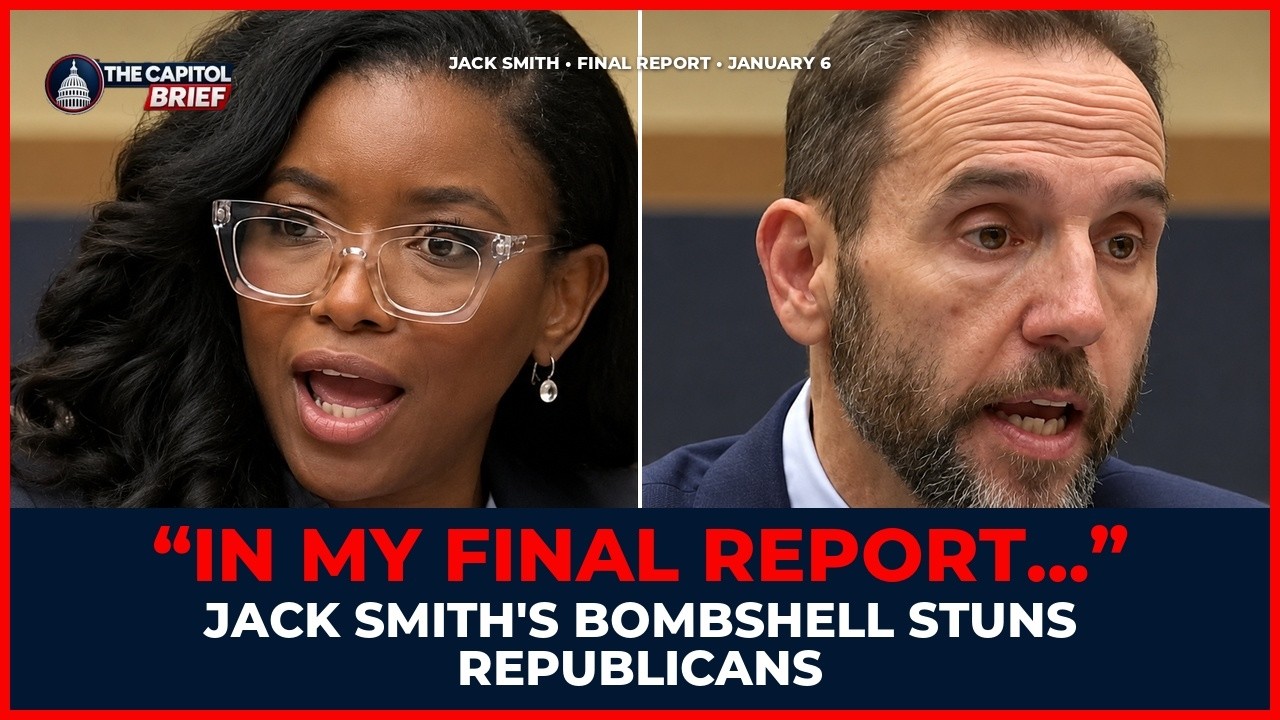
The competing allegations transformed the January 22, 2026, House Judiciary Committee hearing into an examination of prosecutorial independence, presidential immunity, constitutional authority, and the unresolved consequences of January 6.
At the center of the controversy was a statement buried on page 137 of Smith’s final report, released in January 2025 after the federal election interference case was dismissed.
The report explained that prosecutors believed the admissible evidence could have supported a conviction, but longstanding Justice Department policy prevented continued criminal prosecution once Trump returned to office.
Crockett treated that conclusion as evidence of a disturbing political reality. Republicans argued that the investigation itself represented an improper use of federal law enforcement against a political opponent.
Yet the report established neither Trump’s personal motivation for running in 2024 nor a criminal conviction. Those distinctions became essential to understanding the clash that followed.
The hearing began with House Judiciary Committee Chairman Jim Jordan accusing Smith of misusing the Justice Department’s authority and pursuing an investigation that threatened the integrity of the American political system.
Jordan argued that prosecutors had treated Trump differently from other political figures, particularly because the investigation unfolded during the former president’s campaign to reclaim the White House.
Smith rejected those accusations, maintaining that his office had followed the evidence and applied federal law without considering Trump’s political affiliation or electoral ambitions.
The former special counsel had overseen two federal investigations: one involving efforts to overturn the 2020 election and another concerning classified documents retained after Trump’s presidency.
Both resulted in criminal charges, but neither reached a completed trial before Trump’s return to the White House in January 2025.
That unfinished legal history provided the foundation for Crockett’s questioning, which began after hours of Republican criticism directed at Smith’s investigation and professional conduct.
She accused committee Republicans of focusing heavily on whether Smith possessed legitimate authority to prosecute Trump while avoiding what she regarded as the central evidence.
Crockett argued that the public deserved to hear from the prosecutor responsible for assembling the case rather than relying exclusively on competing political interpretations.
Her questioning soon turned toward Trump’s broader legal history, including the criminal proceedings in Manhattan that resulted in his conviction on 34 felony counts in May 2024.
Those convictions concerned falsified business records, not the federal January 6 investigation, and they remained legally distinct from the charges Smith had pursued.
Nevertheless, Crockett invoked them while arguing that allegations of criminal misconduct involving Trump should not automatically be dismissed as implausible or politically motivated.
Trump has consistently denied wrongdoing in the federal investigations and has maintained that the prosecutions were intended to damage his political standing.
Crockett then directed attention toward Smith’s final report, particularly its explanation of why federal prosecutors abandoned the election interference case after Trump’s 2024 victory.
The report stated that the Justice Department’s prohibition against prosecuting a sitting president applied regardless of the seriousness of the alleged offenses or the strength of available evidence.
Smith also wrote that his office believed it possessed evidence sufficient to obtain and sustain a conviction had the prosecution proceeded to trial.
That assessment became the centerpiece of Crockett’s argument because it directly challenged the suggestion that the case ended after prosecutors discovered their evidence was insufficient.
She interpreted Trump’s successful presidential campaign as a means of escaping the federal prosecution, arguing that his return to office had protected him from possible imprisonment.
The accusation was forceful, but it remained Crockett’s interpretation of Trump’s motives rather than a conclusion established by Smith’s report or a judicial finding.
The report explained why the prosecution ended and described prosecutors’ assessment of their evidence. It did not establish why Trump personally decided to seek another presidential term.
Smith’s conclusions also did not constitute a criminal conviction, because prosecutors never presented their complete case to a jury empowered to determine guilt beyond a reasonable doubt.
That distinction remains fundamental to the controversy: A prosecutor’s confidence in the evidence does not replace the constitutional requirement for an adversarial trial.
The federal election interference indictment had charged Trump with offenses involving conspiracy, obstruction, and alleged efforts to interfere with the lawful certification of presidential election results.
Prosecutors argued that Trump and associates pursued several strategies to challenge Biden’s victory, including pressure on state officials and efforts involving alternative electoral certificates.
Trump disputed the allegations, maintaining that his conduct involved legitimate efforts to investigate election irregularities and exercise rights protected by the Constitution.
The case encountered a major legal obstacle in July 2024, when the Supreme Court recognized substantial presidential immunity for official acts undertaken during a presidency.
That ruling required additional examination of the conduct described in Smith’s indictment, complicating prosecutors’ efforts to proceed toward trial before the November election.
After Trump won reelection, Smith moved to dismiss the case in accordance with the Justice Department’s longstanding position against prosecuting a sitting president.
The court dismissed the charges without a verdict, leaving the underlying criminal allegations unresolved rather than producing either a conviction or a trial acquittal.
Crockett’s argument therefore rested on a consequential legal distinction: The case ended because of a presidential-prosecution restriction, not because a jury rejected Smith’s evidence.
But Republican lawmakers emphasized another unresolved question: Whether Smith possessed constitutional authority to conduct his investigations and bring the charges in the first place.
That dispute became particularly important in the separate classified-documents prosecution, where federal Judge Aileen Cannon ruled in July 2024 that Smith’s appointment was unlawful.
Cannon concluded that the special counsel’s appointment violated constitutional requirements, prompting prosecutors to challenge her decision before the federal appeals court.
Smith’s team maintained that longstanding legal precedent and Justice Department authority supported the appointment of special counsels without separate Senate confirmation.
The appeal was subsequently abandoned after Trump’s reelection, leaving Cannon’s ruling in place in that case without a definitive higher-court resolution of the broader appointment dispute.
During the hearing, Crockett portrayed the Republicans’ emphasis on Smith’s appointment as an effort to redirect attention away from the evidence underlying Trump’s alleged conduct.
Smith responded that his office had defended the legality of his appointment through formal court filings and believed substantial legal authority supported its position.
The exchange did not eliminate the constitutional questions surrounding the appointment, but it exposed the difference between challenging a prosecutor’s authority and disputing the underlying allegations.
Crockett then escalated the confrontation by invoking the events of January 6, 2021, when Trump’s supporters breached the Capitol as Congress convened to certify Biden’s election victory.
She accused Republican lawmakers of minimizing the danger surrounding the attack while challenging the investigation intended to establish what Trump and his associates had done.
Her criticism became particularly pointed when she mentioned Jordan’s communications with the White House during the period surrounding the congressional certification proceedings.
Crockett referred to testimony concerning former White House Chief of Staff Mark Meadows and the fear experienced by lawmakers during the Capitol attack.
She also questioned Republicans’ objections to Smith’s acquisition of telephone records involving members of Congress, an issue that had generated considerable controversy.
Smith’s investigators had obtained certain telecommunications records showing call participants, timing, and duration, but those records did not disclose the content of conversations.
Republican lawmakers criticized the subpoenas as an intrusion into congressional activities, raising questions about legislative independence and protections associated with official congressional responsibilities.
Smith maintained that investigators sought the records because they were relevant to the election interference investigation, not because the individuals involved belonged to the Republican Party.
Crockett asked whether Smith had intended to obtain every Republican lawmaker’s telephone records simply because of political affiliation, and he rejected that characterization.
His response shifted attention toward the investigative justification for the subpoenas, particularly whether communications could help establish the sequence of events surrounding January 6.
The controversy involved legitimate institutional concerns because federal investigations of lawmakers’ communications can raise sensitive questions about separation of powers and investigative necessity.
Yet the existence of subpoenas does not independently establish improper surveillance, just as Smith’s explanation does not eliminate the need to examine their scope and authorization.
Crockett subsequently asked Smith to confirm that Trump had lost the 2020 presidential election to Joe Biden, a result established through official state certifications.
Smith agreed, reinforcing the distinction between the certified election outcome and the allegations of widespread fraud Trump continued promoting after the vote.
The congresswoman then referenced unsuccessful election litigation, alternative-elector proposals, pressure on government officials, and the January 6 attack as components of the broader dispute.
She also criticized the 147 Republican lawmakers who voted to object to at least one state’s electoral votes during the January 2021 certification proceedings.
Those congressional objections were documented, but the votes themselves do not establish that every participating lawmaker committed a criminal offense or joined an unlawful conspiracy.
Crockett’s questioning nevertheless underscored the importance of distinguishing ordinary political disagreement from efforts that prosecutors alleged were intended to obstruct an official government proceeding.
Once she finished, the hearing shifted toward a different allegation involving a member of Smith’s prosecution team and the handling of Trump’s classified-documents investigation.
Republican Representative Mark Harris of North Carolina questioned Smith about accusations involving former prosecutor Jay Bratt and attorney Stanley Woodward, who represented Trump aide Walt Nauta.
Woodward had alleged that Bratt improperly referenced his interest in a federal judgeship while discussing the possibility of his client cooperating with investigators.
If substantiated as an attempt to pressure an attorney through career considerations, such conduct could raise significant professional responsibility and prosecutorial misconduct concerns.
Smith disputed the accusation’s credibility, explaining that the alleged incident occurred before his appointment and was not reported to him until approximately nine months afterward.
He told Harris that he directed senior staff to examine the matter and confirmed that it had been referred to the Justice Department’s Office of Professional Responsibility.
Smith also said the allegation emerged when Trump’s attorneys were seeking to delay proceedings, a circumstance he considered relevant when assessing the complaint.
Harris challenged that explanation, questioning why Smith had not pursued what the congressman regarded as a sufficiently independent examination of the allegations.
Smith responded that referral to the Office of Professional Responsibility provided review outside his immediate prosecutorial team, distinguishing that process from an internal decision alone.
The exchange ended without a publicly established finding that Bratt had improperly threatened Woodward, leaving the alleged misconduct disputed rather than conclusively demonstrated.
Harris nevertheless maintained that the episode deserved scrutiny, placing it within broader Republican accusations that federal prosecutors had treated Trump unfairly.
He also argued that Trump’s 2024 election victory reflected public dissatisfaction with the prosecutions, characterizing the result as a political rejection of the investigations.
But an election result cannot determine whether particular evidence satisfies the elements of a criminal offense or whether an investigative method complied with federal law.
That separation between political judgment and judicial determination became an important theme across the hearing, even as lawmakers frequently interpreted the same facts differently.
The congressional controversy continued on September 29, 2026, when Smith appeared before the Senate Judiciary Committee to answer additional questions about his investigations.
Republican senators again challenged his independence and use of investigative powers, particularly the acquisition of telephone records associated with elected officials.
Smith defended those decisions, arguing that records of relevant communications helped investigators reconstruct conduct surrounding the attempted interruption of electoral certification.
He also emphasized that several significant witnesses in the federal election investigation were Republicans who had supported Trump but resisted efforts they considered improper.
The September proceedings demonstrated that disagreements concerning the special counsel’s work remained unresolved even after the dismissal of both federal prosecutions.
Meanwhile, litigation continued over access to the second volume of Smith’s final report, concerning the classified-documents investigation and allegations against Trump and his associates.
A federal judge had blocked that volume’s publication, while organizations seeking disclosure challenged the restrictions through appellate proceedings that remained active during the fall of 2026.
The resulting dispute added another dimension to the transparency debate, because lawmakers continued criticizing or defending an investigation whose complete final report had not been made public.
For Republicans, the unresolved questions concern prosecutorial authority, investigative methods, political influence, and the government’s treatment of a presidential candidate.
For Democrats, the central concern remains the evidence describing Trump’s attempts to challenge the 2020 election and the absence of a completed federal criminal trial.
Smith’s testimony offered information about his decisions, but it could not deliver the judicial determination that the abandoned prosecution would have sought.
Crockett’s assertion that Trump pursued reelection to avoid prison captured one political interpretation of the case’s ending, rather than an established finding about his personal motivation.
The report’s conclusion was narrower and legally significant: Prosecutors believed their evidence could support a conviction, but department policy prevented continued prosecution of the returning president.
That finding does not erase the presumption of innocence, and it does not settle Republicans’ objections concerning the legality and conduct of Smith’s investigation.
It does, however, establish that prosecutors did not describe their decision to dismiss the election case as a concession that the evidence was insufficient.
As the dispute continues, the central question remains whether the American public can distinguish verified evidence, unresolved legal allegations, and competing political interpretations.
The January hearing placed those distinctions under extraordinary pressure, with Crockett invoking the potential strength of an untried case and Republicans questioning the legitimacy of its prosecution.
And after hours of confrontation, one reality remained unchanged: The investigation produced serious federal charges and an extensive evidentiary record, but no jury verdict resolving Trump’s criminal responsibility.
That absence continues to shape the debate over Jack Smith, Donald Trump, and the limits of presidential accountability long after the original prosecution ended.
