
“Does a defense secretary really need to be taught respect?” — Pete Hegseth faces scrutiny after an Arlington guard interrupts his group, but the next day’s decision changes the story
A solemn Veterans Day ceremony at Arlington National Cemetery took an unexpected turn when an Army sentinel interrupted a group accompanying Defense Secretary Pete Hegseth.
The moment unfolded on November 11, 2026, at the Tomb of the Unknown Soldier, one of America’s most revered military memorials.
Hegseth, his wife, and several senior advisers had gathered for photographs following a ceremony honoring the nation’s veterans and fallen service members.
As the group prepared to leave, laughter and conversation could be heard near the memorial.
Then the soldier guarding the tomb stopped his patrol and issued a forceful reminder.
“All visitors will maintain an atmosphere of silence and respect at all times.”
The words carried across the ceremonial space as Hegseth and his entourage moved away from the monument.
The video immediately attracted national attention because the person receiving the reminder was the official responsible for overseeing America’s military.
Critics questioned whether a senior defense leader should ever need to hear such a warning while visiting a place dedicated to fallen service members.
But the complete footage revealed an important distinction.
Although laughter came from someone in Hegseth’s group, available reporting did not establish that Hegseth himself was the person laughing.
The Pentagon acknowledged the incident and defended the secretary’s commitment to honoring military service.
Then, on November 12, an unexpected development changed the direction of the controversy.
Hegseth presented a medal to the very soldier who had publicly corrected his group.
The decision introduced a new question into a debate that had initially focused almost entirely on the conduct captured in the recording.
Was the incident evidence of inappropriate behavior, an example of military standards being enforced, or a combination of both?
The answer requires examining the footage, the military traditions governing the tomb, the Pentagon’s official response, and what happened afterward.
AP News+2
1. The Veterans Day ceremony that ended with an unexpected warning
The incident occurred after the annual Veterans Day observance at Arlington National Cemetery in Virginia.
President Donald Trump, Vice President JD Vance, and senior government officials had attended ceremonies honoring Americans who served in the armed forces.
The day’s events included a wreath-laying ceremony at the Tomb of the Unknown Soldier, a memorial representing sacrifice without recognition.
Such ceremonies occupy a special place in American military tradition because they honor service members whose identities remain unknown.
Following the formal observance, Hegseth and members of his entourage remained near the tomb for photographs.
The group included his wife, Jennifer Hegseth, and senior Pentagon officials and advisers.
Among those identified in reporting were chief of staff Ricky Buria, deputy chief of staff Patrick Weaver, and senior adviser Tami Radabaugh.
Video obtained by a television news pool showed members of the group standing near the memorial and posing for pictures.
As the group began departing, conversation and audible laughter disrupted the otherwise solemn atmosphere.
The soldier on duty responded immediately.
Rather than continuing his patrol without comment, the sentinel stopped and addressed the visitors in a loud, commanding voice.
He reminded everyone present of the requirement to maintain silence and respect.
The scene attracted attention because it placed a uniformed soldier in the position of correcting a group led by a senior civilian defense official.
Hegseth appeared to look back toward the soldier as he continued moving away.
The publicly reported footage did not establish that the secretary argued with the sentinel or refused to comply with the instruction.
Nor did the video conclusively identify Hegseth as the person responsible for the audible laughter.
Those details matter because criticism of the group’s conduct should remain separate from unsupported claims about the behavior of any particular individual.
Nevertheless, the sentinel’s intervention was unmistakable.
A reminder ordinarily directed toward cemetery visitors had been delivered to a party containing the nation’s defense secretary.
And the setting made the moment especially sensitive.
The Tomb of the Unknown Soldier is not an ordinary public monument where visitors are free to behave as they would at a tourist attraction.
It is a continuously guarded military memorial governed by demanding standards of discipline, silence, and ceremonial respect.
The soldier’s response was therefore part of an established responsibility rather than an improvised personal confrontation.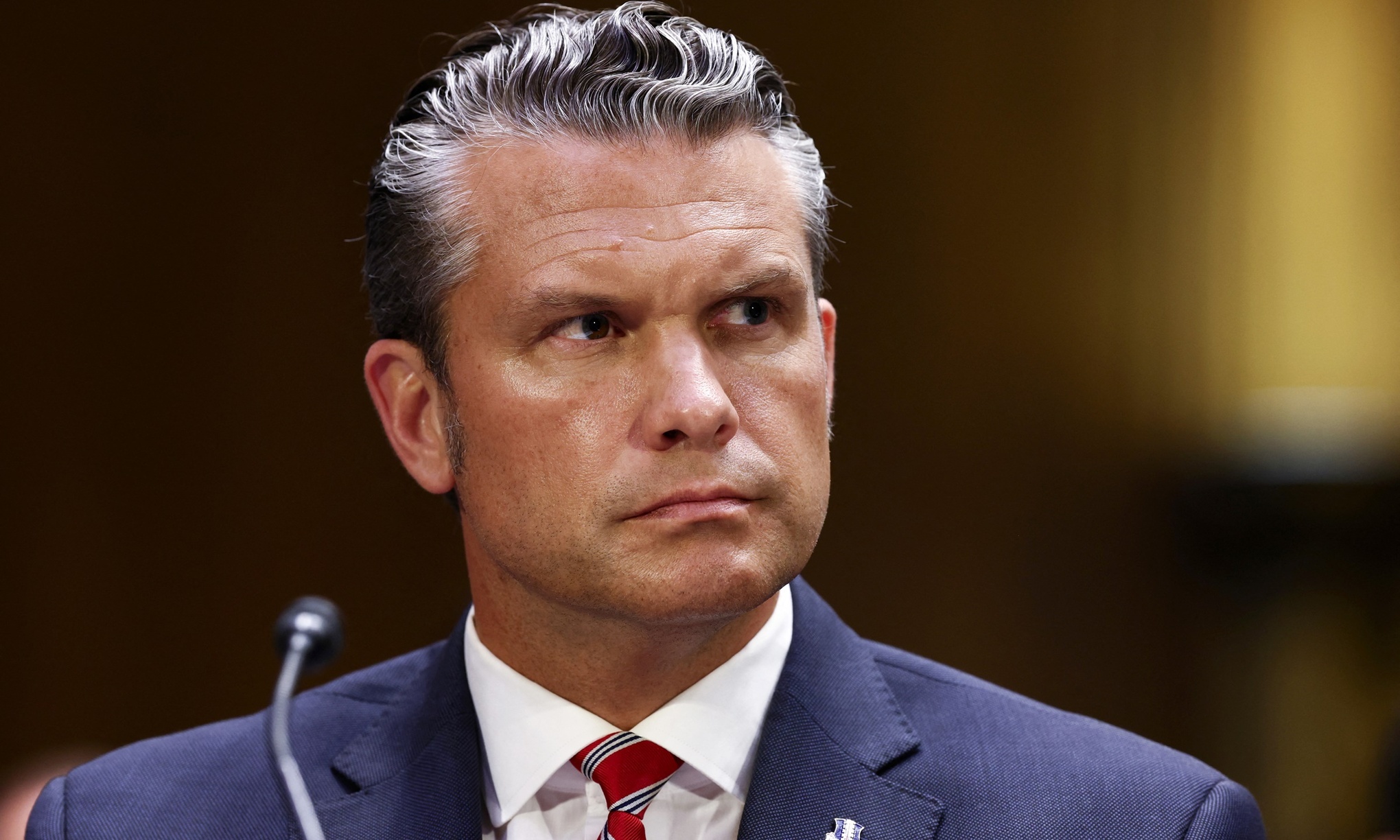
2. Why silence carries special meaning at the Tomb of the Unknown Soldier
The Tomb of the Unknown Soldier commemorates American military personnel whose identities could not be established after their deaths.
Its central significance lies in honoring sacrifice without requiring a name, rank, or personal history to justify remembrance.
The memorial contains unidentified service members associated with major American conflicts, including the First World War.
Each unknown service member represents families who lost loved ones and communities that endured the consequences of war.
The tomb is guarded by soldiers from the 3rd United States Infantry Regiment, commonly known as The Old Guard.
The regiment maintains a continuous ceremonial watch, a tradition that has continued around the clock since 1948.
Sentinels perform their duties in demanding conditions, including rain, snow, extreme temperatures, and periods when relatively few visitors are present.
The watch involves precise movements, inspections, and strict expectations concerning discipline and ceremonial conduct.
Visitors are expected to preserve the dignity of the memorial by observing silence and behaving respectfully.
Those requirements do not disappear when prominent political figures, military officials, or distinguished guests approach the site.
The soldier on duty has responsibility for maintaining the atmosphere appropriate to the memorial.
That responsibility helps explain why the sentinel addressed the group so forcefully.
His statement was not a personal insult directed at Hegseth.
It was an instruction reflecting the standards imposed on everyone visiting the tomb.
The distinction is important because the military chain of command and the ceremonial responsibilities of a sentinel operate in different contexts.
A defense secretary possesses substantial civilian authority over the military.
But that authority does not mean the official is exempt from respecting the procedures governing a national military memorial.
The sentinels’ duty is to preserve the solemnity of the site regardless of a visitor’s political position or official rank.
Their responsibility includes correcting behavior that interferes with the atmosphere of remembrance.
From that perspective, the soldier’s response demonstrated the enforcement of a longstanding rule rather than an unusual assertion of personal authority.
What made the event extraordinary was the identity of the visitors being corrected.
And that contrast explains why the video quickly became a national news story.
AP News+1
3. The footage reveals what happened and what remains uncertain
The central question raised by the viral video was whether Hegseth personally behaved disrespectfully at the memorial.
The available footage provides evidence of the group’s activities, but it does not establish every individual action.
Hegseth was present with his wife and advisers while photographs were being taken.
Conversation and laughter were audible as members of the group moved away from the tomb.
The sentinel then delivered the warning requiring silence and respect.
Multiple news organizations reported the same essential sequence after examining the recording.
However, the evidence did not conclusively identify Hegseth as the person laughing.
This distinction is particularly important because several online descriptions treated the entire group’s behavior as though every participant had acted identically.
A group can be reprimanded because of conduct by one or more members without every person having committed the same act.
The footage also did not establish that Hegseth personally ordered anyone to disregard the tomb’s rules.
Nor did it show him confronting the soldier in anger or attempting to prevent the sentinel from carrying out his duties.
Those limitations do not make the recorded warning insignificant.
They define precisely what the available evidence supports.
The soldier corrected a group that included the defense secretary after audible laughter and conversation near the memorial.
The recording supports that conclusion directly.
It does not support claims about Hegseth’s private thoughts, intentions, or personal attitude toward fallen service members.
Those matters cannot reliably be determined from a brief recording.
The distinction between observable behavior and inferred motivation became especially important as political commentary spread.
Critics viewed the scene as an inappropriate lapse during a solemn national observance.
Others emphasized that the record did not prove the secretary himself was laughing and that the correction was handled without an apparent confrontation.
Both interpretations were shaped by the same publicly available video.
But the factual foundation remained narrower than some of the commentary surrounding it.
The sentinel issued a reminder, the group departed, and the incident became the subject of extensive reporting.
Then the Pentagon issued a statement that removed any uncertainty about whether the soldier’s intervention had actually occurred.
NCIJ Network+2
4. The Pentagon acknowledges the correction and defends Hegseth’s respect for the military
As the video spread, journalists sought an explanation from the Pentagon concerning the circumstances surrounding the sentinel’s warning.
Chief Pentagon spokesman Sean Parnell responded with a statement acknowledging the soldier’s intervention and defending the secretary’s regard for military service.
Parnell said the department remained committed to honoring the sacrifices made by America’s armed forces.
He also acknowledged that the sentinel had appropriately reminded the visitors to observe the expected standards of conduct.
This response was significant because it confirmed the essential event rather than dismissing the footage as misleading or denying that the correction occurred.
The Pentagon did not publicly accuse the soldier of acting improperly.
Instead, its response recognized that maintaining decorum was an appropriate part of the sentinel’s responsibilities.
That acknowledgment separated the military institution’s position from some of the more confrontational political commentary surrounding the video.
The department defended Hegseth’s commitment to honoring service members while accepting that the soldier had properly enforced the memorial’s rules.
Those positions were not necessarily contradictory.
A person may respect military sacrifice while participating in a moment when someone nearby behaves inappropriately.
Likewise, acknowledging that a reminder was appropriate does not automatically establish that every person in the group had intentionally violated the rules.
But the incident still raised questions about expectations for senior officials attending solemn military ceremonies.
Hegseth was not merely an ordinary visitor unfamiliar with military institutions.
He had previously served in the Army National Guard, including deployments to Iraq and Afghanistan.
His military background made the encounter particularly notable because he was familiar with the importance of military discipline and ceremonial traditions.
Critics argued that a defense secretary’s experience should make him especially conscious of the standards associated with a memorial honoring fallen service members.
Supporters emphasized his military record and the Pentagon’s statement that the department remained committed to respecting those sacrifices.
The dispute therefore concerned both the conduct visible in the footage and the expectations associated with Hegseth’s office.
Yet the official response clarified one matter beyond reasonable dispute.
The sentinel had acted within his responsibility when he called for silence and respect.
The next day’s events would reinforce that conclusion in an unexpected way.
AP News+1
5. Political criticism intensifies as Hegseth faces wider congressional scrutiny
The Arlington incident occurred during a particularly contentious period for Hegseth’s leadership of the military.
Just one day earlier, the House of Representatives had voted to block an impeachment effort introduced by Republican Representative Thomas Massie.
The impeachment articles concerned allegations involving the administration’s military operations and Hegseth’s conduct as defense secretary.
Hegseth rejected those accusations and defended his record, describing the impeachment effort as a political attack on his leadership.
The House decision prevented the immediate resolution from advancing, although it did not settle every dispute surrounding his tenure.
Against that background, the Arlington recording attracted attention from lawmakers already questioning Hegseth’s performance.
Democratic Representative Gwen Moore publicly criticized his behavior and connected the incident to her concerns about his leadership.
Former Republican Representative Adam Kinzinger also condemned the conduct and praised the sentinel for enforcing the memorial’s rules.
Their criticism treated the episode as an issue of leadership standards rather than merely an isolated moment of inappropriate conversation.
Other observers cautioned against making conclusions about Hegseth’s personal actions that the available video did not establish.
The record did not prove that Hegseth himself laughed or deliberately disregarded the sentinel’s instruction.
That limitation matters when separating documented events from broader political evaluations.
The controversy also revived memories of an earlier dispute at Arlington involving Trump’s 2024 presidential campaign.
During that episode, a cemetery employee reportedly confronted campaign personnel over filming and photography connected with a memorial visit.
The earlier dispute involved separate circumstances and should not be treated as evidence of wrongdoing in the 2026 incident.
Nevertheless, its renewed appearance in commentary illustrated how controversies at military memorials can become part of wider debates about political leadership.
Arlington occupies a symbolic place in American public life because it represents service, loss, and remembrance across generations.
Disputes involving the cemetery therefore attract attention beyond the immediate actions being questioned.
Still, the political reaction did not change what the November 11 footage established.
A sentinel had corrected Hegseth’s departing group after laughter was heard near the Tomb of the Unknown Soldier.
The Pentagon had acknowledged that the correction was appropriate.
And then Hegseth made a decision that would change how the encounter was discussed.
AP News+2
6. The unexpected reversal: Hegseth presents a medal to the soldier who corrected him
On November 12, 2026, Hegseth publicly recognized the Army sentinel involved in the incident.
The soldier was identified as Specialist Thomas Iglesias, a member of the 3rd United States Infantry Regiment.
Iglesias had been carrying out his duties at the Tomb of the Unknown Soldier when he issued the warning captured on video.
The following day, Hegseth presented him with a medal.
The defense secretary shared a photograph showing the presentation, with Iglesias standing alongside members of his unit.
Hegseth accompanied the image with a message praising soldiers and the importance of maintaining standards.
The development was significant because it provided a documented response from Hegseth himself, beyond the earlier statement issued by his spokesman.
Rather than publicly criticizing the sentinel for addressing a group containing senior Pentagon officials, Hegseth chose to recognize him.
The action also clarified that the soldier’s enforcement of ceremonial rules was not being treated as an act of insubordination.
Iglesias had performed a responsibility associated with his assignment, and the defense secretary publicly acknowledged that responsibility.
The medal presentation did not erase the events captured in the original video.
Nor did it prove that every member of Hegseth’s group had behaved appropriately during the memorial visit.
It did, however, materially change the public record by adding a response that was absent from the initial footage.
The controversy was no longer limited to a recording of a soldier correcting senior officials.
It now included the defense secretary formally recognizing the soldier who had delivered the correction.
That distinction matters because the outcome challenged a simple interpretation of the incident as an unresolved confrontation between a senior official and a subordinate.
Hegseth’s action demonstrated public acceptance of the sentinel’s enforcement of standards, although it did not settle every criticism of the group’s earlier conduct.
The medal presentation also drew attention back to Iglesias and the responsibilities carried by soldiers assigned to guard the memorial.
His conduct showed that the standards governing the tomb remained enforceable even when distinguished visitors were present.
The soldier who had interrupted the defense secretary’s group on Wednesday was publicly honored by that same official on Thursday.
That was the most consequential new development after the video became national news.
Reuters+1
7. What the complete record establishes about respect, responsibility, and the Arlington incident
The original controversy began with an allegation that Pete Hegseth had been reprimanded after members of his entourage laughed near a solemn military memorial.
The footage confirmed that the incident occurred, although it did not establish that Hegseth personally produced the audible laughter.
The soldier guarding the tomb issued a forceful reminder requiring visitors to maintain silence and respect.
The Pentagon subsequently acknowledged that the sentinel had appropriately enforced the standards associated with the memorial.
Those details established that the encounter was genuine and that the soldier’s intervention was consistent with his responsibilities.
The political response focused on whether senior defense officials should have been in a position requiring such a warning.
Critics argued that the circumstances reflected poorly on the group’s conduct during a ceremony dedicated to military sacrifice.
Others emphasized that the recording did not establish intentional disrespect by Hegseth himself and that the group did not visibly challenge the sentinel.
Both interpretations must be distinguished from the documented sequence of events.
Then the November 12 medal presentation introduced a meaningful development that was not visible in the initial video.
Hegseth recognized Specialist Thomas Iglesias, identifying the soldier responsible for the correction and publicly praising military standards.
That action provided a more complete picture of how the defense secretary responded after the incident attracted national attention.
The record therefore supports several clear conclusions.
A member of Hegseth’s group was heard laughing near the Tomb of the Unknown Soldier following the Veterans Day observance.
The sentinel interrupted the group’s departure to enforce the memorial’s rules.
The Pentagon acknowledged that he had acted appropriately, and Hegseth later awarded him a medal.
What the record does not establish is that Hegseth personally laughed, argued with the soldier, or attempted to prevent the guard from performing his duty.
Nor can the public record conclusively establish every participant’s private intentions during the encounter.
The episode nevertheless illustrates a significant aspect of military tradition.
At Arlington, the responsibility to protect the solemnity of remembrance does not depend on the official status of those visiting.
A soldier assigned to guard the tomb must uphold its standards even when those present include individuals occupying the highest positions in government.
Iglesias did precisely that when he stopped his patrol and reminded the group of the rules.
Hegseth’s subsequent recognition reinforced the soldier’s authority to carry out that responsibility.
The original video raised questions about conduct at a sacred memorial.
The medal presentation supplied an important answer about how the defense secretary chose to respond once the controversy became public.
Those two events should be considered together rather than treating the initial confrontation as the complete story.
The guard’s warning was real, the Pentagon acknowledged it, and Hegseth ultimately honored the soldier who delivered it.
The incident began with a question about whether the defense secretary’s entourage had shown appropriate respect at Arlington.
It ended with a public recognition of the sentinel responsible for ensuring that the memorial’s standards were maintained.
At the Tomb of the Unknown Soldier, the rules applied even to the defense secretary’s group, and the soldier who enforced them received public recognition.
