
“SIX FOLDERS. SIX EXPLOSIVE QUESTIONS!” JD Van.c.e Challenges Gavin News.o.m as French Laundry, $70 Billion Fraud Claims and Ruby Controversy Ignite Political Firestorm
Washington was bracing for another political confrontation when Vice President JD Van.c.e turned his attention toward California Governor Gavin News.o.m and the controversies surrounding the state’s leadership.
News.o.m had repeatedly defended California’s record against Republican criticism, arguing that his administration had faced extraordinary challenges while continuing to pursue ambitious policies on housing, public services, and economic development.
But in this fictionalized political showdown, Van.c.e arrives with something designed to change the conversation.
Six folders.
Each carries a different label.
French Laundry. Fraud. Homelessness. Spending. Ruby. Foundation.
The presentation is intended to force News.o.m to confront questions that have followed California’s political leadership for years.
The first folder concerns an expensive dinner during the pandemic.
The second raises questions about allegations of fraud involving public programs.
The third examines billions of dollars allocated to homelessness initiatives.
The fourth focuses on government spending and accountability.
The final two folders, marked Ruby and Foundation, raise questions about political associations, nonprofit organizations, and financial transparency.
News.o.m’s fictional opening statement is confident.
NEWSOM: “I HAVE NOTHING TO HIDE.”
Van.c.e looks toward the folders.
VANCE: “THEN LET’S OPEN THEM ONE BY ONE.”
The imagined exchange begins.
And the six folders become six separate tests of political accountability.
FOLDER ONE: THE FRENCH LAUNDRY DINNER
The first folder carries a name that has remained familiar in California political discussions: French Laundry.
The controversy dates back to November 2020, when News.o.m attended a dinner at the upscale French Laundry restaurant in Yountville while California was experiencing the COVID-19 pandemic.
The gathering attracted widespread criticism because public health restrictions and official recommendations were encouraging Californians to limit social gatherings.
Photographs and reports about the dinner generated questions about whether political leaders were following the same expectations they were asking ordinary residents to observe.
The viral narrative claims the dinner cost $15,800.
That specific amount should not be treated as an independently established personal payment by News.o.m.
But the broader controversy was real, and it became a significant political embarrassment.
In this fictional confrontation, Van.c.e opens the first folder.
VANCE: “Governor, Californians were being told to avoid gatherings, change their daily lives, and follow restrictions. Yet your attendance at this dinner created a very different impression. Do you understand why people were angry?”
News.o.m responds firmly.
NEWSOM: “I understand why people were frustrated. But California was dealing with an unprecedented public health emergency, and my administration was making decisions under extraordinary circumstances.”
Van.c.e refuses to let the answer end there.
VANCE: “That is exactly the problem. Leadership means accepting responsibility when your own actions create the impression that the rules are different for people in power.”
News.o.m argues that the pandemic required difficult decisions and that one controversy should not erase the work performed by public health officials.
But the political damage had already been done.
The French Laundry controversy became a symbol of the broader frustration surrounding pandemic restrictions and the conduct of elected officials.
For Van.c.e, the issue represents a basic question.
Should elected leaders be held to the same standards they expect from everyone else?
FOLDER TWO: THE $70 BILLION FRAUD CLAIM
The second folder carries a much more serious label.
Fraud.
The viral account associates it with approximately $70 billion in alleged losses and questionable government spending.
But there is an important distinction between documented fraud, suspected fraud, improper payments, and disputed estimates of financial losses.
These categories are not interchangeable.
A government program can experience administrative failures without every questionable payment representing criminal fraud.
Likewise, an allegation involving billions of dollars does not establish that a governor personally knew about or participated in wrongdoing.
In this fictionalized hearing, Van.c.e places the figure at the center of his challenge.
VANCE: “Governor, Californians deserve to know what happened to the money entrusted to their government. When enormous sums are involved, who takes responsibility?”
News.o.m pushes back.
NEWSOM: “You cannot take a massive number, attach the word fraud to it, and pretend that every dollar represents proven criminal conduct. Show the actual findings.”
Van.c.e answers:
VANCE: “Then show the audits. Show the investigations. Show the corrective actions. Nobody is asking you to invent a number. We are asking for accountability.”
The exchange becomes more complicated because both arguments touch on legitimate concerns.
California has faced significant questions about oversight of public programs, including unemployment assistance during the pandemic.
The Employment Development Department experienced serious fraud and administrative problems during the emergency.
However, estimates of questionable payments and identified fraud have varied according to the period, methodology, and program being examined.
The fictional confrontation therefore turns toward a more important question.
What systems were responsible for detecting irregularities?
Which agencies were responsible for oversight?
What corrective measures were implemented?
And how much money was ultimately recovered?
Those are questions that require official audits and investigative findings, not viral headlines.
FOLDER THREE: THE HOMELESSNESS BILLIONS
<text color=”secondary” size=”xs”>WHERE DID THE MONEY GO?</text>
The third folder is marked HOMELESSNESS.
For years, California has struggled with one of the country’s most visible homelessness crises.
Cities including Los Angeles, San Francisco, and Oakland have faced enormous pressure to address encampments, housing shortages, addiction, mental health challenges, and public safety.
California has committed substantial resources to homelessness programs.
Yet the crisis has remained a major political issue.
Republicans have repeatedly questioned whether billions of dollars in public funding have produced measurable improvements.
News.o.m’s administration has defended its investments, pointing to housing initiatives, emergency interventions, and partnerships with local governments.
But questions about spending oversight have continued.
In 2024, California’s State Auditor published an examination of the state’s homelessness response, criticizing weaknesses in the state’s ability to track spending and evaluate the effectiveness of programs.
That finding created an important accountability issue.
The challenge was not simply how much money had been allocated.
It was whether the state could consistently demonstrate what those investments had accomplished.
Van.c.e opens the third folder.
VANCE: “Governor, if taxpayers have spent billions addressing homelessness, shouldn’t they be able to see measurable results?”
News.o.m responds.
NEWSOM: “Homelessness is not a problem that can be solved overnight. It involves housing costs, mental health, addiction, local government responsibilities, and decades of policy failures.”
Van.c.e interrupts.
VANCE: “Nobody is saying it is simple. But complexity cannot become an excuse for refusing to measure success.”
News.o.m counters that funding housing and treatment programs requires cooperation between state and local governments.
He argues that California cannot solve the crisis simply by cutting programs or blaming individual communities.
The disagreement exposes a central political divide.
Democrats emphasize the structural causes of homelessness and the need for sustained investment.
Republicans emphasize spending accountability, public safety, and measurable outcomes.
But both sides face the same question.
Are public investments actually improving the lives of people living on the streets?
FOLDER FOUR: THE SPENDING QUESTION
The fourth folder concerns the broader question of state spending.
California operates one of the largest state economies in the world.
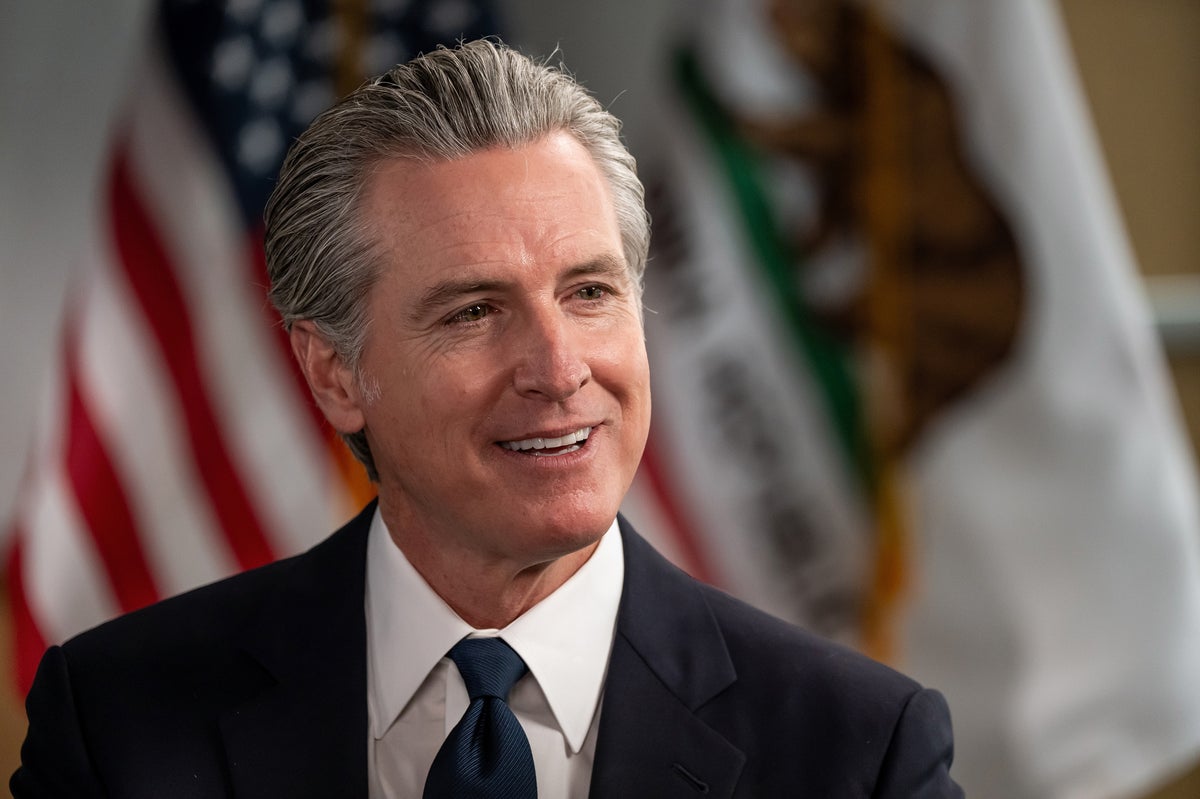
Its government oversees enormous budgets involving education, healthcare, transportation, public safety, environmental policy, and social services.
That scale creates enormous opportunities.
It also creates significant risks.
A program that works effectively in one county may produce disappointing results in another.
A funding commitment announced with great political enthusiasm may encounter administrative delays.
And money allocated by Sacramento may not always translate into the results expected by taxpayers.
Van.c.e argues that California’s leadership should be judged not only by the size of its spending commitments but by the results those commitments produce.
VANCE: “Governor, announcing billions in funding is easy. Demonstrating that the money accomplished something is the real test.”
News.o.m rejects the suggestion that California’s public investments are simply wasteful.
NEWSOM: “California is managing an enormous economy and serving millions of people. You cannot evaluate every program through a single political talking point.”
Van.c.e responds that he is not asking for simplistic answers.
He is asking for measurable standards.
VANCE: “Then publish the results. Explain the failures. Show taxpayers what changed and what still needs to be fixed.”
The argument becomes less about ideology and more about government performance.
How should taxpayers evaluate a public program?
What constitutes measurable success?
Who is responsible when a program fails?
And how quickly should officials acknowledge mistakes?
These questions are relevant regardless of which political party controls the government.
FOLDER FIVE: THE RUBY FILE
The fifth folder carries a single name.
Ruby.
Unlike the French Laundry controversy and California’s documented homelessness oversight problems, the viral story provides no reliable explanation of what this folder supposedly contains.
It does not identify a complete name, an authenticated document, a specific transaction, or an established connection to News.o.m.
That absence matters.
A first name alone cannot establish wrongdoing.
Nor can the appearance of a person’s name in a political narrative establish that the person participated in an improper financial arrangement.
In this fictional reconstruction, Van.c.e raises the question without presenting an invented accusation as fact.
VANCE: “Governor, if someone is raising questions about an individual or organization connected to your political activities, shouldn’t the public be able to examine the actual records?”
News.o.m responds sharply.
NEWSOM: “Absolutely. But you cannot throw somebody’s name into a political controversy without explaining what the evidence actually shows.”
Van.c.e acknowledges that documentation matters.
VANCE: “Then identify the documents. Establish the relationships. Let independent investigators examine them.”
The exchange becomes a reminder that political transparency cannot mean abandoning basic standards of fairness.
A name is not proof.
An association is not proof.
And an accusation is not a finding.
Before anyone can responsibly discuss the Ruby folder, the underlying source material must be identified and authenticated.
Without that information, the allegation remains unsubstantiated.
FOLDER SIX: THE FOUNDATION QUESTION
The final folder carries another potentially explosive label.
FOUNDATION.
Nonprofit organizations and charitable foundations play important roles in American public life.
They support education, healthcare, research, cultural institutions, and political advocacy.
Their activities are governed by different legal requirements depending on their organizational structure and tax-exempt status.
Some foundations must publicly disclose substantial information about their finances.
Other nonprofit organizations have different donor-disclosure obligations.
That complexity has created longstanding political arguments about transparency.
Van.c.e argues that organizations operating in the political world should be subject to meaningful accountability.
News.o.m counters that nonprofit status does not automatically indicate improper activity.
VANCE: “If a foundation is connected to political influence, Americans deserve to understand what it does, where its money comes from, and how it operates.”
NEWSOM: “And if an organization is acting legally, you cannot imply wrongdoing simply because you dislike its political positions.”
The disagreement highlights an important constitutional issue.
Political association and charitable activity receive legal protections.
The First Amendment protects individuals and organizations engaged in lawful political advocacy.
At the same time, federal tax laws impose reporting requirements on different categories of nonprofit organizations.
The correct standard is neither unlimited secrecy nor unlimited government disclosure.
It is transparency consistent with the law and constitutional protections.
The sixth folder therefore does not deliver a dramatic revelation.
Instead, it leaves a more difficult question.
How can political leaders demand accountability without turning nonprofit organizations into targets of partisan intimidation?
THE MOMENT THE SIX FOLDERS COME TOGETHER
The fictional confrontation now reaches its most important moment.
Six subjects have been raised.
A pandemic dinner.
Allegations of fraud.
Homelessness spending.
Government accountability.
An unidentified Ruby file.
And questions involving a foundation.
News.o.m looks at the documents.
He argues that Van.c.e has combined unrelated controversies to create the appearance of a single political scandal.
Van.c.e disagrees.
NEWSOM: “You have taken years of California’s political history, placed six labels on six folders, and presented them as though they prove one enormous conspiracy.”
VANCE: “No. They represent six questions that deserve honest answers.”
News.o.m responds that questions must be supported by evidence.
NEWSOM: “Then investigate specific claims. Do not turn assumptions into conclusions.”
Van.c.e delivers his fictional closing challenge:
“CALIFORNIANS DESERVE ANSWERS, NOT ANOTHER POLITICAL EXCUSE.”
The sentence captures the political argument without pretending that an actual confrontation occurred.
News.o.m answers that accountability must apply equally to federal and state officials.
He argues that California should be judged through verified results rather than partisan presentations.
The disagreement remains unresolved.
And that is precisely where the larger political story begins.
WHAT THE SIX FOLDERS REALLY REPRESENT
The six-folder narrative is powerful because it combines several issues that have become central to debates about California’s political leadership.
The French Laundry dinner represents the question of whether elected officials should follow the standards they expect from the public.
The fraud folder represents the importance of protecting taxpayer money and investigating documented irregularities.
The homelessness folder represents the gap between enormous government spending commitments and measurable results.
The spending folder represents the need for independent oversight.
The Ruby folder illustrates the danger of circulating allegations without identifying reliable evidence.
And the Foundation folder raises the difficult relationship between financial transparency, nonprofit activity, and constitutional freedoms.
These issues should not be collapsed into one accusation.
Each requires its own documentation, legal standards, and independent examination.
But together, they illustrate why California’s government remains under intense political scrutiny.
THE QUESTION NEWSOM CANNOT ESCAPE
The fictional showdown ends without a verified six-folder presentation, an authenticated financial discovery, or evidence that Van.c.e confronted News.o.m in the manner described by viral posts.
Yet the underlying accountability questions remain significant.
How much did California spend addressing homelessness?
What did independent auditors discover?
How effectively did the state respond to pandemic-era fraud?
What lessons were learned from the French Laundry controversy?
And can California demonstrate that its public programs are delivering the results taxpayers were promised?
Those are legitimate questions.
They deserve answers supported by official records rather than political exaggeration.
For JD Van.c.e, the fictional challenge is about demanding accountability from a prominent Democratic governor.
For Gavin News.o.m, the fictional defense is about refusing to let unverified accusations become accepted conclusions.
But the final test belongs to the public.
Because six folders can create a dramatic political moment.
Six labels can dominate social media.
And six unanswered questions can become a powerful campaign message.
But when the headlines disappear and the documents are examined independently, will the evidence support the accusations — or reveal that the biggest scandal was the story itself?
