
“YOUR BONUSES ARE RISING FASTER THAN GROCERY PRICES!” Amy Klobuch.a.r Takes on Kroger CEO Rodney McMulle.n in Explosive Senate Showdown!
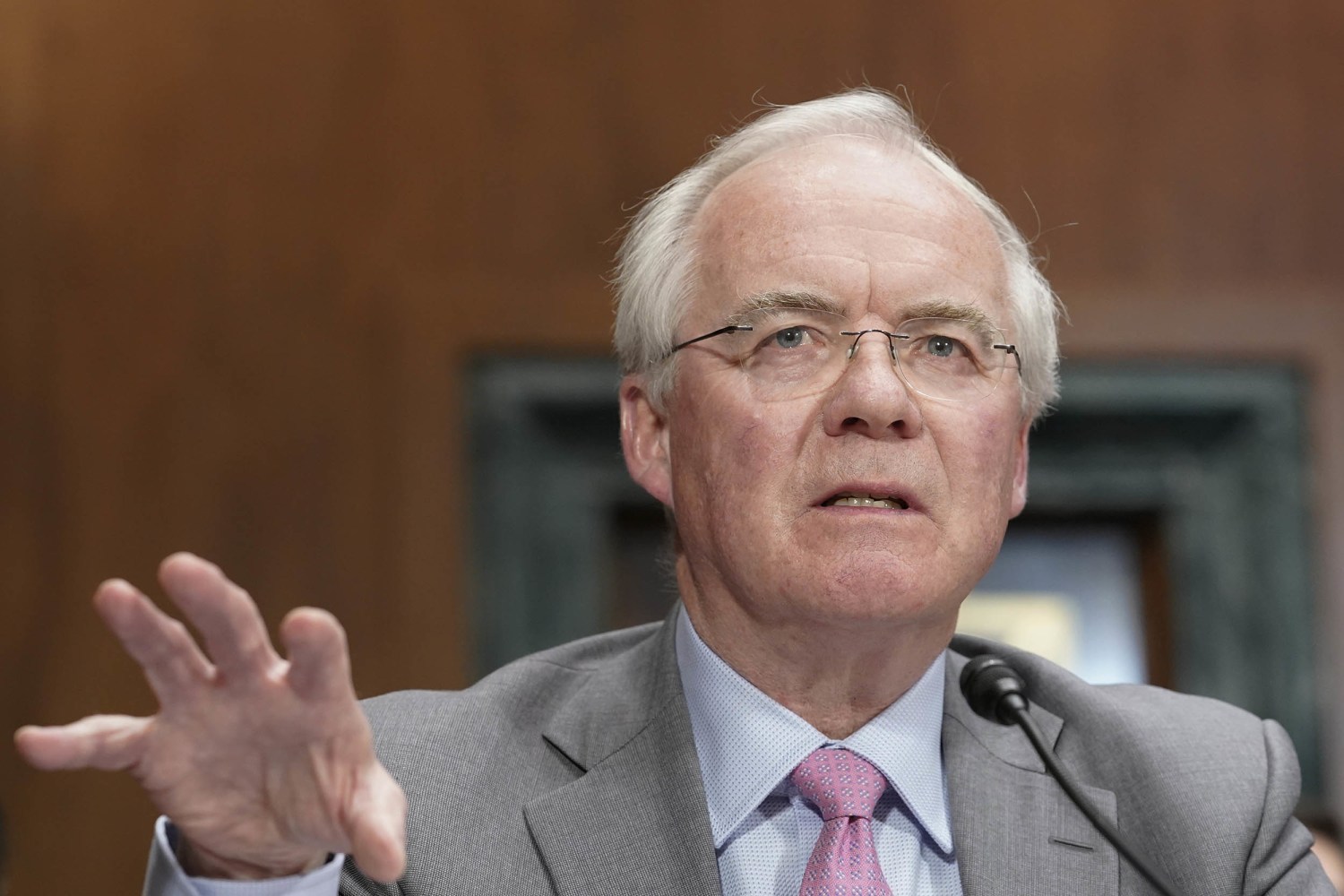
The atmosphere inside the Senate hearing room grew increasingly uncomfortable as Senator Amy Klobuch.a.r confronted Kroger Chairman and Chief Executive Officer Rodney McMulle.n over one of the most painful issues facing American families: the skyrocketing cost of groceries.
For millions of households, grocery shopping had become an increasingly stressful experience.
Eggs, milk, meat, bread, cooking oil, and everyday household essentials were consuming larger portions of monthly budgets, leaving families struggling to balance basic necessities against rent, electricity, transportation, and medical expenses.
Yet the executives responsible for America’s largest grocery businesses continued defending their pricing strategies.
That was precisely what Klobuch.a.r wanted to challenge.
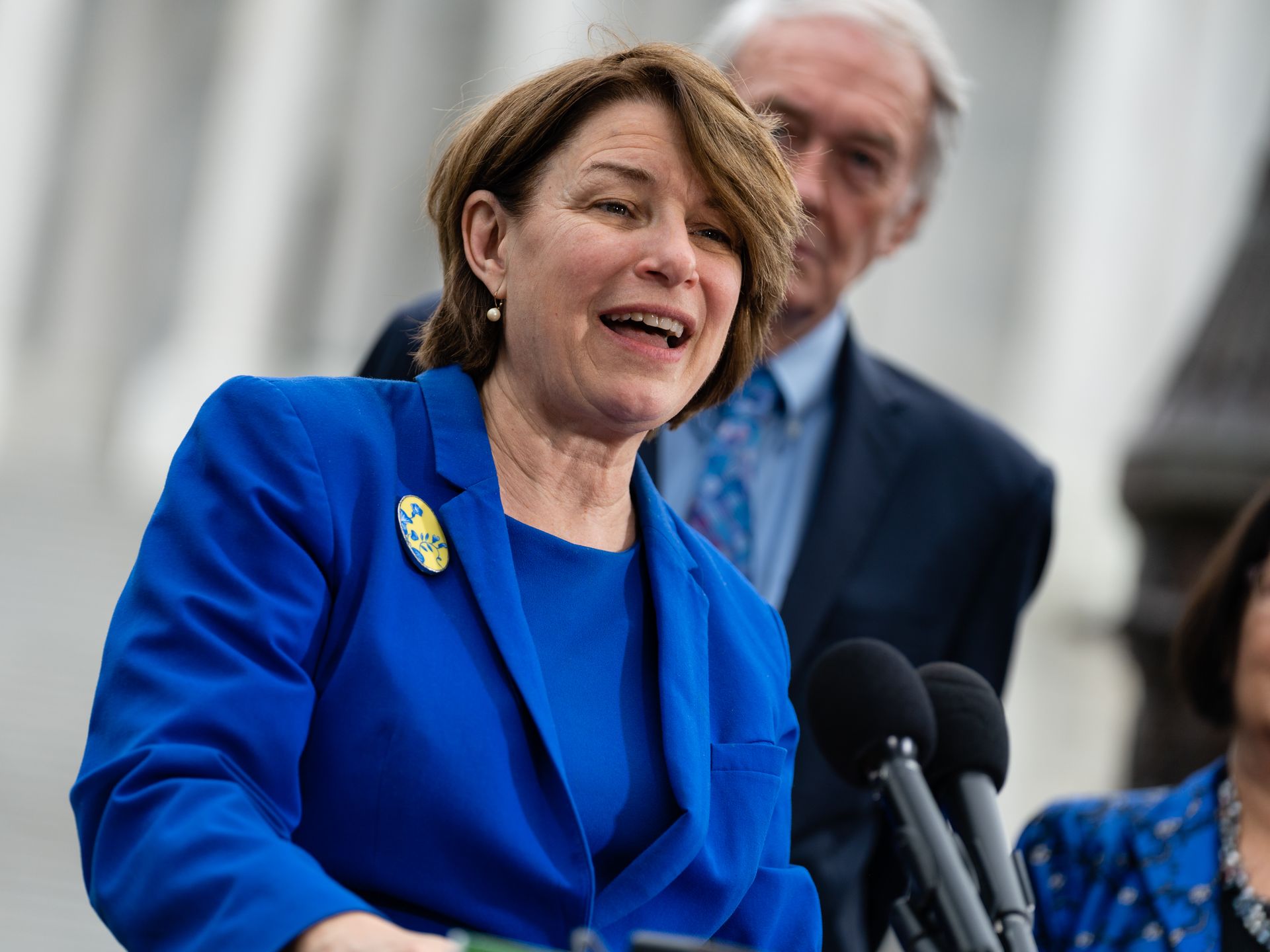
Sitting across from her was McMulle.n, the longtime Kroger executive who had risen from working as a part-time grocery clerk to leading one of America’s largest supermarket companies.
He had experience, financial records, and an entire corporate organization behind him.
But Klobuch.a.r had something different.
She represented consumers who could not simply negotiate a better price when standing at the supermarket checkout.
The disagreement was not merely about whether grocery companies were profitable.
It was about whether ordinary Americans were receiving a fair deal while corporate executives continued defending their business models.
And the most important question was whether stronger competition could finally force grocery prices downward.
The confrontation recalled the November 29, 2022, Senate Judiciary Subcommittee hearing examining the proposed Kroger-Albertsons merger, where Klobuch.a.r questioned McMulle.n about competition, consumer prices, and the consequences of combining two enormous supermarket chains.
It was a debate with consequences extending far beyond one corporate executive.
THE GROCERY RECEIPT THAT REPRESENTED MILLIONS OF AMERICAN FAMILIES
Klobuch.a.r’s strongest political argument began with something almost every American understood: a grocery receipt.
Unlike complicated corporate financial statements, a receipt showed exactly what a family had to pay before leaving the store.
There were no complicated accounting definitions.
No corporate explanations.
No investment presentations.
Just the final amount.
For families already struggling with inflation, even modest increases in everyday necessities could create serious financial pressure.
A parent purchasing groceries for children could no longer assume that the same shopping basket would cost approximately the same amount from one month to another.
Eggs became more expensive.
Meat prices fluctuated.
Dairy products consumed more of the household budget.
And families increasingly searched for discounts, substituted cheaper brands, or abandoned products they previously purchased regularly.
Klobuch.a.r understood the political significance.
Grocery prices were not an abstract economic statistic.
They were a daily reminder of economic pressure.
In a dramatic reconstruction of the exchange, she places the issue directly before McMulle.n.
She challenges him to explain how a family could continue absorbing higher grocery bills while a major supermarket corporation defended its financial performance.
The question was deliberately uncomfortable.
A corporate executive could discuss supplier contracts, transportation costs, labor expenses, and inventory management.
But none of those explanations changed what customers experienced when they reached the checkout counter.
For Klobuch.a.r, the issue was whether the company was doing enough to protect consumers.
And she was not prepared to accept the suggestion that every price increase was simply unavoidable.
“YOU CAN’T KEEP BLAMING EVERYTHING ON SUPPLY CHAINS!”
McMulle.n’s strongest defense involved the complicated economics of grocery retailing.
Kroger operates across a vast network of supermarkets, distribution facilities, manufacturing operations, and transportation systems.
The company purchases products from thousands of suppliers and must move enormous quantities of food through its distribution network.
Its expenses include wages, electricity, transportation, refrigeration, packaging, inventory losses, and payment processing.
When supplier prices increase, retailers face difficult decisions.
When fuel becomes more expensive, transportation costs can rise.
When labor expenses increase, store operating costs may also increase.
McMulle.n had previously used these arguments when defending Kroger’s pricing policies.
During September 2024 testimony connected to the proposed Albertsons acquisition, he attributed grocery price increases to higher supplier costs, fuel expenses, and credit-card processing fees.
He also rejected suggestions that the merger would automatically lead to higher consumer prices.
His argument was that grocery retailers operated in a competitive marketplace where customers could switch stores if prices became unreasonable.
But Klobuch.a.r’s concern was that competition could become weaker if two major supermarket chains combined.
She questioned whether the promises of lower prices could be trusted when consumers might have fewer major alternatives.
That disagreement was central to the merger controversy.
Kroger wanted to demonstrate that combining operations could produce efficiencies.
Regulators and critics wanted to know whether those efficiencies would actually reach consumers.
The senator’s challenge was therefore straightforward.
If Kroger believed it could lower prices through a merger, where were the enforceable guarantees?
And what would happen if those promises failed?
THE $24.6 BILLION MERGER THAT BECAME A NATIONAL BATTLE
The proposed Kroger-Albertsons merger represented one of the biggest grocery industry transactions in American history.
Announced in October 2022, the agreement was valued at approximately $24.6 billion.
The companies argued that combining their operations would help them compete more effectively against Walmart, Costco, and other major retailers.
They maintained that a stronger combined business could invest in lower prices, improve distribution, and expand its ability to compete.
But regulators saw significant risks.
The Federal Trade Commission argued that eliminating competition between Kroger and Albertsons could hurt consumers and workers.
The concern was particularly important in communities where the two supermarket chains competed directly.
If one major competitor disappeared, consumers might have fewer affordable alternatives.
Workers could also lose bargaining leverage if the number of competing grocery employers declined.
Klobuch.a.r was deeply involved in examining these concerns.
On November 29, 2022, she chaired a Senate Judiciary Subcommittee hearing specifically examining the competitive impact of the proposed transaction.
McMulle.n appeared as a witness alongside Albertsons CEO Vivek Sankaran and other industry representatives.
The hearing was not a fictional political confrontation.
It was a documented examination of one of America’s largest proposed supermarket mergers.
Klobuch.a.r wanted executives to explain how the transaction would benefit consumers.
McMulle.n defended the company’s position and argued that the combined business would have greater resources to compete.
But the senator’s broader concern remained unresolved.
Would a larger grocery corporation genuinely deliver lower prices?
Or would reduced competition eventually leave consumers paying more?
That was the question regulators ultimately had to examine.
THE EXECUTIVE BONUS QUESTION: WHO BENEFITS WHEN THE BUSINESS GROWS?
The controversy became even more politically sensitive when the discussion turned toward executive compensation.
For ordinary workers, rising grocery costs often mean making difficult decisions.
A family might reduce its meat purchases.
A parent might choose a cheaper brand.
Someone living alone might abandon certain products altogether.
But corporate executives operate within a very different financial environment.
Their compensation can include salaries, annual performance incentives, long-term stock awards, retirement benefits, and other financial arrangements.
That difference naturally attracts public scrutiny.
Klobuch.a.r’s broader political argument focused on whether corporate leadership should face tougher questions when consumers are struggling with affordability.
In the dramatic version of the confrontation, she delivers a pointed line:
“If your customers are paying more every week, why should your executives be celebrating bigger rewards?”
The remark captures the anger surrounding the grocery affordability debate.
However, there is an important distinction between asking whether executive compensation is reasonable and claiming that bonuses increased faster than grocery prices.
The latter requires specific compensation records and comparable financial data.
Without those records, it cannot responsibly be presented as an established fact about McMulle.n or Kroger.
Nevertheless, the broader question is legitimate.
How should executive rewards be structured when a company’s performance depends partly on the purchasing power of working families?
Should consumer affordability receive greater weight?
Should employee wages and customer satisfaction influence performance incentives?
And should executives face greater accountability when pricing decisions generate widespread public criticism?
These questions reach beyond Kroger.
They concern the responsibilities of major corporations operating in markets where consumers have limited flexibility to avoid purchasing essential goods.
THE NUMBERS BEHIND KROGER’S FINANCIAL PERFORMANCE
Kroger’s financial statements provide another important dimension to the debate.
During fiscal 2025, the company reported adjusted FIFO operating profit of approximately $4.9 billion, compared with approximately $4.7 billion in fiscal 2024.
Its reported gross margin increased from 22.3 percent to 22.9 percent.
Those figures attracted attention because they demonstrated that Kroger maintained substantial financial strength while grocery affordability remained a major concern.
But financial figures require context.
Operating profit is not the same as grocery markup.
Gross margin is not the same as net profit.
And a company’s overall financial performance does not automatically establish that every individual price increase was unnecessary.
Kroger also operates businesses beyond traditional supermarket sales, and its financial statements include adjustments and expenses that must be considered when comparing different periods.
Nevertheless, consumers have every reason to examine the relationship between corporate performance and affordability.
If a company is reporting stronger adjusted operating profits, customers can reasonably ask what portion of those gains is being used to improve prices, wages, store conditions, and product availability.
McMulle.n’s historical defense emphasized the importance of operating efficiency and competition.
Klobuch.a.r’s argument emphasized the need for customers to benefit from those efficiencies.
The disagreement was ultimately about who should receive the benefits when a grocery company becomes more financially successful.
Should shareholders receive higher returns?
Should employees receive stronger compensation?
Should customers receive lower prices?
Or should all three groups benefit?
That is a much more complicated question than simply accusing a supermarket of making money.
THE WORKING MOTHER WHO CANNOT NEGOTIATE WITH A SUPERMARKET
The most emotionally powerful part of the grocery affordability debate concerns families with limited financial flexibility.
Imagine a working mother arriving at a supermarket after a long day.
She has already paid rent, covered transportation costs, and managed the household’s monthly bills.
Now she needs to purchase groceries for her children.
She checks the price of eggs.
She compares milk brands.
She considers whether she can afford fresh meat or should choose a cheaper alternative.
She adds bread, vegetables, fruit, and household essentials.
By the time she reaches the checkout counter, the total is higher than expected.
She begins removing items.
This is not a corporate accounting problem.
It is a household budgeting problem.
Klobuch.a.r’s political message draws its strength from this reality.
A grocery executive can explain the economics of distribution networks.
A working parent must make decisions about what the family can afford tonight.
And those experiences are fundamentally different.
However, the responsibility for grocery affordability cannot be assigned to one company alone.
Food prices are influenced by agricultural production, weather, energy markets, transportation, labor, trade policy, processing costs, and competition between retailers.
A serious investigation must examine all those factors.
But corporate executives should not be exempt from answering difficult questions simply because the industry is complicated.
The more essential a product is, the greater the public interest in understanding how its price is determined.
THE MERGER COLLAPSES, AND THE ARGUMENT DOES NOT DISAPPEAR
The proposed Kroger-Albertsons merger eventually encountered major legal obstacles.
On December 10, 2024, a federal judge in Oregon blocked the transaction after finding that the proposed combination raised serious competition concerns.
The FTC had argued that the merger could reduce competition and harm consumers and workers.
Klobuch.a.r welcomed the decision.
She emphasized that families needed the benefits of meaningful competition, including lower prices, higher quality, and innovation.
The decision represented an important victory for critics of the transaction.
But it did not automatically solve America’s grocery affordability problems.
Kroger continued operating as an independent company.
Albertsons remained a major supermarket competitor.
And consumers continued facing questions about food prices, competition, and corporate pricing practices.
The larger debate therefore survived the collapse of the merger.
Klobuch.a.r’s argument was that competition must remain strong enough to protect consumers.
Kroger’s position had been that a larger combined company could compete more effectively against powerful retailers.
Both positions involved economic arguments that deserved serious examination.
But the merger’s defeat demonstrated that corporate promises were not sufficient to overcome regulatory concerns about market concentration.
THE CEO WHO LEFT, AND THE QUESTIONS THAT REMAINED
There is another important development that changes how this confrontation should be presented today.
Rodney McMulle.n resigned as Kroger chairman and chief executive on March 3, 2025, following a board investigation into personal conduct that Kroger said was unrelated to the company’s business operations.
Ron Sargent subsequently served as interim CEO.
On February 9, 2026, Kroger announced that Greg Foran had become its new chief executive.
McMulle.n’s departure therefore marked the end of his leadership at the company.
That does not erase his role in the grocery industry’s most significant competition debates.
His testimony during the 2022 merger hearing remains part of the public record.
His arguments about supplier costs, fuel expenses, and grocery pricing remain relevant to understanding Kroger’s historical position.
But he should not be described as Kroger’s current CEO.
The distinction matters because corporate accountability requires accurate identification of the people responsible for decisions during particular periods.
The questions Klobuch.a.r raised about grocery competition remain relevant under Kroger’s new leadership.
And the public still deserves answers about how supermarket companies balance profits, executive compensation, employee wages, and customer affordability.
THE FINAL QUESTION THAT STILL HANGS OVER THE GROCERY INDUSTRY
The political battle between Klobuch.a.r and McMulle.n represents something much larger than one Senate hearing.
It reflects a fundamental disagreement about the responsibilities of powerful companies in markets where consumers depend on their products every day.
McMulle.n defended the economics of grocery retailing.
Klobuch.a.r demanded stronger competition and greater attention to consumer prices.
Kroger argued that its proposed merger could produce efficiencies.
Regulators warned that eliminating a major competitor could damage the very competition consumers needed.
And working families remained caught between those competing arguments.
The most important lesson is that lower prices cannot be guaranteed through corporate promises alone.
They require competition, transparency, effective regulation, and a marketplace where customers have genuine alternatives.
Executive compensation should also be examined through reliable financial records rather than political accusations.
And corporate profitability should never be confused with proof that a company is exploiting consumers.
But the public is entitled to ask difficult questions.
If a supermarket corporation becomes more profitable, how much of that success reaches its customers?
If executives receive substantial performance incentives, which measurements determine those rewards?
And when millions of families are struggling to afford essential groceries, what concrete steps are major retailers taking to provide meaningful relief?
Those questions remain relevant long after McMulle.n’s departure.
Because the next time a working mother places a grocery receipt on the kitchen table and realizes that her paycheck cannot cover the same basket of food, will America’s biggest supermarket companies finally have an answer beyond rising costs—or will consumers once again be told that they simply have to pay more?
