
John Ke.n.n.e.d.y was staring at a massive number on the hearing room screen when the senior immigration officials finished their opening statements.
The Louisiana senator had listened for nearly twenty minutes as federal authorities defended their management of the southern border.
They discussed processing capacity, international migration patterns, humanitarian obligations, and the complicated challenges confronting immigration enforcement agencies.
But Ke.n.n.e.d.y appeared interested in something far more specific.
A thick investigative folder rested beside his microphone.
Across its cover were three words.
EIGHT MILLION ENCOUNTERS.
The figure came from a cumulative border enforcement summary prepared for the fictional hearing, covering multiple fiscal years.
The number represented encounters recorded by authorities, not necessarily eight million different people entering the United States.
Ke.n.n.e.d.y understood that distinction.
But he wanted to know whether officials had a convincing explanation for the extraordinary volume of encounters.
He slowly adjusted his glasses.
Then he looked toward the officials seated across from him.
“Folks, I’ve been listening to this presentation, and I’ve got a question.”
The room became quiet.
“How can you tell Americans the system is working when your own records show millions of encounters?”
The senior border official leaned toward his microphone.
He explained that encounter totals reflected immigration enforcement activity across multiple categories and reporting periods.
Some individuals appeared in the records more than once.
Others were apprehended and removed.
Still others underwent immigration processing or sought protection under applicable law.
Ke.n.n.e.d.y nodded.
“I understand that an encounter isn’t the same thing as somebody being admitted into the country.”
He pointed toward the screen.
“But that doesn’t explain whether the government was prepared to handle the volume.”
The official acknowledged that unusually high migration levels had strained personnel, facilities, and processing systems.
Ke.n.n.e.d.y leaned forward.
“Then let’s stop talking about the problem like it appeared yesterday.”
He opened the first folder.
Inside were staffing reports, processing statistics, and summaries of federal border management responsibilities.
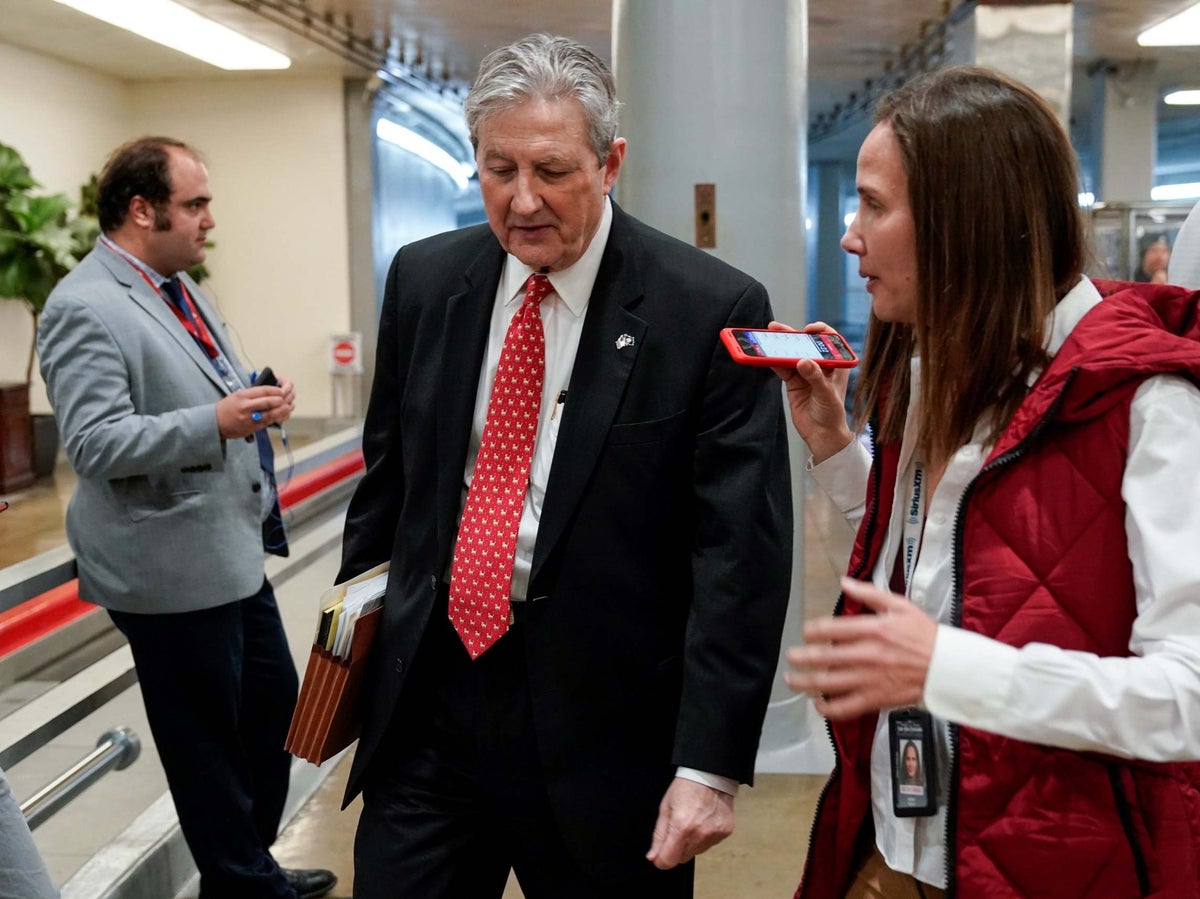
Ke.n.n.e.d.y placed the documents directly beneath the committee cameras.
The fictional confrontation had shifted from broad political arguments to the practical responsibilities of immigration enforcement.
The senator pointed toward the first page.
It contained a timeline showing changes in recorded border encounters across several fiscal years.
The figures fluctuated considerably.
Some periods experienced sharp increases.
Others showed declines.
Ke.n.n.e.d.y asked whether officials had adjusted their operational plans in response to those changes.
The border official explained that agencies had expanded processing capacity and reassigned personnel during periods of increased activity.
They had also worked with other federal agencies to address transportation, shelter, and administrative demands.
Ke.n.n.e.d.y acknowledged those efforts.
But he questioned whether emergency adjustments had become substitutes for a durable border management strategy.
The official responded that immigration enforcement depended on several legal and operational factors.
Those included detention capacity, removal agreements, immigration court proceedings, and cooperation with foreign governments.
Ke.n.n.e.d.y placed his pen on the desk.
“That’s a lot of moving parts.”
He paused.
“But somebody still has to be responsible for making sure the parts work together.”
The committee chairman asked the official to explain how operational success should be measured.
The official described several indicators.
They included encounter trends, processing times, removal outcomes, and the capacity to identify security risks.
Ke.n.n.e.d.y asked whether the department tracked all those measures consistently.
The official answered that different agencies maintained separate operational records.
Their reporting systems served different purposes.
Ke.n.n.e.d.y looked toward the committee analyst.
“Then can Congress see one complete picture of what happens after somebody arrives at the border?”
The analyst explained that producing such a picture required combining information from multiple government systems.
A single encounter record did not necessarily show the entire course of an immigration case.
Some cases involved detention.
Others involved transfer, release under conditions, removal, or further proceedings.
Ke.n.n.e.d.y acknowledged the explanation.
Then he opened the second folder.
Its label read PROCESSING OUTCOMES.
Inside was a hypothetical comparison of encounter totals and subsequent case dispositions.
Several entries contained incomplete information because the cases remained unresolved within the reporting period.
Ke.n.n.e.d.y pointed toward the gaps.
“How is the public supposed to evaluate performance when the outcome isn’t visible in the same report?”
The official answered that cases often continued for months or years after the initial encounter.
Immigration court proceedings could involve appeals and additional legal review.
Ke.n.n.e.d.y acknowledged that the process could be lengthy.
But he argued that delayed outcomes made clear public reporting even more important.
The chairman asked whether a consolidated reporting framework would be feasible.
The analyst suggested that agencies could develop consistent definitions and coordinated reporting schedules.
Such improvements would require technical work and appropriate privacy protections.
Ke.n.n.e.d.y nodded.
“That’s something we can actually measure.”
Then he reached toward the third folder.
Its cover contained the phrase that would define the remainder of the fictional hearing.
SAFE THIRD COUNTRY.
Ke.n.n.e.d.y placed the document on the desk.
He asked the senior immigration official to explain the basic principle.
The official described agreements under which certain asylum seekers could be required to seek protection in another qualifying country.
Such arrangements depended on applicable legal requirements and agreements between governments.
Ke.n.n.e.d.y leaned toward his microphone.
“Then why weren’t those arrangements used more broadly to reduce pressure on our southern border?”
The room became silent.
The official explained that safe-third-country arrangements involved more than identifying another country on a map.
They required legal authority, diplomatic agreements, and appropriate safeguards for people seeking protection.
A receiving country also needed the ability to provide meaningful access to protection procedures.
Ke.n.n.e.d.y listened carefully.
Then he pointed toward the border encounter figures.
“All right, but did the government seriously evaluate whether additional agreements could help?”
The official answered that international cooperation had been part of American immigration policy.
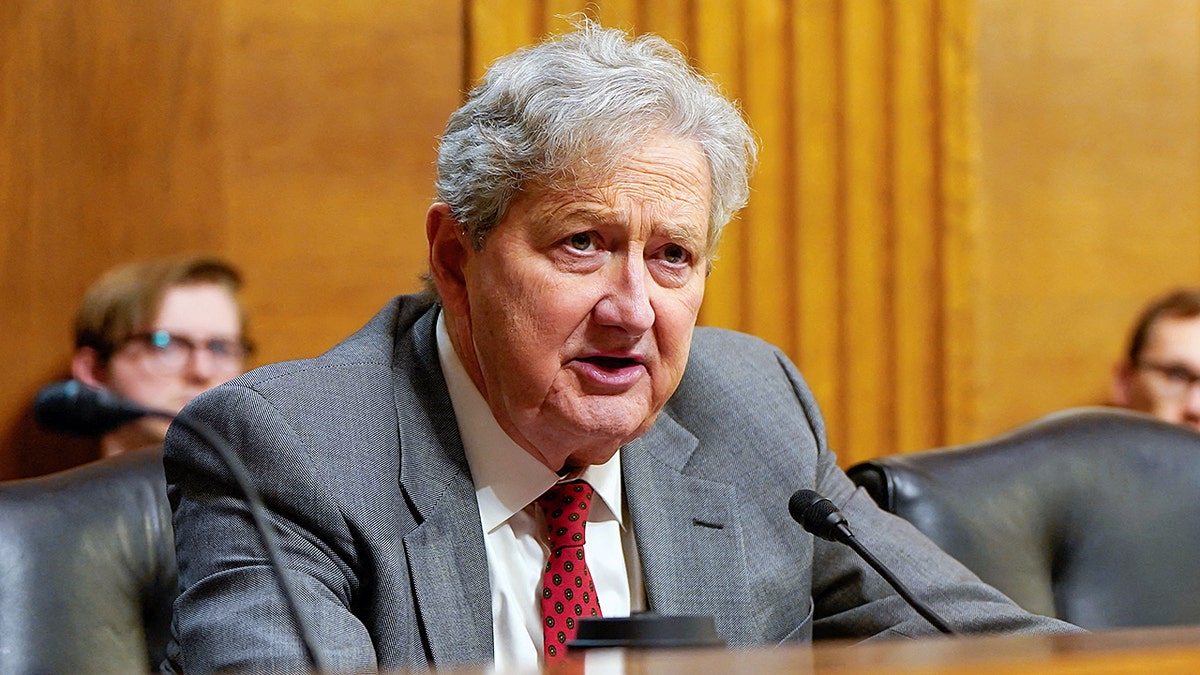
However, different agreements involved different conditions, operational capacities, and legal challenges.
Ke.n.n.e.d.y opened another document.
It concerned the 2019 Asylum Cooperative Agreements involving Guatemala, Honduras, and El Salvador.
Those agreements were associated with efforts to direct certain asylum seekers toward protection procedures in participating countries.
The Biden administration suspended and began terminating the arrangements in 2021.
Ke.n.n.e.d.y pointed toward the historical timeline.
“So there were agreements, and then the government changed course.”
The official acknowledged the policy shift.
But he emphasized that the arrangements had faced criticism concerning the participating countries’ protection systems.
There were also questions about their ability to process asylum claims safely and effectively.
Ke.n.n.e.d.y looked toward the analyst.
“Then tell me what the government concluded those agreements couldn’t accomplish.”
The analyst explained that agreements needed to satisfy applicable legal standards and practical humanitarian requirements.
A country experiencing serious security or institutional challenges might struggle to offer adequate protection.
Ke.n.n.e.d.y nodded.
“But terminating one arrangement doesn’t answer whether a better arrangement could be negotiated.”
The official agreed that governments could consider other forms of international cooperation.
However, any new agreement would require diplomatic negotiations and legal review.
The senator returned to the original encounter chart.
He questioned whether policymakers had explored enough alternatives while border processing systems remained under pressure.
The official responded that international migration involved complicated regional conditions.
Economic instability, insecurity, political repression, and family relationships could influence movement across borders.
Ke.n.n.e.d.y acknowledged those factors.
But he insisted that understanding migration pressures did not eliminate the responsibility to develop workable policies.
The hearing grew increasingly focused.
Ke.n.n.e.d.y’s central criticism concerned the government’s ability to connect policy decisions with measurable operational results.
The officials maintained that enforcement decisions also had to comply with immigration law and international protection obligations.
Neither consideration could simply erase the other.
Then Ke.n.n.e.d.y introduced a hypothetical case file.
The document described an asylum seeker who had traveled through several countries before reaching the United States.
The case raised questions about whether protection had been available elsewhere.
Ke.n.n.e.d.y asked whether a safe-third-country agreement could automatically determine that person’s eligibility for American asylum.
The analyst answered no.
The answer depended on applicable law, the specific agreement, and the individual’s circumstances.
Simply traveling through another country did not automatically establish that a qualifying safe-third-country arrangement applied.
Ke.n.n.e.d.y examined the file.
“So the government needs to know whether the person actually had access to meaningful protection.”
The analyst agreed.
Ke.n.n.e.d.y then asked whether officials maintained reliable information about the availability of such protection.
The official explained that assessments could involve country conditions, diplomatic information, and legal requirements.
Those assessments could change as conditions evolved.
Ke.n.n.e.d.y acknowledged the complexity.
But he argued that complexity should produce better procedures rather than indefinite uncertainty.
The chairman asked the witnesses to clarify another distinction.
A safe-third-country arrangement was not the same as an ordinary agreement to accept returned nationals.
The analyst explained that the two mechanisms served different purposes.
A removal agreement could address returning someone to their country of nationality.
A safe-third-country arrangement concerned certain protection claims involving another country.
Ke.n.n.e.d.y pointed toward the explanation.
“Then we should stop lumping every international agreement into one political argument.”
The official agreed.
The senator opened a fourth folder.
Its label read ENFORCEMENT CAPACITY.
Inside were summaries concerning detention facilities, immigration courts, and federal processing resources.
Ke.n.n.e.d.y asked whether additional international agreements would eliminate the need for domestic enforcement capacity.
The official answered that they would not.
Even effective diplomatic arrangements required screening, documentation, transportation, and legal review.
Immigration officers would still need to process individuals according to applicable requirements.
Ke.n.n.e.d.y nodded.
“Then a safe-third-country policy isn’t some magic switch that makes the border problem disappear.”
The analyst confirmed that conclusion.
However, appropriately structured international agreements could affect the processing options available in particular cases.
The senator examined the records again.
His criticism had become narrower but more concrete.
He wanted officials to explain which policies had been evaluated, why particular arrangements were abandoned, and what alternatives replaced them.
The chairman directed the discussion toward accountability.
Ke.n.n.e.d.y returned to the eight-million figure displayed behind the witnesses.
He asked the analyst to explain why cumulative encounter numbers could be misleading when presented without context.
The analyst described repeat encounters and differences between reporting categories.
A person could be encountered more than once.
An encounter could end in removal, detention, or another administrative outcome.
And the cumulative total did not represent the number of individuals permanently admitted into the United States.
Ke.n.n.e.d.y acknowledged those limitations.
Then he asked whether the encounter figures still demonstrated substantial operational pressure.
The analyst answered that high encounter volumes could strain agency resources.
However, determining the extent of that pressure required examining staffing levels, capacity, and actual processing outcomes.
Ke.n.n.e.d.y pointed toward the documents.
“Then let’s use the numbers correctly and still ask whether the government had a workable plan.”
The official agreed that accurate measurements were essential.
The chairman asked whether the committee could obtain a consolidated assessment of existing international cooperation policies.
The official indicated that relevant information could be gathered through appropriate departmental processes.
Ke.n.n.e.d.y proposed that the assessment identify each major arrangement considered during the reporting period.
He wanted the report to explain which agreements remained operational.
It would also identify arrangements that had been suspended, terminated, or replaced.
The report would describe the legal and practical reasons behind those decisions.
And it would examine whether alternative policies had been evaluated.
The committee analyst suggested including estimates of processing capacity and implementation requirements.
The chairman agreed that those measures could help lawmakers evaluate the consequences of different policy approaches.
But Ke.n.n.e.d.y had another concern.
He wanted to know whether decisions were being evaluated against consistent performance standards.
The official explained that immigration policies pursued multiple objectives.
Those included enforcement, lawful processing, humanitarian protection, and international cooperation.
Ke.n.n.e.d.y acknowledged that those objectives sometimes involved difficult tradeoffs.
But he argued that policymakers should explain those tradeoffs openly.
The senator reached toward the fifth folder.
Its label read POLICY CONSEQUENCES.
The document contained three hypothetical options.
The first involved maintaining existing processing arrangements while increasing operational resources.
The second considered negotiating additional international protection agreements under appropriate legal safeguards.
The third examined changes to domestic processing procedures and case management.
The analyst explained that each option involved different costs, legal questions, and operational consequences.
Ke.n.n.e.d.y asked whether the committee could evaluate the options using common criteria.
The analyst suggested examining processing times, administrative costs, enforceability, and protection outcomes.
The chairman directed staff to prepare a comparison.
That instruction gave the fictional hearing its first measurable result.
The committee would examine alternatives instead of relying exclusively on arguments about border encounter totals.
Ke.n.n.e.d.y returned to the witnesses.
“Folks, I’m not asking you to solve every immigration problem before lunch.”
He paused.
“I’m asking whether we can identify what works, what doesn’t, and why.”
The senior official acknowledged the importance of evaluating government programs.
But he cautioned that international migration patterns could change rapidly.
Policies effective under one set of conditions might become less effective under another.
Ke.n.n.e.d.y agreed that governments needed flexibility.
Then he asked whether flexibility should prevent agencies from explaining their decisions.
The official answered that it should not.
The room grew quieter.
The senator reached for his final folder.
Its cover read ACCOUNTABILITY.
Inside was a summary of the unresolved questions raised during the hearing.
The first concerned the accuracy of encounter statistics.
The second involved processing outcomes.
The third examined international protection agreements.
The fourth concerned enforcement capacity.
The fifth addressed the consequences of changing existing immigration policies.
Ke.n.n.e.d.y placed the summary beside the eight-million figure.
He asked whether anyone could responsibly describe all encounters as successful illegal entries.
The analyst answered no.
He then asked whether officials could dismiss high encounter volumes as meaningless simply because the data included repeat encounters.
The analyst again answered no.
Ke.n.n.e.d.y nodded.
“Good. Then we’ve established that the number matters, but its meaning has to be explained.”
The committee chairman requested a final statement from the senior official.
The official emphasized that immigration management required coordination across federal agencies and foreign governments.
He also acknowledged that accurate data and transparent explanations were important for congressional oversight.
Ke.n.n.e.d.y listened.
Then he returned to his original concern about safe-third-country arrangements.
He asked whether the department could explain what policy alternatives replaced terminated agreements.
The official answered that different international cooperation and domestic processing measures had been pursued.
But a complete assessment would require reviewing the relevant records and implementation details.
Ke.n.n.e.d.y looked toward the chairman.
“Then that’s the information this committee ought to request.”
The chairman instructed staff to prepare a narrowly focused oversight inquiry.
It would request a historical account of major third-country protection arrangements.
The inquiry would also seek explanations of significant policy changes and their operational consequences.
It would distinguish encounter totals from admissions and other case outcomes.
And it would evaluate whether proposed alternatives complied with applicable legal and humanitarian safeguards.
The fictional hearing had produced a concrete request.
But Ke.n.n.e.d.y still had one final question.
He returned to the large display.
The eight-million figure remained visible.
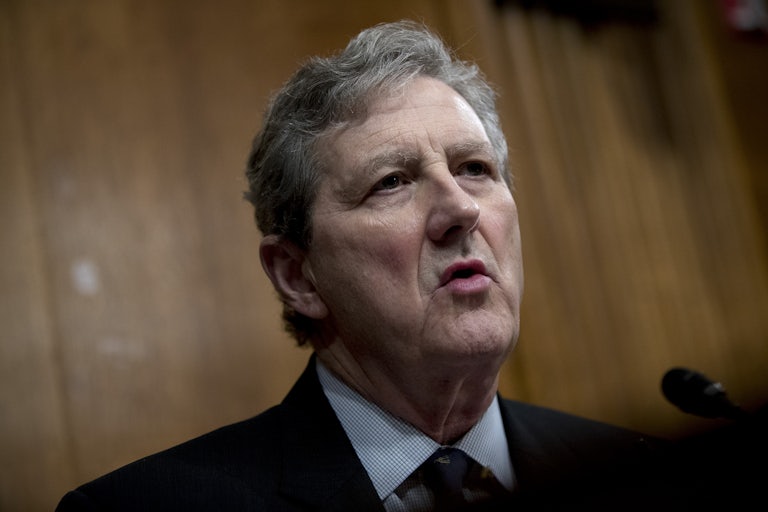
So did the timeline of international protection agreements.
The senator slowly removed his glasses.
He placed them beside the final document.
Then he looked directly toward the senior immigration officials.
“Let me make sure I understand what we’re discussing.”
He paused.
“Millions of encounters placed enormous pressure on the system.”
He pointed toward the agreement timeline.
“Some existing international arrangements were discontinued.”
Then he turned toward the committee’s proposed oversight request.
“And Congress still needs a complete explanation of which alternatives were evaluated and what results they produced.”
The chairman confirmed that those questions fell within the planned inquiry.
Ke.n.n.e.d.y leaned toward his microphone.
Then he delivered his final sentence.
“If millions of border encounters were manageable under your strategy, why can’t you show Americans exactly which policies worked, which failed, and what replaced the agreements you abandoned?”
The fictional chamber fell silent.
The senior official responded that a complete answer required examining records across multiple agencies and reporting periods.
He maintained that immigration policy could not be evaluated through a single cumulative statistic.
Ke.n.n.e.d.y acknowledged the limitation.
But he insisted that complicated statistics strengthened the need for transparent explanations.
The chairman closed the hearing.
The encounter totals remained on the screen.
The safe-third-country agreement timeline remained beside them.
No witness had established that eight million different people had successfully entered and remained in the United States.
Nor had the hearing proven that a single international agreement could resolve every border management challenge.
But the committee had identified several questions requiring documentary answers.
How effectively had authorities managed unusually high encounter volumes?
What happened to individuals after their initial encounters?
Which international protection arrangements had been considered?
Why had particular agreements been terminated?
And what alternative measures had been implemented afterward?
Those questions formed the basis of the committee’s proposed review.
The fictional confrontation had begun with a dispute over the government’s handling of the southern border.
It ended with a demand for clearer information about policy choices and their measurable consequences.
Ke.n.n.e.d.y gathered his folders.
The immigration officials collected their briefing materials.
The chairman dismissed the witnesses while the reporting requirements remained under consideration.
The number on the screen had sparked the confrontation.
But the most consequential question concerned the decisions made behind that number.
A border strategy could not be evaluated solely through dramatic descriptions of migration.
It required reliable statistics, workable enforcement procedures, and clear explanations of government decisions.
International agreements could play a role.
So could domestic processing reforms, adequate resources, and cooperation with regional partners.
But every proposed solution needed evaluation against the same standards.
The public deserved to know what government agencies had attempted.
They also deserved to understand what those efforts actually accomplished.
Because managing the southern border requires more than defending a strategy in front of Congress; it requires showing Americans how that strategy performs when confronted with reality.
