
Jimmy Kimmel turned a personal attack from the White House into another nationally televised confrontation, transforming an insult about his intelligence into a pointed comedy routine targeting President Donald Trump.
The controversy erupted after White House spokesperson Davis Ingle accused the ABC comedian of suffering from severe “Trump Derangement Syndrome” and possessing a “peanut-sized brain.”
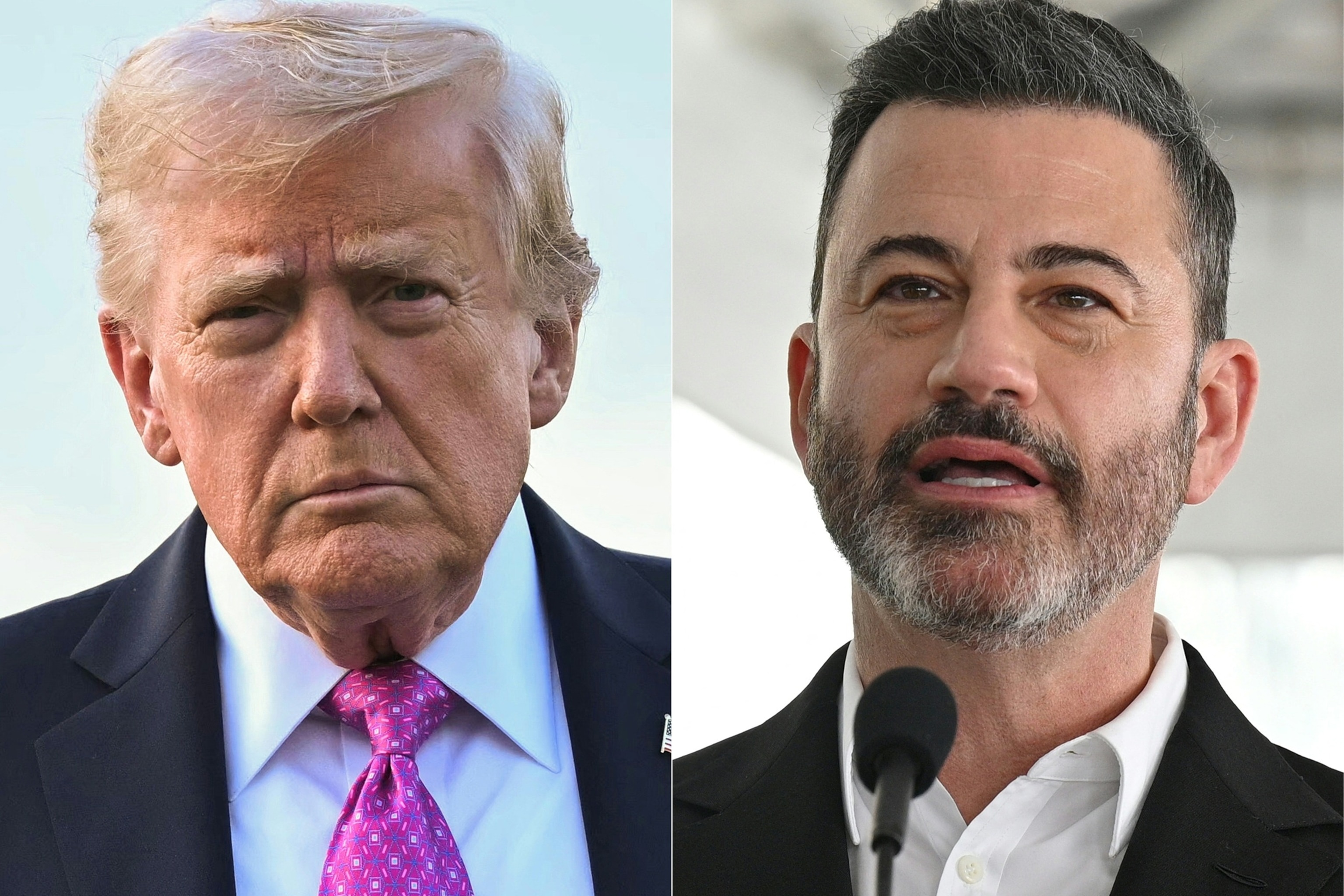
Instead of ignoring the insult, Kimmel read the administration’s statement directly to his studio audience on November 9, setting up a response that immediately redirected attention toward Trump himself.
But the most memorable moment came when Kimmel stopped mocking the spokesperson and introduced archival footage of the president struggling with a scientific phrase during a public appearance.
The comedian’s decision turned a personal insult into a broader exchange about presidential communication, political criticism, and the increasingly hostile relationship between the administration and late-night television.
The confrontation was not an isolated disagreement. It followed weeks of public exchanges involving Kimmel, the White House, and administration officials who had repeatedly criticized his political commentary.
Ingle’s statement accused Kimmel of allowing his opposition to Trump to overwhelm his judgment, while also claiming that the comedian’s television ratings demonstrated declining public interest.
The language was striking because it came from an official White House representative rather than an ordinary political commentator responding to a television joke.
Kimmel seized on that distinction, suggesting that the administration had become so preoccupied with criticizing him that even junior officials were now participating in the dispute.
During his November 9 monologue, he sarcastically referred to Ingle as “Davis Dingle,” continuing a mocking nickname he had previously used when discussing the spokesperson.
The comedian then treated the official statement as though it were an amateur attempt at competitive insult comedy, responding with a deliberately dismissive “Sick burn, bro.”
He suggested that Ingle should consider entering a rap battle, turning the administration’s aggressive language into material for a joke about its supposed lack of originality.
But Kimmel had another response prepared, one that would shift the focus from the spokesperson’s words to the president’s own performance before television cameras.
After repeating the allegation that he possessed an impossibly small brain, Kimmel questioned what would happen if someone actually tried operating a human body with such limited capacity.
The broadcast then cut to footage of Trump speaking at NASA’s Kennedy Space Center in Florida, where the president had stumbled while pronouncing the phrase “human genome.”
Kimmel used the clip as the punchline, implying that the administration’s insult could just as easily be redirected toward its own leader.
The exchange was unmistakably satirical, relying on a brief public speaking error rather than providing any medical or scientific assessment of Trump’s cognitive abilities.
Nevertheless, the footage gave Kimmel a recognizable response to the attack, allowing viewers to hear the president’s words rather than simply accepting another round of political insults.
The joke also illustrated a recurring feature of Kimmel’s approach: using existing video recordings to challenge the rhetoric of political officials who criticize him.
For the White House, however, the disagreement involved more than an isolated comedy routine, reflecting frustration over Kimmel’s repeated attacks on Trump’s leadership and public behavior.
Ingle defended the administration’s position by portraying the comedian as increasingly consumed by criticism of the president and questioning his ability to attract an audience.
The administration’s allegations about declining ratings formed part of its broader attack, although those claims require television audience data and context before they can be evaluated independently.
Kimmel, meanwhile, treated the suggestion that the White House needed to critique his entertainment career as another opportunity for comedy.
The personal exchange had already developed into a recognizable pattern during October, when Ingle publicly dismissed Kimmel as lacking the talent necessary to sustain a successful television program.
Kimmel responded during his October 15 broadcast by displaying the spokesperson’s photograph and making jokes about his youthful appearance and unusually elaborate insults.
That earlier statement accused Kimmel of misleading viewers, attracting declining ratings, and embarrassing himself through his persistent criticism of the administration.
Rather than responding through a formal defense of his career, Kimmel incorporated the allegations into his next monologue and challenged the spokesperson to evaluate additional jokes.
The encounter established a familiar rhythm: Kimmel criticized Trump, the White House responded with personal language, and the comedian turned that response into another television segment.
By November, the exchange had become self-sustaining, with each new statement providing material for the other side’s next public appearance.
The latest confrontation emerged amid additional controversy surrounding Trump’s appearance on 60 Minutes, where the president answered questions about his administration, political priorities, and personal beliefs.
During the November 8 interview, journalist Ross Douthat asked Trump about the afterlife and whether he believed he would eventually go to heaven.
Trump described himself as religious and expressed hope about his ultimate destination, while acknowledging that he did not want to go to hell.
Kimmel responded by turning the president’s answer into another darkly comic exchange, invoking familiar religious language before making an unmistakably provocative joke about Trump’s possible fate.
His comments were presented as comedy rather than a theological judgment, but they added to the contentious atmosphere surrounding the administration’s response to his television program.
The White House’s criticism therefore arrived during a period when Kimmel was repeatedly using Trump’s own interviews and speeches as material for political satire.
The confrontation continued on November 11, when the comedian questioned another administration explanation involving a laugh heard during Trump’s surprise telephone appearance on C-SPAN.
Kimmel had previously played a recording of the president calling the network, noting that a woman’s laugh could apparently be heard as the conversation began.
The comedian speculated that the laughter might have come from Trump aide Natalie Harp, whose responsibilities reportedly included helping arrange communications for the president.
The White House disputed that interpretation, explaining that the sound came from a previous caller whose audio connection had not yet been disconnected.
Kimmel questioned the explanation, pointing to details in the recording and joking that the administration had turned an insignificant sound into an unexpectedly elaborate controversy.
He humorously referred to the dispute as “Gigglegate,” suggesting that the White House’s willingness to respond had made a relatively minor moment more interesting.
The administration again rejected Kimmel’s interpretation, and Ingle repeated the familiar accusation involving Trump Derangement Syndrome and the comedian’s supposedly limited intelligence.
That repetition demonstrated how the disagreement had developed beyond one insulting statement into an ongoing dispute about who controlled the interpretation of Trump’s public appearances.
For Kimmel, the White House’s repeated responses became evidence that his jokes were receiving attention inside an administration confronting significant national and international responsibilities.
For Ingle, the exchanges offered opportunities to reject Kimmel’s criticisms and portray the comedian as an unreliable commentator motivated by hostility toward the president.
Neither position established the other’s private motivations, but their public statements revealed a relationship increasingly defined by personal rhetoric rather than disagreements over specific policies.
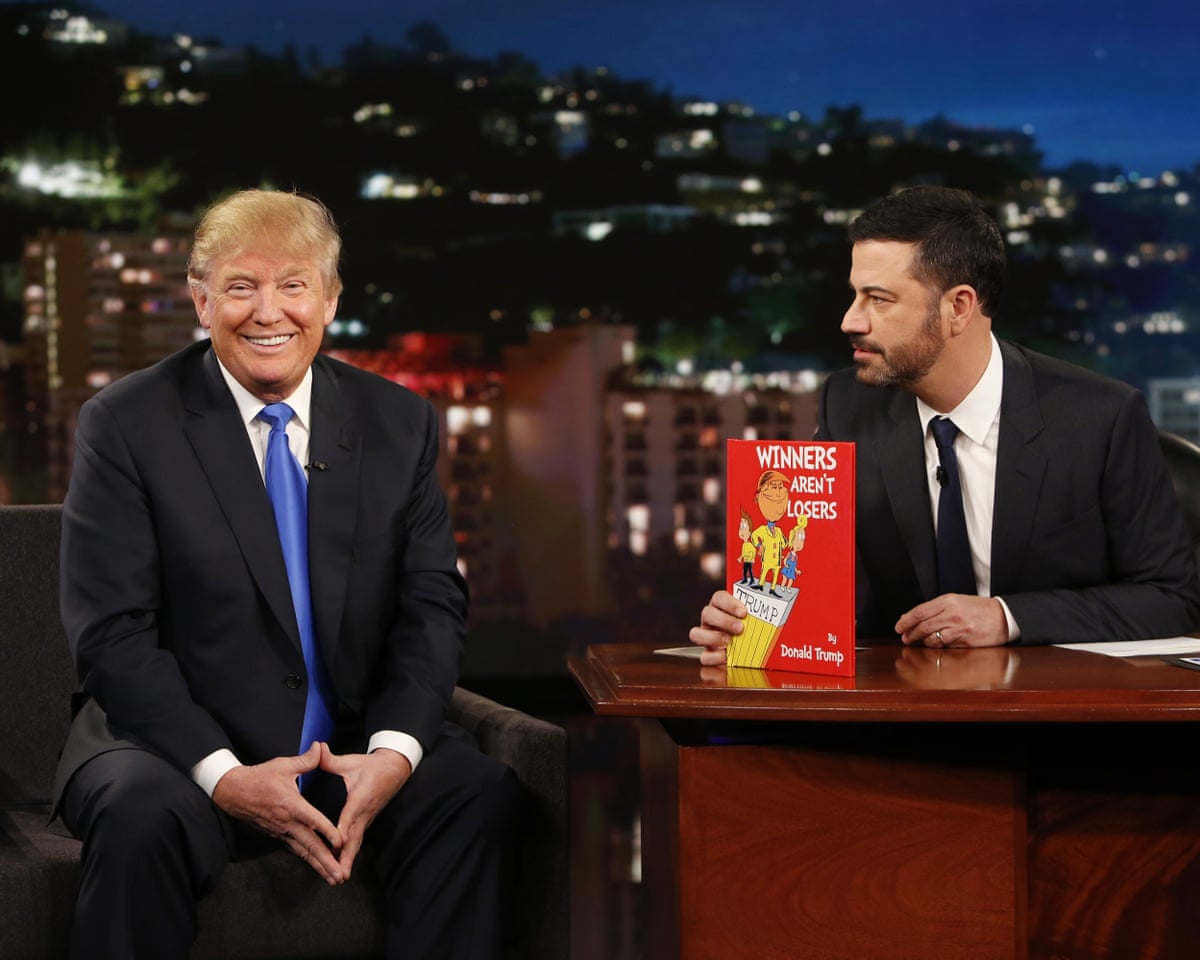
The dispute also attracted attention because Kimmel had already experienced a significant confrontation with ABC and political officials during the previous year.
In September 2025, ABC temporarily suspended Jimmy Kimmel Live! following controversy surrounding comments the comedian made about reactions to the killing of conservative activist Charlie Kirk.
The suspension produced widespread disagreement about television networks, corporate responsibility, political pressure, and the limits of protected expression in American public debate.
Federal Communications Commission Chairman Brendan Carr’s public comments during that controversy increased scrutiny of whether government officials were exerting inappropriate pressure on broadcasters.
ABC eventually restored Kimmel’s program, but the episode left lasting questions about the relationship between political power and commercial television decisions.
That history gave the latest White House statements additional significance, particularly because they came from an administration whose officials had previously criticized the comedian’s continued presence on television.
The present controversy did not establish that ABC faced a new formal regulatory threat, but it illustrated how directly the administration remained engaged with Kimmel’s criticism.
The distinction matters because a political official criticizing a comedian is not automatically equivalent to government censorship, even when the criticism is unusually personal.
Likewise, broadcasters and entertainers retain the ability to answer political attacks publicly, an established tradition within American satire and political commentary.
Kimmel’s willingness to broadcast Ingle’s statement in full enough to preserve its central accusations demonstrated how criticism from government officials could become part of his program.
The White House, meanwhile, continued using its communications operation to challenge the comedian’s credibility, suggesting that it regarded his repeated attacks as worthy of official responses.
The intensity of the dispute also raised questions about whether personal insults help the public understand political disagreements or simply create another cycle of attention.
A statement about television ratings does not resolve criticism of government policy, just as a joke about a speaking mistake does not establish whether an administration’s decisions are effective.
Both sides were competing for public attention through language designed to be memorable, immediately recognizable, and easily circulated beyond the original broadcast.
The broader late-night television landscape has made such exchanges increasingly common, particularly as comedians rely on short digital clips to reach audiences outside traditional network schedules.
An exchange that once might have remained confined to a single evening’s broadcast can now circulate across multiple platforms, attracting reactions from viewers with sharply different political perspectives.
Supporters of Kimmel may view the confrontation as an example of comedy challenging government authority, while Trump supporters may regard the comedian’s repeated criticism as excessive.
Those different interpretations reveal how political satire functions in a polarized environment, where audiences frequently evaluate humor through existing opinions about the public figures involved.
The November exchange became especially notable because the White House did not simply dispute a specific joke or factual assertion made during Kimmel’s monologue.
Instead, its spokesperson attacked the comedian personally, questioned his intelligence, and criticized the commercial performance of his television program.
Kimmel’s response mirrored that confrontational tone, but used exaggeration, wordplay, and video footage rather than presenting a formal political rebuttal.
The result was a continuing argument in which the original disagreement became less important than the increasingly inventive ways both sides criticized each other.
Further developments during November reinforced the impression that Kimmel had no intention of reducing his political commentary simply because administration officials objected.
During another monologue, he questioned a gracious letter Trump had reportedly left for former President Joe Biden, suggesting that its polished language contrasted with Trump’s familiar public communication style.

The comedian joked about the possibility that someone else had drafted the letter, while the White House again characterized his criticism as evidence of personal hostility.
There was no established proof that Trump had not written or approved the message, and Kimmel’s speculation was part of his comedic treatment of the document.
Nevertheless, the exchange demonstrated how the dispute extended into different subjects while retaining the same central characters and personal accusations.
By November 19, the documented back-and-forth had become an example of the unusual relationship between presidential communications and entertainment programming during Trump’s second administration.
The most revealing aspect was not whether Kimmel had delivered the funniest joke or whether the spokesperson had written the sharpest insult.
It was the extent to which an official White House response had become recurring material for a national television program built partly around mocking the administration.
The dispute also illustrates why original footage matters, because viewers can assess the context of Trump’s speaking mistake and Kimmel’s response without relying exclusively on dramatic descriptions.
A brief stumble during a speech may be suitable material for comedy, but it does not independently establish broader claims about a person’s intelligence or fitness.
Similarly, an aggressive statement from a political spokesperson can reveal the administration’s position without automatically demonstrating that criticism has damaged the comedian’s professional standing.
The documented facts establish that Ingle made the personal accusation, Kimmel responded during his November 9 broadcast, and additional exchanges followed.
They do not establish that the president personally directed each statement, nor that the back-and-forth caused demonstrable changes in television ratings or public opinion.
For American viewers, the episode offers a revealing example of how political power, entertainment, and personal rivalry can become intertwined in modern media coverage.
The central controversy began with a White House official questioning a comedian’s intelligence, only for that comedian to respond by broadcasting a memorable example of presidential verbal difficulty.
Kimmel’s decision turned the administration’s own terminology into the framework for his punchline, creating another round of attention around a dispute neither side appeared eager to abandon.
Yet the larger significance extends beyond a single insult, raising questions about the value of government communications and the role of satire in challenging powerful officials.
The White House has the ability to contest inaccurate commentary, while comedians retain the freedom to criticize its statements and public conduct through humor.
When those exchanges become increasingly personal, audiences must distinguish entertainment, political advocacy, and factual claims instead of treating every sarcastic remark as an objective conclusion.
For now, the “peanut-sized brain” controversy remains a documented exchange of personal criticism, comedy, and countercriticism rather than evidence of any larger official action against Kimmel.
And the final irony is that the White House’s attempt to ridicule the comedian supplied him with precisely the material he needed for another nationally televised joke.
