
John Kennedy and Amy Klobuchar: The Senate Judiciary Showdown Behind the Viral Claim
A tense Senate Judiciary Committee hearing on September 29, 2026, produced a series of sharp exchanges over the Justice Department, the investigations of Donald Trump, and allegations of political abuse. Among the lawmakers drawing attention were Republican Senator John Kennedy and Democratic Senator Amy Klobuchar. But the most revealing moment was not a direct confrontation between the two. It came when Klobuchar challenged a Republican colleague over evidence presented against former special counsel Jack Smith.
The hearing centered on Smith’s investigations into Trump’s efforts to overturn the 2020 presidential election and his handling of classified government documents. Republicans accused the former special counsel of weaponizing federal law enforcement against a political opponent, while Democrats argued that the hearing was being used to discredit an investigation rather than examine the underlying conduct that prompted it.

Kennedy took an aggressive approach to questioning Smith. He focused on the collection of telephone records belonging to members of Congress during the investigation into Trump’s actions surrounding January 6, 2021. The senator questioned why Smith had sought those records, whether Democratic and Republican lawmakers were treated differently, and whether the legal process had respected constitutional protections.
Smith explained that investigators had obtained non-content telephone records, commonly known as toll records. These records can reveal who communicated with whom, along with the timing and duration of communications, but do not provide the contents of conversations. He maintained that the information was relevant to reconstructing communications involving the White House and members of Congress during the period surrounding the certification of the 2020 election.
Kennedy was not persuaded by the explanation. He challenged Smith’s legal reasoning and questioned whether the special counsel had adequately informed the court about the scope of the records being sought. At one point, Kennedy invoked constitutional protections and accused Smith’s investigation of damaging public confidence in the justice system.
The exchange reflected a broader Republican argument that the Justice Department had crossed institutional boundaries in pursuing Trump and his political allies. Smith rejected the accusation that his work was partisan. He maintained that his decisions were based on evidence and that he would apply the same standards regardless of whether the subject of an investigation was a Republican or a Democrat.
The hearing became even more contentious when Republican Senator Eric Schmitt questioned Smith about his whereabouts in February 2024. Schmitt presented text messages that he said suggested the former special counsel had attended an Atlanta Hawks basketball game in Atlanta. He connected the alleged trip to the controversy surrounding Georgia prosecutor Fani Willis and her investigation of Trump.

Smith denied attending the Atlanta game. He explained that he had attended a different basketball event: a University of Maryland women’s game against the University of Iowa, where basketball star Caitlin Clark was playing. The distinction was significant because the game took place in College Park, Maryland, not Atlanta.
Schmitt nevertheless continued to challenge Smith’s account, suggesting that the messages raised questions about his credibility. He eventually called the former special counsel a “total dirtbag,” a personal accusation that immediately drew attention from other members of the committee.
That was when Klobuchar intervened.
The Minnesota Democrat questioned why Schmitt had presented the messages without giving Smith a proper opportunity to examine them. She also demanded that the witness receive a copy of the material being used against him. As a former prosecutor herself, Klobuchar argued that it was inappropriate to display selected information, make a serious accusation, and then remove the evidence before the witness could review it.
She then addressed the apparent confusion over the basketball teams. The Iowa Hawkeyes and the Atlanta Hawks have similar names, but they are entirely different teams. Smith’s explanation that he had attended the Iowa game in Maryland directly addressed the central claim being made against him.
Klobuchar told the committee that senators should have their facts straight before accusing someone of being a “dirtbag.” She also questioned why the witness had not been given the opportunity to inspect the documents properly.
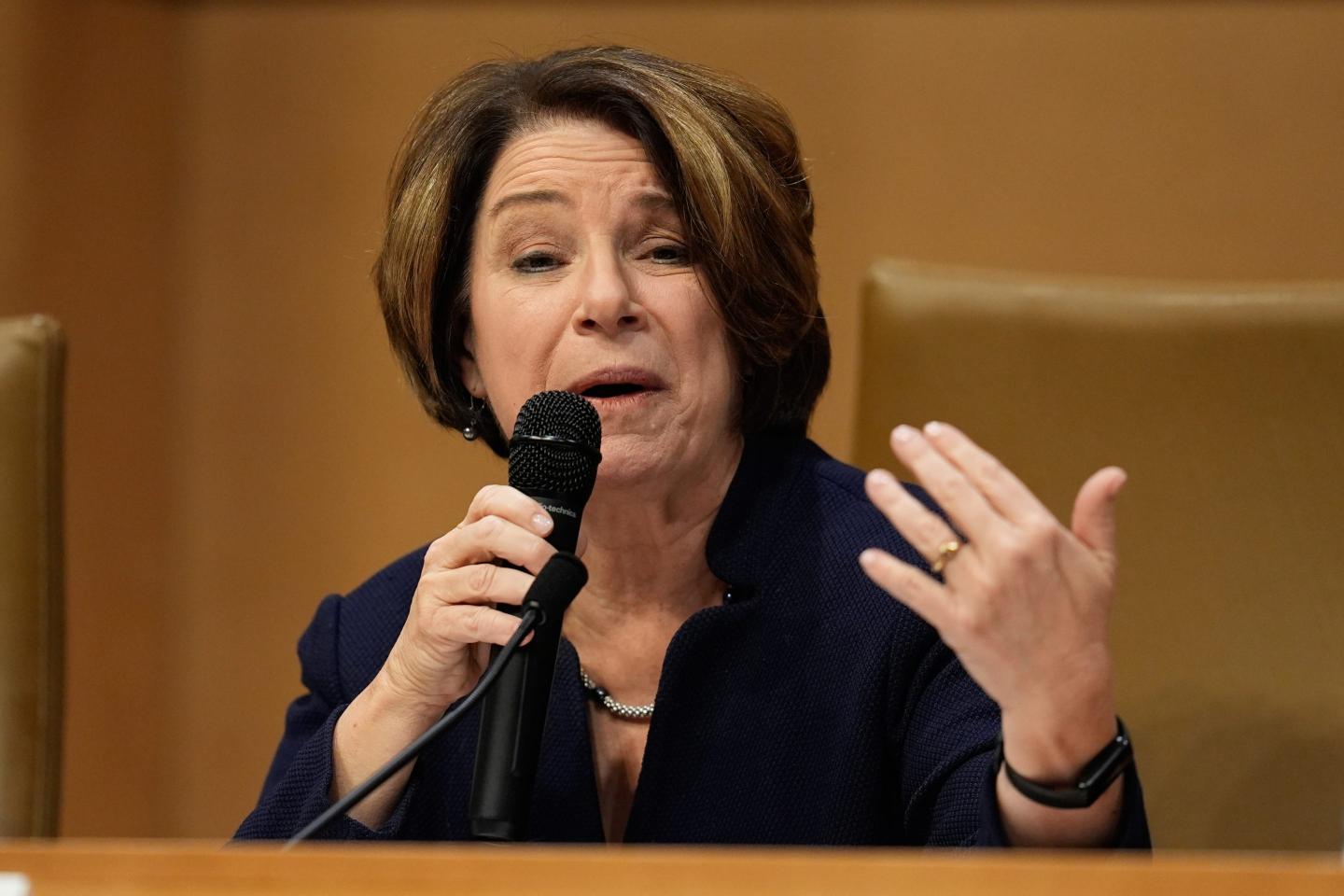
Her intervention turned the exchange into a dispute about the standards of congressional oversight. The issue was no longer simply whether Smith’s account was credible. It was also whether committee members had an obligation to share evidence, verify details, and allow witnesses to respond before making serious public accusations.
The disagreement continued after the hearing. On October 7, Senate Judiciary Committee Democrats, led by Senator Dick Durbin, sent a letter to Chairman Chuck Grassley demanding that all committee records used during the hearing be provided to the minority. They argued that documents presented by Schmitt and Senator Josh Hawley had not been shared with Democratic members or their staff in advance.
The letter cited Senate Judiciary Committee rules requiring access to committee records and argued that withholding the material had prevented Democrats from properly preparing their responses. It also criticized the use of the documents during the hearing, particularly given the confusion surrounding the basketball-game allegation.
The dispute highlighted a deeper disagreement about the committee’s responsibilities. Republicans maintained that Smith’s investigation deserved aggressive scrutiny, particularly because it involved sensitive questions about congressional phone records and the authority of federal prosecutors. Democrats countered that oversight could not be credible if evidence was selectively presented or withheld from committee members.
Smith’s testimony also carried consequences beyond the hearing room. His two federal cases against Trump had been abandoned after Trump won the 2024 election, following longstanding Justice Department policy against prosecuting a sitting president. Republicans continued to argue that the investigations had been politically motivated, while Smith defended the decisions he had made as special counsel.
The September hearing therefore became another chapter in the ongoing conflict over the independence of the Justice Department and the limits of congressional oversight. Kennedy’s questioning reflected Republican concerns about investigative authority and constitutional protections. Klobuchar’s intervention focused on the accuracy and transparency of the evidence used against a witness.
Although viral posts have portrayed the episode as a direct showdown in which Kennedy silenced Klobuchar with a stack of official records, the available hearing transcript does not support that description. Kennedy questioned Smith, while Klobuchar challenged Schmitt’s handling of the basketball-game allegation. Their exchanges were part of the same contentious hearing, but they were not the dramatic personal confrontation described online.
The larger questions remain important. How should Congress investigate the conduct of federal prosecutors? What safeguards should apply when investigators seek lawmakers’ communications records? And what standards should committee members follow when presenting evidence and making accusations in public?
Those questions cannot be answered by a viral clip alone. They require careful examination of the hearing record, the documents involved, and the legal arguments presented by both sides. The September 29 proceedings demonstrated just how sharply divided the Senate remains over the Justice Department’s role in American politics — and how quickly disputes over evidence can become disputes over the credibility of the institution itself.
