
John Kennedy Turns Chuck Schumer’s Own Words Against Him in the Senate Filibuster Debate
A political argument over the future of the Senate’s legislative rules took an unexpected turn on January 11, 2022, when Republican Senator John Kennedy used the words of Democratic Leader Chuck Schumer himself to challenge the Democratic Party’s push to weaken the filibuster.
Speaking on the Senate floor, Kennedy did not focus on a presidential veto or accuse Schumer of attempting a coup. Instead, he revisited a statement Schumer had made in 2005, when the Democratic senator had warned that eliminating the Senate’s 60-vote threshold could undermine the institution’s constitutional balance.
The contrast was central to Kennedy’s argument. More than a decade earlier, Schumer had defended the importance of procedural protections that prevented a simple majority from exercising unrestricted control over the Senate. In 2022, however, he was leading an effort to change those same rules to advance Democratic voting-rights legislation.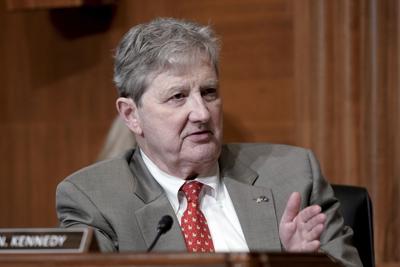
Kennedy used Schumer’s earlier remarks to question what he viewed as a reversal of principle. His message was straightforward: if the Senate’s procedural safeguards were essential when Democrats were in the minority, why should those protections suddenly become unacceptable when Democrats controlled the chamber?
The dispute reflected one of the most consequential institutional debates of the Biden presidency. Democrats argued that the filibuster had become an obstacle to protecting voting rights and that the Senate should not allow a minority of senators to block legislation supported by a majority. Republicans countered that changing the rules would weaken an important safeguard and allow whichever party controlled the Senate to impose its agenda with fewer constraints.
At the center of the disagreement was the legislative filibuster, a Senate procedure that allows extended debate and, in practice, often requires 60 votes to advance legislation toward a final vote. Although the Constitution does not establish a 60-vote requirement for ordinary legislation, Senate rules and precedents have made the threshold a defining feature of the modern institution.
Kennedy’s January 2022 speech relied heavily on Schumer’s own description of the dangers associated with eliminating that threshold. He quoted the Democratic leader’s 2005 warning that changing the rules could create a constitutional crisis and undermine the checks and balances that had shaped the Senate.
One particular idea became the centerpiece of Kennedy’s argument: winning 51 percent of the vote should not mean obtaining 100 percent of the power.
For Kennedy, that principle was not merely a procedural technicality. He argued that the United States was a diverse country whose political institutions needed to accommodate competing interests, regional differences and shifting majorities. A Senate controlled by one party should not necessarily have the ability to impose every legislative priority simply because it held a narrow numerical advantage.
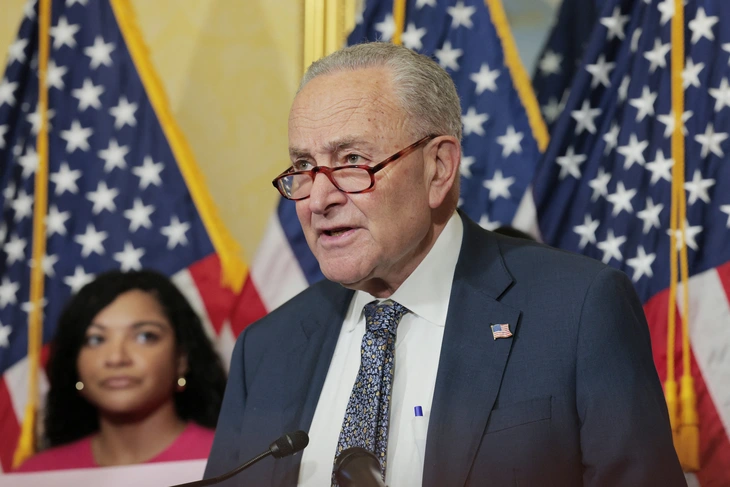
The argument reflected a longstanding defense of the Senate as a chamber designed to operate differently from the House of Representatives. Senators serve longer terms, represent entire states and work within procedures that frequently require broader agreement than a simple majority.
Democrats, however, viewed the issue through a different lens. They argued that the filibuster had increasingly been used to prevent action on legislation addressing access to voting, campaign finance and other national priorities. For supporters of reform, maintaining the existing threshold meant allowing a minority of senators to prevent measures supported by a majority from receiving a final vote.
The voting-rights debate made those differences especially pronounced. Following the 2020 election and the January 6 attack on the Capitol, Democrats argued that federal legislation was necessary to establish stronger protections for voting access and prevent state-level restrictions from disproportionately affecting certain voters.
Republicans disputed both the need for the proposed legislation and the effort to change Senate procedures to pass it. They argued that election administration traditionally involved significant state authority and that federal intervention could create new problems rather than resolve existing ones.
The Senate’s narrow partisan balance made the disagreement even more difficult to resolve. Democrats held only a slim majority, and several members of their own party expressed reservations about eliminating or weakening the filibuster. Without unanimous Democratic support, Schumer could not secure the necessary votes for the proposed procedural change.
Kennedy’s decision to quote Schumer’s earlier remarks was therefore politically significant. Rather than presenting the dispute as a simple Republican-versus-Democratic disagreement, he framed it as a question of whether political principles should remain consistent when control of the Senate changes hands.
The historical record gave his argument a clear foundation. Schumer had previously defended the filibuster when Democrats faced the prospect of Republican control and had warned against allowing a simple majority to change the Senate’s institutional structure for immediate political advantage.
But the two situations were not identical. Supporters of reform argued that the political environment had changed and that the Senate’s rules should not prevent action on fundamental voting protections. They also pointed out that the filibuster itself was a Senate rule rather than an immutable constitutional requirement.
This distinction is important. The filibuster is not the same as the constitutional process for overriding a presidential veto. A veto override requires a two-thirds vote in both the House and Senate, while ending debate through the ordinary legislative filibuster generally requires three-fifths of senators duly chosen and sworn.
The procedures serve different purposes and operate under different legal authorities. Confusing them can obscure the real disagreement about how the Senate should function and what level of bipartisan support should be required for major legislation.
The January 2022 debate ultimately demonstrated how difficult it is to change the Senate’s institutional rules, even when one party believes that doing so is necessary to fulfill its legislative promises. The voting-rights proposals remained blocked, and the effort to change the filibuster rules failed to secure the necessary support.
For Kennedy, the episode offered an opportunity to highlight what he considered an inconsistency in Schumer’s position. His speech drew attention to the tension between the Democratic leader’s earlier defense of procedural restraint and his later effort to reduce the influence of the minority party.
For Schumer and other Democrats, the priority was different: they believed that the Senate’s rules should not prevent legislation intended to protect voting rights from advancing when a majority supported it.
The disagreement was not resolved by a dramatic courtroom-style confrontation or a stack of bipartisan roll-call records placed on a desk. It unfolded through speeches, procedural votes and competing interpretations of the Senate’s responsibilities.
Yet the underlying question remains relevant to American politics: should a Senate majority be able to advance its legislative agenda with fewer procedural obstacles, or should the institution preserve rules that require broader agreement even when those rules prevent legislation from passing?
Kennedy’s use of Schumer’s own words captured the central tension. Political leaders frequently defend institutional safeguards when those safeguards protect their interests, but their positions can become more complicated when the same rules obstruct their priorities.
That tension is not unique to either party. It is part of the continuing struggle over how much power a temporary majority should exercise and how much protection a political minority should retain.
The debate over the filibuster was therefore about more than one piece of legislation. It exposed competing visions of representation, constitutional restraint and the balance of power in the United States Senate — questions that continue to shape the country’s legislative battles long after the January 2022 speeches ended.
