
John Kennedy and Alejandro Mayorkas: The Senate Border Showdown Behind the Viral “Final Knockout” Claim
A tense Senate exchange between Republican Senator John Kennedy and Homeland Security Secretary Alejandro Mayorkas became one of the more memorable moments of a March 2023 congressional hearing on border security. Kennedy challenged Mayorkas over his repeated assertion that the southern border was secure, demanding that the secretary explain whether the administration was achieving meaningful results rather than simply describing its efforts.
The confrontation was real. The dramatic online version, however, adds details that the official record does not support. There is no verified evidence of a second, decisive exchange in which Kennedy produced previously hidden documents, dismantled Mayorkas’s entire defense in less than 20 seconds or left the hearing room paralyzed. Nor is there evidence that the media attempted to suppress the footage.

The actual hearing, held on March 28, 2023, before the Senate Judiciary Committee, offers a substantial exchange in its own right. It began with Kennedy asking Mayorkas about the administration’s position on banning private ownership of assault weapons. The secretary supported a ban but struggled to provide a precise definition when Kennedy pressed him for one.
The senator quickly turned to immigration. He asked a direct question: Was the southern border secure? Mayorkas replied that he had addressed the issue earlier in the hearing and began explaining that, when he spoke about border security, he was referring to maximizing available resources to achieve the most effective results.
Kennedy challenged that explanation. If the border was secure because the department was trying to secure it, he asked, was the administration actually succeeding? Mayorkas responded by describing the resources being deployed and the department’s focus on enforcement. Kennedy interrupted with a blunt assessment: “But you are not succeeding.”
The secretary attempted to widen the discussion, explaining that migration pressures were affecting the entire Western Hemisphere rather than the United States alone. Kennedy rejected that framing, reminding him that his responsibility was to worry about the United States. Mayorkas answered that the same responsibility belonged to him.
The exchange became more pointed as Kennedy presented a series of claims about illegal immigration under the Biden administration. He cited record numbers of encounters, people entering the country illegally, individuals who evaded apprehension and asylum applicants whose claims had been rejected but who had not been deported. He also raised the issue of fentanyl entering the country.
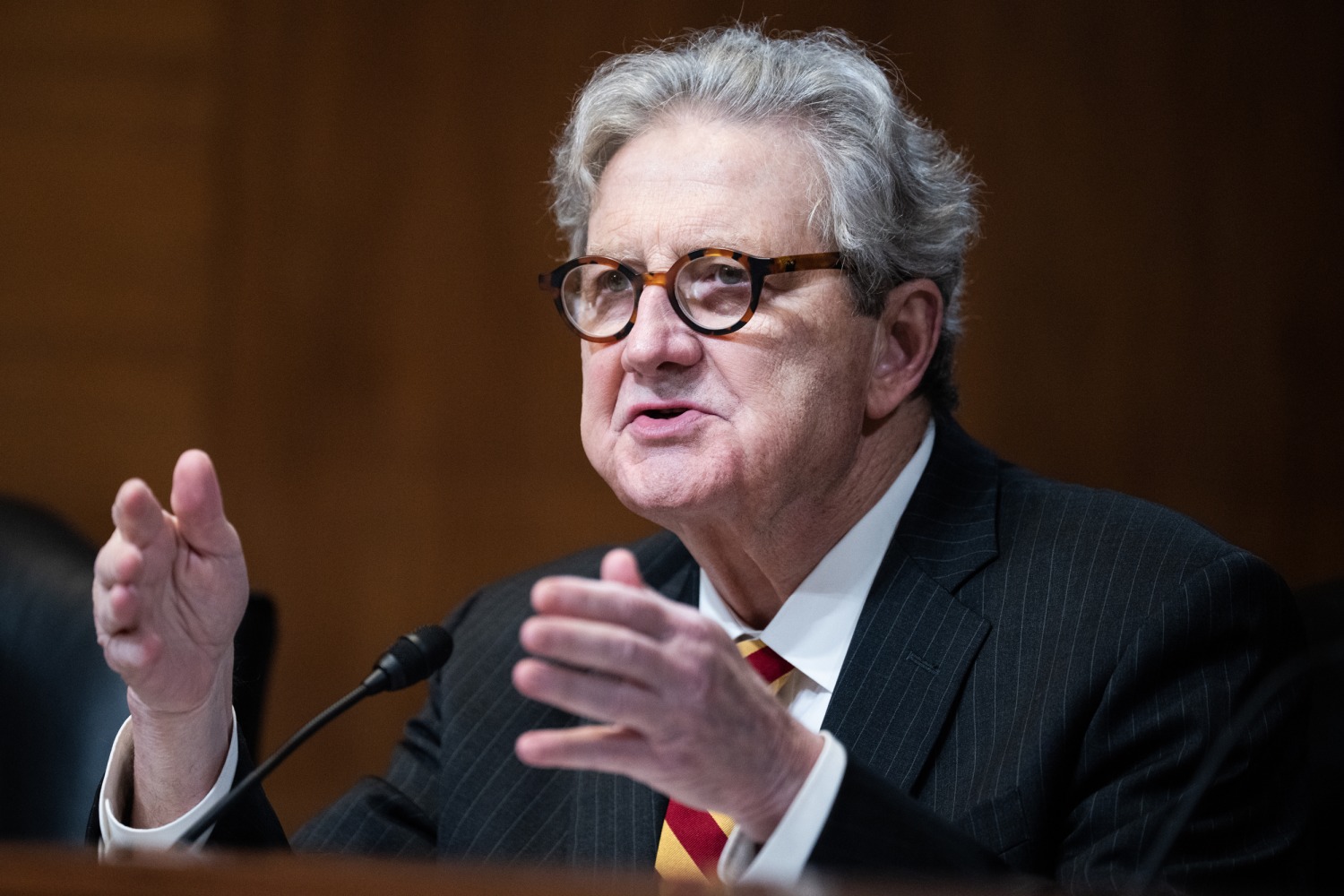
Kennedy’s central argument was that the administration could not establish the success of its border policy merely by describing the amount of work being done. He wanted the secretary to address the results. His question was not simply whether DHS was attempting to secure the border, but how Mayorkas could continue describing it as secure amid the figures Kennedy had presented.
Mayorkas responded with a different set of measurements. He cited approximately 1.4 million people expelled or removed from the southern border during the previous year, which he described as the highest number ever recorded. He argued that these enforcement outcomes demonstrated the department’s commitment to border security.
Kennedy was unconvinced. He acknowledged that the secretary was focused on the issue but repeated that the administration was not succeeding. Mayorkas attempted to provide another example, explaining that a new policy approach had produced a significant decline in encounters involving nationals from four countries: Cuba, Haiti, Nicaragua and Venezuela.
According to Mayorkas, encounters between ports of entry involving nationals from those countries had declined by approximately 95 percent following the measures introduced on January 5. He argued that the result demonstrated the effectiveness of the administration’s approach and questioned why the policy was being opposed.
Kennedy interrupted before the secretary could fully develop the explanation. He complained that Mayorkas was taking too long to answer and told him not to filibuster. The senator then delivered one of the most memorable lines of the hearing, asking whether the secretary had “just parachute[d] in from another planet” because, in Kennedy’s view, almost nobody would deny that the country was experiencing massive illegal immigration.

Mayorkas objected that Kennedy was putting words in his mouth. He then acknowledged that there was a very serious challenge at the southern border. That acknowledgment did not end the disagreement. Kennedy immediately moved to another question, proposing that the administration adopt a stricter Safe Third Country policy for asylum seekers.
The proposal became the next major point of contention. Kennedy argued that people traveling through another safe country should generally seek asylum there before attempting to enter the United States. He suggested that the Department of Homeland Security could establish such a policy without waiting for an agreement with Mexico.
Mayorkas disagreed. He argued that the legal framework for Safe Third Country arrangements involved agreements between countries and questioned whether the United States had unilateral authority to implement the approach Kennedy was proposing. He also warned that the proposal could effectively shut down the American asylum system.
Kennedy rejected that interpretation. He maintained that he was not proposing the elimination of asylum rights but a requirement that applicants pursue protection in the first safe country they reached. Mayorkas continued to dispute the legal and policy assumptions behind the suggestion.
The senator returned repeatedly to the same question: Why had the administration not adopted the policy? Mayorkas explained that the department had pursued enforcement measures and other changes, while also expressing doubts about the legality and practicality of Kennedy’s proposal.
The exchange illustrates the broader disagreement that defined the Biden administration’s border debate. Republicans argued that high levels of illegal crossings demonstrated a failure of enforcement and demanded stricter deterrence measures. Mayorkas and other administration officials emphasized enforcement resources, removals, cooperation with regional governments and policies intended to reduce irregular migration.
The two sides were also measuring different aspects of border security. Kennedy focused heavily on the number of encounters, estimated illegal entries and individuals who evaded authorities. Mayorkas pointed to enforcement activity, removals and changes in migration patterns among specific nationalities. Those figures addressed different parts of a complicated system and could not, by themselves, resolve every question about border control.
Kennedy’s questioning was forceful, but the official transcript does not show a dramatic final revelation that permanently ended the debate. The senator did not produce a new collection of documents in the closing seconds, and Mayorkas did not fall into a prolonged silence. Instead, the hearing continued through a series of policy disagreements before Kennedy concluded his allotted questioning.
The significance of the exchange lies in the questions it exposed. What should the government mean when it describes a border as secure? Should success be measured by the number of people encountered, the number removed, the number who successfully enter, or the effectiveness of policies designed to prevent irregular migration? And how much responsibility rests with the executive branch when the underlying immigration system is also shaped by laws passed by Congress?
Those questions remain central to American immigration policy. Border enforcement involves more than a single statistic, and the effectiveness of any particular approach depends on legal authority, operational capacity, migration patterns and conditions in neighboring countries.
The viral description turns the 2023 hearing into a story of a final political knockout. The documented record presents something more substantial: a direct confrontation over competing definitions of border security, conflicting assessments of enforcement results and the limits of executive authority.
Kennedy pressed Mayorkas to defend the administration’s claims with measurable outcomes. Mayorkas defended the department’s enforcement record and explained why he believed the administration’s policies were producing results. Neither abandoned his central position.
The exchange remains a revealing example of how sharply divided Washington was over immigration during the Biden administration. Its importance does not depend on an invented final blow or claims that footage is being hidden. The official Senate transcript preserves the actual questions, answers and disagreements—and allows the public to judge the arguments for themselves.
