
John Kennedy and Zohran Mamdani: The Political Divide Over Working-Class Priorities and Islamophobia
A growing political debate over public safety, economic pressure and religious discrimination in New York has created a sharp divide between competing visions of what working-class residents need most. At the center of a viral political narrative is an alleged confrontation between Republican Senator John Kennedy and New York City Mayor Zohran Mamdani, portrayed as a clash over crime, political priorities and the treatment of ordinary Americans.
The story claims that Kennedy challenged Mamdani for emphasizing Islamophobia while working-class families continued to worry about violent crime, repeat offenders and the safety of their neighborhoods. It also describes Kennedy presenting victim impact statements as evidence that progressive political priorities had failed ordinary New Yorkers. However, no reliable recording, official transcript or credible news report confirms that this confrontation took place. The alleged quotation, “You despise the working class,” has not been authenticated, and there is no verified evidence that Kennedy presented the described collection of documents.
The political disagreement behind the story, however, touches on genuine questions facing New York and the country. How should elected officials balance concerns about discrimination with the immediate economic and public safety challenges experienced by residents? Can a city address religious prejudice while also confronting violent crime, affordability and the needs of working families? These questions are not mutually exclusive, but they frequently become points of political conflict.
Mamdani placed Islamophobia at the center of a major public statement on October 24, 2025, during his campaign for New York City mayor. Speaking outside the Islamic Cultural Center of the Bronx, he described what he considered an increasingly hostile political environment for Muslim New Yorkers. He discussed his own experiences following the September 11 attacks and recalled how his aunt stopped taking the subway because she did not feel safe wearing her hijab.
His remarks followed a series of controversial statements and political attacks during the mayoral campaign. Mamdani criticized comments from former New York Governor Andrew Cuomo, Mayor Eric Adams and Republican candidate Curtis Sliwa, arguing that accusations associating him with terrorism and extremist movements had contributed to an atmosphere of suspicion toward Muslims.
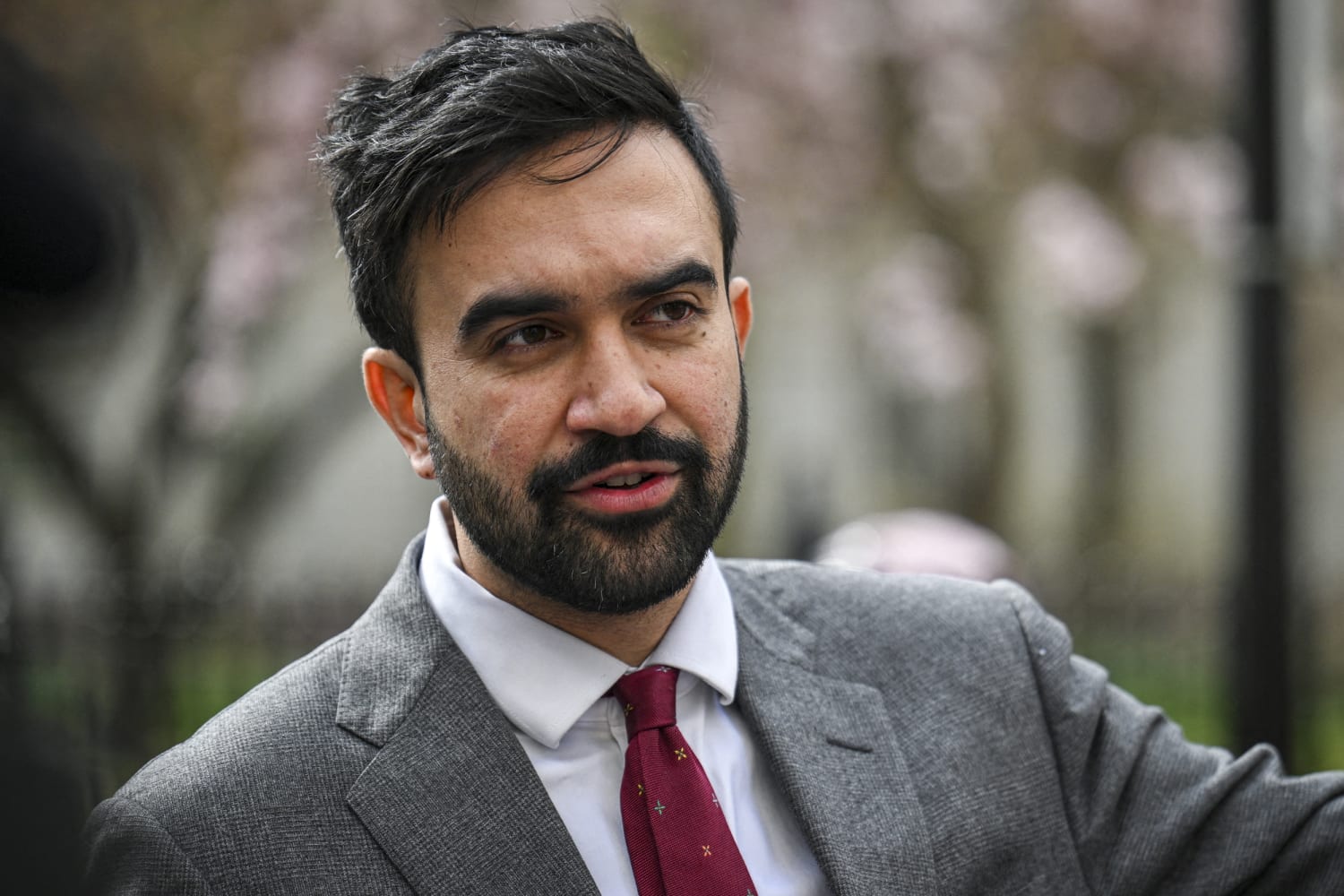
Mamdani also spoke about the broader Muslim community, emphasizing that discrimination against one prominent political figure could reflect a much wider experience among people who had little public visibility or political influence. His argument was that Muslim New Yorkers should not have to hide their religious identity or repeatedly prove their loyalty to the city they call home.
The speech attracted national attention because it connected a mayoral campaign to a larger debate over religious freedom, racial prejudice and political rhetoric. The Associated Press reported on the address, including Mamdani’s account of his aunt’s experience and his criticism of attacks he described as racist and baseless.
In March 2026, after taking office, Mamdani continued addressing the subject in public interviews. Speaking with ABC7’s N.J. Burkett, he said that anti-Muslim rhetoric was concerning not simply because it targeted him personally, but because it affected the roughly one million Muslims who call New York City home. He argued that being Muslim and being a New Yorker should not be treated as conflicting identities.
That position represents one part of Mamdani’s public agenda. His administration also faces the practical responsibilities of governing a city where housing costs, public transportation, employment, education and public safety remain central concerns for residents. The political debate surrounding his leadership therefore extends well beyond the question of religious discrimination.
For working-class families, public safety can be an immediate and deeply personal issue. Parents may worry about children traveling home from school, employees may feel vulnerable during late-night commutes, and residents in neighborhoods affected by violence may demand a more visible response from law enforcement. Those concerns deserve serious consideration regardless of political affiliation.

The debate over criminal justice in New York has long involved disagreements about policing, prosecution, bail policy, repeat offenders and the balance between public protection and individual rights. Critics of progressive approaches argue that insufficient consequences for certain offenses can undermine public confidence and leave vulnerable communities exposed to violence. Supporters of reform counter that effective public safety also requires prevention, investment in neighborhoods, mental health services and a justice system that treats people fairly.
These competing positions should be examined through crime statistics, prosecution outcomes, public safety policies and the experiences of affected communities. A political slogan or an alleged confrontation cannot substitute for that evidence.
The same principle applies to the discussion of Islamophobia. Recognizing discrimination against Muslim residents does not require dismissing concerns about crime or economic insecurity. Equally, discussing public safety does not require minimizing the impact of anti-Muslim hostility. A city’s responsibilities include protecting residents from violence while ensuring that people are not targeted because of their religion, ethnicity or background.
The working-class dimension is particularly important because economic pressure can intensify feelings of insecurity. Rising housing costs, expensive childcare, transportation difficulties and uncertain employment can leave families feeling that government institutions are not responding to their everyday problems. When political leaders focus on highly visible national controversies, residents may question whether their most immediate needs are receiving sufficient attention.
For Mamdani, the challenge is to demonstrate that his administration can translate its political commitments into practical improvements in daily life. Statements defending Muslim New Yorkers are part of his public position, but city residents will also judge his administration through its response to crime, housing affordability, public services and economic opportunity.
For Kennedy, the alleged confrontation in the viral post should not be confused with a documented exchange. The senator has not been shown delivering the quoted attack on Mamdani or presenting victim statements in the described setting. His supposed challenge therefore cannot be used as evidence of a specific disagreement between the two politicians.
What can be examined is the broader political contrast that the story attempts to dramatize. One side of the debate emphasizes the importance of protecting residents from discrimination and ensuring equal treatment regardless of religious identity. Another emphasizes the urgency of public safety, economic pressures and the concerns of families who feel that government institutions have not adequately addressed their daily struggles.
The strongest public discussion would not force New Yorkers to choose between these concerns. A parent worried about a child walking home safely should be able to demand effective public safety policies without being accused of hostility toward Muslims. A Muslim resident experiencing discrimination should be able to demand equal treatment without being told that other problems are more important.
Political accountability requires more than memorable confrontations. It requires elected officials to explain their policies, provide measurable results and respond to the people affected by their decisions. That standard applies to city government, Congress and every public figure participating in the debate.
The alleged Kennedy-Mamdani showdown remains unverified, but the underlying questions are real. New York must address public safety, economic inequality and religious discrimination at the same time. The challenge for its political leaders is not simply to win arguments over which issue deserves the most attention, but to demonstrate how their policies can improve the lives of the people they represent.
