
The January 6 Accountability Debate: John Kennedy, Nancy Pelosi and the Unanswered Questions About Capitol Security
The January 6 attack on the United States Capitol remains one of the most consequential and disputed episodes in modern American political history. More than five years after the breach, questions about intelligence failures, security preparations, emergency decision-making and congressional oversight continue to shape debates in Washington. At the center of those arguments is a broader question: how should responsibility be assigned when the institutions entrusted with protecting the nation’s legislature fail to prevent an attack?
Senator John Kennedy of Louisiana has become one of the Republican lawmakers associated with forceful criticism of Democratic leadership and the federal government’s handling of politically sensitive investigations. His public style is often characterized by pointed questions, dry humor and an emphasis on institutional accountability. However, claims that Kennedy recently staged a dramatic confrontation with former House Speaker Nancy Pelosi, presented a stack of subpoenas or issued a formal warning that congressional immunity would no longer protect members of the January 6 establishment have not been substantiated by reliable public records.

The absence of evidence for that particular confrontation does not mean the underlying questions are imaginary. The security failures surrounding January 6, 2021, were extensively examined by congressional investigators, government watchdogs and law enforcement agencies. Their findings revealed serious weaknesses in the systems responsible for protecting the Capitol, although they did not establish that Pelosi personally directed the security response or deliberately prevented adequate protection from being deployed.
A bipartisan Senate investigation released in June 2021 identified failures across several institutions. Federal intelligence agencies did not adequately communicate the potential for violence, while Capitol Police intelligence units failed to convey the full scope of the threat information they possessed. Security preparations were insufficient for the possibility of a violent assault, and unclear procedures delayed requests for assistance from the National Guard.
Those findings matter because responsibility for Capitol security was not concentrated in the hands of one elected official. The United States Capitol Police, its oversight board, congressional security officials and other federal agencies all had roles in the planning and response. The investigation highlighted institutional weaknesses that crossed organizational boundaries, making the question of accountability more complicated than assigning blame to a single political figure.
The Government Accountability Office reached similarly important conclusions in its February 2022 review. Investigators found that Capitol Police planning did not adequately account for the possibility of extreme violence and lacked clear procedures for obtaining emergency assistance from other agencies. The report also identified weaknesses in the process for evaluating and mitigating security risks across the Capitol complex.
These findings provide a documented basis for continued scrutiny. They also demonstrate why transparency over institutional decisions, communications and security procedures remains relevant. Public confidence depends not simply on political accusations, but on the ability of oversight bodies to establish what happened, who possessed particular information, which decisions were made and whether existing safeguards were subsequently improved.
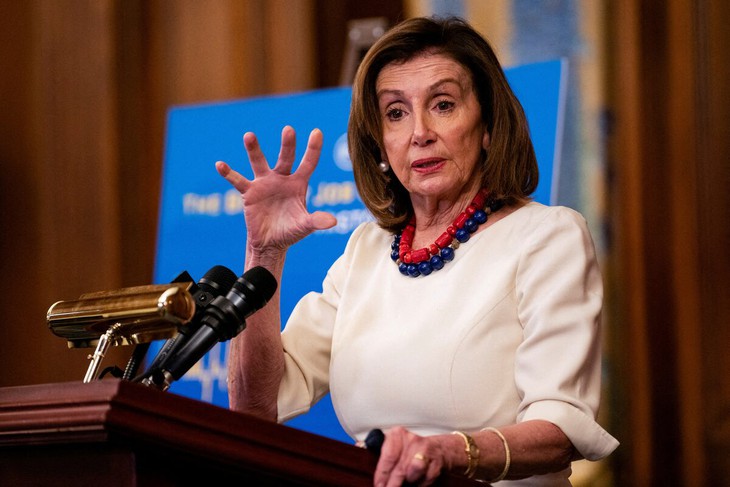
Nancy Pelosi’s role has been a particularly contentious part of that discussion. As House speaker at the time, she had significant institutional responsibilities and appointed one member of the Capitol Police Board. However, the speaker did not independently command every Capitol security operation. FactCheck.org’s examination of Republican allegations in July 2021 noted that claims portraying Pelosi as having direct control over the entire security apparatus overstated her authority. It also found no evidence supporting claims that she had personally blocked National Guard assistance before the attack.
Republican investigators nevertheless raised concerns about access to records and the involvement of House leadership in security discussions. A report released by Republican members of the House Administration Committee in December 2022 argued that Democratic leadership had been closely involved in security decisions and criticized the handling of information requests. Those conclusions represented the Republican investigators’ assessment and should be distinguished from the findings of the bipartisan Senate investigation.
The disagreement illustrates a persistent problem in the January 6 debate: different investigations have emphasized different institutional failures, while political leaders have often presented those findings through competing partisan narratives. A serious examination requires looking at the underlying records rather than treating every accusation as an established fact.
The legal question surrounding congressional immunity also requires precision. The Constitution’s Speech or Debate Clause provides important protections for members of Congress when performing legitimate legislative functions. It is not a blanket exemption from every form of legal accountability. Whether a particular action is protected depends on the nature of the conduct and the legal circumstances involved. Consequently, demands for transparency or accountability cannot automatically be equated with proof that a member of Congress committed a crime.
The treatment of January 6 defendants has also changed substantially since the original prosecutions. On January 20, 2025, President Donald Trump issued a proclamation granting full and unconditional pardons to many individuals convicted of offenses connected to the Capitol attack, commuting the sentences of specified individuals and directing the Justice Department to seek dismissal of pending cases. That decision fundamentally altered the legal landscape for thousands of people connected to the prosecutions.
For critics of the original investigations, the pardons represented a response to what they considered excessive or politically motivated prosecution. Others argued that the decision weakened accountability for conduct that included violence against law enforcement officers and an assault on the constitutional transfer of power. These competing interpretations remain part of the national debate, but the legal consequences of the presidential proclamation are documented.
For Kennedy and other lawmakers demanding greater scrutiny of January 6, the central issue is therefore larger than a confrontation with Pelosi. It concerns the standards applied to government officials, the transparency of congressional operations and the extent to which institutional failures should carry consequences. Those questions can be pursued through hearings, document requests, inspector general investigations and legally authorized oversight.
Any renewed investigation would also need to distinguish between records that remain unavailable, records already examined by previous committees and material that cannot legally be disclosed. A genuine effort to establish accountability would require specific evidence, clear jurisdiction and respect for constitutional protections. The existence of unanswered questions does not itself prove that records were deliberately concealed or that particular officials engaged in criminal conduct.
The January 6 attack exposed weaknesses in the country’s ability to protect one of its most important democratic institutions. The Senate investigation, government oversight reports and competing congressional assessments have established a substantial record of failures and disagreements. Yet the political debate continues because Americans remain divided over how responsibility should be measured and whether the responses that followed were fair.
Ultimately, the strongest case for transparency does not depend on an unverified dramatic scene or an alleged exchange between two politicians. It depends on documented evidence, accountable investigations and consistent standards applied regardless of party affiliation. The questions surrounding January 6 deserve serious examination, but any claim that Nancy Pelosi or another official is facing a new legal reckoning must be supported by verifiable evidence rather than political rhetoric.
