
Jack Smith and Jim Jordan: The House Hearing That Put Prosecutorial Independence Under Scrutiny
The confrontation between former Special Counsel Jack Smith and House Judiciary Committee Chairman Jim Jordan brought one of Washington’s most contentious political and legal disputes into public view. During a lengthy hearing on January 22, 2026, the two men presented sharply different interpretations of the investigations into Donald Trump, raising fundamental questions about prosecutorial independence, congressional oversight and the limits of federal investigative power.
The hearing was not the dramatic courtroom-style showdown portrayed in some viral accounts. There is no verified record of Smith placing a thick stack of documents on the witness table before opening a file to reveal a decisive statement. But the actual exchange was significant in its own right, with both men using the hearing to defend competing views of how the Justice Department should exercise its authority.
Jordan opened the proceedings with a direct accusation: the investigations led by Smith were driven by politics. He argued that the former special counsel and the Justice Department had pursued Trump through a series of investigations that, in Jordan’s view, demonstrated a pattern of partisan treatment. The Republican chairman also focused on the collection of congressional telephone records, particularly records associated with former House Speaker Kevin McCarthy.

For Jordan, the issue extended beyond the investigation of one former president. He argued that obtaining records connected to senior members of Congress raised serious questions about the separation of powers and the ability of lawmakers to perform their constitutional responsibilities without improper government interference.
Smith rejected the suggestion that political considerations had influenced his prosecutorial decisions. In his prepared opening statement, he emphasized that he had spent nearly three decades working as a prosecutor under both Republican and Democratic administrations. His stated approach, he told the committee, had always been to follow the facts and the law without fear or favor.
He also defended the decisions made during his tenure as special counsel, including the indictments against Trump. Smith maintained that the investigations followed Justice Department policies and legal requirements, and that the former president’s political affiliation and candidacy played no role in the decision to bring charges.
His testimony included an especially direct declaration: no one should be above the law. Smith said the evidence developed by his office had established, in his assessment, proof beyond a reasonable doubt of criminal activity. He added that he would make the same prosecutorial decision if presented with the same facts involving a former president from either political party.
That statement captured the central disagreement of the hearing. Jordan questioned whether the investigations had been conducted impartially, while Smith insisted that the evidence, rather than political identity, determined his decisions. Neither position could be resolved simply through rhetoric. The dispute depended on the legal basis for investigative actions, the evidence gathered and the procedures followed by federal prosecutors.

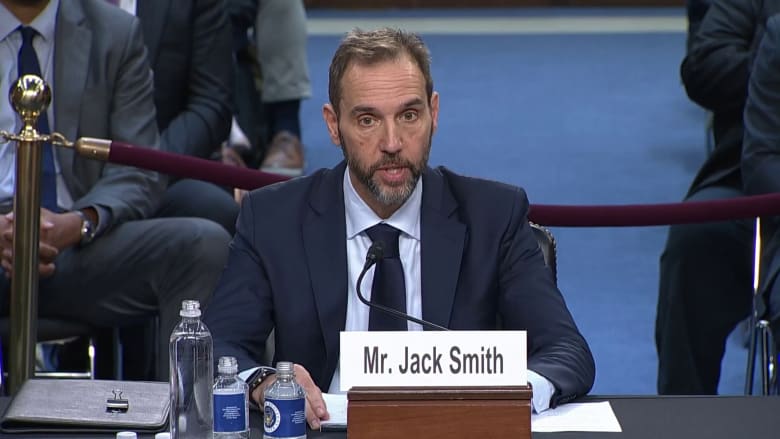
One of the most consequential subjects was the collection of congressional phone records during the investigation into efforts to overturn the 2020 presidential election. Jordan argued that obtaining records associated with McCarthy represented an extraordinary intrusion into the activities of a senior congressional official. He also criticized the use of nondisclosure procedures that prevented the affected individual from immediately learning that records had been obtained.
The issue was not limited to McCarthy. The committee examined investigative steps involving other members of Congress and questioned whether prosecutors had adequately considered the constitutional implications of obtaining such information. Jordan’s broader argument was that congressional oversight must be able to examine government conduct, particularly when federal investigative powers potentially intersect with the independence of the legislative branch.
Smith defended the legal basis for his investigative decisions. He maintained that the records were sought because they were relevant to an authorized criminal investigation, not because of the political identities of the people involved. The distinction is important: congressional status does not automatically place an individual beyond legitimate investigative scrutiny, but the use of compulsory legal processes involving lawmakers can raise complicated constitutional and procedural questions.
The hearing transcript also recorded questions about whether the names of senior congressional figures had been disclosed to a judge when prosecutors sought nondisclosure orders. During one exchange, Representative Darrell Issa pressed Smith about whether information identifying McCarthy or Jordan had been provided to the court. Smith acknowledged that the information had not been provided in the manner Issa described, while maintaining that the process was consistent with applicable law and Justice Department practice. The exchange became one of the hearing’s most consequential discussions because it focused on what the court knew when it considered restrictions on notifying individuals about the records request.
The legal significance of that exchange cannot be reduced to a dramatic revelation. Nondisclosure orders are governed by specific legal standards, and the question of whether a particular application complied with those standards requires examination of the actual filings, the information presented to the judge and the applicable law. Nevertheless, the issue gave lawmakers a concrete basis for questioning how the investigation handled sensitive congressional records.
Other members of the committee challenged Smith from different directions. Republicans questioned the timing and scope of his investigations, his handling of evidence and his decisions involving restrictions on Trump’s public statements. Democrats, meanwhile, defended the work of the special counsel and emphasized the seriousness of the evidence gathered concerning efforts to overturn the 2020 election.
Smith also addressed the distinction between investigating conduct and deciding which criminal charges the evidence could support. He explained that his office had not charged Trump with insurrection, despite discussing the events of January 6 in its investigation. He said he believed the charges actually brought were appropriate under the evidence and the law. That distinction was important because it demonstrated that the special counsel’s charging decisions were not simply a matter of applying the most politically prominent description to the events.
The hearing therefore exposed two competing concerns that cannot be dismissed as irrelevant. Congress has a constitutional responsibility to oversee the executive branch and examine whether federal agencies have exercised their powers lawfully. At the same time, prosecutors must be able to investigate potential crimes without political interference, including when the subjects of an investigation hold positions of considerable influence.
The difficulty lies in determining where legitimate oversight ends and improper pressure begins. Lawmakers are entitled to seek information about government operations, but oversight does not automatically establish that a prosecution was unlawful. Similarly, a prosecutor’s assertion that decisions were based on evidence does not eliminate the need for independent examination of investigative methods.
The public hearing offered Americans an opportunity to hear Smith explain his decisions directly rather than relying exclusively on statements from political allies or critics. It also allowed Jordan to place his concerns about congressional records and prosecutorial authority into the official hearing record. The resulting testimony was extensive, frequently contentious and sharply divided along party lines.
Ultimately, the most important part of the Smith-Jordan dispute was not an alleged folder reveal or an imaginary final sentence. It was the documented disagreement over how federal prosecutors can investigate matters involving elected officials, what information courts should receive when nondisclosure orders are requested, and how Congress can fulfill its oversight responsibilities without undermining legitimate law enforcement.
Those questions remain central to public confidence in the justice system. Accountability requires more than accusations, and prosecutorial independence requires more than assurances. Both depend on evidence, transparent procedures and constitutional standards that apply regardless of who holds political power.
