
“$50 BILLION AND YOU STILL CAN’T KEEP PLANES FLYING!” Amy Klobuch.a.r Corners Sean Duf.f.y in a Brutal Senate Showdown That Ignites Washington!
The atmosphere inside the Senate hearing room was already tense when Transportation Secretary Sean Duf.f.y faced questions about America’s aviation crisis, but nobody anticipated how quickly the discussion could turn into a fierce political confrontation.
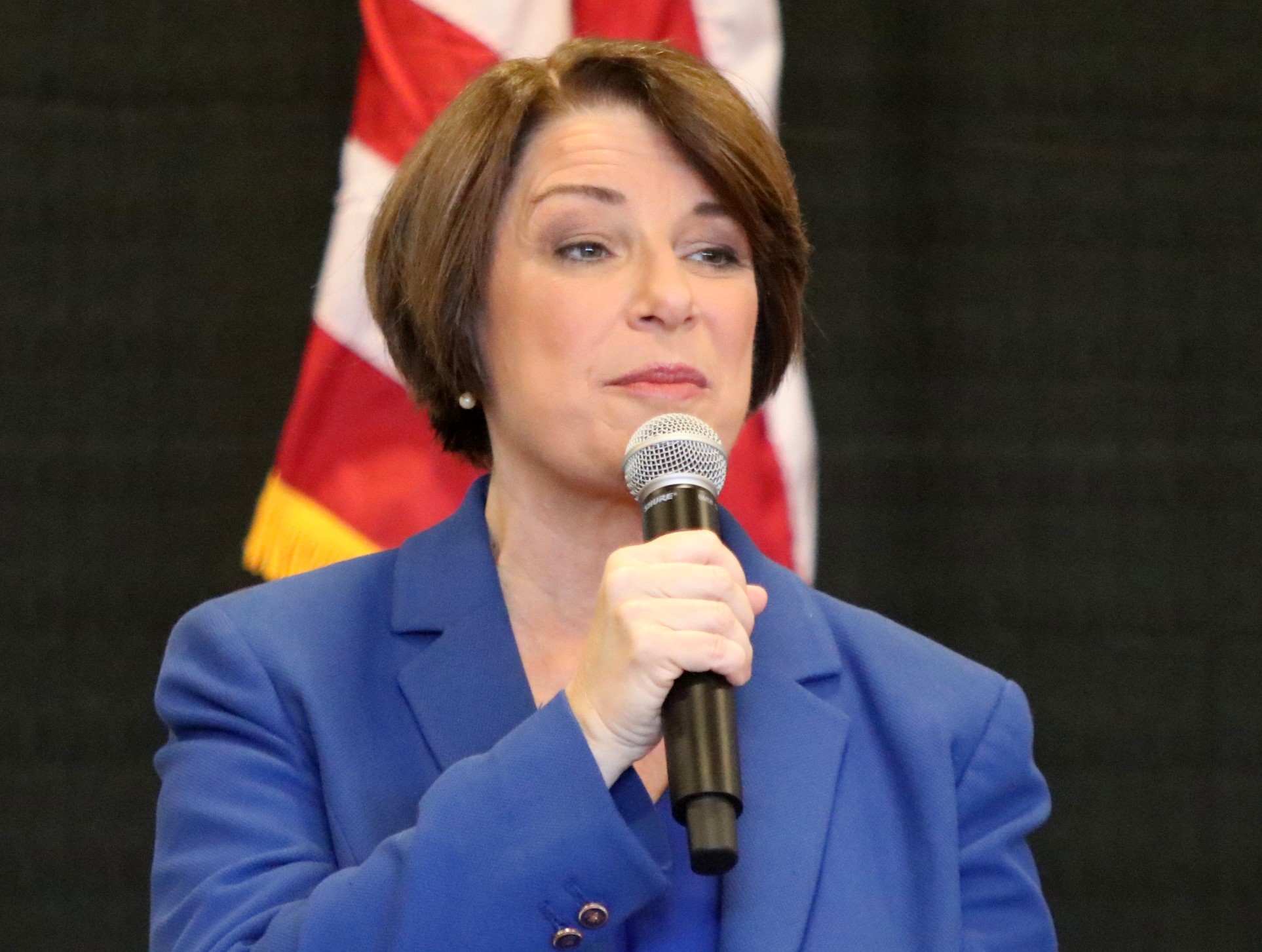
Across the table sat Senator Amy Klobuch.a.r, a Democrat from Minnesota, who appeared determined to challenge the administration’s demand for another $50 billion in aviation modernization funding.
Duf.f.y arrived with a familiar argument.

America’s air traffic control infrastructure was dangerously outdated, previous administrations had failed to modernize essential systems, and the country needed substantial investment before another technical failure threatened the national aviation network.
But Klobuch.a.r was not interested in accepting another general explanation.
She wanted numbers.
She wanted accountability.
And above all, she wanted to know why taxpayers should approve another enormous spending package when billions had already been authorized for aviation modernization.
The exchange quickly became a battle over responsibility.
Duf.f.y insisted that he was trying to repair decades of neglect.
Klobuch.a.r countered that demanding more money was not an acceptable substitute for explaining what had happened to the money already provided.
Neither appeared willing to retreat.
And as the discussion moved from the FAA’s technical failures to the administration’s financial priorities, the disagreement became increasingly personal.
“SECRETARY DUFFY, WHERE DID THE MONEY GO?”
Klobuch.a.r began by bringing the conversation back to the $12.5 billion Congress had previously approved for FAA modernization.
She questioned why the administration was demanding another $50 billion before providing a complete accounting of the existing appropriation.
Duf.f.y responded that the original allocation was already supporting several major infrastructure projects.
He explained that replacing radar systems, telecommunications equipment, and outdated aviation technology required enormous coordination.
He also argued that the existing funding did not cover the full cost of rebuilding the national air traffic control system.
But Klobuch.a.r refused to let the answer end there.
She wanted to distinguish between money already spent, money legally committed to projects, and money that remained available.
Those categories, she argued, could not simply be combined into one impressive-looking budget figure.
“American taxpayers deserve to know what their money is purchasing,” was the central message of her challenge.
Duf.f.y pushed back.
He argued that modernization could not be measured exclusively by how quickly an agency spent its appropriation.
Some equipment required months of manufacturing, testing, and installation.
A project could be financially committed long before the equipment arrived at an airport or control center.
Klobuch.a.r acknowledged that infrastructure projects took time.
But she questioned whether the administration had provided sufficient evidence that the existing program was progressing as promised.
The disagreement exposed two competing political priorities.
Duf.f.y wanted Congress to approve a comprehensive modernization effort.
Klobuch.a.r wanted the administration to demonstrate that its existing financial commitments were being properly managed.
And neither argument could be resolved through another general statement about America’s aging infrastructure.
“YOU CANNOT BLAME EVERY PROBLEM ON THE PREVIOUS ADMINISTRATION!”
The confrontation became sharper when the discussion turned toward responsibility for the FAA’s longstanding problems.
Duf.f.y argued that America’s aviation infrastructure had been neglected across multiple administrations.
He pointed to decades of outdated equipment, insufficient modernization, and technical systems that had become increasingly difficult to maintain.
His argument was straightforward.
He had inherited a complicated problem and was attempting to address it.
Klobuch.a.r challenged the implication that historical failures could excuse present-day accountability.
She argued that the administration now controlled the department responsible for overseeing the modernization program.
The secretary could criticize previous governments, but he also had to explain what his own department was doing.
Duf.f.y responded that his team was working to replace outdated infrastructure rather than merely discussing the problem.
He maintained that the administration needed congressional support to move faster.
Klobuch.a.r then returned to the November 13 nationwide FAA ground stop.
The incident had disrupted thousands of flights after communications problems affected the national aviation network.
Passengers had been left stranded.
Airlines had experienced widespread operational disruption.
And the public had received another reminder of how dependent modern transportation was on reliable federal infrastructure.
Klobuch.a.r questioned whether the administration had adequately explained how such a failure could occur during an infrastructure upgrade.
Duf.f.y defended the department’s response.
He explained that the technical failure involved a communications router associated with work being performed by contractor L3Harris.
The department had moved to isolate the affected equipment and restore normal operations.
But the senator wanted to know whether the government had sufficient safeguards to prevent similar failures.
The disagreement was becoming less about political blame and more about the practical consequences of federal management decisions.
THE CONTRACTOR QUESTION: WHO SHOULD ANSWER FOR THE AIRPORT CHAOS?
Klobuch.a.r turned her attention toward the contractor involved in the communications upgrade.
She questioned whether the administration had adequately examined the contractor’s performance and the FAA’s supervision of the work.
Duf.f.y explained that investigators were examining the technical circumstances surrounding the router failure.
He maintained that the investigation needed to establish whether the problem involved defective equipment, installation mistakes, or another technical issue.
Klobuch.a.r pushed for greater accountability.
She argued that Americans should not have to endure nationwide aviation disruption without receiving a clear explanation of how the failure happened.
Duf.f.y agreed that the public deserved answers.
But he resisted assigning blame before the investigation had reached its conclusions.
That response created another point of disagreement.
Klobuch.a.r wanted the administration to demonstrate that contractors were being held to rigorous standards.
Duf.f.y argued that responsibility had to be established through evidence rather than political pressure.
The senator’s challenge nevertheless raised an important question.
If a contractor performs work on infrastructure essential to national aviation safety, what happens when that work contributes to a widespread system failure?
Who evaluates the contract?
Who examines the technical safeguards?
And who ensures that taxpayers are not paying twice to correct preventable mistakes?
Those questions became increasingly important as the administration continued demanding additional modernization funding.
“FIFTY BILLION DOLLARS IS NOT A BLANK CHECK!”
The most contentious part of the discussion centered on the size of Duf.f.y’s request.
Klobuch.a.r challenged the administration’s demand for $50 billion, arguing that Congress needed a detailed explanation of how the money would be used.
She questioned whether the proposal represented a carefully calculated modernization plan or an enormous funding request assembled in response to a highly publicized infrastructure failure.
Duf.f.y rejected the suggestion that the proposal was excessive.
He argued that the FAA needed a comprehensive replacement strategy covering telecommunications, radar systems, software, control facilities, and other essential infrastructure.
He warned that piecemeal upgrades would leave the country dependent on systems that were increasingly difficult to maintain.
Klobuch.a.r countered that comprehensive modernization did not eliminate the need for financial accountability.
She wanted a project-by-project explanation.
How much would telecommunications upgrades cost?
Which radar systems required immediate replacement?
What portion of the money would finance software?
How would contractors be selected?
And what measurable improvements would taxpayers receive?
Duf.f.y maintained that the administration needed sufficient funding to complete the transformation.
Klobuch.a.r’s position remained that Congress should not approve another enormous appropriation without understanding the existing program.
The disagreement became a defining moment in the exchange.
One side was warning about the consequences of delaying modernization.
The other was warning about the consequences of approving billions without sufficient oversight.
Both arguments carried significant implications.
THE $1.6 BILLION ARGUMENT THAT ADDED FUEL TO THE FIRE
Klobuch.a.r also raised broader questions about federal spending priorities.
She questioned whether the administration was demonstrating the same urgency toward aviation infrastructure that it had demonstrated toward other high-profile government spending decisions.
The debate included references to a $1.6 billion increase in FAA funding for fiscal year 2026.
But the senator’s broader concern was not simply the existence of that budget figure.
It was whether the administration could demonstrate that its funding priorities matched its public promises about aviation safety and modernization.
Duf.f.y responded that FAA spending covered multiple essential responsibilities and that a funding increase did not automatically resolve the department’s infrastructure problems.
He argued that the agency required a coordinated investment strategy rather than isolated budget adjustments.
Klobuch.a.r remained skeptical.
She wanted the administration to explain why the existing resources were insufficient and how the additional money would produce measurable improvements.
The disagreement highlighted an important distinction.
A larger budget does not automatically mean a more reliable aviation system.
The money must be directed toward the correct projects, properly managed, and supported by measurable performance standards.
For passengers waiting in airports, those details are not abstract political arguments.
They determine whether flights depart on time, whether air traffic controllers have reliable equipment, and whether the national aviation network can withstand technical failures.
THE FINAL EXCHANGE: WHO WILL TAKE RESPONSIBILITY?
As the confrontation approached its conclusion, the disagreement returned to one central issue.
Responsibility.
Duf.f.y argued that he could not reverse decades of infrastructure neglect overnight.
He insisted that modernization required substantial resources and congressional cooperation.
Klobuch.a.r countered that leadership meant explaining what had happened, identifying who was responsible for failures, and demonstrating that the proposed solution would actually work.
The secretary emphasized the scale of the challenge.
The senator emphasized the expectations of the American public.
Neither position could erase the underlying problem.
The FAA needed reliable infrastructure.
The administration needed congressional funding.
And taxpayers needed evidence that additional spending would produce meaningful results.
The most important question was therefore not whether Duf.f.y could defend the modernization request.
It was whether he could demonstrate that his department had a credible plan for using the money effectively.
Klobuch.a.r’s challenge exposed the tension between two responsibilities that Washington frequently struggles to balance: investing in essential infrastructure and ensuring that public money is properly managed.
The debate was bigger than one secretary and one senator.
It was about the credibility of the federal government itself.
Because when thousands of passengers are stranded and the administration responds by requesting another $50 billion, Americans have every right to demand more than promises.
They deserve documents.
They deserve explanations.
And they deserve measurable results.
But as Duf.f.y continues pushing for the largest aviation modernization investment in the debate, one question remains hanging over Washington: Will Congress give him the $50 billion he says America desperately needs, or will Klobuch.a.r and other skeptical lawmakers force the administration to account for every dollar before approving another cent?
