
Senator Bernie Sanders delivered a pointed challenge to America’s healthcare establishment during a revealing conversation with Jon Stewart, arguing that the country’s medical system has become extraordinarily expensive while leaving millions unable to afford essential treatment.
The Vermont independent used his November 2026 appearance on The Weekly Show with Jon Stewart to outline what he considers one of the most urgent failures in American public policy.
His argument centered on a striking figure: approximately 90 million Americans who, according to Sanders, either lack health insurance or have coverage that leaves them financially vulnerable.
But the senator’s criticism extended beyond insurance companies and prescription drug prices to a deeper problem involving physician shortages, hospital access, and the political obstacles surrounding healthcare reform.
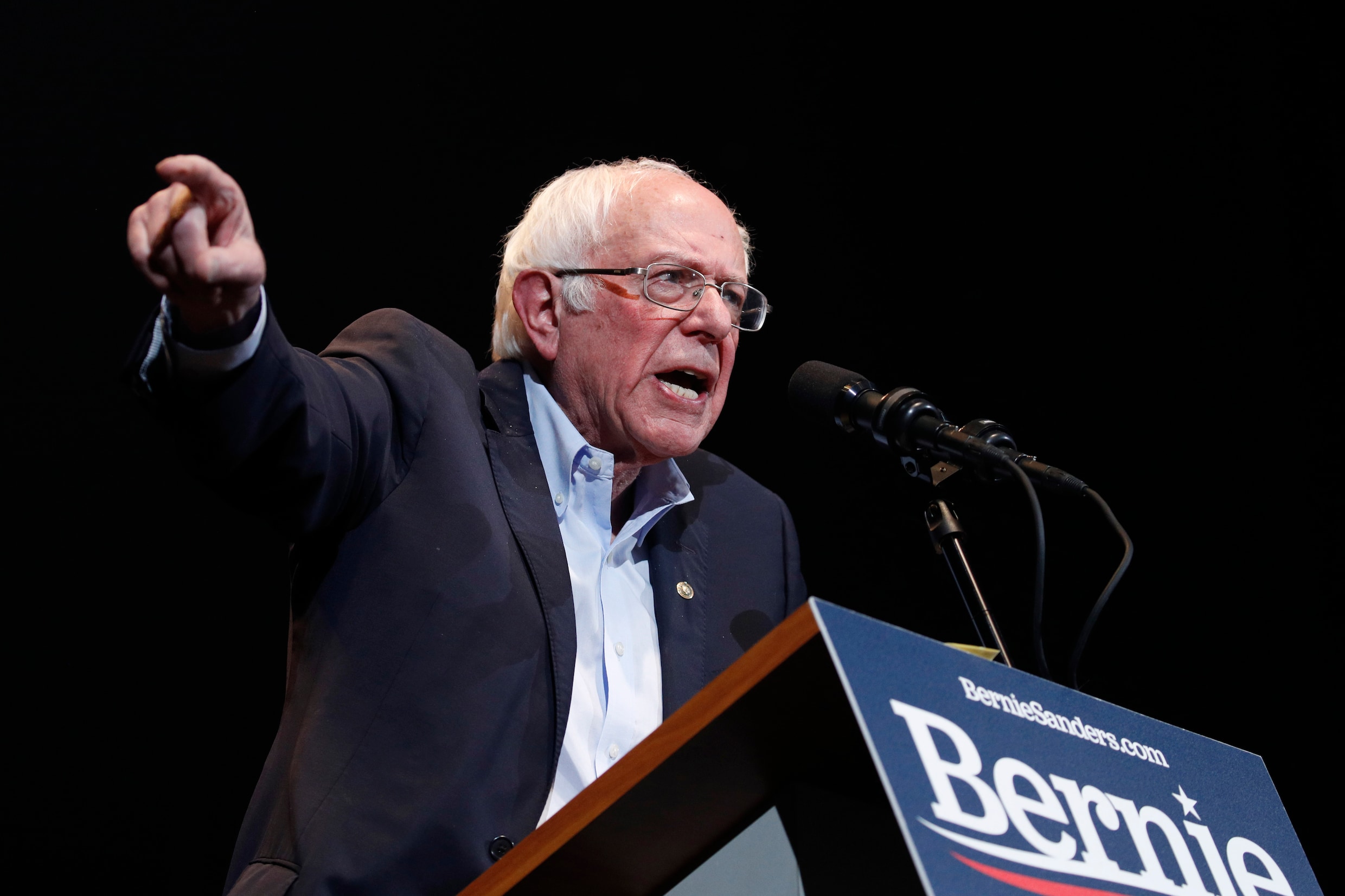
Sanders argued that Americans were paying substantially more for medical services than residents of other wealthy countries without receiving the universal coverage those nations provide.
The interview took place following Democrats’ victories in the November 3 midterm elections, creating renewed discussion about what the party should accomplish with congressional majorities.
Stewart questioned whether Democrats would pursue substantial economic reforms or return to familiar political strategies that Sanders believes have failed to address widespread dissatisfaction.
The senator responded by identifying healthcare as a central example of the structural changes he wants Congress to consider when the new legislative session begins.
Rather than concentrating on an individual politician or a temporary funding dispute, Sanders challenged the design of the entire American healthcare financing system.

He argued that the debate should begin with a simple question: why does a wealthy country spend so much while leaving so many people unable to obtain affordable care?
The exchange was direct and occasionally humorous, with Stewart encouraging Sanders to explain how a fundamentally different system could operate.
It was not an authenticated confrontation in which pharmaceutical executives or insurance industry representatives appeared before Sanders and were personally humiliated.
The documented discussion involved Sanders and Stewart examining the economic consequences of healthcare policy and the political challenges involved in replacing existing arrangements.
Sanders described the American healthcare system as broken and dysfunctional, arguing that its financing structure imposes unnecessary costs on working families.
He told Stewart that the United States spends approximately twice as much per person on healthcare as many other wealthy countries.
That comparison reflects a longstanding pattern documented by international health policy researchers, although individual estimates vary according to the countries and measures used.
The Centers for Medicare and Medicaid Services reported that American healthcare spending reached approximately $5.3 trillion in 2024.
That represented roughly $15,474 per person and approximately 18 percent of the nation’s gross domestic product.
The figures illustrate why healthcare has become one of the most significant economic obligations facing households, employers, and government budgets.
Insurance premiums, employer contributions, public programs, prescription medicines, hospital charges, and out-of-pocket payments all contribute to the overall cost.
Yet total national spending does not automatically reveal whether individual patients can afford necessary treatment when they become ill.
A family may possess health insurance while facing deductibles, copayments, and coinsurance charges that make medical services financially difficult to obtain.
That distinction became central to Sanders’ argument because he emphasized the difference between being insured and having meaningful access to affordable healthcare.
During the interview, Sanders stated that approximately 90 million Americans were uninsured or underinsured.
The number was presented as his assessment of the scale of the affordability problem, rather than a newly released official Census count.
In a September 2026 essay, Sanders had cited a somewhat lower figure of approximately 85 million Americans, demonstrating that the estimate depends on the underlying data and definition.
Independent research confirms that underinsurance affects a substantial portion of the population, although estimates differ according to income thresholds and healthcare costs.
The Commonwealth Fund’s 2024 Biennial Health Insurance Survey found that 23 percent of working-age adults had maintained insurance throughout the year but remained underinsured.
The survey defined underinsurance through financial measures involving deductibles and out-of-pocket costs relative to household income.
Another 9 percent of adults were uninsured when surveyed, while 12 percent reported experiencing a period without coverage during the preceding year.
Those categories require careful interpretation because they measure different problems and cannot always be combined without considering overlapping populations.
Nevertheless, the findings support the broader concern that possessing an insurance card does not guarantee affordable access to treatment.
For patients managing chronic illnesses, high deductibles and recurring prescription costs can create substantial financial pressure even when coverage remains technically active.
For people without insurance, medical emergencies may generate bills that exceed their available savings or annual income.
And for workers whose coverage depends on employment, losing a job can introduce uncertainty about both household income and access to healthcare.
Stewart focused on that connection between employment and insurance, arguing that separating the two could increase individual economic freedom.
He suggested that Americans should not feel compelled to remain in particular jobs primarily because their families depend on employer-sponsored health benefits.
That argument resonated with Sanders’ long-standing support for a national system providing coverage independently of employment status.
The senator responded that Stewart had effectively described Medicare for All, the proposal Sanders has promoted through years of congressional legislation and presidential campaigns.
The exchange included humor, but the underlying policy question was substantial.
Under Sanders’ preferred framework, healthcare coverage would become a universal entitlement rather than depend primarily on employment, age, income, or eligibility for separate programs.
The proposal would expand the concept of Medicare beyond its traditional role serving older Americans and certain people with disabilities.
Sanders also emphasized the importance of benefits covering dental care, vision services, and hearing treatment.
Those services are often excluded from basic insurance coverage or require separate plans, creating additional costs for patients who need them.
His approach would establish a national financing system intended to cover medically necessary services while reducing the financial barriers associated with deductibles and copayments.
Supporters argue that such an arrangement could make coverage more predictable and reduce the administrative complexity associated with multiple insurance networks.
They also contend that negotiating prices nationally could strengthen the government’s ability to limit certain healthcare expenditures.
But replacing existing insurance arrangements would involve major changes to federal spending, taxation, healthcare payment systems, and the operations of private insurers.
Those changes are central to the political disagreement surrounding Medicare for All.
Critics question whether the proposed system could be financed sustainably and whether payment reductions would affect hospitals, physicians, and medical innovation.
They also raise concerns about possible disruptions for people satisfied with their current insurance arrangements.
Supporters respond that the relevant comparison should include existing premiums, deductibles, employer contributions, and other expenditures Americans already pay.
That distinction matters because the total cost of a national healthcare program is not the same as the additional cost imposed on the economy.
A substantial portion of healthcare spending would shift from private insurance arrangements to government financing under a single-payer model.
The distribution of costs among households, businesses, and taxpayers would depend on the specific financing legislation adopted by Congress.
Sanders argues that the current system already imposes enormous expenses while leaving substantial gaps in coverage.
Opponents maintain that concentrating healthcare financing within a federal program could introduce new risks involving budget pressures, provider payments, and access to treatment.
Neither argument can be evaluated completely without examining detailed legislation and independent projections of its economic effects.
The interview also addressed another major weakness in the American healthcare system: shortages of medical professionals.
Sanders told Stewart that the country lacked sufficient doctors and nurses to meet the needs of its population.
That concern is supported by workforce research showing persistent shortages in numerous medical specialties and geographic regions.
The Association of American Medical Colleges projected in 2024 that the United States could face a shortage of as many as 86,000 physicians by 2036.
Federal workforce projections published in December 2025 identified potentially even larger shortages under particular assumptions about population growth and healthcare demand.
Those projections reflect multiple factors, including an aging population, physician retirements, uneven geographic distribution, and limitations in medical training capacity.
The shortage is particularly concerning in rural communities and underserved urban neighborhoods, where obtaining appointments can require extended travel or substantial waiting periods.
However, the suggestion that the entire shortage was deliberately manufactured by pharmaceutical or insurance corporations is not established by the available evidence.
Physician training involves universities, teaching hospitals, professional accreditation systems, federal residency funding, and decisions made by medical graduates.
Federal financing of graduate medical education has long influenced the number and distribution of residency positions available to newly trained physicians.
The Balanced Budget Act of 1997 imposed restrictions on Medicare-funded residency positions at many teaching hospitals, becoming an important part of later debates about training capacity.
Subsequent legislation has created additional federally supported residency positions, but professional organizations continue calling for expanded investment.
The Association of American Medical Colleges has warned that failure to increase medical training capacity could worsen future shortages.
Expanding the physician workforce, however, requires more than increasing insurance coverage.
It involves medical school enrollment, residency training, teaching capacity, financial incentives, working conditions, and the distribution of practitioners across communities.
More comprehensive insurance coverage could also increase demand for appointments as previously uninsured patients seek services they had delayed.
That possibility makes workforce expansion an important consideration for any transition toward universal coverage.
Sanders’ proposal therefore raises two connected questions: how Americans would pay for healthcare and whether enough trained professionals would be available to provide it.
The senator’s criticism of drug companies also reflects his long record of challenging high American prescription medicine prices.
As a prominent member of the Senate Health, Education, Labor and Pensions Committee, Sanders has repeatedly questioned pharmaceutical executives about pricing practices.
His investigations and public hearings have examined why certain medicines cost substantially more in the United States than in other wealthy countries.
The debate involves patent protections, regulatory arrangements, market competition, research costs, and negotiations between manufacturers and healthcare purchasers.
Sanders argues that pharmaceutical companies and their investors exercise excessive influence over a system that should prioritize access to necessary treatment.
Drug manufacturers respond that revenue from successful products supports expensive research, clinical trials, and development programs with substantial financial risks.
Those arguments are not mutually exclusive in every case because innovation requires investment while excessive prices can limit access to existing treatments.
Federal policymakers must consider how to encourage medical research while preventing patients from facing costs that make essential medicines unaffordable.
The Biden administration’s Medicare drug price negotiation program represented one policy response, allowing the federal government to negotiate prices for selected medications.
Sanders has advocated more extensive measures, arguing that existing reforms do not go far enough to address the broader pricing problem.
He sees Medicare for All as a potential mechanism for strengthening purchasing power and simplifying the financial relationships among patients, providers, and insurers.
Yet negotiating lower prices involves complicated questions about reimbursement, provider participation, and incentives for future medical development.
The senator’s proposal would require Congress to determine how those relationships should operate under a fundamentally different financing framework.
The political timing of his conversation with Stewart was significant because Democrats were preparing to regain control of both chambers of Congress.
Sanders argued that the party’s election victories created an opportunity to pursue structural reforms rather than concentrate exclusively on incremental adjustments.
Stewart asked how Democrats could translate public dissatisfaction into a legislative agenda capable of delivering measurable improvements.
The discussion moved beyond healthcare to include corporate influence, wealth inequality, housing costs, and the political power of major financial interests.
For Sanders, those concerns were connected by a broader argument about whether government policy serves ordinary households or concentrates benefits among wealthy institutions.
He argued that restoring certain healthcare subsidies or reversing recent coverage losses could provide important immediate relief.
But he distinguished those steps from his longer-term objective of replacing the existing insurance system with universal coverage.
That distinction matters because immediate legislative changes may be possible without achieving agreement on the complete redesign Sanders advocates.
Even with Democratic majorities, a comprehensive Medicare for All bill would face major political, procedural, and financial obstacles.
The Senate’s filibuster rules could require broader support than the party possesses unless lawmakers pursue procedural changes or qualifying budget legislation.
Budget reconciliation can provide a simple-majority pathway for certain spending and revenue measures, but it does not permit every regulatory proposal to bypass ordinary Senate rules.
A universal healthcare system would also require extensive implementation planning involving existing public programs, private insurers, employers, and medical providers.
Questions about financing would be particularly important because federal expenditures would increase substantially even if total national healthcare costs declined.
Independent estimates of single-payer proposals have reached different conclusions based on assumptions about administrative savings, provider reimbursements, and service utilization.
Consequently, claims that Medicare for All would unquestionably save money or inevitably increase overall costs are too categorical without specifying the plan being analyzed.
The distribution of financial consequences would also differ across households depending on income, employment benefits, medical needs, and any new taxes.
Some families could experience lower direct healthcare expenses, while others might pay more through the taxes used to finance the system.
The overall outcome would depend on the specific legislative design and the economic assumptions used to evaluate it.
Sanders’ argument is ultimately that universal coverage should be considered a public responsibility rather than an employment benefit or individual financial gamble.
His critics maintain that reform should focus on improving existing arrangements, increasing competition, and addressing affordability without replacing private insurance.
Those competing perspectives remain central to the American healthcare debate as the next Congress prepares to organize its legislative priorities.
The Jon Stewart interview did not establish that insurance executives were secretly defeated, that pharmaceutical companies had conceded wrongdoing, or that a new healthcare system had already been approved.
What it established was Sanders’ determination to place Medicare for All at the center of the coming congressional debate.
His reference to 90 million uninsured or underinsured Americans highlighted the distinction between nominal coverage and meaningful financial protection.
His discussion of physician and nursing shortages emphasized that insurance reform alone cannot guarantee timely access to treatment.
And his exchange with Stewart introduced a broader argument about employment freedom, suggesting that healthcare coverage should not determine where Americans can afford to work.
As of November 16, 2026, those proposals remain subjects of political debate rather than enacted national policy.
The country’s documented healthcare expenditures, insurance gaps, and workforce challenges nevertheless demonstrate why the subject remains economically consequential.
For patients, the immediate concern is whether medical bills, insurance restrictions, or limited provider availability will prevent them from receiving needed treatment.
For lawmakers, the challenge is designing reforms capable of improving access while addressing financing, workforce capacity, and long-term fiscal sustainability.
For Sanders, the interview represented another effort to move universal healthcare from a recurring political proposal into the center of a legislative agenda.
The most consequential question is not whether an interview embarrassed pharmaceutical executives or stunned political leaders.
It is whether the United States can develop a healthcare system that provides reliable access, protects patients from unaffordable costs, and remains financially sustainable.
That unresolved challenge, rather than an imagined confrontation, was the central issue Sanders placed before Stewart and his audience.
