
A controversial land agreement involving former President Barack Obama’s presidential center has returned to the national spotlight, raising questions about public property, private philanthropy, and the financial obligations imposed on Chicago taxpayers.
At the center of the dispute is an extraordinary arrangement: approximately 19.3 acres of historic Jackson Park were made available to the Obama Foundation through a 99-year agreement involving a nominal $10 payment.
The arrangement has attracted renewed scrutiny because the presidential center’s construction costs increased dramatically while surrounding infrastructure improvements required substantial public spending.
Critics question whether Chicago residents received adequate financial protection when their government approved the use of valuable public parkland for a privately operated institution.
Supporters argue that the center provides cultural facilities, recreational amenities, employment opportunities, and economic development in communities that have historically experienced underinvestment.
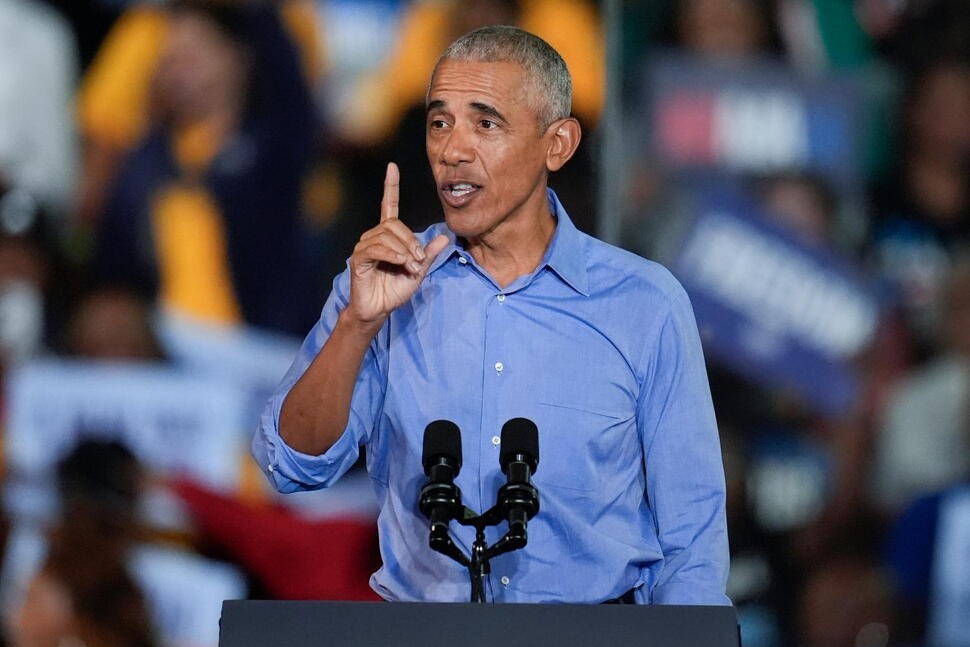
The controversy has also generated an explosive political narrative involving Vice President JD Vance supposedly confronting Obama personally over the project’s finances.
According to that account, Vance challenged the former president during a private meeting, produced damaging financial evidence, and demanded an explanation for the public costs.
However, no authenticated recording, official transcript, or reliable contemporary reporting establishes that such a confrontation occurred.
The documented dispute concerns the land agreement, the project’s rising construction costs, public infrastructure expenditures, and competing assessments of its benefits.
Those issues are substantial without attributing an invented accusation or secret exchange to the vice president.
The Obama Presidential Center officially opened on June 19, 2026, following years of planning, legal challenges, construction delays, and changes to the original development budget.
Located on Chicago’s South Side, the campus includes a museum, public gathering spaces, gardens, athletic facilities, a playground, and a branch of the Chicago Public Library.
Its centerpiece is a 225-foot museum tower featuring exhibitions exploring Obama’s presidency, the civil rights movement, democratic participation, and contemporary American history.
The project was developed by the Obama Foundation, the nonprofit organization responsible for fundraising, construction, and operating the presidential center.
Although frequently described as a presidential library, the facility differs from traditional institutions operated through the National Archives and Records Administration.
Obama’s official presidential records are maintained by the federal government, while the Chicago campus emphasizes museum exhibitions, educational programming, and community engagement.

That distinction matters because the center combines functions associated with presidential history and public education with facilities managed by a private nonprofit organization.
The unusual structure became a source of controversy long before construction began, especially when the foundation selected Jackson Park as the location.
Designed by Frederick Law Olmsted and Calvert Vaux, Jackson Park occupies an important place in Chicago’s landscape and public recreation history.
The park covers hundreds of acres and has served generations of residents through its walking areas, recreational facilities, natural spaces, and connections to Lake Michigan.
Preservation advocates objected to placing a major private institution within the park, arguing that the development would permanently alter public green space.
Their concerns intensified when Chicago officials approved the transfer of control over approximately 19.3 acres for the presidential center.
The arrangement did not represent an ordinary commercial purchase in which the foundation acquired the land outright.
Instead, the city retained legal ownership while granting the foundation long-term rights to occupy and use the property.
The agreement extends for 99 years, with a nominal payment of $10 associated with the arrangement.
Critics emphasize the unusually low payment because the land occupies a desirable location within a historically significant public park.
They argue that the nominal consideration raises legitimate questions about the value of public resources committed to the development.
Supporters counter that public institutions frequently enter favorable land agreements with nonprofit organizations when the anticipated benefits justify the arrangement.
Under that interpretation, the relevant economic question is not simply what the foundation paid for access to the property.
It is whether the public receives sufficient benefits through open spaces, cultural programming, employment, and improvements to surrounding neighborhoods.
The land agreement therefore presents a disagreement about public value rather than proof that the property was unlawfully sold.
The Chicago City Council approved the arrangement, and litigation challenging the development failed to prevent the project from proceeding.
In 2022, a federal appeals court upheld a decision denying preliminary relief sought by opponents of construction.
The court’s ruling allowed the project to continue, although it did not mean every policy criticism of the land agreement had been resolved.
Legal authorization and public approval are separate questions, particularly when a development involves extensive changes to shared public property.
The controversy became more complicated as construction expenses increased far beyond the earliest estimates.
Initial figures associated with the development placed construction costs around $300 million to $350 million.
By the time the project approached completion in 2026, the expected cost had increased to approximately $850 million.
That figure attracted considerable attention because it represented an increase of hundreds of millions of dollars over early projections.
But an even more significant development emerged after the presidential center opened.
In September 2026, the Obama Foundation disclosed that construction costs had reached approximately $909 million.
Foundation chief executive Valerie Jarrett attributed the increase over the previously announced figure to additional amenities incorporated into the campus.
The revised amount placed the project substantially closer to $1 billion than earlier public estimates had indicated.
The increase prompted questions about construction management, financial planning, and how the foundation communicated its changing estimates.
However, the $909 million construction figure must be distinguished from money spent by government agencies.
The foundation financed the center’s construction through private donations rather than a direct appropriation covering its principal buildings and exhibits.
That distinction is essential because describing the entire construction budget as a taxpayer expense would misrepresent the financing arrangement.
Nevertheless, private construction financing does not mean the project involved no public expenditures.
Chicago and Illinois undertook infrastructure work associated with the development, including road changes, transportation improvements, and utility-related projects.
Those costs became a separate source of controversy as critics questioned whether public agencies had accurately explained the financial obligations involved.
When the project was approved, estimates discussed approximately $350 million in public infrastructure improvements associated with the broader development.
That was an estimate of anticipated spending, not proof that taxpayers ultimately paid exactly $350 million.
The projected expenses involved both state and local responsibilities, including transportation work needed to accommodate changes around Jackson Park.
In February 2026, reporting identified approximately $229 million in state-managed infrastructure spending connected to the site.
The figure was higher than an earlier state estimate of approximately $174 million, raising additional questions about changing project costs.
However, state-managed spending can include federal transportation funds, making it important to distinguish the agency administering money from the original source of that money.
Chicago also carried out public infrastructure improvements associated with the center.
Local reporting subsequently identified approximately $123 million in city-related infrastructure work in and around Jackson Park.
Those improvements included modifications to roads, pedestrian access, and other transportation facilities serving the surrounding area.
Officials described the work as part of a broader effort to improve mobility and connect public spaces around the presidential campus.
Critics argued that taxpayers were absorbing costs necessary to make a privately operated institution functional.
Supporters responded that infrastructure improvements could also benefit residents, motorists, pedestrians, and visitors who never purchased admission to the museum.
Both arguments involve legitimate questions about how public infrastructure should be financed when it supports a major private development.
The available figures also require caution because different reports include different agencies, project categories, and accounting periods.
Adding every historical estimate together risks double-counting expenses or combining preliminary projections with final expenditures.
A complete accounting would need to distinguish direct costs, associated transportation projects, federal contributions, and infrastructure improvements delivering benefits beyond the center itself.
That remains one of the central accountability questions raised by the development.
Chicago residents have an interest in understanding exactly how much public money was committed and what improvements resulted from those expenditures.
The controversy is not limited to construction spending because the Obama Foundation’s long-term financial arrangements have also attracted attention.
Earlier reporting raised questions about an endowment arrangement intended to provide financial protection if the organization encountered difficulties maintaining the property.
The foundation’s commitments and the timing of deposits became subjects of criticism among observers who questioned the adequacy of financial safeguards.
Such concerns require examining the actual contractual obligations and audited financial statements rather than assuming that an incomplete reserve automatically constitutes fraud.
The foundation’s financial disclosures provide information about its assets, liabilities, commitments, and expenses, but those records must be interpreted alongside the agreements governing the project.
A nonprofit organization can legitimately finance construction through donations, borrowing arrangements, and multiyear commitments without those practices establishing wrongdoing.
The relevant oversight questions concern whether obligations were disclosed accurately, whether contractual requirements were met, and whether public agencies protected taxpayers.
Another controversy involved contractors and subcontractors that worked on the presidential center.
In June 2026, several subcontractors alleged that they had not received full payment for completed work.
Some of the reported complaints involved minority-owned companies whose participation had been presented as part of the project’s commitment to local economic opportunity.
The allegations attracted attention because supporting minority-owned businesses had been an important element of the foundation’s public description of the project.
The Obama Foundation responded that Lakeside Alliance, the project’s construction manager, held primary responsibility for hiring and managing subcontractors.
The foundation also stated that it had no outstanding disputed charges with the construction manager and no direct contractual relationships with the relevant subcontractors.
Those responses do not independently resolve every payment disagreement, but they demonstrate why responsibility must be examined through the specific construction contracts.
A subcontractor’s claim that money remains unpaid is a serious commercial dispute, yet it does not automatically establish that Obama or the foundation personally withheld funds unlawfully.
The controversy nevertheless adds another dimension to questions about how a high-profile nonprofit development manages complex financial and contractual relationships.
The project’s supporters point to substantial community facilities that have become available since the opening.
The campus includes publicly accessible outdoor areas, recreation facilities, cultural spaces, and a library branch serving residents and visitors.
Foundation representatives argue that the development is intended to generate continuing economic activity and encourage investment on Chicago’s South Side.
They also emphasize educational programming and opportunities for young people interested in civic engagement and public leadership.
The organization has presented the center as an institution designed to extend beyond preserving the former president’s personal legacy.
Its stated purpose includes encouraging community participation, supporting future leaders, and creating spaces that connect visitors with American democratic history.
Supporters also expect the museum to attract substantial tourism spending, potentially benefiting hotels, restaurants, transportation providers, and other local businesses.
A study associated with the University of Chicago projected approximately $220 million in annual economic activity connected to the center and surrounding communities.
That projection represents an estimate, not a verified measurement of annual benefits already realized.
Economic forecasts depend on assumptions about attendance, visitor spending, employment, and the extent to which new spending would otherwise have occurred elsewhere.
The first months of operations nevertheless provided evidence of significant public interest.
During its initial 100 days, the museum recorded more than 175,000 ticketed visitors, according to figures released around the center’s September milestone.
That attendance suggests the facility has attracted substantial public engagement, although attendance alone cannot establish the net economic benefit to Chicago taxpayers.
Visitors who purchase museum tickets contribute directly to the institution’s revenue, while those using free facilities may receive recreational and cultural benefits without paying admission.
The distribution of those benefits is especially important because the surrounding neighborhoods have experienced longstanding concerns about affordability and displacement.
Some residents support the investment but worry that rising property values could eventually increase rents and make housing less affordable.
Others hope the development will attract businesses and employment opportunities that provide meaningful benefits to existing communities.
Those concerns reflect a familiar challenge in urban development: investment can improve public amenities while also creating economic pressure for residents with limited incomes.
Whether the presidential center produces equitable development will depend partly on housing policy, local business opportunities, transportation access, and long-term community involvement.
Those outcomes cannot be determined exclusively by the project’s construction price or the nominal land payment.
They also cannot be assumed simply because the institution describes itself as a charitable or civic initiative.
Public accountability requires examining both the promised benefits and the actual consequences experienced by residents.
The political dimension of the controversy remains significant because Obama’s presidency continues to influence national debates about government spending and public institutions.
Republican critics have used the project’s rising costs and public infrastructure arrangements to question whether officials provided sufficient transparency.
Illinois Republican leaders have accused Democratic officials of exposing taxpayers to unnecessary expenses while presenting the center as a privately funded development.
Supporters reject the suggestion that publicly financed infrastructure automatically represents improper favoritism, arguing that major projects frequently require transportation improvements.
The available record establishes real public spending, a nominal land agreement, and substantial construction cost increases.
It does not establish that the Obama Foundation stole public land, that the former president personally committed financial fraud, or that the project’s charitable status was a disguise for criminal activity.
Nor does it establish the dramatic private confrontation attributed to JD Vance.
No reliable recording or contemporaneous account identifies a meeting in which Vance confronted Obama with financial documents and demanded an explanation for the arrangement.
The supposed final question that left everyone speechless therefore cannot be reproduced as an authentic statement from the vice president.
The absence of that exchange does not eliminate legitimate concerns about government spending or the public value of long-term land agreements.
Instead, it directs attention toward questions that can be answered through contracts, audited accounts, government expenditures, and measurable community outcomes.
The first question concerns whether Chicago obtained sufficient value from granting long-term access to a significant portion of Jackson Park.
The second concerns how much public money was ultimately spent on associated infrastructure and which government entities provided those funds.
The third concerns whether the development’s projected economic and community benefits are materializing as originally presented.
A fourth concerns whether contractors, workers, and nearby residents have received the opportunities and protections promised during the project’s planning.
These are questions suitable for independent audits, public hearings, and scrutiny of government documents.
They do not depend on an imagined confrontation between current and former national political leaders.
As of November 16, 2026, the center has opened, its construction costs have increased beyond earlier estimates, and public spending associated with the development remains an important subject of debate.
The originally publicized $850 million construction figure has been overtaken by the foundation’s subsequent disclosure of approximately $909 million.
The $350 million infrastructure figure frequently repeated in political commentary reflects an earlier projection rather than a verified final taxpayer bill.
The $10 agreement concerns long-term land-use rights, not an outright sale transferring ownership of the parkland to the former president.
Those distinctions are essential to understanding the financial controversy accurately.
For the Obama Foundation, the challenge is demonstrating that the institution delivers the public value promised during years of planning and fundraising.
For Chicago and Illinois officials, the responsibility involves providing transparent information about public expenditures, land commitments, and infrastructure benefits.
For residents, the practical question is whether the project improves access to cultural resources and economic opportunity without imposing disproportionate costs.
And for political critics, the most consequential scrutiny will come from identifying specific financial obligations and comparing promised outcomes with documented results.
The controversy surrounding the Obama Presidential Center therefore involves far more than a provocative headline about a ten-dollar land agreement.
It raises lasting questions about the relationship between private philanthropy and public property, the financing of major cultural institutions, and the standards used to measure public benefit.
The verified figures deserve examination, particularly as the center moves beyond construction into long-term operation.
The decisive issue is not whether an alleged secret exchange left Barack Obama unable to respond.
It is whether Chicago’s commitment of public land and infrastructure resources will ultimately deliver benefits that justify the decisions made on behalf of its residents.
