
The enormous timeline chart stood beside Senator Sheldon Whitehouse, but the most consequential document remained inside a folder on his desk.
Across the hearing room, Senator Tom Cotton prepared to challenge the argument that fossil fuel interests had exercised extraordinary influence over American climate policy.
The disagreement had already become politically charged.
Cotton questioned whether environmental regulations imposed unacceptable economic costs on American workers, consumers, and industries competing against foreign rivals.
Whitehouse wanted to examine a different problem.
How could Congress objectively evaluate climate policy when powerful financial interests spent enormous sums influencing the information lawmakers and voters received?
The Rhode Island senator had assembled decades of documentary evidence into a chronological display.
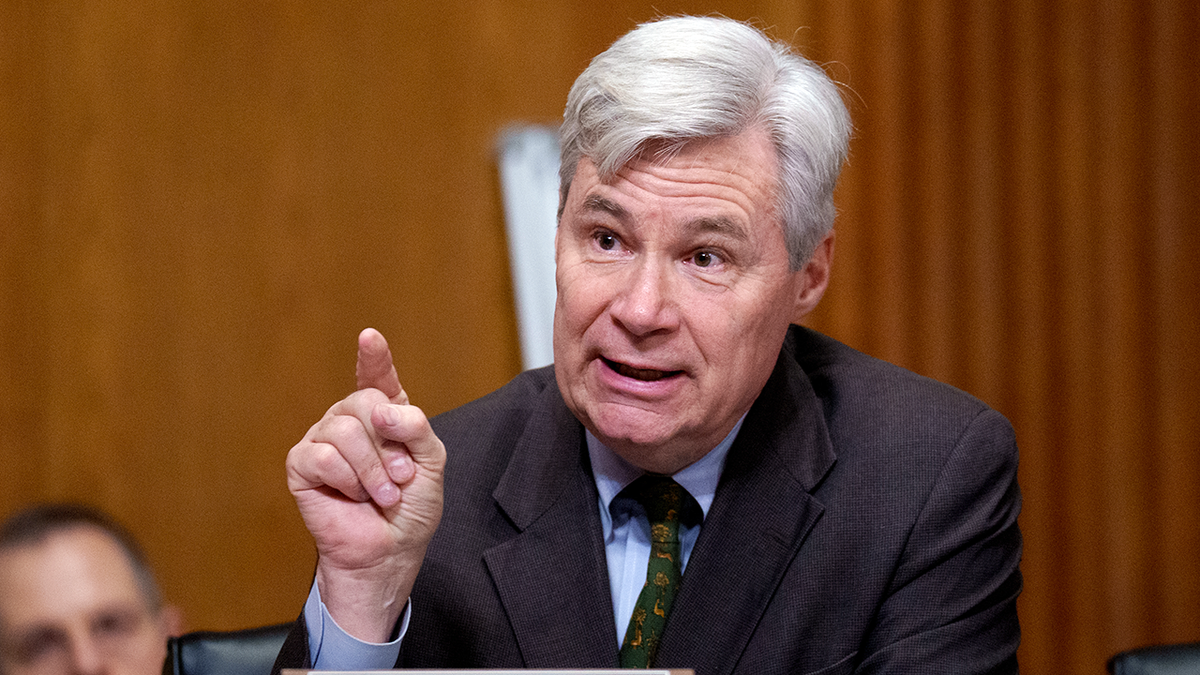
But the timeline was only the beginning.
The final document would force both senators to confront a distinction often lost in Washington’s loudest political arguments.
Campaign contributions were publicly measurable.
Political influence was considerably harder to prove.
And the difference between those two facts would determine whether the confrontation uncovered genuine accountability or merely another political accusation.
THE HEARING THAT BECAME A BATTLE OVER CLIMATE POLICY
Whitehouse began by identifying the broader disagreement.
For decades, American lawmakers had debated how to address greenhouse gas emissions while protecting jobs, maintaining affordable energy, and supporting economic growth.
Those concerns represented competing policy priorities rather than inherently incompatible goals.
Cotton emphasized the risks associated with imposing expensive restrictions on domestic energy producers.
He argued that American businesses could face disadvantages if other countries maintained less stringent environmental standards.
He also questioned whether certain climate proposals could raise household energy costs without producing corresponding global emissions reductions.
Whitehouse acknowledged that economic consequences deserved examination.
But he argued that evaluating those consequences required an accurate understanding of the climate problem itself.
The senator then turned toward his chart.
Its first entries reached back to the period when major energy companies were examining the possible consequences of rising atmospheric carbon dioxide.
Scientific research had already identified important connections between greenhouse gases and global warming.
Some energy companies possessed internal research discussing those risks.
Whitehouse argued that the public deserved to understand how industry knowledge compared with subsequent corporate messaging.
Cotton challenged the suggestion that historical corporate communications automatically established present-day political misconduct.
That objection introduced an important evidentiary distinction.
Evidence that a company understood climate risks did not independently prove that every subsequent lobbying position was dishonest.
Likewise, lawful political advocacy did not automatically establish corruption.
Whitehouse accepted that individual conclusions required specific supporting evidence.
But he maintained that examining patterns across decades could reveal relationships invisible when events were considered separately.
The first question was therefore not whether a particular senator had committed wrongdoing.
It was whether the documentary record showed a sustained effort to influence how Americans understood climate science.
THE TIMELINE THAT REVEALED DECADES OF CONFLICT
Whitehouse pointed to the earliest entries.
Historical investigations had uncovered research conducted or considered within the petroleum industry concerning the potential consequences of increasing carbon dioxide emissions.
The timeline then moved into the late twentieth century.
Public concern about global warming expanded as scientists accumulated evidence and international institutions developed increasingly detailed assessments.
At the same time, certain industry organizations supported campaigns emphasizing uncertainty about climate science.
One especially revealing document emerged in 1998.
An American Petroleum Institute communications strategy described efforts to influence public understanding of climate science and uncertainty.
The document became significant because it addressed public perceptions rather than merely scientific research.
Whitehouse emphasized that distinction.
Scientific uncertainty is a normal feature of research.
But deliberately emphasizing uncertainty to discourage action raises different questions when evidence of substantial risks already exists.
Cotton countered that organizations participating in public debate could legitimately challenge policy proposals and scientific interpretations.
Their right to advocate did not disappear because their views conflicted with environmental activists or government officials.
Whitehouse agreed that public debate required competing arguments.
However, he questioned whether voters could evaluate those arguments fairly without understanding their financial sponsorship.
The chart advanced through the following decades.
Industry associations, advocacy organizations, lobbying firms, and political committees became important participants in debates over energy regulation.
Some campaigns focused on the economic costs of emissions restrictions.
Others challenged climate research or questioned the effectiveness of proposed solutions.
The organizations involved did not all share identical positions.
Nor did every contribution from an energy-related business support climate science denial.
That complexity mattered.
Whitehouse’s larger concern involved the combination of industry-sponsored messaging, financial influence, and limited transparency.
His timeline suggested that the history could not be understood through isolated speeches or advertisements.
The next document would examine the financial mechanisms behind that broader political activity.
THE MONEY NETWORK BEHIND THE PUBLIC DEBATE
Whitehouse moved to a second display showing different forms of political spending.
The categories included direct campaign contributions, lobbying expenditures, independent political advertisements, and financial support for advocacy organizations.
Each category operated under different legal rules.
Direct contributions to federal candidates were subject to contribution limits and disclosure requirements.
Independent political expenditures could involve much larger sums, provided they complied with applicable restrictions.
Some politically active organizations could also receive funding without publicly identifying every underlying donor.
Whitehouse argued that the distinction was crucial.
A voter might see an advertisement promoting an energy policy without knowing who ultimately financed its production.
Similarly, an advocacy organization could criticize climate legislation while receiving support from interests affected by that legislation.
Neither circumstance necessarily established illegal conduct.
But incomplete disclosure could make it more difficult for the public to evaluate possible conflicts of interest.
Whitehouse directed attention to the Supreme Court’s 2010 Citizens United decision.
That ruling became a major turning point in American campaign finance law.
It protected certain independent political expenditures by corporations and unions under the First Amendment.
Whitehouse had repeatedly argued that the resulting political environment strengthened the influence of wealthy interests.
Cotton defended the importance of constitutional protections for political expression.
He questioned whether restricting political expenditures could unfairly favor certain speakers over others.
The argument highlighted a genuine constitutional disagreement.
Campaign finance restrictions can affect political speech, while weak disclosure requirements can make financial influence harder to examine.
Whitehouse did not claim that every independent expenditure constituted a bribe.
Instead, he distinguished lawful political participation from the separate concern that hidden financial relationships could reduce public accountability.
The distinction prevented the discussion from becoming a simplistic accusation.
Political money could create opportunities for access and influence.
But proving an unlawful exchange required evidence beyond the existence of a donation.
The senator then introduced the most difficult question.
How could Congress distinguish independent policy agreement from a position potentially influenced by financial incentives?
A contribution ledger could provide part of the answer.
It could not provide the entire answer.
THE FOSSIL FUEL DOCUMENTS THAT CHANGED THE ARGUMENT
Whitehouse presented findings from congressional investigations into fossil fuel industry communications.
A joint investigation involving Senate Budget Committee and House Oversight Committee Democratic staff had examined internal industry materials.
In April 2024, investigators released a report addressing alleged differences between public corporate climate commitments and private industry strategies.
The report was titled “Denial, Disinformation, and Doublespeak: Big Oil’s Evolving Efforts to Avoid Accountability for Climate Change.”
Its findings included criticism of corporate messaging and efforts to influence climate policy.
The investigation examined major companies and the American Petroleum Institute.
Whitehouse’s argument focused on the contrast between corporate promises and internal decision-making.
A company might publicly endorse emissions reduction goals while privately supporting organizations opposing particular regulations.
That discrepancy could be relevant to evaluating the company’s overall strategy.
However, determining whether such conduct amounted to deception depended on the specific communications, context, and evidence.
Cotton challenged the suggestion that opposing a proposed regulation necessarily contradicted concern about climate change.
A company could acknowledge greenhouse gas risks while disputing the costs or effectiveness of a specific policy.
Whitehouse recognized that distinction.
But he emphasized that internal communications could help establish whether public statements accurately represented corporate intentions.
That was why documentary investigations mattered.
They allowed lawmakers to compare public commitments with information unavailable to ordinary voters.
The senator then returned to the timeline.
The industry had faced decades of scientific warnings, political debates, changing market conditions, and demands for greater disclosure.
Yet arguments over climate action remained deeply polarized.
Whitehouse argued that financial influence helped explain some of that division.
Cotton maintained that legitimate economic disagreements could exist independently of corporate lobbying.
Both propositions required careful examination.
A political position could reflect genuine policy beliefs.
It could also align with the financial interests of major donors.
The mere existence of that alignment did not reveal which explanation applied.
That uncertainty made the final financial document especially important.
THE LEDGER THAT TURNED A POLITICAL ACCUSATION INTO AN EVIDENCE TEST
Whitehouse finally opened the folder that had remained on his desk.
Inside was a financial ledger organized into several columns.

The first identified publicly disclosed political contributions.
The second recorded reported lobbying expenditures.
The third separated independent political spending from contributions made directly to candidate committees.
The fourth identified the policy positions associated with the period under review.
Cotton examined the categories.
The ledger appeared to offer exactly what the confrontation had promised.
A way to compare political money with congressional activity.
Whitehouse explained that the numbers came from different disclosure systems and could not simply be combined into one total.
Campaign contributions were not interchangeable with lobbying expenditures.
Money spent by outside organizations did not necessarily enter a candidate’s campaign account.
And donations attributed to an industry could include individuals with different political motivations.
These distinctions prevented the chart from becoming misleading.
Cotton questioned whether the document proved that his own decisions had been purchased.
That was the decisive challenge.
Whitehouse examined the ledger and acknowledged what it could establish.
Publicly disclosed financial relationships could be documented.
Policy positions and voting records could also be documented.
But the existence of financial support did not, by itself, prove that a senator adopted a position in exchange for money.
The ledger contained no verified agreement establishing such an exchange.
It did not establish an individual price for Cotton’s political loyalty.
The confrontation therefore reached a more consequential distinction.
A financial record could reveal relationships deserving public scrutiny without proving an unlawful transaction.
Whitehouse refused to discard the record merely because it could not answer every question.
Cotton insisted that the absence of proof should prevent unsupported allegations about personal corruption.
Their disagreement was substantial.
One senator emphasized the danger of financial influence operating through relationships that could be difficult to expose.
The other emphasized the danger of treating lawful political participation as evidence of misconduct.
The ledger did not resolve that disagreement through a dramatic confession.
Instead, it clarified which questions the evidence could answer and which still required investigation.
That distinction would become the confrontation’s turning point.
THE FINAL DISCOVERY THAT REDEFINED ACCOUNTABILITY
Whitehouse returned to the financial documents.
The most revealing feature was not an individual contribution total.
It was the separation between money that disclosure laws made visible and funding whose ultimate sources could remain difficult to identify.
Public records could establish certain direct contributions, reported expenditures, and lobbying activities.
But those records did not necessarily reveal every donor financing politically active organizations.
This limitation affected the conclusions investigators could responsibly draw.
If a donor remained undisclosed, investigators could not simply attribute that money to a particular corporation or politician.
If a contribution was disclosed, investigators could identify the financial relationship without automatically proving improper influence.
The distinction created two separate transparency problems.
The first involved information that was publicly available but easily misunderstood.
The second involved information that disclosure requirements did not fully reveal.
Whitehouse argued that meaningful reform required addressing both problems.
Citizens needed accurate financial records, clear distinctions between expenditure categories, and stronger mechanisms for identifying potential conflicts.
Cotton maintained that transparency measures should not become tools for punishing disfavored political speech.
The constitutional issue remained legitimate.
But it did not eliminate the public interest in knowing who financed influential political campaigns.
The senator then connected the evidence to climate policy.
When lawmakers considered emissions standards, energy subsidies, infrastructure spending, or environmental regulations, the public deserved to understand relevant financial interests.
Industry representatives deserved opportunities to explain their positions.
Environmental organizations deserved the same opportunity.
And elected officials remained responsible for justifying their decisions through evidence and policy arguments.
That standard applied regardless of party.
The final revelation therefore concerned the limits of the financial evidence itself.
The ledger could document financial relationships.
It could expose discrepancies and identify questions requiring additional investigation.
But it could not manufacture proof of personal wrongdoing that the underlying records did not contain.
The distinction mattered because unsupported accusations could undermine the very accountability investigators sought to strengthen.
Whitehouse’s strongest argument did not require inventing a secret payment.
It required demonstrating why transparent political financing was relevant to evaluating public decisions.
Cotton’s strongest response did not require dismissing every concern about money.
It required distinguishing legitimate advocacy from proven misconduct.
The dispute ended with a more precise question than the one that began it.
How much financial transparency should Americans demand before accepting that important policy decisions are being made independently?
THE CONSEQUENCE WASHINGTON COULD NOT IGNORE
The confrontation left both senators facing an issue larger than their disagreement.
Climate policy involved scientific evidence, economic tradeoffs, constitutional rights, and the political power of competing interests.
Each deserved independent examination.
The scientific evidence for human-caused global warming did not depend on whether a particular corporation funded a political advertisement.
Similarly, a senator’s policy position could not be judged solely by identifying contributors who supported similar goals.
But financial relationships remained relevant to public accountability.
Whitehouse’s documented investigations had drawn attention to industry communications and political spending that ordinary voters might never otherwise examine.
The 2024 congressional investigation provided specific materials for evaluating corporate claims about climate policy.
Its findings also demonstrated why documentary evidence carried greater analytical value than unsupported assumptions about political motives.
The financial ledger in the confrontation illustrated the next challenge.
Information could reveal possible conflicts without conclusively establishing corruption.
That limitation was not a reason to abandon scrutiny.
It was a reason to demand better records and more careful analysis.
For Whitehouse, the central concern remained the influence of powerful financial interests on national climate decisions.
For Cotton, the competing concern involved protecting legitimate political disagreement and preventing allegations from outrunning available evidence.
The two positions did not automatically cancel each other.
A functioning democratic system required space for disagreement and mechanisms for examining potential conflicts of interest.
The consequences extended beyond fossil fuel policy.
Similar questions arose whenever industries with substantial resources sought to influence legislation affecting their businesses.
The public needed to distinguish advocacy, access, persuasion, undisclosed influence, and actual unlawful exchanges.
Those categories were not interchangeable.
And treating them as identical would make the political debate less accurate, not more accountable.
The timeline had established the history of an enduring conflict.
The congressional documents had supplied evidence of contested corporate practices.
The ledger had revealed the boundaries of what financial records could prove.
Together, they produced a result more substantial than a momentary exchange of insults.
They clarified the evidence necessary to evaluate claims about money and political influence.
The most consequential demand was therefore not that one senator confess to a motive assigned by an opponent.
It was that powerful participants in public policy debates face meaningful scrutiny grounded in verifiable information.
Campaign contributions should be accurately disclosed.
Lobbying activity should be documented under applicable laws.
Corporate statements should be compared with reliable internal evidence when that evidence becomes available.
And allegations of personal corruption should require proof rather than political disagreement alone.
The central question had never been whether money existed in politics.
Everyone in the room already knew that it did.
The question was whether American voters possessed enough reliable information to understand its influence.
For a democracy confronting decisions with enormous environmental and economic consequences, that was no minor distinction.
Because the real danger is not simply that wealthy interests participate in political debate.
It is that voters may be unable to distinguish open persuasion from influence that remains hidden from public examination.
And when the financial evidence is incomplete, the responsible response is not to invent a price tag for loyalty.
It is to demand the transparency needed to determine what that money actually accomplished.
