
ABC News anchor David Muir opened his November 10 broadcast with a dramatic development from Washington: House Republicans had blocked a rare impeachment effort against Defense Secretary Pete Hegseth.
The challenge came from within their own party, as Kentucky Republican Thomas Massie accused Hegseth of committing serious constitutional violations during American military operations.
For a Republican administration already facing questions about the Iran war, the impeachment resolution created an unusual confrontation between a conservative congressman and President Donald Trump’s defense secretary.

Massie introduced eight articles of impeachment, arguing that Congress could no longer overlook disputes involving presidential war powers, civilian casualties, and the Pentagon’s conduct.
But the decisive development came when House Republicans voted overwhelmingly to prevent the resolution from advancing, demonstrating the limits of Massie’s support inside his own conference.
By a vote of 211 to 204, the House referred the impeachment measure to the Judiciary Committee, effectively ending its immediate prospects during the current congressional session.
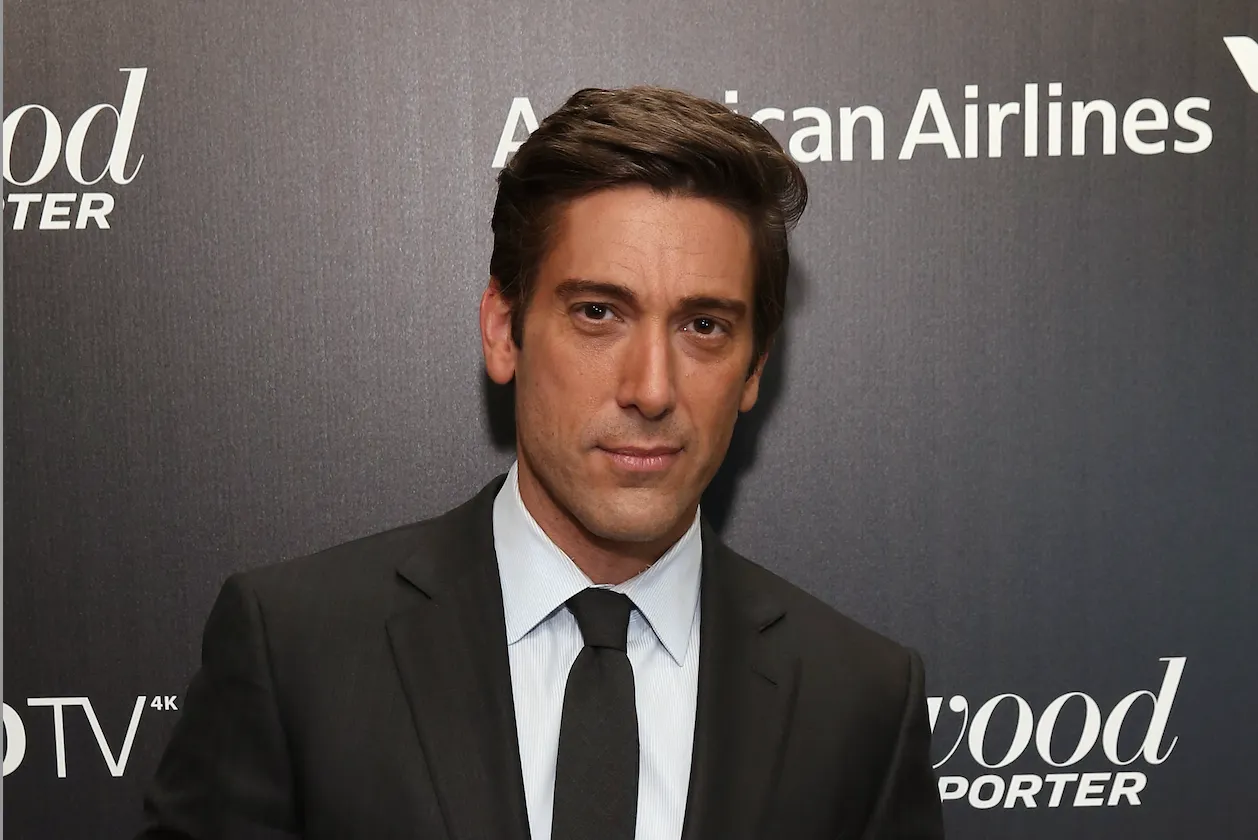
Muir brought that result to a national television audience, introducing correspondent Rachel Scott’s coverage of the vote and Hegseth’s response to the accusations.
The broadcast documented an important division over military accountability, but it did not establish that Republican leaders were secretly orchestrating a conspiracy behind closed doors.
Nor did Muir reveal an authenticated private confession, hidden political mastermind, or extraordinary statement proving that the Republican Party had fractured into two equal camps.
The verified story concerns an identifiable impeachment resolution, recorded congressional votes, public statements from senior officials, and competing interpretations of constitutional military authority.
ABC News+2
The dispute began on November 9, when Massie formally introduced his impeachment articles following the Republican Party’s substantial defeats in the November 3 midterm elections.
Those results had already raised questions about the administration’s handling of the economy and the Iran conflict, which had become politically contentious.
Massie argued that the Pentagon’s actions deserved independent congressional examination regardless of the defense secretary’s political affiliation or the president’s position.
His resolution accused Hegseth of exceeding lawful authority, participating in military operations without sufficient congressional authorization, and violating obligations governing the use of force.
The accusations extended across several military campaigns, making the proposal broader than an ordinary disagreement concerning one tactical decision or battlefield operation.
Four articles concerned Iran, including allegations that military action continued beyond the period permitted by the War Powers Resolution without the necessary congressional authorization.
Another Iran-related accusation involved a February 28 strike on a girls’ school in Minab that killed numerous children and prompted questions about civilian protections.
Massie argued that the circumstances surrounding the strike warranted scrutiny of the Pentagon’s compliance with legal requirements intended to minimize harm to civilians.
Two additional articles concerned Venezuela, including the operation targeting Nicolás Maduro and strikes against vessels suspected of involvement in drug trafficking.
Another article addressed military operations against Houthi forces in Yemen, while the final allegation involved actions taken against Democratic Senator Mark Kelly.
The Kelly accusation centered on alleged retaliation after the senator and other lawmakers reminded military personnel of their obligation to refuse unlawful orders.
Together, the eight articles presented Massie’s argument that disputed military policies represented more than errors of judgment and potentially satisfied constitutional standards for impeachment.
Those allegations remain claims made in a congressional resolution, rather than findings established through a trial or an independent judicial determination.
Hegseth denied wrongdoing, while the administration defended the military operations and argued that Massie was attempting to criminalize legitimate national security decisions.
The distinction is important because impeachment involves constitutional judgments about official conduct, not merely whether a particular military operation is popular or politically controversial.
Reuters
Massie’s decision was particularly striking because lawmakers ordinarily face pressure to support Cabinet officials appointed by presidents from their own political party.
The Kentucky Republican nevertheless maintained that Congress possessed responsibilities extending beyond partisan loyalty, especially regarding authorization for military conflict.
His argument drew on a longstanding constitutional debate over the respective powers of Congress and the president when American military forces engage overseas.
The Constitution assigns Congress significant authority concerning war and military appropriations, while the president serves as commander in chief of the armed forces.
Disagreements arise when presidents initiate or continue military operations without a formal declaration of war or specific authorization for the circumstances involved.
The War Powers Resolution of 1973 attempted to establish procedures for consultation, reporting, and limits on military operations undertaken without congressional approval.
Presidents of both parties have disputed aspects of that framework, particularly the extent to which it restricts their independent constitutional authority.
Massie contended that the administration had exceeded applicable limits during the Iran conflict, creating grounds for congressional action against the defense secretary.
The administration rejected that interpretation, maintaining that military operations had been conducted lawfully under presidential authority and existing national security responsibilities.
Resolving those competing claims would require detailed consideration of the operations, their legal justifications, congressional actions, and the authority exercised by Hegseth.
Massie’s impeachment resolution sought to force that confrontation, but Republican leadership declined to allow the articles to proceed directly toward an impeachment vote.
House Speaker Mike Johnson warned that impeaching the defense secretary while American military operations continued would send a damaging message about national security leadership.
The speaker’s criticism reflected Republican concerns that impeachment proceedings could undermine confidence in the Pentagon during an active military conflict.
Massie countered that the existence of military operations made accountability more important, not less, because the consequences involved American service members and civilians.
His disagreement with Johnson revealed an internal Republican divide over whether Congress should prioritize executive stability or use impeachment to challenge disputed military conduct.
But the size of that division became clearer when representatives recorded their votes on November 10.
Before the vote, Hegseth appeared at a Pentagon news conference and delivered a direct response to Massie’s accusations.
He dismissed the impeachment effort as a political spectacle and characterized the allegations as an attack on military personnel carrying out the administration’s orders.
Hegseth also used the words “slander” and “sabotage” while rejecting the resolution, language featured in ABC’s coverage of the confrontation.
His response was public and combative, rather than the secret reaction described in sensational accounts suggesting that officials had been caught in panic.
President Trump likewise expressed support for Hegseth, making clear that he opposed removing the defense secretary over Massie’s accusations.
Vice President JD Vance defended the administration’s position, while Republican leaders argued that policy disputes did not automatically justify impeachment proceedings.
Their responses demonstrated that Massie had challenged an official who retained substantial support among the party’s national leadership.
Yet they did not independently determine whether every disputed military action complied with applicable law or whether Congress should conduct further oversight.
The defense secretary’s supporters emphasized the risks of undermining military leadership during wartime, while Massie emphasized the risks of allowing constitutional questions to go unanswered.
Both arguments involved institutional responsibilities that extend beyond the political fortunes of individual officeholders.
The immediate decision, however, belonged to the House, where lawmakers considered a procedural motion rather than voting directly on Hegseth’s removal.
Republican Representative Darrell Issa offered the motion to refer Massie’s impeachment resolution to the Judiciary Committee, effectively preventing an immediate decision on the articles.
The motion passed with 211 votes in favor and 204 against, while eighteen representatives did not participate in the recorded vote.
Of those supporting referral, 210 were Republicans and one was an independent, revealing overwhelming Republican support for the procedural maneuver.
Massie was the only Republican voting against referral, joining the 203 Democrats who opposed moving the resolution away from immediate consideration.
The result demonstrated that the Republican conference was not evenly divided on the immediate impeachment question, despite substantial internal debate about the Iran war.
It also revealed that Democrats were willing to oppose the procedural move, although their votes did not establish unanimous agreement with every allegation in Massie’s resolution.
A vote against referral is not identical to a vote approving articles of impeachment, and those two decisions should not be treated interchangeably.
Likewise, the successful referral did not constitute a legal finding that Hegseth had been cleared of misconduct or that the resolution’s allegations were false.
It established that a majority of participating representatives preferred to send the measure to committee instead of permitting immediate impeachment proceedings.
The official Congressional Record confirms the 211–204 outcome and the procedural disposition of the resolution, providing an independently documented account of the decision.
The vote effectively ended the impeachment effort during the current Republican-controlled Congress, but it did not prevent a future Congress from examining similar allegations.
ABC News+2
Muir’s broadcast focused on that immediate result, identifying the vote as the principal development before introducing Scott’s report from Washington.
Scott described Republicans as voting to protect Hegseth after his public rejection of Massie’s allegations, connecting the House decision to the Pentagon news conference.
The coverage did not present an undisclosed financier, secret adviser, or hidden political operator as the cause of the congressional result.
Instead, it reported the actions of identifiable lawmakers and administration officials whose positions were already available through public statements and recorded votes.
The distinction matters because allegations about undisclosed control over government decisions require evidence beyond the existence of party discipline or a coordinated voting strategy.
Republican leaders had clear institutional and political reasons to oppose impeachment proceedings, and those reasons were expressed openly before the vote.
Similarly, Massie had publicly explained why he believed constitutional obligations required action against a defense secretary serving under a Republican president.
The confrontation therefore exposed disagreement over legal principles and political strategy without demonstrating an authenticated conspiracy behind the final result.
Massie’s challenge also carried unusual personal circumstances because he was approaching the end of his House service after losing his Republican primary earlier in 2026.
His departure reduced the immediate electoral consequences of confronting Trump and Republican leadership, although it did not determine the merits of his accusations.
Massie had already established a reputation for challenging Republican presidents and congressional leaders when he believed their decisions exceeded constitutional limits.
That history helped explain why he was willing to pursue an impeachment resolution despite knowing that support among Republican colleagues was limited.
The initiative also reflected frustration over the Iran war, whose military and economic consequences had become important subjects during the midterm election campaign.
Republicans had suffered substantial losses on November 3, with voter concerns about affordability and the conflict contributing to the party’s difficult political environment.
The election transformed the impeachment debate because Democrats were preparing to assume control of both congressional chambers in January.
Massie warned that postponing accountability would leave the matter to an incoming Democratic majority with different political priorities and investigative strategies.
He suggested that future investigators could conduct extensive hearings, obtain testimony from Pentagon personnel, and pursue inquiries broader than his eight impeachment articles.
That warning was political speculation about future congressional action, not confirmation that Democratic leaders had already approved a particular impeachment process.
Nevertheless, the change in congressional control creates a genuine possibility of renewed oversight concerning military operations and the administration’s handling of the Iran conflict.
Incoming Democratic leaders have indicated an interest in investigating executive decisions, including matters involving military authority and potential government misconduct.
Such investigations would require decisions by the relevant committees, requests for evidence, and consideration of the legal standards governing congressional oversight.
They would not automatically establish the accuracy of Massie’s allegations or guarantee a future vote to impeach Hegseth.
For Hegseth, the November 10 result delivered immediate political protection while leaving broader questions about military operations unresolved.
For Trump, the vote demonstrated continued Republican support for a prominent Cabinet official despite the party’s recent electoral defeats.
For Massie, it confirmed that his argument had not persuaded enough Republican colleagues to permit immediate impeachment proceedings.
The result also presented Republicans with a strategic dilemma as they prepared for the approaching transfer of congressional power.
Some lawmakers argued that the party needed to maintain unity and finish its remaining legislative business rather than begin proceedings against administration officials.
Others questioned whether continuing to defend controversial decisions could damage public confidence in Congress’s ability to oversee the executive branch.
Those disagreements are relevant even when they do not produce comparable voting blocs or an immediate split in the party’s leadership.
A political party can remain united on a procedural vote while containing substantial disagreements over policy, accountability, and the consequences of government decisions.
That is precisely why describing the House vote as a complete Republican civil war risks overstating what the recorded evidence demonstrates.
Massie challenged Hegseth forcefully, but the overwhelming majority of participating Republicans supported the move that prevented the resolution from advancing.
The broadcast also showed that Hegseth was not avoiding public scrutiny, since he had already responded to reporters and rejected the impeachment allegations.
His willingness to challenge Massie publicly did not resolve the constitutional questions, but it contradicted claims of a concealed, incapacitating personal reaction.
The same caution applies to suggestions that David Muir delivered a mysterious sentence exposing the hidden forces controlling Republican leadership.
The authenticated broadcast documents his introduction of the impeachment vote and Scott’s account of the political dispute, not an extraordinary secret revelation.
The relevant financial, political, or personal relationships of officials would require separate documentation before they could be identified as determining the outcome.
No such evidence is established by the public House vote or the television report describing it.
The stronger documented story is the unusual confrontation between a Republican lawmaker invoking congressional war powers and a Republican administration defending its military decisions.
That disagreement touches the constitutional responsibility of Congress to examine war-making authority, military appropriations, and the conduct of senior executive officials.
It also concerns the legitimate authority of the president and defense secretary to direct operations intended to protect national security.
Those powers exist within a constitutional structure designed to distribute responsibility rather than place every military decision under one institution’s exclusive control.
Determining whether that structure has been respected requires examining specific operations, governing statutes, and the decisions made by responsible officials.
The Minab school strike, maritime operations, and alleged retaliation against Mark Kelly each raise distinct factual and legal questions within Massie’s resolution.
They should not be treated as interchangeable allegations, because their relevant legal standards and the evidence necessary to evaluate them differ.
Civilian casualty questions involve targeting decisions and protections under the laws of armed conflict, while unauthorized war allegations concern the allocation of constitutional authority.
Claims of retaliation against an elected official introduce still other questions involving military administration, protected expression, and the proper use of executive power.
A meaningful investigation would need to evaluate those allegations separately rather than presuming that proof of one automatically validates the others.
For lawmakers, the challenge is ensuring that oversight remains grounded in reliable evidence and clear legal reasoning instead of partisan expectations.
For the Pentagon, accountability requires explaining disputed decisions while protecting legitimately sensitive military information and the safety of personnel involved in operations.
For Americans following the controversy, the most consequential questions involve whether military actions were lawfully authorized and whether civilian protections were adequately observed.
As of November 15, 2026, the verified record establishes Massie’s eight impeachment articles, Hegseth’s public rejection, and the House’s procedural decision.
It does not establish a secret political mastermind, an undisclosed private concession, or a broadcast revelation proving that Republican leaders were acting under hidden control.
The November 10 vote settled the immediate procedural dispute, but it did not settle every question about presidential war powers or Pentagon accountability.
Those issues may return when the next Congress convenes, particularly if lawmakers seek additional records or testimony concerning operations described in Massie’s resolution.
Any future findings will depend on evidence obtained through legitimate investigative procedures rather than assumptions drawn from the political affiliations of those involved.
Muir’s coverage brought a significant congressional development to viewers, but the underlying importance lies in the constitutional questions raised by the attempted impeachment.
The Republican majority chose referral over immediate impeachment, demonstrating that Massie remained largely isolated within his party on that procedural decision.
Hegseth retained the president’s support and remained in office, while Massie’s allegations continued to raise questions that a procedural vote alone could not answer.
The central unresolved issue is whether Congress will undertake a fuller examination of those military decisions or leave the disputes to future political and legal proceedings.
That decision, rather than an unverified secret revelation, will determine the lasting significance of the impeachment challenge and the divisions it revealed.
