
Amy Klobuchar, John Kennedy and the Voter Rights Debate: The Real Senate Hearing Behind a Viral Showdown
A dramatic political story circulating online describes an explosive confrontation between Senators Amy Klobuchar and John Kennedy over voter suppression, election security and the future of American democracy. According to the account, Kennedy defended aggressive voter-roll purges and polling-place restrictions, while Klobuchar responded with accounts of elderly voters and veterans struggling to exercise their constitutional rights. The story ends with Kennedy supposedly producing an unmarked folder and delivering a final sentence that silenced the chamber.
The dramatic exchange, however, is not supported by the available record. There is no verified transcript showing Kennedy defending a nationwide voter-purge scheme in a direct confrontation with Klobuchar, nor is there evidence of the mysterious folder or the closing remark described in the viral post. What does exist is a genuine Senate hearing in July 2026, where both senators questioned Acting Attorney General Todd Blanche on separate issues.
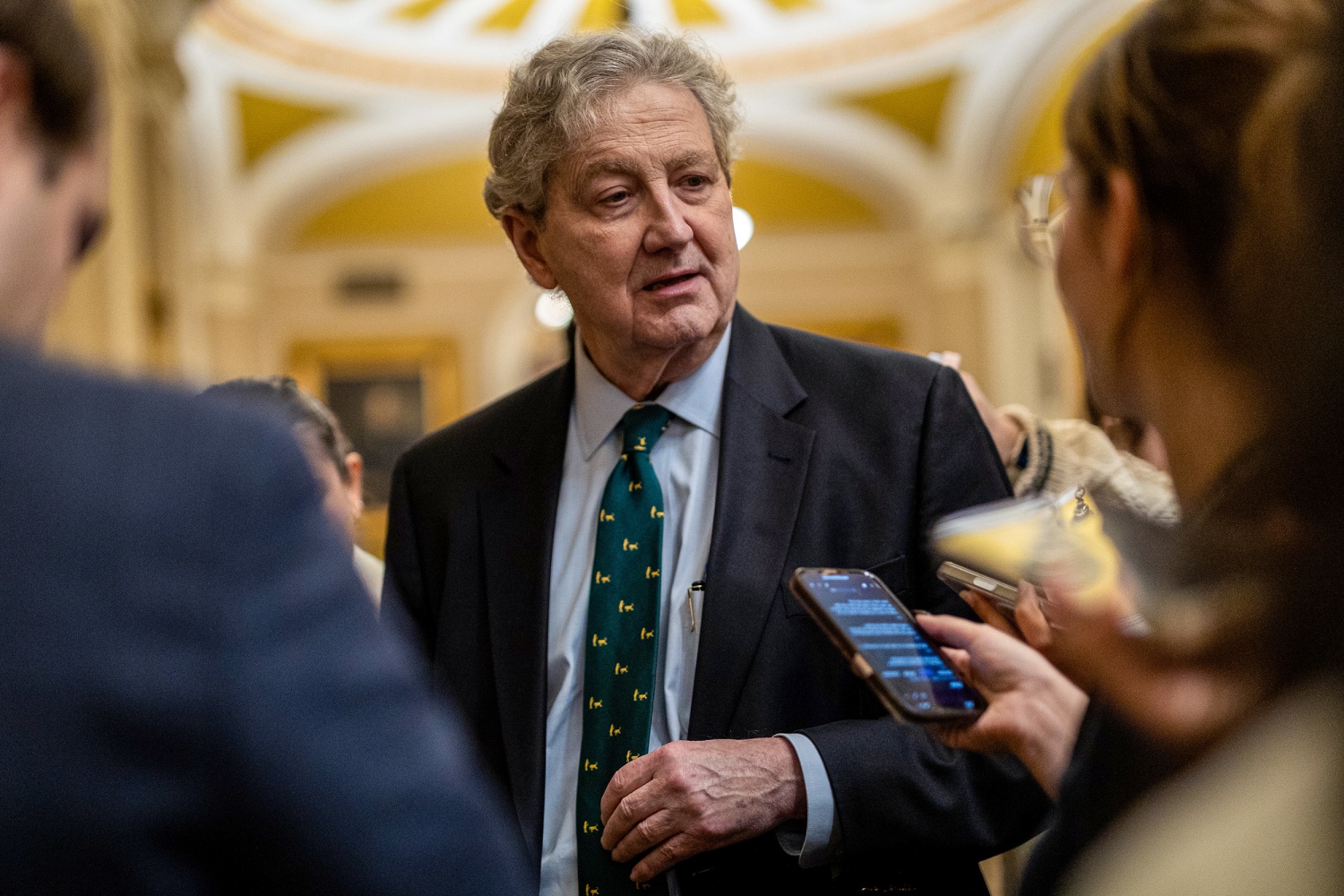
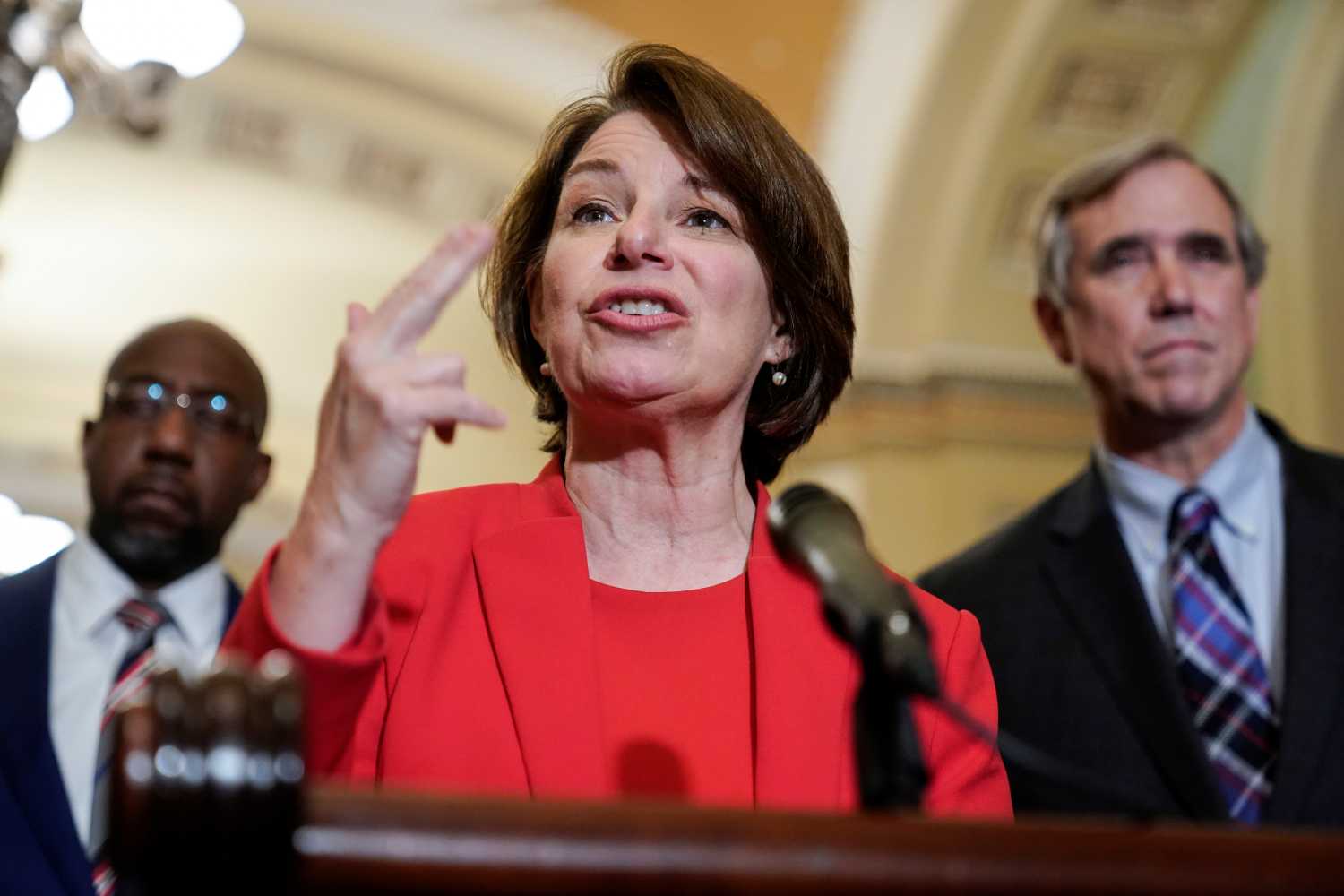
During the July 15 hearing before the Senate Judiciary Committee, Klobuchar questioned Blanche about the Justice Department’s efforts to obtain sensitive voter information from state governments. She also pressed him on whether federal agents would be deployed to polling locations and raised concerns about the department’s cooperation with state and local election officials. Her questions focused on the boundaries of federal authority, voter privacy and the administration of elections.
Klobuchar specifically asked Blanche whether he would commit to following federal law and not deploying federal agents to polling places. When she pressed him again, Blanche said he would follow the law. She then asked whether he understood why American voters might be concerned about armed federal agents appearing at election sites. Blanche responded that he was not aware of armed agents being present at polling places.
The exchange continued with Klobuchar raising concerns about the Justice Department’s requests for states to turn over private voter data. She cited the number of states that had resisted those requests and referred to court decisions addressing the legality of the department’s efforts. Blanche defended the administration’s position, arguing that ensuring fair elections and limiting voting to eligible citizens were legitimate objectives. Klobuchar then challenged whether the department’s actions were consistent with established election-security practices and cooperation between federal and state officials.
This was a substantive disagreement about election administration, not the dramatic personal confrontation portrayed online. The official hearing transcript records a series of questions and answers between Klobuchar and Blanche. It does not document Kennedy interrupting her, defending voter purges or responding to a folder of evidence presented against him.

Kennedy did participate in the same hearing. His questioning of Blanche began later, after Klobuchar had completed her allotted time. Kennedy focused on the relationship between the president and the attorney general, the independence of the Justice Department, the release of documents connected to Jeffrey Epstein and questions involving former special counsel Jack Smith. His remarks included pointed questions about whether Blanche had ever disagreed with the president and whether he would refuse an illegal presidential request.
The fact that both senators appeared at the same hearing may help explain how the viral narrative acquired an appearance of authenticity. But the transcript shows no direct Kennedy–Klobuchar exchange over voter suppression. Their separate questioning of the same witness should not be presented as a confrontation that never occurred.
The story also draws on a genuine and longstanding part of Klobuchar’s political record: her efforts to highlight barriers faced by older Americans, people with disabilities and other voters who encounter difficulties accessing polling places.
In November 2017, Klobuchar and Senator Bob Casey released a report examining barriers to voting for older Americans. The report identified strict identification requirements, polling-place closures, inaccessible voting locations and restrictions on early and absentee voting as obstacles that could prevent seniors and people with disabilities from casting ballots. It also cited findings from the Government Accountability Office indicating that only 17 percent of the polling places examined during the 2016 election were fully accessible.
Klobuchar continued raising these concerns in subsequent years. In January 2022, while addressing the Senate over federal voting legislation, she described a veteran in central Georgia who had taken older neighbors to vote early. After encountering a line extending around the block, the neighbors abandoned their attempt. When the veteran returned to vote himself, he reportedly waited three hours in the sun.
Klobuchar identified the veteran as someone who had served in the Air Force during Operation Desert Storm. Her point was that a person who had served the country should not face extraordinary obstacles when attempting to participate in its elections.
She also described a voter in a wheelchair in Texas who reportedly had to travel for hours and take multiple buses to reach a ballot drop box. Another example involved an Arizona voter whose mail ballot was not received after the voter had been classified as inactive despite having participated in an earlier election. These examples were part of Klobuchar’s broader argument that election rules and administrative decisions can have consequences for eligible voters.
Her concerns were not limited to speeches. In 2018, Klobuchar and Senator Sherrod Brown introduced the SAVE VOTERS Act, legislation intended to protect registered voters from being removed from active rolls solely because they had not voted or responded to a state notice. The proposal addressed the possibility that people serving overseas, traveling, experiencing illness or facing housing instability could be incorrectly targeted by voter-removal practices.
In 2020, Klobuchar and Casey also introduced the Accessible Voting Act, which sought to improve voting access for seniors, people with disabilities, Native Americans, Alaska Natives and people with limited English proficiency. The proposal reflected a broader concern that the right to vote can be restricted in practice even when it remains formally protected by law.
At the same time, election officials have legitimate responsibilities to maintain accurate voter-registration lists. Removing ineligible registrations, updating addresses and preventing duplicate registrations are recognized elements of election administration. The central legal question is whether those procedures are conducted uniformly, without discrimination and in compliance with federal law. The National Voter Registration Act establishes requirements governing voter-list maintenance, including protections against removing individuals simply because they have failed to vote.
That distinction is important because the debate over election integrity and voting access is often presented as a choice between two incompatible goals. In reality, accurate voter records and meaningful access to the ballot are both necessary components of a functioning electoral system. The challenge for lawmakers and election administrators is to ensure that efforts to maintain accurate records do not improperly remove eligible citizens or create unnecessary obstacles to participation.
The July 2026 hearing brought several of these questions into focus. Klobuchar challenged Blanche on voter information, federal involvement in elections and cooperation with state officials. Kennedy later questioned Blanche on the Justice Department’s relationship with the president and other matters. Their appearances reflected different lines of inquiry during the same proceeding, rather than the direct political battle described in the viral account.
The broader argument remains consequential. How much information should states be required to share with federal authorities? What safeguards should protect voters’ personal data? Under what circumstances can federal officials become involved at polling locations? And how should states balance the removal of outdated registrations with the obligation to protect eligible voters?
Those questions deserve scrutiny through legislation, court decisions, official testimony and documented cases. A theatrical exchange featuring an unexplained folder may attract attention, but it cannot substitute for the actual record.
The verified story is therefore less cinematic but more revealing: Klobuchar used a Senate hearing to challenge the Justice Department’s approach to election administration, while Kennedy questioned the same nominee on separate issues. Their disagreements were part of a wider debate over federal authority, institutional independence and public confidence in government.
For voters, the essential issue is not which senator supposedly delivered the final knockout. It is whether election systems can remain accurate, secure and accessible without compromising the rights of eligible Americans. That question is far more important than an unverified confrontation designed for social media.
