
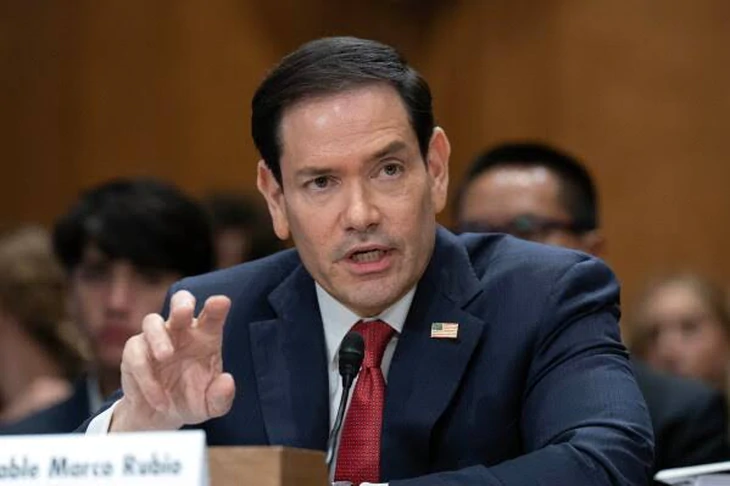
The confrontation began with a personal attack, but the most difficult question concerned 25,000 jobs that never materialized in New York City.
Alexandria Ocasio-Cortez challenged Marco Rubio’s use of his family’s immigration story, suggesting that personal history did not automatically establish political credibility.
Rubio listened without interrupting.
Then he opened a folder containing three documents.
The first described his parents’ journey from Cuba and their years working in the American service industry.
The second concerned Amazon’s abandoned headquarters project in Queens, a development expected to create thousands of jobs.
The third addressed a congressional ethics investigation involving Ocasio-Cortez’s appearance at the 2021 Met Gala.
Rubio placed the documents beside his microphone.
“Congresswoman, I don’t believe working families care how many times politicians talk about opportunity.”
He paused.
“I think they care whether that opportunity actually reaches them.”
Ocasio-Cortez challenged the implication that she had prevented working Americans from prospering.
Rubio turned toward the Amazon announcement.
It carried a date that had become politically significant.
February 14, 2019.
That was when Amazon abandoned its proposed New York headquarters.
But the deeper confrontation involved something neither politician could establish through a single employment projection.
Who should bear responsibility when a promised economic opportunity never becomes reality?

The Immigrant Family Story That Changed the Opening Argument
Rubio began with his parents.
His father, Mario Rubio, worked as a bartender.
His mother, Oriales García Rubio, held jobs that included hotel housekeeping, retail work, and other service-industry employment.
Both had emigrated from Cuba before their son was born in Miami.
Their working lives became an important part of Rubio’s political identity.
He frequently described their sacrifices as evidence of the opportunities available to families willing to work toward a better future.
Their story was not one of instant prosperity.
It involved physically demanding jobs, limited financial resources, and difficult choices about supporting a family.
Rubio argued that those experiences shaped his understanding of economic mobility.
Ocasio-Cortez challenged whether personal experience was sufficient to justify particular economic policies.
She argued that many families worked equally hard without receiving the same opportunities.
Rubio acknowledged that point.
But he maintained that economic policy needed to create pathways through which ordinary workers could improve their circumstances.
The moderator asked whether the disagreement was really about immigration.
Rubio answered that it was about what happens after immigrants and their children begin building lives in the United States.
Ocasio-Cortez responded that opportunity depended on more than employment alone.
Families also needed affordable housing, healthcare, education, and reliable transportation.
Rubio agreed that those issues mattered.
Then he questioned whether public officials sometimes allowed ideological disagreements to overshadow potential economic benefits.
The congresswoman rejected the suggestion that criticizing corporate incentives meant opposing employment.
Rubio accepted that the two positions were not identical.
But he argued that politicians should examine the consequences when major investments disappear.
That brought the discussion to Ocasio-Cortez’s own background.
And the contrast was more complicated than the opening confrontation suggested.
The Bronx, Yorktown Heights, and the Fight Over Political Identity
Rubio turned toward the congresswoman’s childhood.
Ocasio-Cortez was born in the Parkchester neighborhood of the Bronx.
Her parents later moved the family to Yorktown Heights, a suburban community in Westchester County.
The move was intended to provide better educational opportunities for their children.
Her father worked as a small-business owner and architect.
Her mother, who was born in Puerto Rico, worked cleaning homes.
Ocasio-Cortez attended Yorktown High School while maintaining family connections in the Bronx.
Rubio questioned whether politicians sometimes simplified their personal histories to create more effective political messages.
Ocasio-Cortez challenged the suggestion that attending school in a suburban community invalidated her family’s working-class experiences.
She argued that her parents had sacrificed to secure educational opportunities unavailable in their original neighborhood.
That response complicated Rubio’s argument.
His own parents had pursued economic advancement through difficult work and relocation.
Ocasio-Cortez’s parents had also made substantial sacrifices to expand their children’s opportunities.
The moderator asked whether either background established superior political credibility.
It did not.
Personal history could help explain why politicians held particular beliefs.
It could not independently determine whether their policies were effective.
Rubio acknowledged that distinction.
Then he returned to the question of economic opportunity.
He argued that both families’ experiences demonstrated why access to jobs and advancement mattered.
Ocasio-Cortez agreed.
But she challenged whether every corporate development project automatically benefited surrounding communities.
That disagreement brought the confrontation toward the financial and employment records.
Rubio opened the Amazon folder.
The figure printed on the first page was difficult to overlook.
25,000 projected jobs.
But the next pages revealed why the number remained one of the most disputed economic promises in New York politics.

The Amazon Headquarters That Never Arrived
In November 2018, Amazon announced plans to establish a major corporate headquarters in Long Island City, Queens.
The proposed development was part of its broader HQ2 expansion.
The company projected that the New York location could create approximately 25,000 direct jobs.
The announcement also anticipated substantial investment, construction activity, and additional business for the surrounding area.
Supporters believed the project could generate significant employment opportunities and long-term tax revenue.
The agreement included an incentive package worth nearly $3 billion.
That financial commitment became one of the central sources of opposition.
Critics argued that New York should not provide enormous incentives to a company with Amazon’s financial resources.
They also raised concerns about housing prices, infrastructure capacity, and the potential displacement of existing residents.
Ocasio-Cortez publicly opposed the arrangement.
She questioned whether the proposed incentives represented a responsible use of government resources.
Rubio pointed toward the projected employment figures.
“Congresswoman, twenty-five thousand jobs could change a lot of families’ lives.”
Ocasio-Cortez challenged the certainty of the projection.
She argued that those were jobs the company had proposed to create, not positions that already existed.
Rubio acknowledged the distinction.
But he maintained that losing a potential investment could still carry serious economic consequences.
The moderator turned toward Amazon’s February 14, 2019, announcement.
The company stated that opposition from certain political leaders and community groups had made it unwilling to proceed.
The decision ended the New York headquarters proposal.
However, the record did not establish that Ocasio-Cortez alone caused the cancellation.
Opposition came from multiple elected officials, labor groups, and community organizations.
Amazon ultimately made the decision to withdraw.
That distinction mattered.
Rubio could challenge Ocasio-Cortez’s opposition to the project.
But attributing every projected lost job to one congresswoman would exceed what the evidence established.
The cancellation nevertheless created a serious policy question.
Had New York rejected an economic opportunity that could have benefited thousands of households?
Or had the city avoided an expensive agreement whose benefits were uncertain?
The answer depended on examining more than the headline employment figure.
And the financial incentives complicated the argument considerably.
The Nearly $3 Billion Dispute That Changed the Meaning of the Lost Jobs
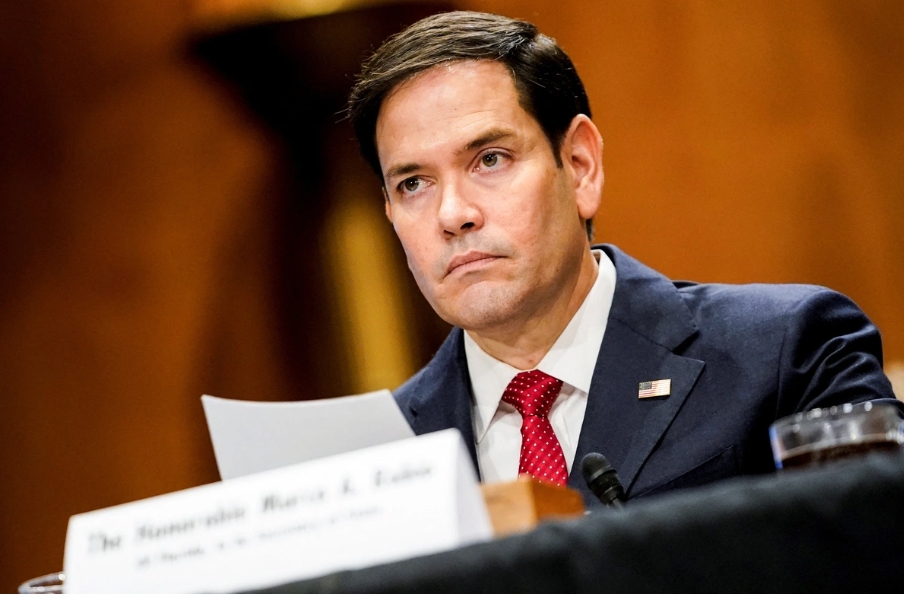
Rubio placed the proposed incentive agreement beside the Amazon announcement.
The project had offered the possibility of substantial employment and investment.
But the government incentives were significant.
Ocasio-Cortez argued that those benefits deserved scrutiny before public officials committed resources to a wealthy corporation.
Rubio challenged whether opposing the deal had produced a better alternative for workers seeking employment.
She responded that the debate should not assume every incentive was necessary to attract corporate investment.
The moderator clarified an important financial distinction.
The proposed incentive package was not simply a $3 billion cash payment waiting in a government account.
Much of the arrangement involved tax credits and benefits tied to qualifying investments and performance.
Those details mattered when evaluating the agreement’s potential costs.
Supporters argued that the project would generate sufficient economic activity to justify the incentives.
Opponents questioned the distribution of those benefits and the impact on local residents.
The Congressional Research Service examined the controversy in March 2019.
Its analysis described competing approaches to economic development.
One emphasized attracting investment and expanding employment.
The other emphasized opportunity costs, public incentives, and broader community priorities.
Neither approach automatically resolved the disagreement.
Rubio returned to the families who might have benefited.
He introduced an illustrative construction worker named David Reyes.
In the example, Reyes hoped that a large new development could provide steadier work closer to home.
The cancellation meant that the anticipated opportunity never materialized.
Ocasio-Cortez questioned whether Rubio had evidence that an identifiable worker had been promised and then denied a specific job.
He acknowledged that Reyes represented a possible worker experience rather than an authenticated individual loss.
The distinction was important.
The project had not been built.
Its employment projections therefore could not establish exactly which workers would have been hired.
But the example illustrated why economic development debates affected more than corporate balance sheets.
Families could reasonably hope for better opportunities from major projects.
Communities could also reasonably question whether promised growth would improve their circumstances.
The moderator returned to the central issue.
Rubio wanted lawmakers to acknowledge the potential benefits lost when Amazon canceled the project.
Ocasio-Cortez wanted those potential benefits evaluated against the costs and risks of the proposed agreement.
The disagreement remained unresolved.
But the confrontation had moved beyond the opening accusation about political identity.
It now concerned how public officials should evaluate decisions whose consequences could never be measured with complete certainty.
Rubio closed the Amazon folder.
Then he introduced the question of political accomplishment.
The Legislative Record Behind the Battle Over Public Image
Rubio questioned whether Ocasio-Cortez’s enormous public visibility translated into measurable legislative results.
The congresswoman had become one of the most recognizable progressive voices in American politics.
Her social media platforms attracted substantial audiences.
Her speeches and public appearances frequently generated national coverage.
Rubio argued that political visibility should not be confused with legislative achievement.
Ocasio-Cortez challenged the simplicity of that comparison.
She argued that members of Congress could contribute to public policy through committee work, amendments, oversight, and coalition building.
The moderator asked what measurable standards should apply.
Rubio identified legislation introduced, legislation enacted, and the results of congressional initiatives.
Ocasio-Cortez responded that a lawmaker’s effectiveness could not always be measured solely by the number of personally sponsored bills becoming law.
Both observations were relevant.
A member could attract enormous public attention while achieving limited success with particular legislative proposals.
But a member could also influence policy without appearing as the original sponsor of enacted legislation.
The distinction prevented the discussion from becoming a misleading statistical contest.
Rubio’s argument concerned whether public officials delivered practical results.
Ocasio-Cortez’s response concerned the many ways Congress operated.
The moderator asked whether political influence without measurable outcomes was necessarily meaningless.
Neither politician accepted that conclusion.
Public advocacy could shape debate and influence future legislation.
But advocacy alone could not establish that promised benefits had been delivered.
The discussion returned to the question Rubio had raised at the beginning.
Working families needed policies capable of producing meaningful improvements.
The disagreement concerned which policies could achieve those improvements.
Then Rubio opened the final section of his folder.
It involved one of the most recognizable political outfits in recent American history.
And unlike the abandoned Amazon project, this document contained a formal ethical finding.
The Met Gala Report That Created an Unexpected Reversal
In September 2021, Ocasio-Cortez attended the Metropolitan Museum of Art’s annual Met Gala.
Her white dress carried a conspicuous political message.
“Tax the Rich.”
The outfit immediately attracted attention.
Supporters praised the decision to present a message about economic inequality inside an exclusive celebrity event.
Critics questioned whether the appearance undermined the message’s credibility.
But the subsequent congressional ethics investigation concerned more than political symbolism.
It examined whether Ocasio-Cortez had improperly accepted gifts and services associated with her attendance.
On July 25, 2025, the House Ethics Committee released its findings.
The bipartisan committee concluded that her conduct had been inconsistent with applicable House rules and standards.
The report addressed goods and services associated with her appearance.
It also examined payment delays and the treatment of benefits provided to her then-partner.
The committee required additional corrective payments.
Those included $2,733.28 for goods associated with her outfit and a $250 charitable payment connected to her partner’s meal.
Rubio highlighted the committee’s findings.
“Congresswoman, this isn’t an allegation from a political opponent.”
He pointed toward the report.
“This is your own House Ethics Committee.”
Ocasio-Cortez challenged whether the report established deliberate misconduct.
The moderator examined the conclusion.
The committee had found violations.
But it had also concluded that the violations were not knowing and willful.
That was the most important qualification in the document.
The report did not establish that Ocasio-Cortez intentionally organized a criminal scheme.
It required corrective action concerning impermissible benefits and delayed payments.
Rubio acknowledged the distinction.
But he maintained that public officials should accept responsibility when ethical rules had not been followed.
Ocasio-Cortez agreed that congressional ethics requirements mattered.
She emphasized that the committee’s conclusion should be represented accurately.
The moderator returned to the central contradiction.
A politician could criticize wealth inequality while attending an exclusive event.
Whether that appearance undermined the message was a matter of public interpretation.
But the ethics report established specific compliance failures independent of that political debate.
That distinction made the evidence consequential.
The strongest criticism did not require exaggerating the committee’s findings.
And the strongest defense could not simply ignore the violations.
The final report had forced both sides toward a more precise standard of accountability.
The Last Thirty Seconds Expose the Question Behind the Entire Confrontation
Rubio placed the three documents in front of him.
The first concerned personal history and economic opportunity.
The second documented Amazon’s abandoned headquarters in Queens.
The third described a formal ethics review.
Each raised a different question.
Personal history could explain a politician’s perspective.
But it could not prove that the politician’s economic policies would succeed.
A corporate development proposal could offer substantial employment opportunities.
But projections could not establish exactly how many jobs would materialize or who would receive them.
And an ethics report could identify improper conduct without establishing intentional corruption.
Rubio returned to the central theme.
“Congresswoman, when working families hear politicians promise opportunity, what should they use to decide whether those promises were kept?”
Ocasio-Cortez answered that voters should examine the results of public policy.
She also argued that those results needed to include costs, benefits, and community consequences.
Rubio agreed that evidence mattered.
But he challenged whether elected officials sometimes celebrated political victories without adequately examining what was lost.
Ocasio-Cortez responded that rejecting a corporate agreement did not automatically mean rejecting economic opportunity.
The moderator returned to the Amazon controversy.
The proposed project had promised substantial employment.
The agreement had also contained significant incentives.
Its cancellation eliminated one potential path toward investment.
But the record could not establish the exact economic future that would have resulted if the project had proceeded.
That limitation mattered.
It prevented either politician from presenting an uncertain counterfactual as a proven outcome.
Rubio’s argument remained that lawmakers should take lost opportunities seriously.
Ocasio-Cortez’s response remained that opportunity should not be measured exclusively through corporate investment projections.
Both positions required credible evidence.
The final question therefore moved beyond personal attacks.
Who was actually delivering meaningful opportunities for working families?
The documents provided important information.
They did not produce a simple answer.
But they revealed how public officials should approach the question.
The Final Revelation That Outlasted the Political Showdown
The confrontation ended without a verified record of the televised exchange described in the original account.
There was no authenticated evidence that Rubio had confronted Ocasio-Cortez with all three documents in one hearing.
Nor was the illustrative construction worker established as a real person whose specific job had disappeared because of the Amazon decision.
The later claims of collapsing public support and an emerging primary challenger also belonged to the supplied narrative rather than verified consequences of the alleged confrontation.
But the underlying public records remained significant.
Rubio’s parents worked in demanding service-industry jobs after emigrating from Cuba.
Ocasio-Cortez’s family moved from the Bronx to Yorktown Heights to pursue better educational opportunities.
Amazon announced a proposed Queens headquarters involving approximately 25,000 projected jobs.
The company abandoned that project after encountering political and community opposition.
And the House Ethics Committee later found that Ocasio-Cortez had violated ethics standards involving her Met Gala appearance.
Those facts provided a substantive foundation for a debate about economic opportunity, political credibility, and accountability.
They also imposed limits on what could responsibly be concluded.
Ocasio-Cortez’s suburban schooling did not erase her family’s working-class experiences.
Amazon’s projected jobs could not be treated as positions that already existed.
And the ethics report could not be rewritten as a finding of deliberate criminal misconduct.
Rubio’s strongest argument concerned whether political leaders should measure success by actual improvements in people’s lives.
Ocasio-Cortez’s strongest response concerned whether economic opportunity could be evaluated without considering its wider costs.
The disagreement was consequential because both arguments spoke to concerns facing ordinary households.
Families wanted access to employment.
They also wanted affordable housing, reliable infrastructure, and communities where economic growth did not leave them behind.
The abandoned Amazon project represented a substantial opportunity that New York did not pursue under the proposed arrangement.
Whether its cancellation ultimately served or harmed the community remained a legitimate subject for economic analysis.
The ethics findings raised a separate question about whether public officials should be held to the standards they champion.
And the immigration stories demonstrated why political identity could never be reduced to a convenient slogan.
Both politicians could point toward family experiences involving work, sacrifice, and the search for a better future.
But those histories did not settle the policy questions.
They made the stakes more personal.
The central lesson was that political authenticity requires more than a compelling biography.
It requires a record that can withstand careful examination.
Personal stories can inspire voters.
Public messages can shape national debates.
But policies ultimately affect people through employment, wages, housing, public services, and economic security.
That is where political promises encounter reality.
The imagined confrontation began with an argument about which politician understood working families.
It ended with a harder question.
How should Americans distinguish political performance from measurable progress?
The answer cannot come from one viral exchange, one abandoned project, or one ethics report.
It requires examining the full record, acknowledging uncertainty, and applying consistent standards.
A politician’s story may explain why they entered public life. What they actually deliver determines how that story should be judged.
