
Bernie Sanders and Markwayne Mullin have repeatedly confronted each other over the American economy, but one of their most revealing Senate disputes concerned a question neither politician could settle through personal attacks.
Who deserves the greatest share of the wealth American workers help create?
Sanders argues that large corporations have accumulated extraordinary financial power while millions of workers continue struggling with wages, healthcare expenses and the cost of living.
Mullin, a former business owner, counters that entrepreneurship, private investment and the risks undertaken by employers are essential to job creation and economic opportunity.
Their disagreement has produced several unusually tense congressional exchanges.
During a March 2023 hearing involving Starbucks executive Howard Schultz, Mullin challenged Sanders over his personal wealth and criticism of corporate leaders.
Sanders rejected the attack and returned the discussion to workers’ rights to organize.
Months later, a separate hearing nearly turned into a physical confrontation when Mullin challenged Teamsters President Sean O’Brien.
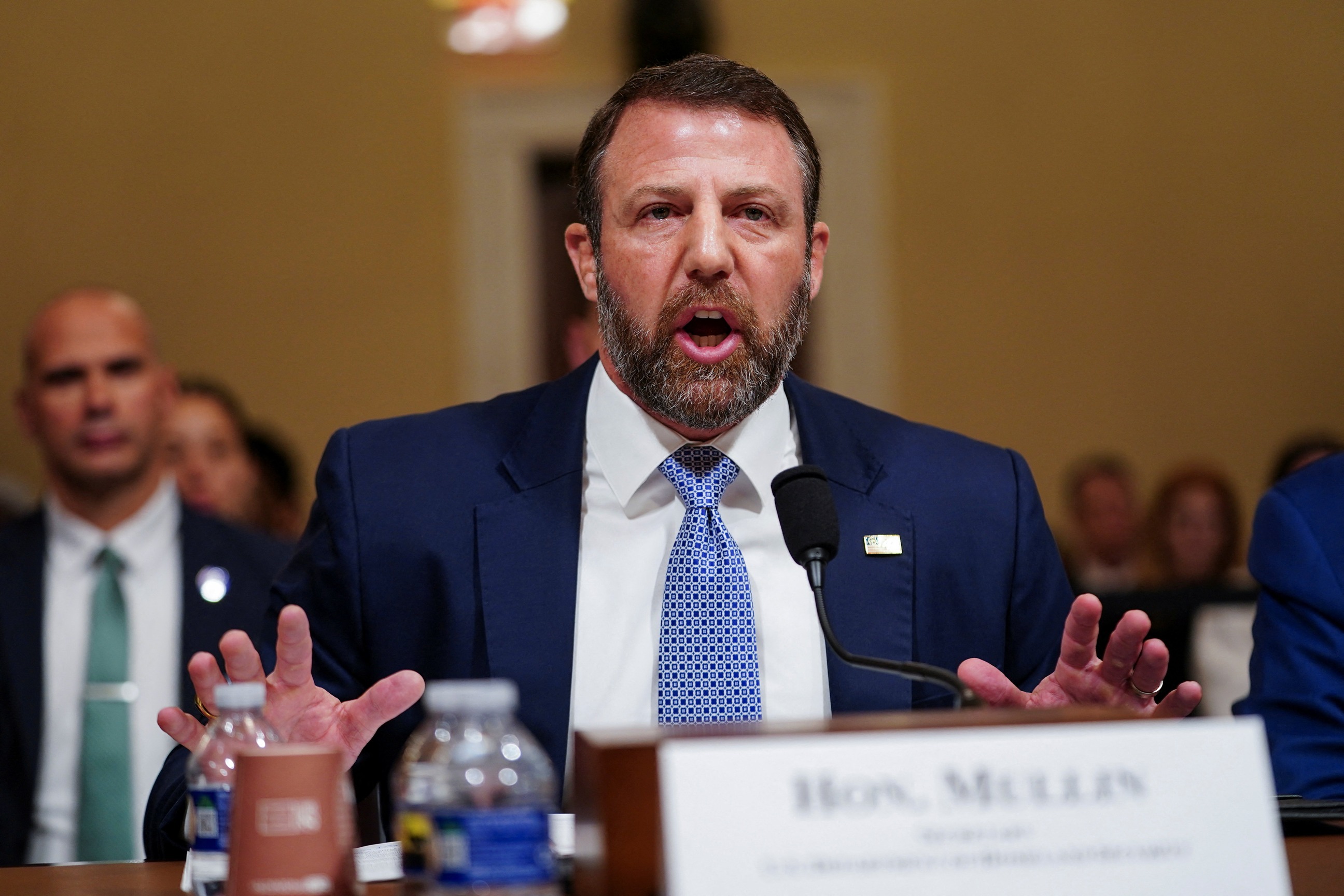
Sanders intervened and demanded that the participants return to the committee’s business.
And in February 2026, the two senators clashed again, this time over healthcare costs and responsibility for fixing America’s medical system.
These events are documented.
But the viral account of Mullin laughing at Sanders before being silenced by an exact twelve-word economic rebuttal remains unverified.
There is no authenticated transcript establishing that particular exchange.
The underlying disagreement, however, is supported by years of public debate and federal labor statistics.
Can workers obtain a fairer share of economic growth without undermining the businesses that employ them?
That question is at the center of the Sanders–Mullin conflict.
The Starbucks Hearing That Exposed Their Differences
On March 29, 2023, the Senate Committee on Health, Education, Labor and Pensions held a closely watched hearing involving Starbucks and its treatment of union-organizing workers.
Sanders chaired the committee.
Former Starbucks chief executive Howard Schultz appeared to answer questions about the company’s response to unionization campaigns.
Sanders accused Starbucks of repeatedly violating federal labor law and interfering with workers’ attempts to organize.
Schultz disputed the characterization of the company’s conduct.
He defended Starbucks’ employment practices and maintained that the company respected its workers.
Mullin approached the hearing from a different perspective.
The Oklahoma Republican questioned Sanders’ criticism of wealthy business executives.
He argued that business owners should not be portrayed as inherently exploitative simply because their companies generated profits.
Mullin then referred to Sanders’ personal finances.
He suggested that the Vermont independent had benefited financially from the same market economy he frequently criticized.
Sanders responded sharply.
He disputed Mullin’s assertions about his net worth and challenged the accuracy of the figures being cited.
The exchange became increasingly personal.
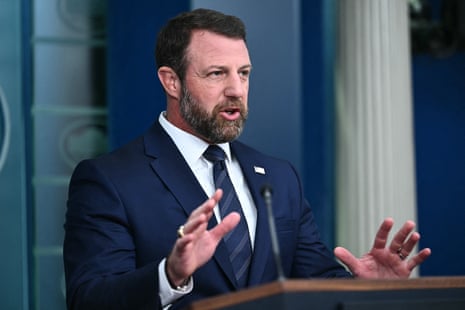
Both senators interrupted one another.
But Sanders eventually returned to the subject of the hearing.
The issue, he argued, was whether workers could organize unions and bargain collectively without unlawful interference.
The disagreement revealed two different economic priorities.
Mullin emphasized the role of entrepreneurs in building businesses and creating employment.
Sanders emphasized the rights of employees who contribute their labor to those businesses.
Neither issue can be reduced to the personal wealth of an individual senator.
The legal question before the committee concerned labor protections and compliance with federal law.
And that was the subject Sanders wanted to restore.
Mullin’s Argument: Someone Has to Create the Jobs
Mullin’s perspective is shaped partly by his experience operating a plumbing business before entering Congress.
He frequently presents entrepreneurship as an economic activity involving risk, investment and responsibility for employees.
From that perspective, employers must generate revenue before they can pay wages, purchase equipment or expand operations.
Successful companies may create opportunities for workers who would otherwise struggle to find employment.
Mullin has argued that political attacks on business owners can overlook those contributions.
He also questions policies that could increase operating costs or reduce employers’ flexibility.
His criticism of Sanders reflects a broader Republican argument about economic growth.
Supporters of this approach emphasize investment, productivity and private-sector competition.
They argue that businesses need conditions that allow them to expand and hire additional workers.
But that argument leaves important questions open.
A profitable company does not necessarily distribute its gains evenly among employees.
A growing business can increase shareholder returns while wage growth remains limited.
And workers may have relatively little bargaining power when employment alternatives are scarce.
Those possibilities do not invalidate Mullin’s emphasis on entrepreneurship.
They demonstrate why business success and worker prosperity should be evaluated separately.
A company can create jobs without necessarily offering wages that keep pace with inflation.
Similarly, high labor costs can affect business decisions without proving that every proposed worker protection is economically harmful.
The debate requires evidence about both sides of the employment relationship.
That is where Sanders’ argument becomes relevant.
Sanders’ Warning About Corporate Profits
Sanders has spent much of his political career arguing that economic growth is distributed unequally.
He frequently points to large corporate profits, executive compensation and the financial pressures experienced by ordinary workers.
His argument is not simply that businesses should earn less money.
It is that workers should receive compensation reflecting their contribution to economic production.
Sanders supports stronger collective bargaining rights, higher minimum wages and broader protections for employees attempting to organize.
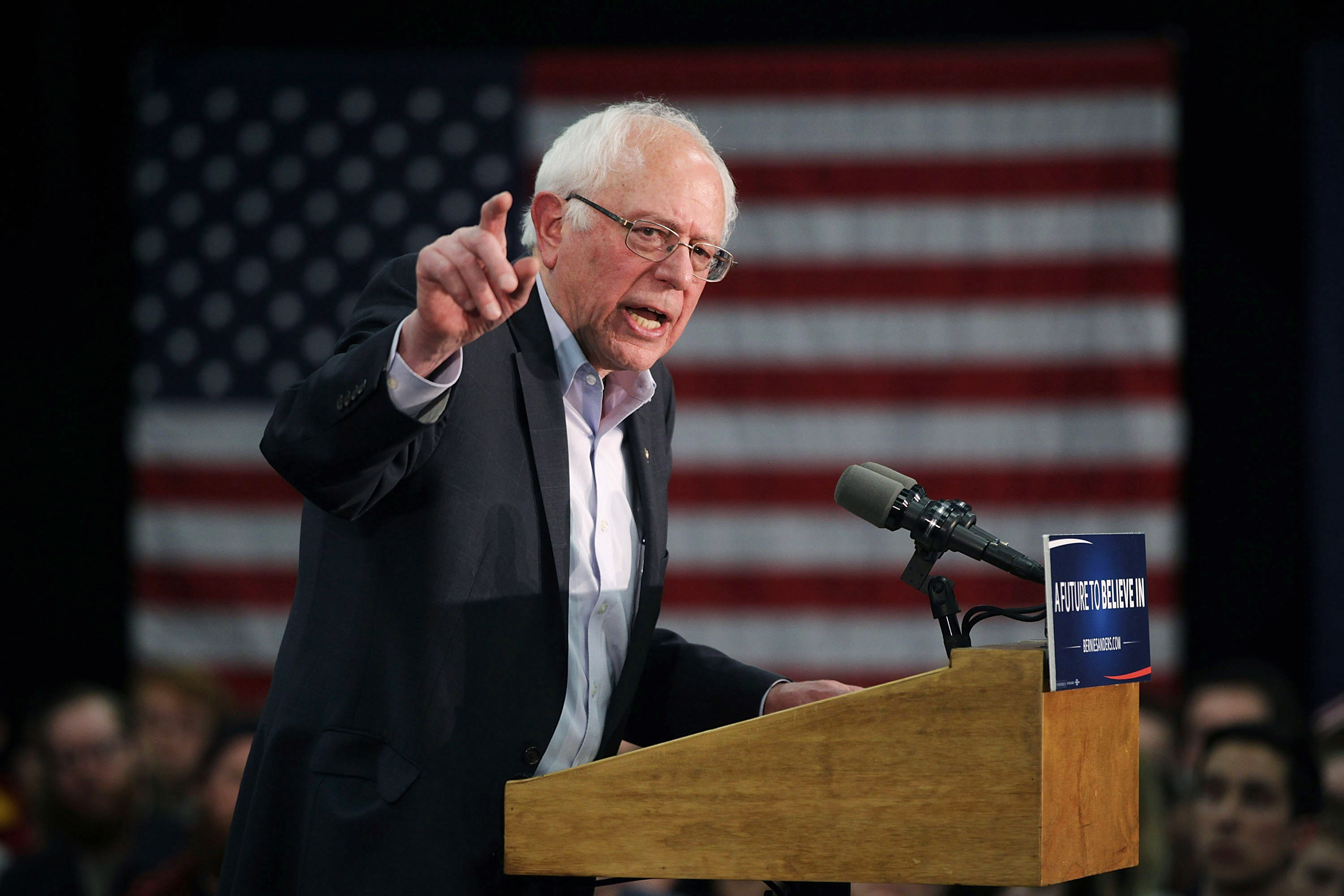
He argues that unions give workers greater negotiating power when dealing with large employers.
Without collective bargaining, individual employees may have limited ability to influence wages, schedules and workplace conditions.
Business representatives frequently challenge aspects of that argument.
They note that compensation depends on productivity, labor demand, competition and industry conditions.
They also argue that restrictive employment rules can make it more expensive to hire workers.
Both considerations deserve examination.
Strong profits may indicate that an employer possesses the resources to improve compensation.
But profits alone do not determine the appropriate wage for every occupation.
Likewise, a company’s decision to increase wages may reflect competition for workers rather than union pressure.
Understanding the effects of organized labor requires comparing workers and businesses under similar conditions.
That is why national wage statistics matter.
They provide evidence beyond the exchanges between individual politicians.
And the latest available figures show significant differences between union and nonunion workers.
The Wage Numbers Behind the Argument
The Bureau of Labor Statistics reported that union members had median usual weekly earnings of approximately $1,404 in 2025.
Nonunion workers had median weekly earnings of approximately $1,174.
That represents a difference of $230 per week.
The comparison helps explain why Sanders emphasizes collective bargaining.
Union members, considered as a group, received higher median weekly earnings than nonunion workers.
But the statistic requires an important qualification.
It does not establish that union membership alone caused the entire difference.
Union and nonunion workers are distributed differently across industries, occupations and demographic groups.
Some industries have relatively high wages and substantial union representation.
Others have lower wages and limited union membership.
Education, experience, geography and job characteristics can also influence compensation.
The BLS explicitly cautions that its simple earnings comparisons do not account for all such differences.
That means the figures support a narrower conclusion than either political side might prefer.
Union members earned more at the median.
But determining the causal impact of unionization requires more detailed analysis.
The national union membership rate remained relatively low.
In 2025, approximately 10 percent of employed wage and salary workers belonged to unions.
Public-sector workers were considerably more likely to be union members than private-sector workers.
Those patterns show why labor policy has become politically contentious.
Sanders wants to strengthen organizing rights and increase bargaining coverage.
Mullin questions approaches that could place additional constraints on employers.
The disagreement concerns both workers’ economic outcomes and the rules governing employment relationships.
It cannot be settled by comparing two weekly earnings figures alone.
The Hearing That Nearly Became a Physical Fight
The Sanders–Mullin relationship attracted even greater attention on November 14, 2023.
The Senate HELP Committee convened a hearing examining organized labor and the economic benefits of union victories.
Witnesses included Teamsters President Sean O’Brien and United Auto Workers President Shawn Fain.
The discussion was intended to address labor organizing, wages and collective bargaining.
But Mullin used part of his questioning time to confront O’Brien over an earlier dispute.
The conflict dated back to March 2023, when the senator and union leader had traded sharp remarks about business ownership, labor unions and personal conduct.
O’Brien had subsequently criticized Mullin on social media.
At the November hearing, Mullin read part of that criticism and challenged the union leader.
He suggested that they could settle their disagreement physically.
O’Brien responded.
The exchange escalated.
Mullin appeared prepared to stand and confront the witness.
Sanders intervened.
“Sit down! You’re a United States senator!”
His words interrupted a confrontation that had moved far beyond the committee’s intended subject.
The moment became widely circulated because of its unusual circumstances.
A sitting senator had challenged a congressional witness to a physical encounter.
The committee chairman was demanding that the participants return to the hearing.
And the discussion about workers’ economic conditions had been overshadowed by a personal dispute.
Sanders later criticized the episode as inappropriate for the Senate.
He argued that lawmakers should focus on the economic problems affecting American families.
For him, the confrontation illustrated the danger of allowing personal hostility to replace substantive debate.
But it also demonstrated how deeply the opposing views of labor and business had become personalized.
What the Union Witnesses Wanted Congress to Hear
The November 2023 hearing was not originally intended to focus on Mullin’s disagreement with O’Brien.
Its purpose was to examine recent labor organizing victories.
United Auto Workers President Shawn Fain described agreements reached after major negotiations with American automobile manufacturers.
The union had secured improvements involving wages, retirement provisions and employment protections.
Fain argued that organizing and collective action had helped workers obtain a larger share of automotive industry earnings.
The negotiations also attracted attention because several nonunion automakers subsequently announced wage increases.
That sequence raised questions about whether successful union bargaining could influence compensation beyond unionized workplaces.
Sanders viewed the developments as evidence of the value of organized labor.
He argued that workers could achieve better outcomes when they negotiated collectively rather than individually.
Mullin and other Republicans emphasized that employers must remain financially viable.
They questioned whether stronger union rules would benefit every worker or every business.
Those disagreements involved genuine policy tradeoffs.
Higher wages can improve household finances and support consumer spending.
But labor costs also affect company budgets, pricing and investment decisions.
The effects vary by industry and economic conditions.
The auto industry provides a significant example because its companies compete internationally and employ workers across complex supply chains.
A wage settlement can influence competitors.
It can also create pressures for companies with different financial positions.
Both effects deserve analysis.
Unfortunately, the confrontation between Mullin and O’Brien dominated much of the coverage.
Sanders later complained that the conflict distracted attention from the testimony about workers’ achievements.
That concern remains relevant to the broader political debate.
A hearing can produce meaningful evidence while its most dramatic moment concerns something entirely different.
Their February 2026 Clash Shows the Rivalry Continued
The disagreement between Sanders and Mullin did not end in 2023.
On February 25, 2026, they argued again during a Senate hearing involving Casey Means, the Trump administration’s nominee for surgeon general.
The discussion focused on healthcare costs and the American medical system.
Mullin criticized Democrats for questioning reform proposals without, in his view, adequately addressing longstanding problems.
Sanders interjected after Mullin acknowledged that he had spoken at length.
“Yes, you did.”
The brief remark prompted an extended response from Mullin.
The Oklahoma Republican accused Sanders of belonging to the political establishment responsible for the problems he was criticizing.
He also emphasized Sanders’ long congressional career and questioned why the Vermont senator had not done more to resolve healthcare costs.
Sanders responded with sarcasm about the surgeon general nomination.
The exchange again became a personal disagreement over political responsibility.
But beneath the sharp language was another economic question.
Healthcare expenses affect the purchasing power of workers, even when nominal wages increase.
A family receiving a raise may still struggle financially if insurance premiums, deductibles and other expenses rise more quickly.
Sanders has argued that healthcare should be treated as a universal right.
Mullin and Republicans have criticized government-centered approaches they believe would increase costs or reduce individual choice.
Those are substantial disagreements.
But the February hearing did not establish the viral story’s alleged twelve-word wage rebuttal.
It documented a separate confrontation about healthcare and the role of government.
That distinction matters because several real disputes between the senators have been combined into simplified online narratives.
Why Corporate Profits Do Not Tell the Whole Wage Story
The economic argument requires looking beyond political rhetoric.
Corporate profits can increase for several reasons.
Companies may become more productive.
They may benefit from stronger demand or higher prices.
They may reduce operating costs.
Or they may gain market power that allows them to maintain larger margins.
Those circumstances have different implications for workers.
A business investing in new equipment may become more productive and eventually support higher wages.
Another company may increase profits without significantly improving compensation.
A third may experience short-term profitability while facing substantial future costs.
That is why aggregate profit figures cannot prove that every employer is underpaying workers.
But Mullin’s emphasis on business ownership does not eliminate questions about wage distribution.
Workers contribute labor, skills and experience to the production of goods and services.
Their compensation depends partly on how the resulting income is divided.
Unions attempt to influence that division through collective bargaining.
Employers argue that compensation must remain consistent with competitive and financial conditions.
The appropriate balance varies.
A credible economic assessment would examine wages, benefits, productivity, profitability, employment and consumer prices together.
It would also distinguish short-term fluctuations from persistent trends.
Sanders’ criticism focuses on the danger that workers receive too little of the value they produce.
Mullin’s criticism focuses on the danger that government intervention or organized labor demands could undermine business activity.
Neither concern can be dismissed solely because the other senator makes it.
The question is what the evidence shows in particular industries and workplaces.
The Difference Between a Wage Increase and a Better Standard of Living
A worker’s paycheck can increase without producing an equivalent improvement in living standards.
Inflation reduces the purchasing power of money.
That means a nominal raise should be compared with changes in consumer prices.
If wages rise faster than inflation, real earnings generally improve.
If wages rise more slowly, purchasing power may decline.
Healthcare and housing expenses can create additional pressures that vary substantially among households.
This distinction helps explain Sanders’ focus on economic insecurity.
Families may hear that employers are reporting profits and increasing compensation while still feeling financially constrained.
But the distinction also complicates simplistic claims about wage stagnation.
Real wages do not move identically for every occupation or income group.
Employment changes, hours worked and differences in benefits also matter.
Some workers experience substantial gains during periods when others fall behind.
National averages cannot describe every household.
Nor can a comparison between union and nonunion earnings establish what would happen if every workplace unionized.
The data must be interpreted carefully.
That is why the supposed twelve-word response attributed to Sanders cannot substitute for an analysis of wages.
A short statement may summarize a political position.
It cannot establish the causal relationship between unions, profits and worker compensation.
The relevant evidence includes collective bargaining agreements, labor-market statistics and company financial records.
Those materials provide a more reliable basis for evaluating the competing claims.
Why the Twelve-Word Comeback Remains Unverified
The viral account portrays a familiar political scene.
Mullin supposedly laughs at an economic warning.
Sanders remains calm.
Then the Vermont senator delivers a twelve-word statement that leaves the committee room silent.
But the publicly documented confrontations differ from that description.
The March 2023 exchange involved Starbucks, union organizing and personal claims about Sanders’ wealth.
The November 2023 confrontation involved Mullin challenging Teamsters President Sean O’Brien to a fight.
The February 2026 disagreement involved healthcare reform and questions about Sanders’ years in Congress.
None of those verified accounts establishes the precise twelve-word statement described in the viral caption.
Nor do they document the claimed audience reaction.
The distinction is particularly important because Sanders and Mullin have genuinely exchanged sharp words.
Their history makes a sensational story about another clash appear plausible.
But plausibility is not verification.
A quotation should be supported by an identifiable video, transcript or reliable firsthand account.
The same applies to descriptions of a senator laughing, becoming silent or appearing embarrassed.
Those details should not be presented as facts without evidence.
The real exchanges contain enough disagreement to support serious political reporting.
They also demonstrate that neither senator’s position can be evaluated through a single dramatic sentence.
The Larger Debate Over Workers and Economic Power
The rivalry between Sanders and Mullin reflects an enduring disagreement about the American economy.
Sanders believes that corporate concentration and unequal bargaining power have prevented many workers from fully benefiting from economic growth.
He supports stronger unions, higher wage floors and greater government intervention to address inequality.
Mullin argues that entrepreneurship and private investment are indispensable to economic opportunity.
He emphasizes the responsibility of employers to build sustainable businesses and questions policies he believes could interfere with that process.
Both approaches address important parts of the economic system.
Businesses create and organize employment opportunities.
Workers supply the labor necessary to produce goods and services.
Government establishes many of the rules governing those relationships.
The disagreement concerns how power and economic rewards should be distributed.
Federal statistics show that union members generally receive higher median weekly earnings than nonunion workers.
But those figures do not establish that all wage differences are caused by union membership.
They also do not prove that every proposed labor regulation would improve economic conditions.
Likewise, business profits and job creation do not automatically demonstrate that employees receive adequate compensation.
The evidence must be assessed in context.
That is the kind of analysis congressional hearings can provide when lawmakers focus on the subjects before them.
The Real Question Behind the Sanders–Mullin Confrontations
The documented history shows that Sanders and Mullin have disagreed intensely about labor unions, corporate leadership and healthcare.
Their exchanges have sometimes involved sarcasm and personal criticism.
At one hearing, Sanders had to intervene when Mullin challenged a union leader to a physical confrontation.
At another, Mullin questioned Sanders’ credibility and effectiveness.
Those incidents attracted attention because of their tone.
But the policy debate behind them remains more important.
Workers want wages that support their families.
Employers need financially sustainable operations.
And lawmakers must evaluate whether existing labor laws allow both objectives to be pursued fairly.
The 2025 Bureau of Labor Statistics figures provide one useful reference point.
Union members earned a median of approximately $1,404 per week.
Nonunion workers earned approximately $1,174.
Those numbers demonstrate an earnings difference that deserves examination.
They do not establish a universal explanation for that difference.
The Sanders–Mullin dispute ultimately concerns how lawmakers interpret evidence like this and which policies they believe should follow.
Sanders argues that stronger collective bargaining can improve workers’ economic position.
Mullin emphasizes the contribution of employers and the risks of imposing additional constraints on businesses.
Neither argument should be reduced to an alleged twelve-word comeback that has not been authenticated.
The actual congressional record offers a more useful question.
When businesses become more profitable, how much of that improvement reaches the employees whose work contributes to their success?
Answering it requires looking at wages, prices, productivity, employment conditions and company performance.
It also requires evaluating the effects of particular labor policies rather than assuming their outcomes.
The senators’ disagreement is real.
The economic pressures affecting American workers are real.
But the supposed moment when one calm sentence silenced the entire room has not been established.
The lasting significance of their confrontations is not which politician delivered the sharper remark.
It is whether Congress can turn competing arguments about corporate power and worker prosperity into policies whose results can be measured.
