
A bitter political disagreement between Senator Bernie Sanders and California Governor Gavin Newsom has exposed a major divide over billionaire wealth, healthcare funding, and the influence of Silicon Valley on American politics.
The confrontation centered on Proposition 40, a controversial proposal to impose a one-time tax on California residents whose net worth exceeded $1 billion.
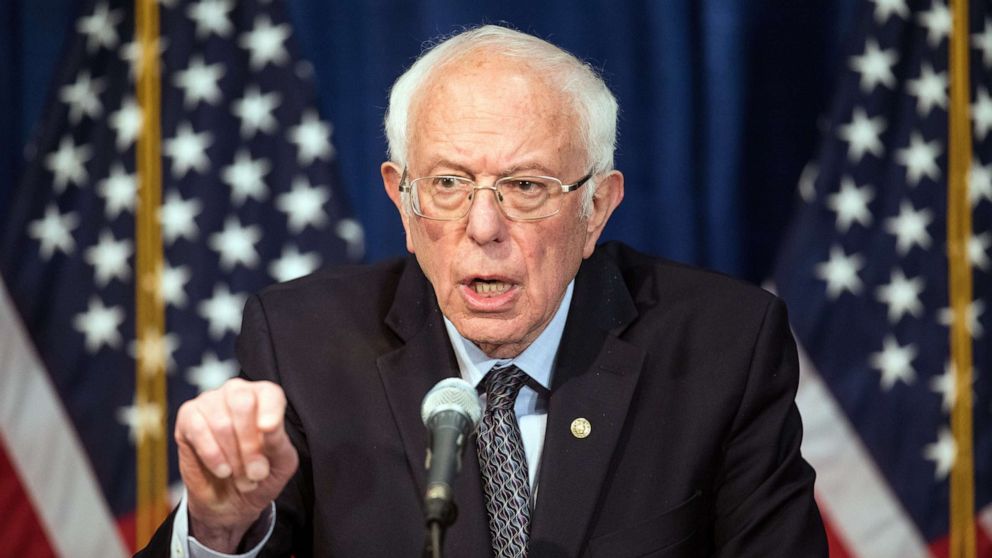
Sanders supported the measure, arguing that wealthy Americans should contribute more to protecting healthcare services threatened by federal funding reductions.
Newsom opposed it, warning that the proposal could drive wealthy taxpayers and businesses out of California, potentially weakening the state’s economy and long-term finances.
Their disagreement became increasingly visible as technology executives spent extraordinary amounts of money campaigning against the proposal.
Sanders accused wealthy opponents of using their financial influence to intimidate voters and protect their fortunes.
Newsom maintained that the potential economic damage could ultimately hurt the very public services the initiative was intended to support.
Then California voters delivered their decision.
On November 3, 2026, voters rejected Proposition 40, with approximately 53 percent opposing the measure and 47 percent supporting it.
The defeat represented a significant setback for Sanders and the labor organizations supporting the initiative.
But it also exposed a broader disagreement among Democrats about whether state-level wealth taxes can reliably finance essential public services.
The controversy did not establish that Newsom had secretly protected billionaires or approved an illegal financial arrangement.
It did reveal how strongly wealthy donors, organized labor, and major Democratic figures disagreed over the future of California’s tax system.
Sanders Launches a Campaign Against Billionaire Wealth
On February 18, 2026, Bernie Sanders appeared at the Wiltern Theatre in Los Angeles to promote California’s proposed billionaire tax.
The event attracted a large audience of supporters, healthcare workers, and activists concerned about economic inequality.
Sanders argued that the United States had reached an extraordinary level of wealth concentration.

He criticized the growing financial influence of individuals who control enormous fortunes while millions of Americans struggle with essential expenses.
The Vermont senator described the concentration of wealth as a major challenge to American democracy.
He argued that billionaires should not be able to use their economic power to discourage governments from raising taxes.
His remarks included references to luxury homes, private aircraft, and expensive yachts.
These examples were intended to contrast the lifestyles of extremely wealthy individuals with the difficulties facing families unable to afford medical treatment.
Sanders also accused some billionaire opponents of threatening to leave California if voters approved the proposal.
He described those warnings as an attempt to pressure the electorate.
However, his remarks were political criticism rather than evidence of criminal misconduct.
The senator’s central argument was that a small number of wealthy residents could contribute substantial funding without experiencing serious hardship.
He maintained that protecting healthcare for low-income families should take priority over preserving every dollar of billionaire wealth.
Newsom and other opponents rejected that economic reasoning.
They questioned whether a state could impose such a large tax without encouraging wealthy residents and companies to relocate.
That disagreement would define the campaign.
The Five Percent Tax That Divided California
Proposition 40 proposed a one-time tax equal to five percent of the net worth of qualifying billionaires.
The measure would generally apply to individuals whose wealth exceeded $1 billion and who met the relevant California residency requirements.
Unlike an ordinary income tax, the proposal targeted accumulated wealth.
That distinction was important because many billionaires hold substantial fortunes in company shares, investments, and other assets.
Their annual taxable income may represent only a small portion of their total net worth.
Supporters argued that taxing wealth would allow the state to collect revenue from individuals whose fortunes had increased dramatically.
The healthcare workers union SEIU-United Healthcare Workers West played a central role in organizing the campaign.
Its leaders estimated that the measure could generate approximately $100 billion over five years.
The proposed revenue would primarily support healthcare programs affected by federal funding reductions.
Other portions would assist education and food assistance programs.
Sanders supported those priorities.
He argued that the consequences of healthcare funding cuts could be severe for low-income families and patients requiring continuous medical treatment.
The proposal was particularly relevant to hospitals and clinics serving financially vulnerable communities.
Supporters warned that reductions in federal healthcare funding could lead to service cuts and greater pressure on California’s public health system.
They believed a billionaire tax could provide an alternative source of financing.
Opponents questioned whether the revenue projections were dependable.
They argued that changes in residency, asset valuations, and investment behavior could produce substantially different outcomes.
These concerns became central to Newsom’s opposition.
Gavin Newsom Breaks With Progressive Democrats
Newsom emerged as one of the most prominent Democratic opponents of Proposition 40.
His position placed him in direct disagreement with Sanders and several major labor organizations.
The governor argued that the measure could weaken California’s ability to attract investment and retain successful businesses.

He warned that a large state-level wealth tax might encourage wealthy residents to establish residency elsewhere.
That possibility mattered because California already depends heavily on income-tax receipts from high earners.
If wealthy residents permanently relocated, the state could lose future income-tax revenue.
Newsom argued that this potential loss deserved careful consideration.
He also criticized the proposal’s design.
In his view, a one-time tax would not necessarily provide the stable funding required for long-term healthcare commitments.
Healthcare systems require predictable revenue to maintain staffing, operate facilities, and plan future services.
A temporary windfall could help address immediate problems without resolving continuing financial pressures.
Newsom therefore argued that California needed a more sustainable approach.
He has expressed support for discussing wealth taxation at the national level, where individuals would have fewer opportunities to avoid a tax simply by moving between states.
Sanders rejected the idea that California should delay action until Congress approved a federal proposal.
He believed the state could demonstrate that substantial wealth taxation was politically and economically possible.
The disagreement involved competing assumptions about taxpayer mobility and government financing.
Neither argument could be settled merely by criticizing the political motives of the other side.
Sanders Challenges the Billionaires Threatening to Leave
One of the campaign’s most contentious issues concerned warnings from wealthy individuals considering relocation.
Some technology executives argued that a substantial tax on accumulated wealth could encourage investors and entrepreneurs to leave California.
Supporters of Proposition 40 questioned those warnings.
They argued that California’s economic opportunities, technology companies, universities, and existing business relationships provided strong reasons to remain.
Sanders was particularly critical of the idea that billionaires might relocate rather than accept additional taxation.
During interviews and campaign appearances, he accused wealthy opponents of using financial threats to influence public policy.
He argued that democratic decisions should not depend on whether the richest residents approve of them.
Sanders also challenged the suggestion that wealthy individuals would automatically abandon California.
He pointed to previous political campaigns in which similar relocation warnings had been made.
However, the possibility of relocation remained a legitimate question for economic analysis.
Different wealthy individuals hold different types of assets.
Some possess substantial interests in businesses headquartered in California.
Others maintain investments that can be managed from many locations.
Moving personal residency may be easier for some taxpayers than for others.
The financial consequences also depend on the design of tax laws and how residency is determined.
The campaign therefore involved considerable uncertainty about behavioral responses.
Supporters emphasized the potential revenue.
Opponents emphasized the possibility of losing existing tax receipts and future investment.
Both sides attempted to persuade voters that their interpretation better reflected California’s economic interests.
Silicon Valley Spends Hundreds of Millions Against the Tax
The opposition campaign became one of the most expensive ballot-measure battles in California history.
Wealthy technology executives contributed substantial amounts to organizations seeking to defeat Proposition 40.
Google co-founder Sergey Brin emerged as one of the largest financial supporters of the opposition.
He contributed approximately $102 million to an organization involved in campaigning against the proposal.
Other wealthy donors also provided significant financial support.
Altogether, billionaire-backed opposition efforts raised approximately $378 million.
That amount dramatically exceeded the funding available to the principal campaign supporting Proposition 40.
Supporters argued that the spending illustrated the extraordinary political influence of concentrated wealth.
Sanders repeatedly warned that wealthy donors could dominate public debate through advertising and political contributions.
He portrayed the campaign as a test of whether voters could make independent decisions despite a substantial financial imbalance.
Opponents maintained that their spending supported legitimate arguments about economic risks.
They warned that a wealth tax could damage business formation, discourage investment, and undermine California’s future revenue.
The scale of campaign financing was itself significant.
It demonstrated how major economic interests can mobilize resources when proposed legislation directly affects their finances.
However, large campaign donations do not automatically prove that voters were manipulated or that the election result was illegitimate.
Voters may have opposed the tax for different reasons.
Some may have accepted the warnings about economic consequences.
Others may have questioned the proposal’s complexity or its ability to generate sustainable healthcare funding.
The campaign spending increased the visibility of those arguments, but its precise effect on individual voting decisions cannot be established from fundraising totals alone.
California Democrats Split Over the Proposal
The disagreement extended beyond Sanders and Newsom.
Several major Democratic organizations adopted different positions on Proposition 40.
The California Democratic Party supported the billionaire tax.
The California Labor Federation also backed the measure.
These organizations argued that additional revenue was necessary to protect workers and vulnerable residents from reductions in federal programs.
However, other traditionally Democratic organizations opposed it.
The California Teachers Association raised concerns about the consequences for public education funding and state finances.
Planned Parenthood organizations also joined the opposition.
Their position reflected concerns that the proposal could weaken the broader financial foundation supporting public services.
This created an unusual political situation.
Organizations that frequently support higher taxes on wealthy individuals found themselves disagreeing about a specific wealth-tax proposal.
The division complicated the campaign.
Voters could not simply rely on traditional partisan endorsements to interpret the measure.
Different Democratic leaders offered competing assessments of its economic consequences.
Newsom emphasized long-term fiscal stability.
Sanders emphasized immediate healthcare needs and the concentration of billionaire wealth.
Labor organizations disagreed about whether the benefits outweighed the risks.
The controversy revealed that supporting progressive taxation in principle does not necessarily mean supporting every proposed tax mechanism.
The details of timing, implementation, and revenue allocation can matter as much as the broader political objective.
The Healthcare Argument Becomes Central
Supporters repeatedly framed Proposition 40 as a response to federal healthcare funding cuts.
They argued that California needed additional resources to protect hospitals, clinics, and health insurance coverage.
The proposal was especially relevant to Medicaid, which operates in California through the Medi-Cal program.
Medi-Cal provides health coverage to millions of low-income residents.
Changes in federal financing can significantly affect the state’s healthcare budget.
Supporters warned that reduced federal support could place pressure on hospitals serving financially vulnerable populations.
They argued that the proposed tax could help prevent service reductions and coverage losses.
Sanders made healthcare the emotional and economic centerpiece of his campaign.
He contrasted the extraordinary wealth of certain technology executives with the financial hardships of patients.
His message focused on whether a wealthy state should allow healthcare services to deteriorate while billionaires continued accumulating assets.
Opponents did not necessarily dispute the importance of healthcare funding.
Instead, they argued that the proposed financing mechanism could create additional problems.
If wealthy residents relocated, California might lose substantial future tax revenue.
That could reduce the money available for healthcare, education, and other services.
There was also uncertainty about the estimated $100 billion in revenue.
Wealth valuations can change sharply because of financial markets.
Assets held in private businesses may be difficult to value.
Taxpayers could also pursue legal challenges involving particular provisions.
These uncertainties complicated the assumption that projected revenue would become available exactly as supporters expected.
The policy debate therefore involved two important questions.
How urgently did California need additional healthcare funding?
And was a one-time wealth tax the most reliable way to provide it?
Sanders Makes His Final Appeal Before Election Day
During the final weeks of the campaign, Sanders traveled through California to encourage support for Proposition 40.
He appeared alongside progressive lawmakers and labor organizers.
Representative Ro Khanna was among the prominent political figures supporting the initiative.
Sanders continued criticizing wealthy donors who were financing the opposition.
He argued that their spending demonstrated a willingness to protect private fortunes while public programs faced financial pressure.
In an October opinion article, Sanders defended the proposal and challenged the arguments presented by billionaire opponents.
He questioned whether individuals possessing enormous wealth genuinely needed additional luxury assets.
His criticism included references to yachts, mansions, and private aircraft.
The argument was designed to emphasize the differences between personal luxury consumption and essential public services.
Sanders also warned that threatening relocation could become a way for wealthy taxpayers to exert political pressure.
However, his campaign did not succeed in eliminating voter concerns about the measure’s possible economic consequences.
Polling during the final stages suggested that support had weakened.
The opposition campaign continued emphasizing uncertainty about jobs, investment, and future tax revenue.
Newsom maintained his position against the proposal.
By Election Day, California voters faced sharply different interpretations of what the tax would mean for the state’s future.
November 3 Delivers a Defeat for Proposition 40
California voters rejected Proposition 40 in the November 3, 2026, election.
The Associated Press confirmed the result on November 9.
Approximately 52.8 percent of voters opposed the measure, while 47.2 percent supported it.
The result prevented California from implementing the proposed one-time billionaire wealth tax.
It also represented a significant political setback for the coalition led by healthcare unions and supported by Sanders.
However, the election produced additional results that complicated any simple interpretation of voter attitudes toward taxation.
Proposition 42, a measure restricting future wealth and retroactive taxes, was approved.
At the same time, voters supported another measure extending taxes on high-income earners.
Those results suggest that Californians distinguished between different forms of taxation.
They did not reject every proposal designed to raise more revenue from wealthy residents.
Instead, they evaluated individual measures according to their design, economic implications, and stated purposes.
That distinction is important.
Support for income taxation does not necessarily translate into support for taxes on accumulated assets.
A recurring tax on income operates differently from a one-time tax on investment wealth.
The economic effects, administrative challenges, and taxpayer responses may differ.
The election therefore reflected a complicated debate about the structure of California’s tax system.
It was not simply a referendum on whether wealthy individuals should contribute to public services.
What Proposition 42 Changed
The passage of Proposition 42 created additional complications for supporters of future wealth taxes.
The measure established restrictions affecting taxation of certain forms of property and accumulated wealth.
It also addressed retroactive taxation.
Its approval made the legal environment less favorable for initiatives resembling Proposition 40.
This development mattered because supporters had already discussed returning with another billionaire-tax proposal.
Labor organizers suggested that healthcare funding problems would not disappear simply because voters rejected one measure.
Some proposed revisiting wealth taxation in 2028 if lawmakers failed to provide another solution.
However, Proposition 42 created a new obstacle for that strategy.
Future proposals would need to account for the restrictions approved by voters.
The election also demonstrated that wealth taxation involves legal and administrative questions beyond political popularity.
Determining a person’s net worth can be difficult when substantial assets are held in private businesses.
Market prices may not exist for certain holdings.
Tax authorities must also address disputes over valuation, residency, and compliance.
These challenges are different from those associated with conventional income taxes.
Supporters believe workable systems can be designed.
Critics argue that the complexity creates opportunities for avoidance and costly disputes.
The approval of Proposition 42 showed that these concerns resonated with a portion of the electorate.
Did Billionaires Determine the Outcome?
Sanders and other supporters strongly criticized the extraordinary spending against Proposition 40.
Following the defeat, organizers argued that wealthy donors had used their resources to influence the election.
That criticism raised broader questions about campaign financing.
A small number of very wealthy individuals can contribute far more to political campaigns than ordinary voters.
Large contributions can finance advertising, public relations, and extensive voter outreach.
These activities can shape which arguments receive the greatest exposure.
However, spending alone does not establish that every opposing voter was persuaded by advertisements.
The campaign also featured substantive disagreements over tax policy.
Newsom and several Democratic organizations opposed the measure for stated economic reasons.
Some voters may have shared those concerns independently.
Others may have been influenced by uncertainty about healthcare funding or the consequences of relocation.
The election result cannot reveal the exact motivation of every person who voted against Proposition 40.
Nevertheless, the enormous financial disparity between the campaigns remains a significant fact.
It illustrates how proposals affecting concentrated wealth can generate unusually expensive political contests.
Sanders views that dynamic as evidence of the excessive influence of billionaires.
Opponents argue that wealthy residents retain the same right as other citizens to campaign against policies affecting their interests.
The broader debate concerns whether existing campaign finance rules provide sufficient transparency and public accountability.
Newsom’s Opposition Raises Questions About Democratic Leadership
The disagreement between Sanders and Newsom revealed competing approaches to progressive economic policy.
Sanders believes that extreme wealth inequality requires substantial changes to taxation and public financing.
He has advocated national wealth taxes, stronger social protections, and greater public investment.
Newsom has emphasized California’s economic competitiveness and the importance of retaining major businesses.
He argues that the state’s tax policies must account for the possibility that taxpayers can relocate.
Both positions reflect concerns about funding public services.
Their disagreement concerns how revenue should be collected.
Sanders sees concentrated wealth as a substantial potential source of funding for healthcare.
Newsom worries that aggressive state-level taxation could weaken the existing revenue base.
The election result did not establish that either politician’s broader economic philosophy was conclusively correct.
It showed that voters rejected this particular proposal.
The consequences of that decision will depend partly on future economic conditions and healthcare funding.
California still faces difficult questions concerning medical coverage, public services, and long-term fiscal stability.
Those problems were not resolved by the defeat of Proposition 40.
They now require alternative policy responses.
The Fight Over Billionaire Taxes Is Not Finished
Although Proposition 40 failed, supporters have indicated that they intend to continue pursuing additional revenue from wealthy residents.
Healthcare unions argue that the need for funding remains urgent.
Sanders continues to advocate policies designed to reduce economic inequality.
At the federal level, he has supported legislation imposing taxes on billionaires’ accumulated wealth.
Such proposals face significant political and administrative challenges.
Opponents question their effects on investment, employment, and economic growth.
Supporters argue that concentrated wealth creates opportunities to finance essential services without placing additional burdens on lower-income households.
Both sides also disagree about how wealthy taxpayers respond to large tax increases.
Some economists emphasize the risks of relocation and reduced investment.
Others argue that well-designed taxes can raise substantial revenue without causing the extreme economic damage predicted by opponents.
The California election provides important political evidence.
It shows that even a state with strong progressive traditions can reject a major wealth-tax initiative.
But the result does not establish a permanent national position on the issue.
Different proposals may receive different responses depending on their design and economic context.
For Sanders, the campaign remains part of a broader effort to challenge billionaire influence.
For Newsom, the result reinforces his argument that California must carefully consider its economic competitiveness.
The next major debate will concern how the state replaces or protects healthcare funding without relying on the rejected tax.
California’s Vote Leaves a Bigger Economic Question Unanswered
The confrontation between Sanders and Newsom was rooted in a genuine disagreement over taxation and public services.
Sanders argued that billionaires should contribute more to protecting healthcare.
Newsom warned that the proposal could damage California’s economy and reduce long-term government revenue.
Silicon Valley executives contributed hundreds of millions of dollars to the campaign opposing the measure.
Labor organizations mounted a competing campaign emphasizing healthcare access and economic fairness.
Voters ultimately rejected Proposition 40.
They also approved a separate measure restricting certain forms of wealth taxation.
Those outcomes represented important decisions about California’s fiscal direction.
But they did not eliminate the underlying financial challenges.
Hospitals and clinics still face pressure from healthcare costs and federal funding changes.
The state continues to depend heavily on tax revenue from high earners.
Questions about concentrated wealth and political influence remain unresolved.
The dramatic claim that Sanders personally humiliated Newsom through a secret revelation is not supported by the documented record.
His public criticism was forceful, but the disagreement took place through rallies, interviews, opinion articles, and an expensive ballot campaign.
Sanders challenged Newsom’s opposition to a billionaire tax, but California voters rejected the proposal by a clear margin.
The central question now is how state leaders will protect healthcare funding while addressing the economic and fiscal concerns that shaped the election.
That debate will continue long after the campaign advertisements disappear.
