
David Muir and John Kennedy named in viral judicial scandal as Sheldon Whitehouse traces dark money and undisclosed luxury travel
A dramatic political story circulating online claims ABC News anchor David Muir confronted Senator John Neely Kennedy with devastating evidence concerning billionaire influence over America’s courts.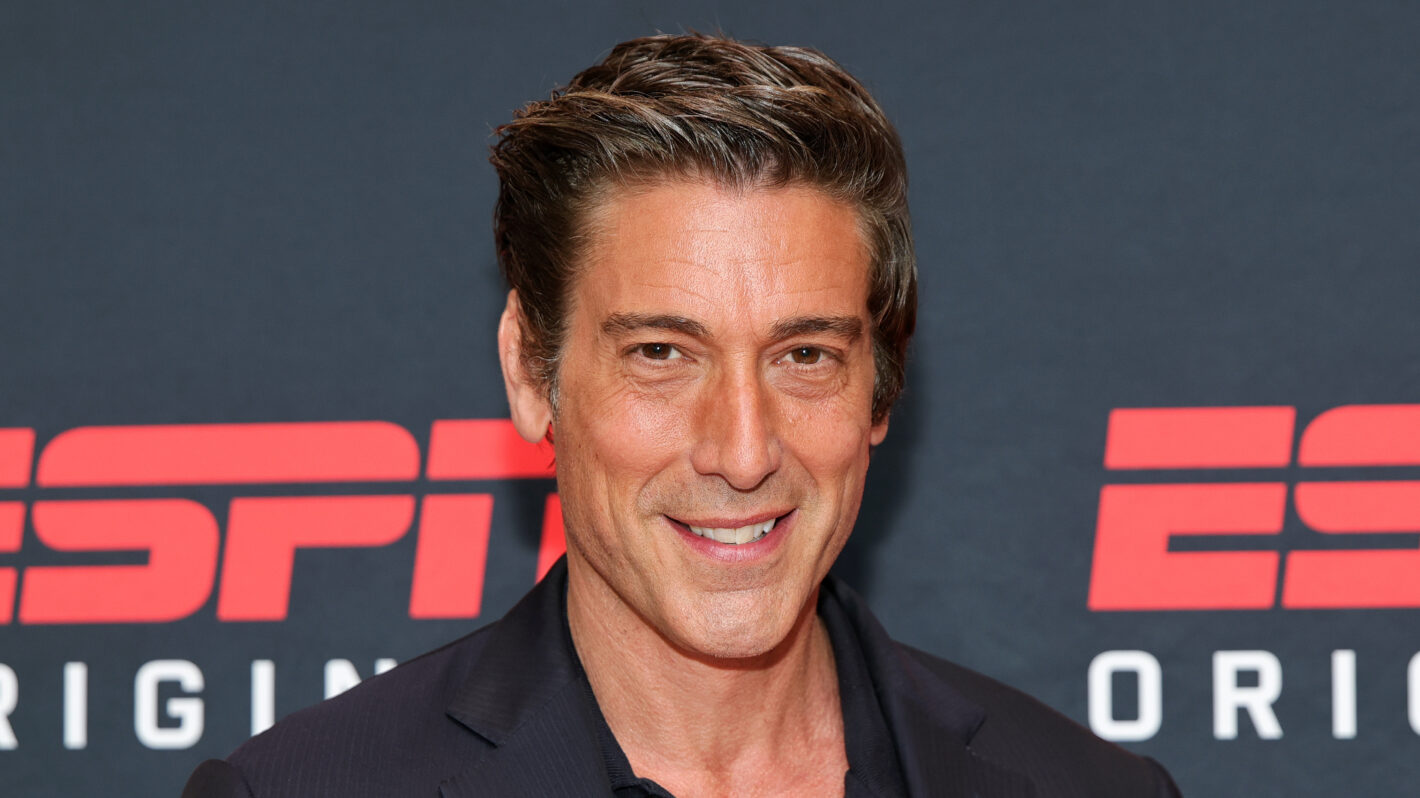
The narrative describes a tense congressional hearing, a giant financial chart, and a collection of documents supposedly exposing secret luxury vacations.
According to the account, Kennedy attempted to dismiss the accusations before an unexpected financial revelation left him unable to respond.
But the story contains a contradiction that changes how its claims should be understood.
It credits Muir with conducting the confrontation while identifying Senator Sheldon Whitehouse as the politician presenting the financial evidence.
No authenticated ABC News broadcast or congressional recording located during this review establishes that Muir confronted Kennedy in the manner described.
Muir is the anchor and managing editor of ABC’s World News Tonight, not a senator conducting congressional investigations.
Whitehouse, however, has spent years examining political organizations that finance campaigns involving judicial nominations and federal court decisions.
His investigations have identified significant donations flowing through nonprofit advocacy networks, including a remarkable $1.6 billion transaction involving conservative donor Barre Seid.
Separately, investigative reporting exposed expensive vacations and private transportation provided to Supreme Court Justice Clarence Thomas by billionaire Harlan Crow.
The revelations prompted congressional investigations, amended financial disclosures, and proposals to strengthen judicial ethics enforcement.
These are documented developments rather than theatrical allegations about Kennedy’s reaction during a televised confrontation.
The consequential question is whether America’s judicial disclosure and ethics systems provide enough information to identify potential conflicts of interest.
1. The alleged David Muir confrontation does not match the documented hearing record
The circulating account begins by describing Kennedy as attempting to dismiss concerns about conservative political spending through humor and familiar political arguments.
It then introduces Muir as the person supposedly conducting an intense cross-examination before a congressional committee.
However, the account never identifies the committee, hearing date, broadcast network, or actual words exchanged between the two men.
Those missing details matter because a significant congressional confrontation should ordinarily leave an identifiable public record.
Official proceedings frequently have schedules, witness lists, transcripts, recorded votes, and video archives available for verification.
The story also switches between Muir and Whitehouse without explaining why two different people supposedly delivered the same decisive evidence.
Whitehouse’s documented role offers a likely explanation for the confusion.
For years, the Rhode Island Democrat has delivered a series of Senate speeches titled The Scheme, examining what he describes as coordinated financial influence over the federal judiciary.
His presentations frequently use charts and diagrams to illustrate relationships among donors, nonprofit organizations, advocacy groups, and judicial nomination campaigns.
Those materials provide the factual foundation for a substantial political controversy.
But they do not establish that Muir confronted Kennedy or that Kennedy was caught participating in unlawful financial activity.
The distinction is especially important because the narrative describes the senator’s silence as though it were proof of corruption.
A politician’s reaction, even if accurately documented, would not independently prove a financial crime.
And when the reaction itself cannot be verified, it cannot support the accusation at all.
The authentic investigation belongs to Whitehouse’s Senate oversight work, not an established televised interrogation conducted by Muir.
World News Tonight with David Muir+2
2. Whitehouse’s financial diagrams identify organizations operating around the federal judiciary
Whitehouse’s investigation focuses on how major political donors finance organizations advocating particular judicial philosophies, nominees, and legal outcomes.
His argument is that overlapping nonprofit groups can make the ultimate sources of significant political spending difficult for citizens to identify.
Some organizations fund advertisements supporting or opposing judicial nominees.
Others sponsor legal scholarship, policy research, litigation, or briefs submitted to federal courts.
These activities can be lawful forms of political participation and legal advocacy.
However, their financial arrangements can raise transparency questions when donors remain undisclosed and organizations share personnel, contractors, or funding sources.
Whitehouse has repeatedly pointed to Leonard Leo, a prominent conservative legal activist associated with the Federalist Society.
Leo played an influential role in conservative judicial nomination strategies during Donald Trump’s first presidential administration.
Whitehouse argues that organizations connected to Leo form an influential advocacy network whose financial relationships deserve greater public scrutiny.
The senator has identified groups associated with names including the Judicial Crisis Network and the Concord Fund.
His presentations trace how money can move between entities before supporting public campaigns concerning judicial appointments.
The diagrams do not establish that every transfer represents bribery.
Nor do they prove that a judge adopted a particular legal interpretation because an advocacy organization received money.
Their purpose is to illustrate financial relationships and identify questions that investigators might pursue through additional records.
Critics of Whitehouse’s approach argue that conservative legal organizations possess the same constitutional rights to advocacy as progressive groups.
They also maintain that judicial decisions should be evaluated through their reasoning rather than presumed donor influence.
The competing positions raise a legitimate question about transparency without establishing wrongdoing by every organization involved.
The financial network is documented, but Whitehouse’s characterization of its political significance remains an interpretation that must be distinguished from proven corruption.
Senator Sheldon Whitehouse+1
3. The $1.6 billion transaction reveals the scale of the judicial advocacy funding debate
One of Whitehouse’s most frequently cited examples concerns businessman Barre Seid and the Marble Freedom Trust.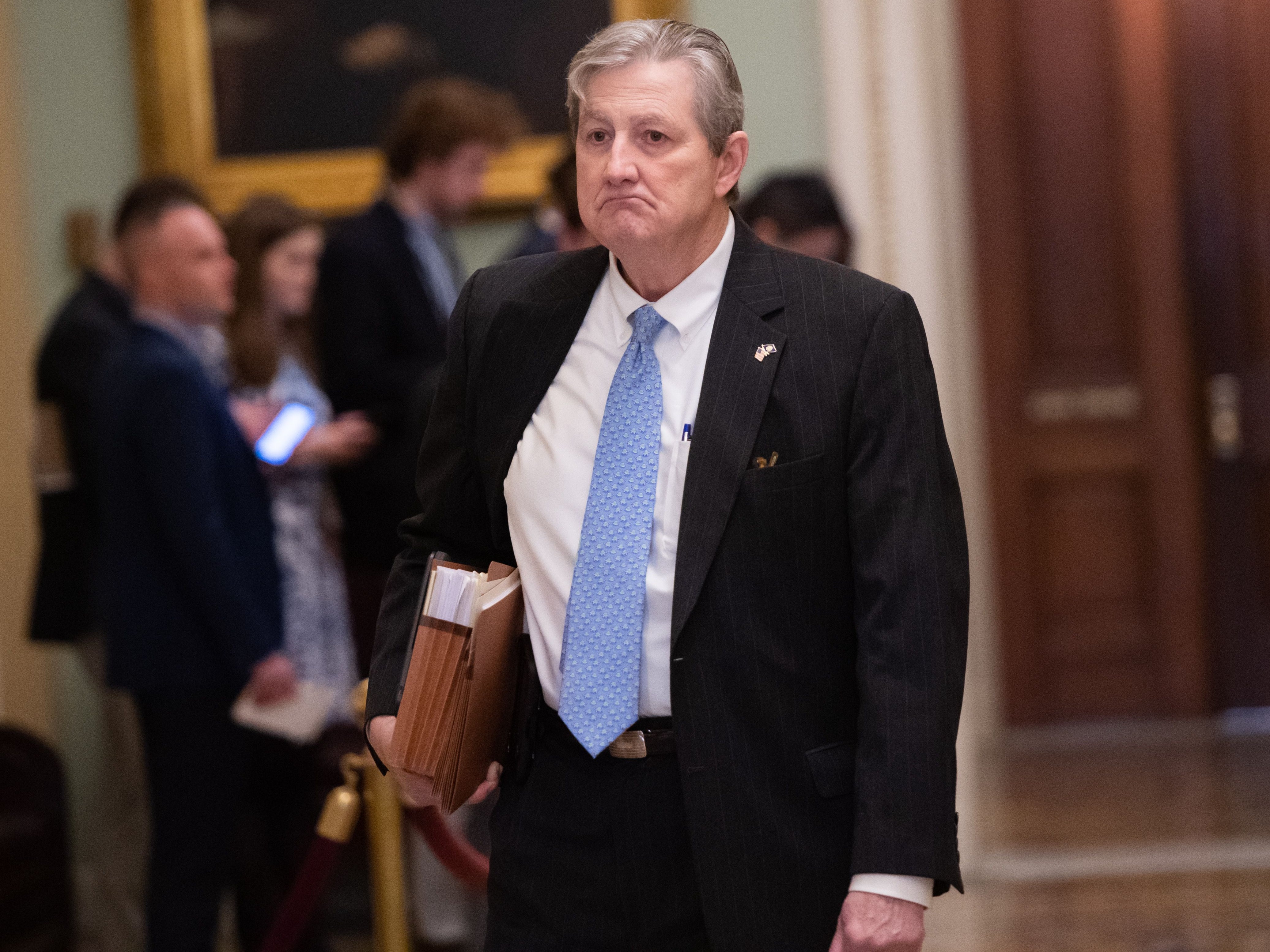
In 2022, investigative reporting revealed that Seid had transferred ownership of his electronics company, Tripp Lite, to the nonprofit organization.
The company was subsequently sold in a transaction valued at approximately $1.6 billion.
Because the trust was structured as a nonprofit organization under Section 501(c)(4) of the Internal Revenue Code, the transfer raised significant tax-policy questions.
Whitehouse argued that the arrangement allowed appreciated business assets to support political advocacy without triggering capital gains taxation through an ordinary sale by the donor.
His office estimated that the potential tax advantage could have approached $400 million.
That amount was an estimate of the possible tax consequences, not a finding that Seid illegally evaded taxes.
The transaction itself provided substantial resources for the Marble Freedom Trust and its related advocacy activities.
Whitehouse linked the trust to Leo’s broader network of conservative political and legal organizations.
He argued that concentrated financial resources could influence judicial confirmation campaigns and public debates about constitutional interpretation.
The important distinction concerns what the records establish.
They show that an unusually large financial transfer was made to a politically active nonprofit organization.
They do not independently establish that the money was secretly paid to Supreme Court justices.
Nor do they demonstrate that Kennedy personally received any part of the donation.
In February 2024, Whitehouse and Representative Judy Chu introduced legislation intended to change tax treatment of similar donations of appreciated property.
Their proposal sought to reduce tax advantages associated with transferring certain assets to politically active nonprofit organizations.
The legislative response showed that the financial arrangement was being examined as a potential issue in federal tax policy.
The $1.6 billion figure describes a documented nonprofit funding transaction, not an authenticated personal payment to Kennedy or a Supreme Court justice.
Senator Sheldon Whitehouse+1
4. Clarence Thomas’s undisclosed vacations introduce a separate judicial ethics controversy
The financial network debate became more politically significant after investigative journalists exposed expensive travel and hospitality provided to Supreme Court justices.
On April 6, 2023, ProPublica reported that Justice Clarence Thomas had accepted luxury vacations from billionaire businessman Harlan Crow over many years.
The investigation identified travel aboard Crow’s private aircraft and yacht, along with visits to exclusive resorts and other private properties.
Some of those arrangements had not appeared on Thomas’s publicly available financial disclosure forms.
ProPublica reported that a 2019 trip to Indonesia involved private jet transportation and a cruise aboard Crow’s yacht.
The estimated commercial cost of equivalent transportation and accommodations could have reached hundreds of thousands of dollars.
Those estimates represented the approximate value of comparable travel, not direct cash payments made to Thomas.
Crow acknowledged providing hospitality and described Thomas as a longtime personal friend.
He maintained that the hospitality was comparable to what he offered other friends and that he had not sought improper official favors.
Thomas and his representatives also disputed interpretations suggesting that the arrangements necessarily violated applicable disclosure requirements.
The controversy nevertheless raised questions about whether existing rules sufficiently covered private transportation and expensive hospitality.
Legal ethics specialists cited by ProPublica argued that certain travel benefits should have been disclosed.
The issue became more concrete in June 2024.
Thomas amended his 2019 financial disclosure, acknowledging that two trips involving Crow had been omitted from earlier filings.
His explanation characterized the omissions as inadvertent.
That amendment established that the earlier reporting had been incomplete.
It did not constitute an admission that Thomas accepted bribes or altered judicial decisions in exchange for gifts.
The documented issue was the disclosure of valuable hospitality and travel, while allegations of corrupt judicial decision-making required separate evidence.
ProPublica+1
5. Senate investigators uncover additional private flights
The controversy expanded when the Senate Judiciary Committee began examining travel benefits provided to Supreme Court justices.
On June 13, 2024, committee chairman Dick Durbin released information obtained from Harlan Crow concerning travel provided to Thomas.
The records identified additional private aircraft trips that had not been included in Thomas’s public financial disclosures.
Investigators reported travel connected with destinations including Montana and Georgia.
The information emerged through a Senate investigation that had sought records from Crow and other individuals connected with judicial hospitality arrangements.
The committee’s work added documentary evidence to the disclosures already identified by journalists.
But the additional travel records also required careful interpretation.
Providing transportation to a justice can raise disclosure obligations without automatically establishing an agreement to influence a particular ruling.
Federal bribery allegations require evidence meeting specific legal standards, including a corrupt connection involving official action.
An undisclosed gift may also raise ethics or reporting issues even when criminal bribery cannot be established.
The committee’s investigation therefore examined questions broader than criminal corruption alone.
It considered whether justices had properly disclosed gifts and whether existing rules adequately addressed private hospitality.
That distinction helps explain why the investigative findings became central to proposals for judicial ethics reform.
The immediate question was whether federal judges, including Supreme Court justices, should face more consistent reporting requirements and independent review.
The broader concern involved public confidence in courts whose members exercise considerable authority over constitutional and statutory interpretation.
The Senate’s additional evidence documented previously undisclosed travel, but it did not establish that Kennedy participated in the arrangements or concealed them.
judiciary.senate.gov+1
6. The investigation extends to Samuel Alito and wider questions about judicial hospitality
Clarence Thomas was not the only Supreme Court justice whose travel arrangements attracted scrutiny.
ProPublica also investigated a luxury fishing trip taken by Justice Samuel Alito to Alaska in 2008.
The trip involved travel and hospitality associated with wealthy individuals, including businessman Paul Singer.
Singer subsequently had interests connected with litigation that reached the Supreme Court.
Alito defended his conduct and disputed claims that his participation violated applicable ethical or disclosure standards.
He argued that the relevant circumstances did not require the conclusions critics drew from the travel arrangement.
The controversy raised questions about both disclosure obligations and judicial recusal.
Disclosure rules address whether certain financial benefits must be publicly reported.
Recusal standards concern whether a judge should withdraw from participating in a particular case because of a relevant conflict or appearance of partiality.
Those are related but distinct legal issues.
The fact that a wealthy individual supports a judicial philosophy does not automatically establish that a justice must recuse from every case connected with that person’s interests.
The applicable requirements depend on the relationship, circumstances, and legal standards.
On December 21, 2024, the Senate Judiciary Committee’s Democratic majority released a report summarizing its twenty-month investigation into Supreme Court ethics.
The report examined hospitality, financial disclosure practices, institutional safeguards, and potential improvements to enforcement procedures.
Its findings were sharply contested by critics who considered the investigation partisan.
The report nevertheless provided substantial documentation concerning travel and financial disclosure issues.
It also reinforced the distinction between investigating whether rules were followed and proving that a particular judicial decision was corrupt.
The documented disputes involved identifiable travel arrangements and ethics requirements, not proof that every justice receiving hospitality had sold a judicial ruling.
judiciary.senate.gov+1
7. The Supreme Court’s ethics code becomes the focus of reform proposals
The Supreme Court adopted its first formal Code of Conduct for Justices in November 2023.
The development followed growing public debate over financial disclosures, recusal practices, and hospitality provided to members of the Court.
The code set out ethical principles addressing impartiality, outside activities, conflicts of interest, and the conduct expected of justices.
But critics argued that the code lacked an adequate independent enforcement mechanism.
Unlike other parts of the federal judiciary, the Supreme Court operates within a distinct institutional framework.
Questions about who should investigate alleged misconduct by a justice remain particularly sensitive because of the Court’s constitutional independence.
Whitehouse has advocated legislation intended to establish clearer standards and stronger oversight.
On May 2, 2023, he participated in a Senate Judiciary Committee hearing devoted to Supreme Court ethics reform.
His proposals included stricter disclosure requirements and procedures for investigating possible violations.
Supporters argued that transparency and enforceable standards could improve public confidence.
Critics raised concerns about congressional interference with judicial independence and the constitutional separation of powers.
The disagreement involves an institutional question rather than a simple division between politicians who favor ethics and those who oppose them.
Most participants accept that judges should act impartially and avoid improper financial influence.
The debate concerns how ethical obligations should be defined, investigated, and enforced without permitting one branch of government to control another.
The distinction is especially important when evaluating the fictionalized confrontation involving Kennedy.
A senator may oppose a particular reform proposal because of concerns about constitutional authority without necessarily defending unethical judicial conduct.
Likewise, a senator may support stronger oversight without proving that particular justices committed criminal offenses.
The real legislative dispute concerns how to enforce judicial ethics standards while preserving the judiciary’s constitutional independence.
Senator Sheldon Whitehouse+1
8. The financial records reveal the weakness in the alleged Kennedy confrontation
The viral story promises a final document that supposedly proves Kennedy’s political arguments were covering up undeniable judicial corruption.
But the records identified through the actual investigations establish a more complicated sequence.
In 2022, the $1.6 billion Marble Freedom Trust transaction drew attention to the concentration of resources available for political advocacy.
In 2023, ProPublica documented extensive hospitality and travel provided to Justice Thomas by Harlan Crow.
That same year, the Supreme Court adopted a formal ethics code while congressional lawmakers continued debating stronger enforcement provisions.
In June 2024, Thomas amended his financial disclosures to acknowledge previously omitted trips.
Senate investigators subsequently identified additional private flights through records obtained from Crow.
In December 2024, the Judiciary Committee released a broader report examining the Supreme Court’s ethics controversies.
Each development is independently identifiable.
Together, they raise serious questions about transparency, financial disclosure requirements, and institutional accountability.
But the records do not establish that Kennedy knowingly participated in a corrupt arrangement.
Nor do they authenticate a televised confrontation in which David Muir displayed evidence proving the senator’s wrongdoing.
They also do not establish that Whitehouse confronted Kennedy with a specific document that caused the chamber to fall silent.
The importance of those distinctions extends beyond the individuals named in the viral account.
A financial diagram may reveal relationships between nonprofit organizations without establishing that every relationship is unlawful.
A major donation may be politically significant without constituting a personal payment to a judge.
An undisclosed luxury trip may raise serious reporting questions without automatically proving bribery.
And a congressional investigation may identify substantial evidence of ethics problems without resolving every disputed legal question.
Those distinctions allow the public to examine financial influence without substituting suspicion for proof.
They also prevent political narratives from assigning personal criminal responsibility where the evidence does not support it.
Whitehouse’s documented work illustrates the importance of tracing financial relationships through identifiable organizations and transactions.
The travel investigations demonstrate why disclosure rules matter when public officials receive valuable private benefits.
The 2024 Senate report provides a substantive basis for examining whether the Supreme Court’s existing oversight arrangements are sufficient.
Yet those findings remain separate from the claim that Kennedy was personally exposed during an ABC News confrontation.
The most consequential evidence concerns the actual financial arrangements and the institutional rules governing them.
The records establish substantial judicial advocacy funding and previously undisclosed luxury travel, but they do not prove that Kennedy participated in a corruption scheme.
The unresolved policy debate concerns whether stronger financial disclosure requirements and independent ethics procedures would improve confidence in federal courts.
Opponents of particular reforms continue to raise concerns about judicial independence, constitutional authority, and politically motivated investigations.
Those arguments can be evaluated alongside the documented financial records without presuming either side’s motives.
And that is where the original viral narrative ultimately falls short.
It promises a political humiliation, but the verifiable story involves financial disclosure, judicial ethics, and the limits of congressional oversight.
The decisive question is not whether David Muir silenced John Kennedy, but whether the public can sufficiently examine financial influence surrounding America’s courts.
