
A single joke about First Lady Melania Trump turned into a national political controversy when Jimmy Kimmel described her as an “expectant widow,” prompting an extraordinary public response from the White House.
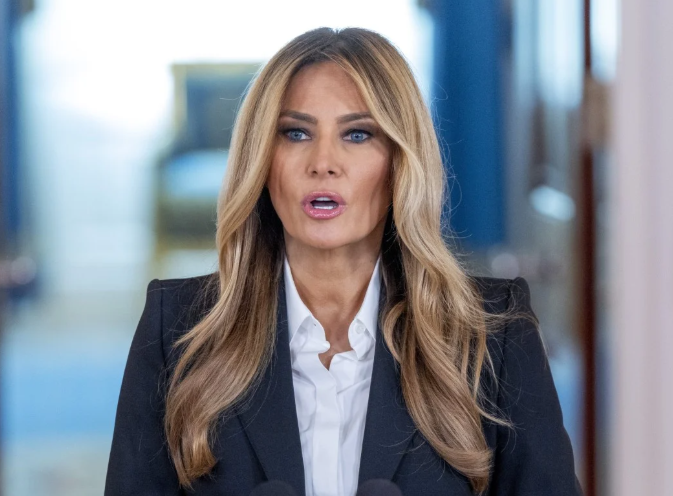
What began as a satirical segment on late-night television escalated into a confrontation involving the president, the first lady, and one of America’s most recognizable television comedians.
The remark, originally broadcast on April 23, 2026, returned to the center of political debate after a frightening security incident at the White House Correspondents’ Dinner two days later.
Suddenly, a joke that initially attracted limited attention became the subject of accusations involving political hostility, violent rhetoric, presidential security, and the boundaries of acceptable comedy.
Kimmel insisted that his words were an obvious reference to the age difference between President Donald Trump and his wife, rejecting suggestions that he had encouraged violence.
Melania Trump saw the situation differently, publicly condemning the comedian’s remarks and questioning why ABC continued providing him with a national television platform.
The confrontation exposed a deeper disagreement over political satire, personal responsibility, and whether comedians should face professional consequences when their jokes involve prominent political families.
The controversy began during an episode of Jimmy Kimmel Live!, when the comedian staged a parody of the White House Correspondents’ Dinner ahead of the actual event.
Rather than performing at the official gathering, Kimmel imagined himself hosting the prestigious Washington dinner, delivering a series of jokes aimed at political figures and administration officials.
The segment used edited footage to simulate reactions from prominent attendees, creating the appearance of a traditional political roast without requiring the politicians to participate.
During the routine, Kimmel turned his attention toward Melania Trump, initially complimenting her appearance before delivering the line that would ultimately trigger the controversy.
Addressing the first lady in his fictional dinner setting, Kimmel said she had “a glow like an expectant widow,” combining a familiar expression about pregnancy with a reference to bereavement.
The joke relied on the substantial age difference between the president and his wife, but its reference to widowhood introduced an unmistakably darker element.
Donald Trump, born in June 1946, was approaching his eightieth birthday, while Melania, born in April 1970, was twenty-four years younger.
For audiences accustomed to Kimmel’s confrontational humor, the remark fit an established pattern of jokes about Trump’s age, personality, relationships, and political conduct.
Others found the wording unnecessarily personal, particularly because it introduced the possibility of the president’s death into a joke about the first lady.
Initially, the remark did not generate the same level of controversy that would emerge several days later, when an unrelated and deeply alarming incident changed its public interpretation.
On April 25, the actual White House Correspondents’ Dinner was interrupted by a security emergency involving an armed suspect near the Washington Hilton.
Authorities reported that the suspect attempted to reach the event, where the president, first lady, journalists, and other prominent officials had gathered for the annual celebration.
The security breach resulted in a frightening situation for attendees, including Melania Trump, who was evacuated as authorities responded to the threat.
The suspect was subsequently charged in connection with an alleged assassination attempt, making the event a serious national security matter rather than an ordinary political disturbance.
Although Kimmel’s joke had been broadcast two days before the incident, its reference to widowhood suddenly appeared far more disturbing to some viewers.
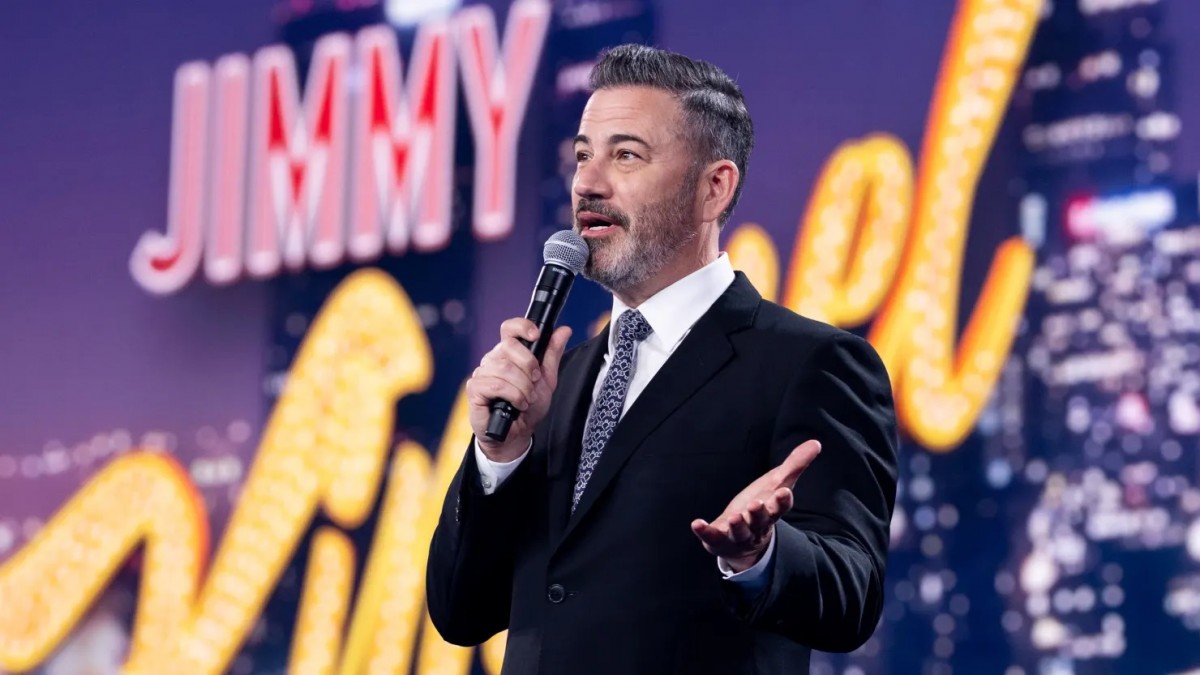
The chronological distinction became crucial: the comedian had not made the remark in response to the security emergency, nor had he known that the incident would occur.
Nevertheless, clips of his earlier monologue circulated alongside commentary about the attempted attack, encouraging a new wave of criticism over the language he had chosen.
Some commentators argued that joking about the first lady becoming a widow was inappropriate in any circumstances, especially during a period of heightened political violence.
Others emphasized that the timing disproved claims that Kimmel had deliberately mocked the danger faced by the presidential family during the correspondents’ dinner.
The disagreement intensified on April 27, when Melania Trump issued a public statement condemning the comedian’s words and expressing frustration with ABC’s handling of his program.
The first lady characterized Kimmel’s remarks as hateful and corrosive, arguing that this kind of commentary contributed to an increasingly hostile political atmosphere.
Her criticism went beyond expressing personal offense, directly challenging the television network responsible for broadcasting Kimmel’s late-night program to reconsider its treatment of the comedian.
She also questioned whether a nationally televised entertainment platform should continue showcasing humor she believed encouraged division and disrespect toward the presidential family.
The statement transformed the controversy into a confrontation between the first lady and a major entertainment company, placing corporate editorial independence under renewed political scrutiny.
President Trump quickly reinforced his wife’s criticism, publicly demanding that ABC and its parent company, Disney, remove Kimmel from the air.
Trump described the remark as unacceptable and associated it with dangerous political rhetoric, arguing that the comedian had crossed a line beyond ordinary entertainment.
His response introduced a significant political dimension because the criticism came not simply from offended viewers, but from the sitting president of the United States.
The dispute also revived memories of an earlier confrontation involving Kimmel, ABC, and the Trump administration that had already generated debate about government influence over broadcasting.
In September 2025, ABC temporarily suspended Jimmy Kimmel Live! following controversy over the comedian’s remarks concerning the assassination of conservative activist Charlie Kirk.
The suspension followed intense criticism and public comments from Federal Communications Commission Chairman Brendan Carr, raising questions about political pressure on television networks.
ABC eventually restored Kimmel’s program, but the episode left unresolved disagreements about corporate responsibility, political influence, and the protection of controversial expression.
Against that background, the April 2026 dispute carried consequences extending beyond whether one comedian had delivered a joke in poor taste.
For Kimmel’s critics, the controversy concerned whether repeated personal attacks on political figures should remain acceptable simply because they are delivered under the banner of comedy.
For his defenders, the presidential demand for dismissal raised concerns about powerful government officials using their public influence against entertainers who criticize them.
The First Amendment protects freedom of expression from government restrictions, although private broadcasters retain significant discretion over the content they choose to distribute.
That distinction is essential because criticism from political leaders does not automatically establish unconstitutional censorship, even when their statements create intense public pressure.
Likewise, a comedian’s right to express controversial opinions does not prevent audiences from criticizing those remarks or asking a private company to reconsider its programming.
Kimmel addressed the controversy during his April 27 broadcast, responding directly to the demands for his dismissal and explaining the intended meaning of his joke.
He described the original segment as a pretend political roast and emphasized that the remark had been delivered before the frightening events at the Washington Hilton.
According to Kimmel, the reference to widowhood was intended as a joke about the president’s age and the public image of his relationship with Melania.
He rejected the accusation that his words amounted to encouragement of political violence, pointing to his longstanding public criticism of gun violence in America.
The comedian also acknowledged that the security emergency had been frightening, expressing sympathy for those who experienced the incident and recognizing the seriousness of the situation.
However, he did not issue the apology some critics demanded, maintaining that the intended meaning of his original remark had been distorted.
That decision prolonged the disagreement because the two sides were debating different questions: whether the joke was intended to encourage violence and whether it was appropriate regardless.
Kimmel insisted that his intention mattered, arguing that interpreting the comment as an assassination reference ignored both the original context and its broadcast date.
Melania’s criticism placed greater emphasis on the language itself and the responsibility of public entertainers to consider how their words might affect political discourse.
The disagreement became especially revealing when Kimmel challenged the administration’s own rhetoric, suggesting that concerns about inflammatory political language should be applied consistently.
He argued that politicians who condemn hostile speech should also examine how they characterize their opponents, rather than directing their criticism exclusively toward television comedians.
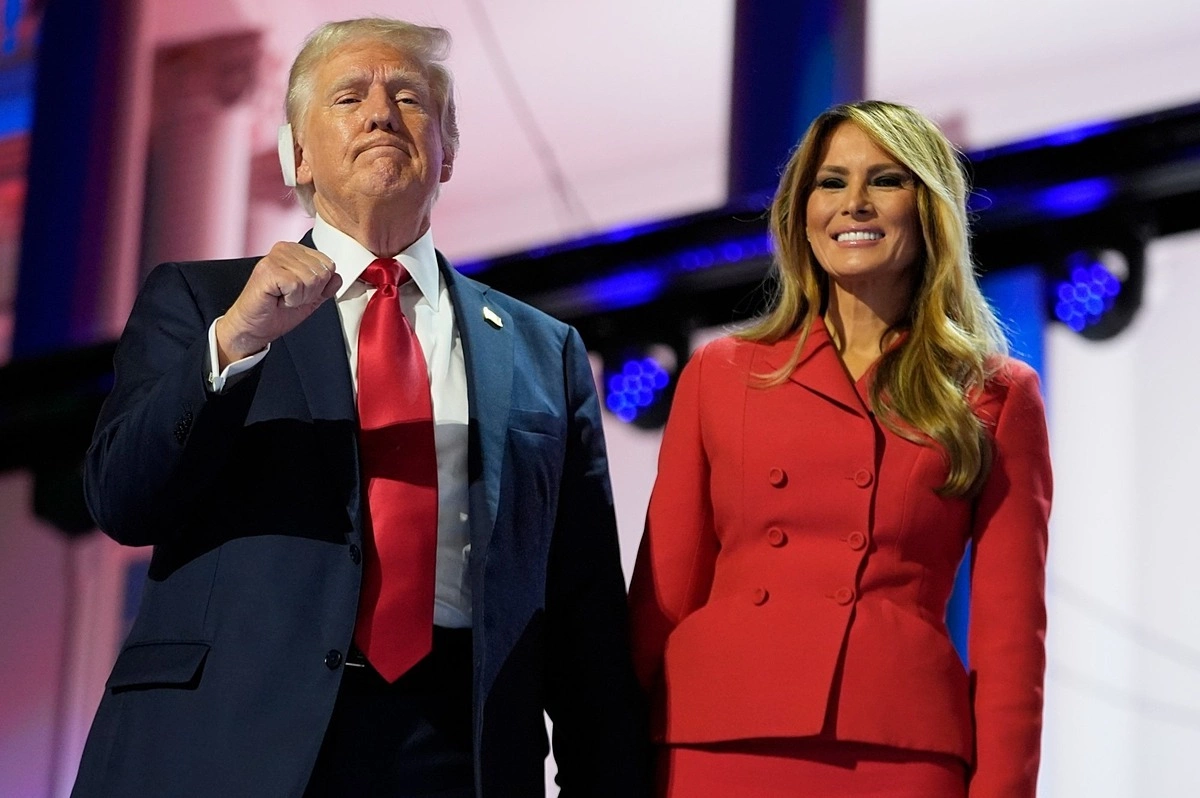
The exchange reflected a larger national debate about political communication, particularly when criticism moves beyond government policies and directly targets public figures’ families.
First ladies have frequently become subjects of political satire, but the personal nature of certain jokes can generate arguments about fairness and proportionality.
Melania Trump occupies a distinctive public position, participating in official events while maintaining a personal identity separate from the president’s political office.
That distinction complicates the debate over whether jokes about her marriage should be treated as ordinary commentary about public figures or unnecessarily intrusive personal attacks.
Kimmel’s defenders maintain that presidential families have long appeared in political comedy, and that exaggerated humor is a familiar feature of American entertainment.
His critics counter that invoking death or widowhood can be especially insensitive when political violence and threats against public officials remain serious concerns.
Both arguments gained attention because the April security incident created emotional circumstances that were absent when Kimmel originally recorded his parody.
The timing also made the controversy vulnerable to misleading social media claims, particularly posts suggesting that the widow joke had been delivered after the attempted attack.
Fact-checkers established that the original broadcast occurred on April 23, before the April 25 incident, correcting the chronology presented in some circulating commentary.
Another misleading claim emerged through a video purporting to show Kimmel issuing a sincere apology for the joke, despite his actual broadcast containing no such apology.
Investigators identified manipulated audio associated with that supposed apology, demonstrating how artificial intelligence can complicate controversies already shaped by emotionally charged political claims.
Those developments reinforced the importance of examining original recordings rather than relying exclusively on short social media clips or dramatic interpretations.
The controversy continued on April 28, when Kimmel highlighted remarks from President Trump that he considered relevant to the dispute over jokes involving mortality.
During a White House appearance involving Britain’s King Charles III and Queen Camilla, Trump referenced his parents’ long marriage and joked about whether he and Melania could match it.
Kimmel seized on the remark, arguing that the president had himself used the passage of time and the length of a marriage as material for humor.
The comedian suggested that the contrast illustrated inconsistent standards, with the president condemning one age-related joke while making another involving his own marriage.
The two remarks were not identical, however, and audiences could reasonably distinguish between joking about the length of a marriage and referring explicitly to widowhood.
Nevertheless, Kimmel used the comparison to question whether criticism of his comedy reflected genuine concern about language or broader hostility toward his political commentary.
The episode also demonstrated how conflicts involving entertainment personalities can quickly expand into debates about the responsibilities of presidents, corporate executives, and media regulators.
Late-night comedy has traditionally relied on irreverence toward political authority, with hosts using satire to challenge administrations, expose contradictions, and entertain politically engaged audiences.
But the media environment has changed dramatically, allowing a single joke to circulate beyond its original program and reach viewers unfamiliar with the surrounding context.
A remark delivered during an eight-minute comedy segment can become a brief clip accompanied by captions that emphasize outrage rather than the comedian’s intended meaning.
The resulting audience may evaluate the words through a completely different political context, especially when subsequent events make previously ordinary jokes appear more troubling.
That dynamic was central to the Melania controversy, because the alarming security incident gave renewed emotional significance to a remark originally framed around an age difference.
For the first lady, the concern was personal as well as political, emerging after an event in which her family’s safety had been directly threatened.
For Kimmel, the controversy centered on defending the distinction between dark humor and actual encouragement of violence while resisting demands that his employer terminate him.
The dispute remains a revealing example of how quickly American political discourse can shift from the content of a joke to the power of institutions.
As of November 2026, the original April controversy remains relevant to ongoing arguments about political satire, broadcast independence, and the treatment of presidential families.
The documented confrontation established that Kimmel made the joke, the Trumps condemned it, and the comedian publicly rejected the interpretation that his words encouraged an attack.
It did not establish that his remark caused or inspired the subsequent security incident, and the chronology makes any claim that he was reacting to that event inaccurate.
Ultimately, the dispute leaves Americans confronting two related but different questions: whether a joke can be protected expression while still being offensive, and who should decide its consequences.
For some viewers, the words “expectant widow” represent a familiar example of provocative late-night humor directed at a powerful political family.
For others, the same phrase illustrates how political comedy can become unnecessarily personal and unsettling, particularly when national security concerns and threats of violence dominate public attention.
Kimmel’s refusal to apologize ensured that the disagreement would not end with a simple acknowledgment of offense, while the Trumps’ demands introduced broader questions about political influence.
The controversy’s enduring significance lies in that unresolved tension between the freedom to criticize, the responsibility to consider consequences, and the right of audiences to object.
And six months after the original broadcast, the question remains as divisive as the joke itself: was Kimmel exercising the traditional freedom of political satire, or crossing a personal boundary that comedy should respect?
