
Senator Sh.e.l.d.o.n White.h.o.u.s.e had barely touched his microphone when an enormous financial diagram appeared on the hearing room’s central screen.
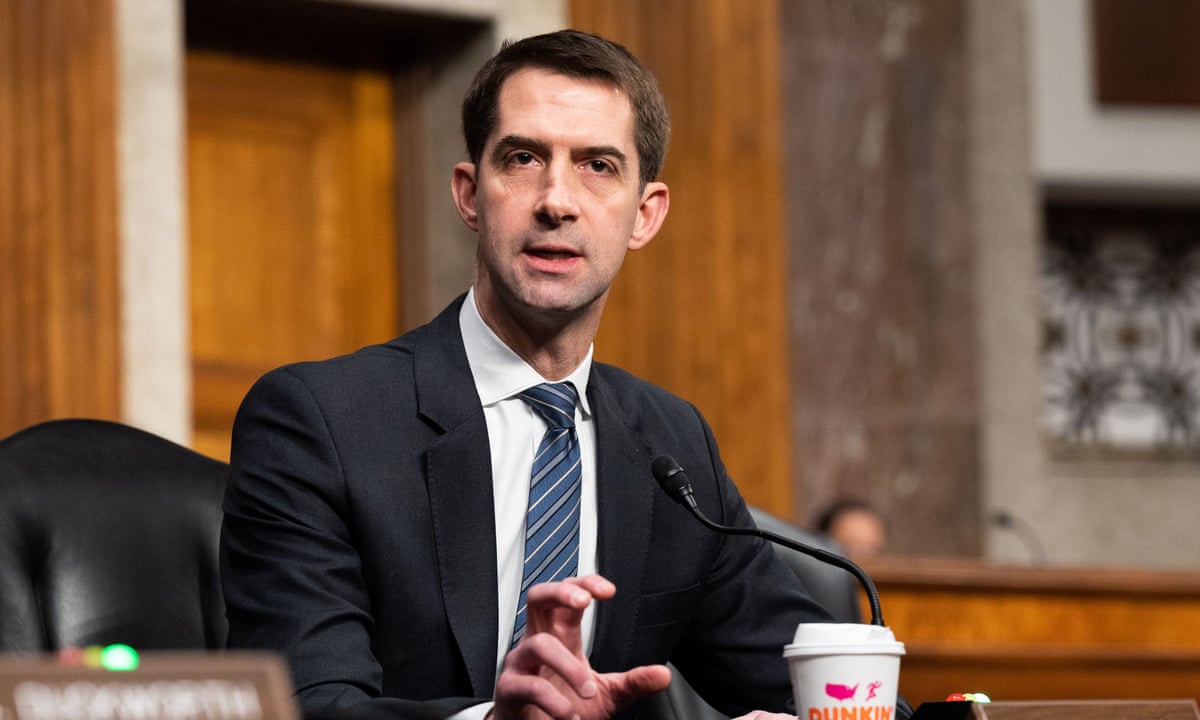
Across the committee table sat Senator T.o.m Co.t.t.o.n, surrounded by briefing papers concerning energy policy, corporate investment, and the influence of political advocacy organizations.
The discussion had begun as a disagreement about American energy security.
Cotton argued that environmental policies should account for energy affordability, industrial competitiveness, and national security.
Whitehouse believed the debate had overlooked another important question.
Who was paying to influence the policies being discussed?
He had brought a thick folder containing financial summaries, organizational records, and a reconstructed ledger illustrating how political advocacy money could move through multiple entities.
Cotton examined the screen.
“Senator, are you accusing American energy companies of committing a crime because they participate in politics?”
Whitehouse slowly adjusted his glasses.
“No, Senator.”
He paused.
“I’m asking whether the public can identify who’s financing the arguments they’re being asked to believe.”
Then he pointed toward a highlighted entry.
The number was impossible to miss.
$4,850,000.
Several people in the room leaned forward.
Whitehouse explained that the figure represented a payment within the committee’s illustrative financial scenario.
It was not an authenticated payment to Cotton or his campaign.
But the transaction raised a question that would dominate the hearing.
If millions of dollars financed political messaging through intermediary organizations, how much could ordinary voters discover about the original source?
Cotton leaned toward his microphone.
“Then let’s establish what that money actually represents before anybody starts drawing conclusions.”
Whitehouse nodded.
“That’s exactly what we’re going to do.”
The confrontation had begun with a debate about whether energy companies exercised disproportionate influence over American political decisions.

Whitehouse argued that large corporations possessed financial resources capable of shaping public discussions about climate policy.
He believed voters deserved transparency concerning organizations financing advertising campaigns, research projects, and legislative advocacy.
Cotton challenged the suggestion that financial participation automatically undermined an organization’s credibility.
He argued that companies had legitimate interests in policies affecting their operations, employees, and customers.
The disagreement reflected two different concerns.
Whitehouse emphasized political transparency and the possibility of concealed influence.
Cotton emphasized lawful participation and the danger of treating industry advocacy as inherently improper.
Neither concern resolved the other.
Whitehouse opened his first document.
It described an advocacy campaign opposing proposed restrictions on certain fossil fuel activities.
The campaign had financed advertisements, commissioned economic research, and organized public messaging.
Its supporters argued that the proposed restrictions would increase energy costs and threaten employment.
Critics argued that the campaign minimized environmental risks and overstated the consequences of regulation.
Whitehouse asked whether voters should know who financed those messages.
Cotton answered that applicable disclosure laws should be followed.
Whitehouse pressed further.
“What if those laws don’t reveal the original financial source?”
Cotton replied that lawmakers could debate disclosure requirements without presuming that every donor was acting improperly.
Whitehouse acknowledged that distinction.
Then he displayed the first section of his diagram.
Three organizations appeared on the screen.
The first represented a fictional energy industry association.
The second was an independent advocacy organization.
The third was a communications firm responsible for purchasing advertisements.
Whitehouse traced a line between the first two entities.
Then he pointed toward the communications firm.
The diagram showed how funding could pass through an intermediary before reaching the company producing political messages.
Cotton studied the image.
“Is that illegal?”
Whitehouse answered that the diagram alone did not establish a violation.
“Then why are we treating it like evidence of a conspiracy?”
Whitehouse looked toward the chairman.
“Because the question isn’t whether every transaction is illegal.”
He returned to the screen.
“The question is whether the public understands the financial relationships behind the messaging.”
The chairman asked the committee’s financial analyst to explain the relevant distinctions.
The analyst described how political organizations operated under different disclosure requirements.
Some activities involved direct contributions to campaigns.
Others involved independent expenditures or broader advocacy.
The legal treatment depended on the nature of the organization and transaction.
A payment to a communications company did not automatically establish a contribution to a politician.
Nor did the presence of several organizations prove unlawful coordination.
Whitehouse accepted the explanation.
Then he raised another concern.
The public might see an advertisement presented as independent civic advocacy without knowing which financial interests supported the organization responsible.
Cotton responded that protecting lawful association and donor privacy could also serve legitimate purposes.
The chairman acknowledged that transparency and privacy could create difficult policy questions.
Whitehouse turned toward the next document.
It contained the reconstructed financial ledger.
The first entries described several payments to a political advocacy organization.
The payments were followed by expenditures for digital advertising, consulting services, and economic research.
One entry stood apart from the others.
Its description read: Strategic Communications and Policy Analysis.
Beside it appeared the figure Whitehouse had highlighted.
$4,850,000.
Whitehouse asked whether that description provided enough information to determine the payment’s ultimate purpose.
The analyst answered that supporting documentation would be necessary.
An invoice, contract, or statement of work could clarify which services had been purchased.
Whitehouse turned toward Cotton.
“Nearly five million dollars, and the description tells us very little.”
Cotton challenged the implication.
“A broad accounting description doesn’t establish misconduct.”
Whitehouse agreed.
“But it can establish why additional disclosure might be useful.”
The chairman asked whether the ledger had been authenticated as a record involving Cotton.
The analyst answered that it had not.
The document was part of the constructed case study prepared for the hearing.
There was no verified evidence connecting the highlighted payment to Cotton personally.
That clarification immediately narrowed the discussion.
Whitehouse could examine the transparency implications of the payment.
He could not responsibly present it as proof that Cotton had secretly received money.
Cotton emphasized the distinction.
“If you’re going to question my integrity, Senator, you need evidence concerning me.”
Whitehouse replied that his argument concerned how corporate political influence could be examined.
The confrontation became more intense.
Cotton argued that Whitehouse’s diagram risked encouraging viewers to associate ordinary political advocacy with wrongdoing.
Whitehouse maintained that complicated financial arrangements deserved scrutiny even when no offense had been established.
The chairman asked both senators to focus on the transaction.
Whitehouse requested that the analyst explain how an investigator would trace the payment.
The analyst described a process involving financial records, contracts, ownership information, and applicable reporting obligations.
The first question would concern who authorized the payment.
The second would concern the recipient.
The third would identify the services purchased.
The fourth would determine whether any further transfers occurred.
Whitehouse nodded.
Then he pointed toward the ledger.
“That’s where the problem begins.”
The original summary identified the recipient organization.
But it did not contain the supporting contract.
The money’s recorded destination was known.
Its complete purpose remained unclear.
Cotton responded that an incomplete document was not proof that the underlying transaction had been concealed.
Whitehouse acknowledged the distinction.
Then he introduced another attachment.
It contained a fictional consulting agreement associated with the highlighted entry.
The agreement described research, message development, audience analysis, and public communications.
It also included a provision allowing certain services to be subcontracted.
Whitehouse asked whether the arrangement could make the final destination of some payments difficult to identify.
The analyst answered that it could, depending on the subcontracting records.
Cotton asked whether subcontracting was itself suspicious.
The analyst said it was not.
Communications firms routinely employed outside specialists.
The relevant issue was whether the records accurately reflected the services and applicable legal obligations.
Whitehouse leaned forward.
“Then suppose the money moves again.”
He displayed the next page.
A portion of the original payment had been transferred to another consulting entity.
That company supplied research services for the advocacy campaign.
Its ownership structure included an investment holding company.
The diagram expanded.
Additional lines appeared.
The audience watched the financial network grow across the screen.
Cotton looked toward the chairman.
“Are we supposed to assume every new box represents another scandal?”
Whitehouse answered calmly.
“No.”
He pointed toward the final entity.
“But every additional layer can create another question about who’s ultimately responsible.”
The analyst explained that complex ownership structures were not inherently unlawful.
Companies might use separate entities for legitimate financial, administrative, or operational reasons.
However, tracing beneficial ownership could become more complicated when records crossed organizational or jurisdictional boundaries.
Whitehouse asked whether those complications could affect investigations into political influence.
The analyst answered that they could.
But the analyst emphasized that the existence of complexity did not establish wrongdoing.
The chairman requested that the diagram distinguish documented relationships from assumptions.
Whitehouse agreed.
Several lines were labeled as illustrative rather than verified.
The correction reduced the apparent certainty of the chart.
It also made the central question clearer.
The committee was examining how financial disclosure systems could reveal or obscure relevant information.
It was not establishing that Cotton had participated in an unlawful scheme.
Then Whitehouse opened the final section of the ledger.
The document contained an additional payment associated with the communications campaign.
Unlike the original entry, this payment carried a more specific description.
It identified the expenditure as economic research concerning the projected effects of proposed energy regulations.
Whitehouse asked the analyst whether the research had been independently reviewed.
The analyst explained that the supporting materials did not establish such a review.
That absence raised questions about methodology.
It did not automatically prove that the research was false.
Cotton challenged Whitehouse.
“Are you claiming the findings were fabricated?”
Whitehouse answered that the committee needed to examine the underlying data before reaching that conclusion.
The distinction mattered.
Research sponsored by an interested organization could still contain accurate information.
Independent research could also contain errors.
The credibility of a study depended on its methods, assumptions, data, and conclusions.
Whitehouse argued that identifying financial sponsorship helped readers evaluate potential conflicts.
Cotton agreed that funding information could be relevant.
But he warned against dismissing research solely because of the identity of its sponsor.
The analyst supported examining both the funding and the methodology.
The hearing had reached another turning point.
The financial records did not establish that the advocacy campaign had deliberately spread false information.
They did, however, identify questions about sponsorship and the transparency of research funding.
Whitehouse returned to the $4,850,000 entry.
He asked whether the committee could determine how much of that payment had been spent directly on political advertising.
The analyst examined the supporting schedules.
The original amount covered several categories of services.
Only part of the payment was connected to advertisements.
Other portions concerned research, administrative work, and consulting.
The distinction significantly changed the transaction’s meaning.
The headline figure could not responsibly be described as a single payment for political advertisements.
Nor could it be characterized as the price paid for an individual senator’s political support.
Whitehouse looked toward Cotton.
“The number alone doesn’t tell the whole story.”
Cotton responded immediately.
“Then neither should the headline.”
The chairman allowed the observation to stand.
For several seconds, the discussion stopped.
The analyst then presented a revised accounting table.
It separated the payment according to its documented purposes.
Some amounts were associated with advertising services.
Others were connected to research and consulting.
The remaining portion required additional supporting records.
Whitehouse asked whether the unexplained balance should be investigated.
The analyst answered that clarification would be appropriate.
Cotton agreed that accurate financial records were important.
But he insisted that the unexplained balance could not be attributed to him without evidence.
Whitehouse acknowledged that limitation.
Then he asked the question he had been building toward throughout the hearing.
“Senator, if nobody can establish where the final dollars went, how can anyone claim to know whose political interests they served?”
The room became quiet.
Cotton studied the revised ledger.
Then he answered that investigators needed reliable documentation before assigning financial or political responsibility.
Whitehouse nodded.
The answer reflected the central tension in the debate.
Incomplete financial records could prevent investigators from identifying important relationships.
But those same gaps could make unsupported accusations especially dangerous.
Whitehouse argued that stronger disclosure systems might reduce both problems.
Cotton questioned whether additional requirements would impose unnecessary burdens or threaten lawful political association.
The disagreement remained substantive.
Neither senator had demonstrated that his preferred approach would resolve every difficulty.
The chairman asked the analyst to identify what the committee could reasonably conclude.
The analyst stated that the reconstructed ledger illustrated potential gaps in financial transparency.
It also demonstrated how incomplete accounting descriptions could encourage misleading interpretations.
The materials did not establish that Cotton had secretly received the highlighted payment.
They did not prove that he had coordinated unlawful political expenditures.
And they did not demonstrate that energy companies had purchased his legislative decisions.
Those allegations would require independent, authenticated evidence.
Whitehouse returned to the original diagram.
He asked staff to remove the unsupported implication connecting the financial transaction to Cotton personally.
The corrected chart retained the relationships relevant to the illustrative funding arrangement.
It separated unanswered questions from established transaction details.
The chairman then proposed a review of disclosure practices concerning politically active organizations and sponsored research.
The review would examine whether additional reporting could improve public understanding without unnecessarily restricting lawful participation.
Whitehouse supported the proposed examination.
Cotton emphasized that any recommendation should respect constitutional protections and distinguish legitimate advocacy from misconduct.
The chairman agreed that those considerations belonged in the review.
The hearing’s outcome was now considerably different from its opening confrontation.
Whitehouse had not demonstrated a secret payment to Cotton.
Cotton had not eliminated the broader concern about financial transparency.
The discussion had identified a concrete policy question requiring further examination.
What information should organizations disclose when they finance research and communications intended to influence public policy?
And how should those rules balance transparency, privacy, and lawful political participation?
Whitehouse closed the ledger.
He looked toward the chairman.
“Following the money matters.”
He paused.
“But following it correctly means accepting what the records establish, not what somebody wishes they established.”
Cotton responded that the principle should apply to every political party and industry.
Whitehouse agreed.
The chairman prepared to close the hearing.
But the final accounting schedule remained on the screen.
Its most prominent number was still $4,850,000.
At the beginning, that figure had appeared capable of resolving an explosive political accusation.
By the end, it had become something different.
A payment requiring context.
A collection of services requiring classification.
And a reminder that financial records could not be interpreted responsibly without understanding their supporting documents.
The chairman struck the gavel.
No authenticated evidence had established that Cotton received a secret multimillion-dollar payment.
No finding of unlawful coordination had emerged.
And the illustrative ledger could not establish the price of any politician’s loyalty.
But the financial exercise had revealed why questions about sponsorship, ownership, and disclosure could matter.
The strongest conclusion was narrower than the accusation that opened the hearing.
Transparency could help identify financial influence.
It could also protect people from allegations built on incomplete records.
Both purposes depended on accuracy.
Whitehouse gathered his papers.
Cotton returned to his briefing folder.
The enormous diagram disappeared from the screen.
Only the revised ledger remained.
Its final column distinguished documented transactions from unresolved entries.
And the most important number was no longer the largest one.

It was the amount that still lacked sufficient supporting information.
That unresolved balance represented a question investigators could actually answer through additional records.
It did not represent proof of anyone’s guilt.
The original confrontation had promised an extraordinary revelation about money and political influence.
The documents instead demonstrated the importance of separating suspicion from evidence.
And the final question exposed the central problem facing any investigation into political funding.
A financial ledger can show where money moved. Proving what that money purchased requires evidence beyond the number itself.
