
“WAKE UP BEFORE IT’S TOO LATE!” — G@vin News0m’s Warning About T.r.u.m.q Ignites a Constitutional Showdown, but One Revealing Detail Changes the Entire Story….
Gavin Newsom has issued some of his fiercest warnings about Donald T.r.u.m.q’s presidency, accusing the administration of pushing American democracy toward dangerous territory.
But one viral account takes that confrontation a step further.
It claims the California governor delivered an explosive TIME magazine interview, called T.r.u.m.q a self-serving showman, and warned Americans to wake up before their constitutional protections disappeared.
The message portrays Washington in chaos and suggests Newsom’s remarks triggered an immediate political earthquake.
There is one problem.
The exact quotations attributed to Newsom could not be verified in the TIME interview coverage reviewed.
Yet the underlying confrontation is real.
Newsom has repeatedly warned about presidential power, election integrity, and the erosion of democratic norms.
And in one documented interview, he raised an allegation far more consequential than a personal insult.
He questioned whether T.r.u.m.q genuinely intended to accept the constitutional limits on his presidency.
That accusation transformed the debate from political showmanship into something considerably more serious.
The central question was no longer whether Newsom disliked T.r.u.m.q.
It was whether the constitutional safeguards Newsom invoked could withstand the pressures he described.
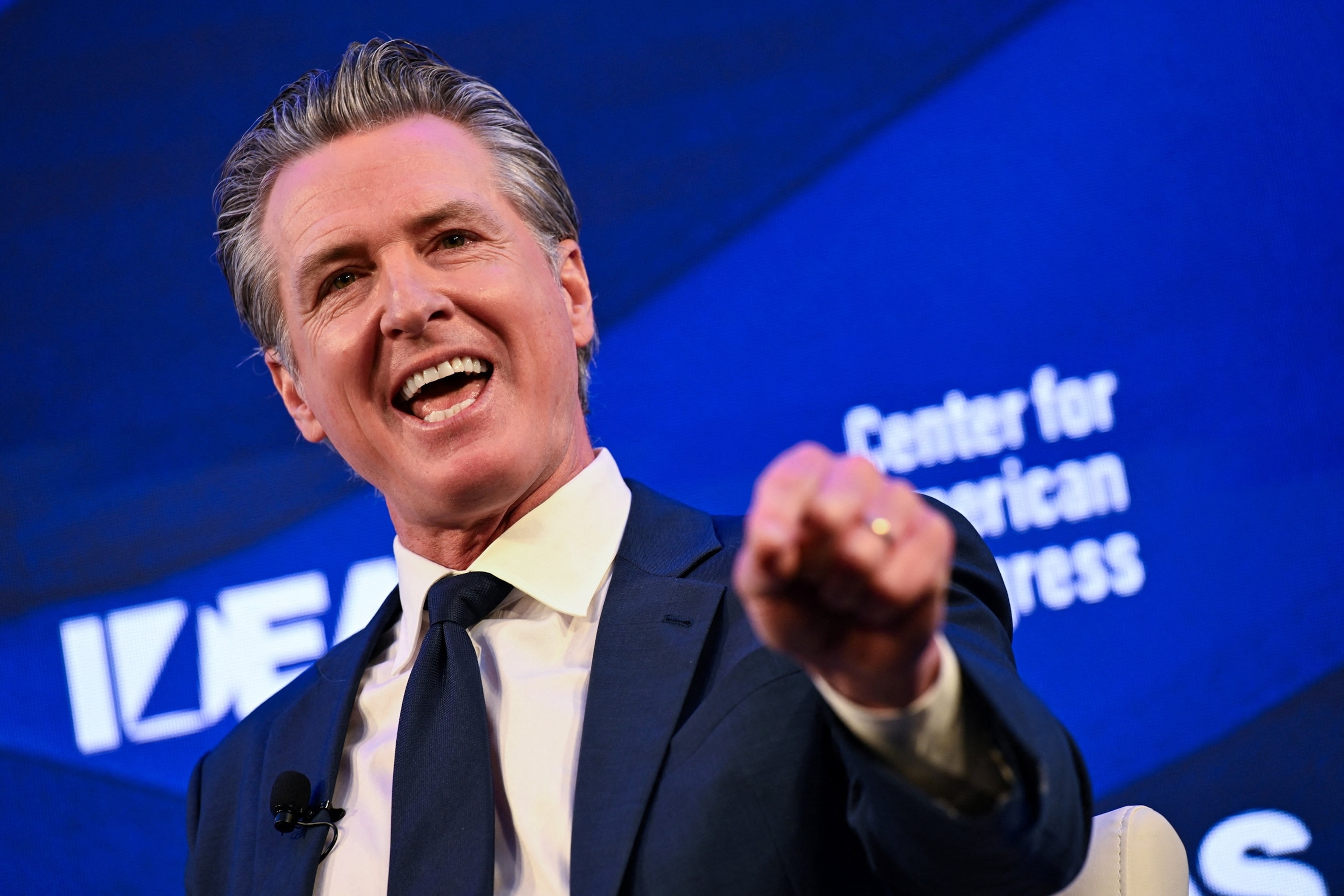
The Viral TIME Interview That Doesn’t Match the Public Record
The circulating account begins with a dramatic premise.
Newsom supposedly confronted T.r.u.m.q during a recent TIME magazine interview, describing the president as a self-serving showman.
It also attributes several memorable declarations to the governor.
One urges Americans to wake up before it becomes too late.
Another presents T.r.u.m.q as the reason constitutional protections and accountability exist.
The final quotation rejects the idea of political kings and demands leaders who serve the public.
The statements closely resemble Newsom’s broader political arguments.
But resemblance is not verification.
A review of relevant TIME reporting did not establish that Newsom delivered those precise remarks during a single interview.
TIME has covered the governor’s increasingly aggressive opposition to T.r.u.m.q.
The magazine also included Newsom on its 2026 TIME100 list.
That profile described his growing national influence, political ambitions, and confrontational approach toward the administration.
But it was not the explosive interview described in the viral message.
The distinction matters because a fabricated quotation can appear credible when it closely matches someone’s established political views.
Readers may recognize Newsom’s confrontational style and assume the wording must be authentic.
Yet the actual record contains statements that are both verifiable and politically significant.
The strongest example came during a public appearance in Sacramento.
And the warning Newsom delivered there went directly to the future of American elections.
The Real Interview Where Newsom Questioned T.r.u.m.q’s Democratic Intentions
On August 27, 2025, Newsom appeared at POLITICO’s California Summit.
During the discussion, he expressed grave concerns about T.r.u.m.q’s commitment to the constitutional limits of presidential power.
The governor suggested that T.r.u.m.q was treating democratic institutions as obstacles rather than essential restraints.
Then he made an extraordinary prediction.
“I don’t think Donald T.r.u.m.q wants another election.”
That remark was documented in contemporary reporting.
It reflected Newsom’s interpretation of T.r.u.m.q’s rhetoric and actions, not a judicial finding about the president’s intentions.
Nevertheless, it represented a serious political accusation.
Newsom questioned whether T.r.u.m.q’s references to remaining in power beyond his second term should be dismissed as harmless jokes.
He also described a private White House encounter involving a portrait of Franklin D. Roosevelt.
According to Newsom’s account, T.r.u.m.q directed his attention toward Roosevelt, the only American president elected to more than two terms.
Newsom interpreted the exchange as another indication that T.r.u.m.q was interested in the possibility of an additional term.
T.r.u.m.q’s intentions could not be conclusively established through Newsom’s recollection alone.
But the underlying constitutional issue was clear.
The Twenty-Second Amendment generally prohibits anyone from being elected president more than twice.
T.r.u.m.q won presidential elections in 2016 and 2024.
Another election to the presidency would therefore face that constitutional prohibition.
Newsom’s argument was that Americans should take political rhetoric about extending presidential power seriously.
T.r.u.m.q’s defenders offered a different interpretation.
They argued that provocative comments about another term could be political theater rather than a genuine attempt to violate the Constitution.
That disagreement led directly to the next question.
What happens when statements that could be jokes concern the fundamental rules governing democratic government?
The Constitutional Limit That Makes the Warning So Serious
The Twenty-Second Amendment was ratified in 1951.
It established formal limits on presidential elections following Franklin Roosevelt’s unprecedented four election victories.
Before Roosevelt, the two-term tradition had been associated with George Washington’s decision to retire after serving twice.
The amendment converted that tradition into a constitutional restriction.
Its significance goes beyond any individual president.
It limits the ability of one political figure to remain in elected presidential office indefinitely.
Newsom’s warning concerned the broader importance of that restraint.
He argued that democratic institutions depended on leaders accepting limits even when those limits prevented them from retaining power.
T.r.u.m.q and his supporters have challenged many of Newsom’s criticisms.
They contend that the president is entitled to advance his agenda aggressively through powers granted by law.
They also argue that Democrats frequently characterize ordinary political disagreements as threats to democracy.
That criticism deserves consideration.
Presidents possess substantial constitutional authority.
Disagreements over immigration enforcement, executive orders, federal spending, and administrative decisions do not automatically establish authoritarian conduct.
But constitutional power is not unlimited.
Congress, the courts, elections, and state governments operate within a system designed to prevent unchecked executive authority.
The distinction between aggressive governance and unlawful overreach depends on specific actions and applicable legal standards.
Newsom’s broader argument was that Americans should evaluate those actions before political norms become weakened through repetition.
That concern explains why his warnings frequently extend beyond personal criticism of T.r.u.m.q.
He has repeatedly connected presidential conduct to institutional accountability.
But another episode revealed just how far the conflict between the two men had already escalated.
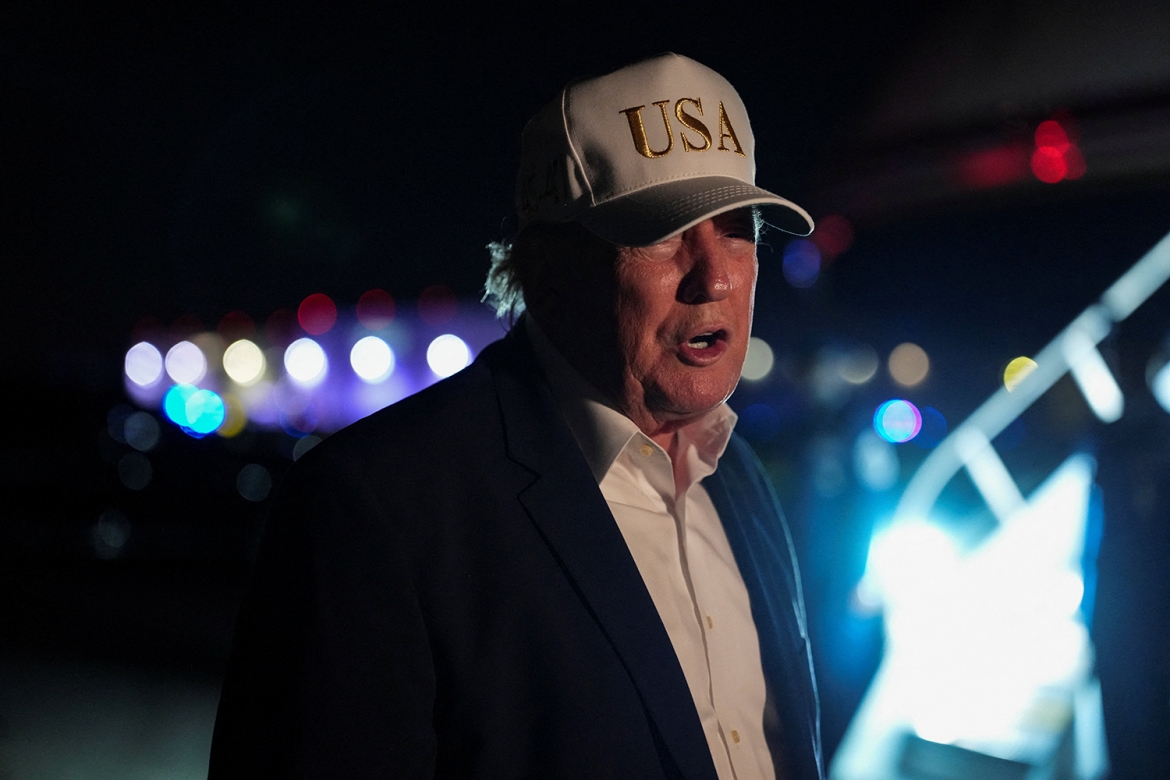
California Became the Front Line of the Constitutional Fight
In June 2025, the T.r.u.m.q administration deployed National Guard forces to Los Angeles amid protests connected to federal immigration enforcement.
The federal intervention created an immediate confrontation with California officials.
Newsom argued that the administration had exceeded appropriate limits on federal power.
He accused T.r.u.m.q of using military personnel in ways that threatened the relationship between federal and state authority.
The administration defended the deployment as necessary to protect federal personnel and property.
It maintained that the president had legal authority to respond to threats involving federal operations.
The dispute produced litigation and competing interpretations of federal law.
Newsom delivered a televised address warning that the conflict extended beyond California.
His argument was that federal power exercised against one state could establish precedents affecting others.
The governor’s warning was dramatic.
But its constitutional importance depended on concrete questions.
What statutory authority supported the deployment?
What limits applied to the use of military personnel?
And what role could courts play in resolving disagreements between federal and state governments?
Those questions could not be settled through political insults.
They required legal interpretation and judicial review.
The confrontation also demonstrated why Newsom’s opposition to T.r.u.m.q had become personal.
The president publicly criticized the governor’s competence.
During a June 9 exchange with reporters, T.r.u.m.q even suggested that border official Tom Homan should arrest Newsom.
Newsom treated the statement as another indication of the administration’s confrontational approach.
The recorded exchange did not establish that an arrest had been ordered.
But it illustrated the unusually hostile relationship between the White House and California’s governor.
And the next development revealed an uncomfortable question for Newsom himself.
The Unexpected Complication in Newsom’s Defense of Democratic Rules
Newsom’s warnings about constitutional safeguards have attracted support from Democrats seeking a more aggressive response to T.r.u.m.q.
But critics have also questioned whether the governor consistently follows the democratic principles he invokes.
One prominent controversy involved congressional redistricting.
In August 2025, Newsom challenged Republican-led redistricting efforts in Texas.
He argued that the proposed changes sought to strengthen Republican control of the House before the 2026 elections.
The governor warned that California might respond with its own redistricting measures.
He framed the strategy as an attempt to counter Republican efforts rather than abandon democratic principles.
But opponents challenged that explanation.
They argued that responding to partisan mapmaking with additional partisan mapmaking could undermine the independent redistricting standards Newsom had previously defended.
The criticism created a genuine contradiction for the governor to address.
If independent electoral rules were important, why support changes that could temporarily move California away from its established system?
Newsom argued that unilateral restraint could allow one party to gain an advantage while the other refused to respond.
His opponents maintained that constitutional and democratic principles should not depend on which party benefited politically.
That dispute revealed a broader problem.
Protecting institutions can become complicated when political leaders believe their opponents are already disregarding established norms.
One side may describe aggressive countermeasures as necessary self-defense.
The other may view those measures as evidence that the principles were never consistently applied.
Newsom’s warning about T.r.u.m.q therefore carried an additional burden.
He needed to demonstrate that his defense of democracy involved more than opposing a particular president.
The question was whether the rules he wanted enforced would also apply when they constrained Democrats.
And that challenge made the next stage of the confrontation more consequential than any viral quotation.
The Warning Newsom Repeated on the International Stage
By January 2026, Newsom was delivering similar warnings before international audiences.
At the World Economic Forum in Davos, Switzerland, the governor criticized what he regarded as the normalization of extraordinary political conduct.
He also acknowledged that his own confrontational messaging had become unusually aggressive.
During one exchange, Newsom described his response to T.r.u.m.q’s political style as an effort to expose behavior he considered unacceptable.
His criticism extended beyond the president.
He questioned whether Congress and other institutions were responding adequately to executive power.
He also expressed concern about the willingness of powerful individuals and organizations to accommodate political pressure.
These were Newsom’s political assessments.
They were not judicial determinations that American constitutional government had ceased functioning.
But they demonstrated the consistency of his broader warning.
The governor was no longer simply arguing over California policy.
He was presenting himself as a national opponent of T.r.u.m.q’s approach to government.
His increasingly confrontational style also raised questions about his political future.
Newsom has been widely discussed as a potential Democratic presidential contender for 2028.
Supporters see his willingness to confront T.r.u.m.q as evidence of political strength.
Critics question whether his aggressive rhetoric and California record would appeal to voters beyond the Democratic base.
Those competing assessments matter.
Political attention does not necessarily translate into electoral support.
And opposition to an unpopular policy does not automatically establish that the opponent possesses a persuasive governing alternative.
Newsom therefore faces a challenge beyond delivering effective attacks.
He must explain how his understanding of constitutional accountability would translate into decisions if he held greater national authority.
That issue brings the story back to the viral TIME claim.
The most important question is not whether Newsom delivered an unforgettable insult.
It is whether his warnings identify risks that institutions can independently evaluate.
The Final Revelation: The Strongest Warning Wasn’t the Viral Quote
The original viral message promised a sudden political earthquake.
It attributed several dramatic statements to a TIME interview and described a country stunned by Newsom’s remarks.
But the verified record points toward a more consequential story.
Newsom’s warnings did not begin with one sensational interview.
They developed through repeated public confrontations over elections, federal authority, political norms, and constitutional limits.
His documented POLITICO interview raised concerns about T.r.u.m.q’s intentions regarding future elections.
His Los Angeles address challenged the federal government’s use of military authority.
His Davos remarks questioned the willingness of political institutions to resist executive pressure.
Together, those episodes form a recognizable argument.
Newsom believes that political leaders can weaken democratic safeguards by treating established restraints as inconveniences.
T.r.u.m.q’s supporters reject the suggestion that his use of executive authority necessarily represents such a threat.
They argue that constitutional mechanisms, courts, and elections remain available to challenge unlawful conduct.
Both positions ultimately depend on evidence.
A politician’s intentions cannot always be determined through provocative statements.
Nor can constitutional violations be established solely through an opponent’s interpretation.
But the existence of legal safeguards does not eliminate the importance of examining whether officials respect them.
The strongest revelation is therefore not a newly discovered TIME quotation.
It is the distinction between political rhetoric and the institutions capable of testing political power.
Newsom can warn voters about T.r.u.m.q.
T.r.u.m.q can challenge Newsom’s credibility.
But neither politician has the authority to decide unilaterally what the Constitution permits.
That question belongs to the legal and democratic institutions established to distribute and restrain government power.
The controversy becomes particularly important when political leaders suggest that elections, courts, or legislative oversight are obstacles to be overcome.
The relevant issue is not whether those statements generate online attention.
It is whether actual government conduct remains subject to enforceable limits.
That is the standard by which Newsom’s warnings should be evaluated.
And it applies equally to the governor’s own political decisions.
The Question Washington Cannot Escape
Newsom’s increasingly aggressive criticism of T.r.u.m.q has helped define his national political identity.
He has framed the president’s conduct as a warning about the concentration of power.
He has also argued that public officials must act before democratic institutions become weakened.
T.r.u.m.q’s allies reject that interpretation and challenge Newsom’s motives, policies, and record in California.
The disagreement is likely to remain central to American politics.
But the underlying constitutional question is larger than either man.
Presidential authority is powerful because the office carries substantial responsibilities.
It is limited because the American constitutional system does not place unlimited power in one individual.
Those limits depend on elections, independent courts, congressional authority, and the willingness of officials to respect lawful decisions.
They also depend on citizens understanding the difference between a documented action and a dramatic political accusation.
The viral TIME story illustrates that distinction.
Its specific quotations could not be authenticated through the reviewed interview coverage.
The descriptions of instant nationwide panic and stunned political opponents were similarly unsupported.
Yet Newsom’s broader concerns about presidential power are publicly documented.
His warnings deserve to be evaluated according to their actual language, evidence, and constitutional implications.
The same scrutiny should apply to his political proposals and any future ambitions.
That standard offers a more demanding form of accountability than viral outrage.
It asks what happened, what the law permits, and what consequences follow.
Newsom’s confrontation with T.r.u.m.q will continue generating headlines.
But its lasting significance will not be determined by which politician delivers the sharper insult.
It will depend on whether the institutions both men operate within remain capable of constraining government power.
The real test of constitutional accountability is not whether a leader demands limits for an opponent. It is whether that leader accepts the same limits when they become personally inconvenient.
And that is the question Americans will still face after the latest political headline disappears.
