
On September 10, 2015, Senator Marco Rubio stood on the Senate floor and delivered a warning he explicitly wanted preserved for history.
He was not merely challenging a nuclear agreement with Iran.
He was describing a chain of military, economic, and geopolitical consequences that he believed could transform the Middle East.
His argument began with sanctions relief, moved through missile development and regional armed groups, and ended with a chilling comparison to North Korea.
More than a decade later, the speech has returned to public attention as Washington confronts renewed tensions over Iran’s military capabilities and nuclear ambitions.
But the most consequential question is not whether Rubio made those predictions.
The Congressional Record confirms that he did.
The question is which warnings subsequent events support, which remain disputed, and what his original argument reveals about the dangers of deterrence failing.
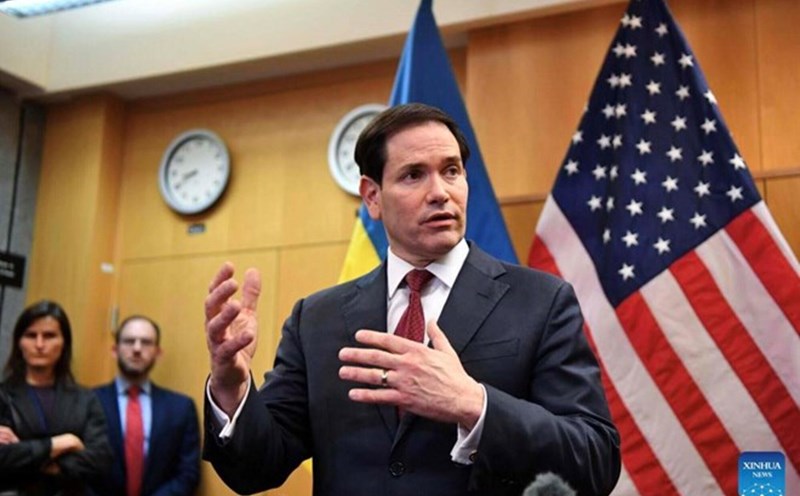
The Senate Speech Rubio Wanted History to Remember
The setting was a consequential debate over the Joint Comprehensive Plan of Action, the nuclear agreement negotiated between Iran and major world powers.
President Barack Obama’s administration argued that the agreement could restrict Iran’s nuclear activities through negotiated limits and international monitoring.
Opponents questioned whether those restrictions would endure and whether sanctions relief would strengthen Iran’s position elsewhere.
Rubio, then representing Florida in the Senate, belonged to the agreement’s most outspoken critics.
His September speech focused less on the technical provisions of uranium enrichment than on the broader strategic environment that might follow.
He believed policymakers were concentrating on the immediate nuclear restrictions while underestimating the military and financial opportunities available to Tehran.
The distinction mattered.
An agreement could temporarily constrain nuclear activity while leaving other disputes unresolved.
Iran’s missile development, relationships with armed groups, and conventional military investments were separate components of the security challenge.
Rubio wanted those components considered together.
His argument was that economic relief could change Iran’s capabilities before the agreement’s longer-term nuclear restrictions expired.
That created a difficult question for supporters of the deal.
Even if the nuclear provisions worked as intended, could Iran become more difficult to confront through conventional military expansion?
Rubio answered that question with a warning about the future.
His words established a sequence of developments that could be evaluated long after the Senate debate ended.
The Sanctions Warning That Became the Center of His Argument
Rubio’s first major concern involved the financial consequences of lifting economic restrictions.
Sanctions had helped bring Iran to negotiations by limiting access to international markets and financial resources.
The proposed agreement offered relief from certain nuclear-related sanctions in exchange for restrictions on Iran’s nuclear activities.
Rubio questioned how Tehran might use the economic opportunities that followed.
His concern was not simply that Iran would obtain additional money.
It was that Iran’s government could redirect available resources toward military investments that would undermine American and allied security.
He described a future in which Iranian conventional forces became more capable of challenging American operations across the region.
That included weapons designed to threaten ships, aircraft, and military installations.
The strategic concern extended beyond individual weapons systems.
A stronger military could force the United States to devote greater resources to maintaining its regional presence.
American commanders might face more complicated operational decisions and greater risks during a confrontation.
Rubio believed those costs could eventually weaken Washington’s ability to pressure Tehran.
However, the relationship between sanctions relief and military expansion requires careful examination.
Money released into an economy cannot automatically be traced to particular weapons purchases.
Economic restrictions also affect civilian industries, employment, financial stability, and ordinary households.
Supporters of the nuclear agreement argued that negotiated restrictions could address an immediate proliferation danger while maintaining other tools against destabilizing Iranian activities.
Rubio regarded those remaining tools as insufficient.
His underlying disagreement concerned whether nuclear restraint and regional security could be addressed separately without increasing future risks.
That disagreement would become increasingly important as American policy toward Iran changed.
The Missile and Proxy Network Problem
Rubio’s warning became more specific when he described capabilities that could challenge American forces directly.
He referred to anti-access weapons, fast attack boats, and missiles capable of threatening naval operations.
These systems offered Iran a means of complicating American military activity without matching the United States weapon for weapon.
The strategic concept was straightforward.
A military does not necessarily need superior overall strength to make intervention costly.
It can instead threaten important assets, disrupt transport routes, and create uncertainty about the consequences of an operation.
For American forces operating around the Persian Gulf, maritime threats represented one particularly significant concern.
Commercial shipping, naval deployments, energy transportation, and regional military facilities all contributed to the strategic importance of those waters.
Rubio also emphasized Iran’s relationships with armed organizations operating beyond its borders.
He feared that regional partners and proxies could increase pressure on American personnel while complicating responsibility for attacks.
This was a different kind of confrontation from a conventional war between two national armies.
An incident involving an armed group could trigger retaliation, provoke further violence, or threaten a broader regional conflict.
Attribution could become disputed.
Political leaders might face competing pressures to respond forcefully or prevent escalation.
Rubio’s argument connected those dangers to sanctions relief and Iran’s growing military capabilities.
He believed that the combined effect could make America’s presence in the region progressively more expensive to sustain.
His reasoning also raised a question that remains central to deterrence.
How can Washington discourage hostile actions when a military response might create consequences far beyond the original incident?
This was the problem Rubio believed conventional weapons and regional proxy networks could intensify.
His 2015 remarks identified those capabilities as central elements of his opposition to the nuclear agreement.
Why North Korea Became His Most Serious Comparison
The speech’s most consequential comparison involved North Korea.
Rubio argued that Iran might eventually pursue a position in which its nuclear facilities became too dangerous for foreign powers to attack.
He described a scenario where stronger conventional defenses and growing missile capabilities would raise the potential cost of military intervention.
North Korea supplied the comparison.
Pyongyang had already established a nuclear weapons program and developed capabilities that threatened neighboring countries and American interests.
Any major confrontation carried the risk of devastating retaliation.
Rubio’s concern was that Iran could seek a comparable form of strategic protection.
The sequence he described involved conventional military growth, increasing deterrent capabilities, and eventually a potential decision to pursue nuclear weapons.
In his account, the danger was not restricted to the moment a country obtained a nuclear device.
It also involved the preceding years, when its ability to resist outside intervention could steadily increase.
That was the central logic behind his warning about military immunity.
The term did not mean that a country could become literally invulnerable.
Instead, it described a situation in which the expected consequences of intervention might become unacceptable to decision-makers.
The comparison also had important limitations.
North Korea and Iran possess different geographic conditions, military structures, diplomatic relationships, and strategic histories.
North Korea has demonstrated nuclear weapons capability.
Iran’s nuclear program has involved a different sequence of inspections, restrictions, disputes, and international confrontations.
Consequently, similarities between their deterrence strategies cannot establish that their outcomes must become identical.
Nevertheless, Rubio considered North Korea a warning about the long-term consequences of allowing military and nuclear threats to become intertwined.
His speech asked whether policymakers were underestimating how difficult future intervention might become.
That question gave his argument a significance extending beyond the original agreement.
The Disagreement That His Warning Could Not Resolve
Rubio’s position represented one side of a serious policy dispute.
Supporters of the Iran agreement argued that negotiated nuclear restrictions could reduce an immediate danger without requiring military action.
The agreement established limits on specified nuclear activities and provided for international verification arrangements.
Critics maintained that its provisions did not adequately resolve missile threats, regional conflicts, or concerns about future nuclear development.
Both positions confronted substantial risks.
Negotiating limits on nuclear activities could create opportunities for monitoring and diplomacy.
Yet restricting one military capability would not automatically eliminate other security challenges.
Conversely, rejecting an agreement could preserve certain economic pressures while leaving fewer negotiated constraints on nuclear activity.
Rubio favored maintaining or restoring sanctions alongside a credible military deterrent.
That approach also carried difficult questions.
Economic pressure might restrict resources available to Iran’s government, but it could also impose substantial costs on civilians.
Military threats could discourage certain actions while simultaneously increasing the danger of escalation.
The effectiveness of deterrence depends partly on whether each side correctly understands the other’s intentions and willingness to act.
Misjudgment can produce consequences neither government originally sought.
These complications explain why Rubio’s speech cannot be reduced to a simple prediction of inevitable events.
He offered a strategic argument about what he believed could happen under particular conditions.
The Senate debate involved competing judgments about those conditions and the available alternatives.
The distinction between a warning and a demonstrated outcome remains essential when examining the speech today.
A Decade Later, Rubio Confronts the Same Question From a Different Office
The most significant change in Rubio’s story is his transition from Senate critic to Secretary of State.
The responsibility of assessing sanctions, negotiations, military risks, and diplomatic concessions now belongs partly to the foreign-policy leadership he helps direct.
In January 2025, during his Senate confirmation hearing, Rubio again discussed the strategic function of economic sanctions.
He explained that sanctions could limit resources available for hostile activities while preserving leverage for negotiations.
That argument closely resembled one of the principal concerns in his 2015 speech.
However, his later position also acknowledged the practical choices governments face when sanctions become part of diplomatic bargaining.
The distinction became especially visible during congressional questioning on June 2, 2026.
Senator Chris Murphy pressed Rubio about whether Washington would provide Iran sanctions relief in exchange for reopening the Strait of Hormuz.
Rubio rejected that proposed exchange as a description of the administration’s position.
He explained that any relief under discussion would depend on conditions involving Iran’s nuclear activities.
He also distinguished among international, congressional, and executive sanctions, recognizing that different restrictions involve different legal authorities.
This exchange introduced a concrete test of the principles Rubio had discussed years earlier.
He was no longer describing sanctions solely as an outside critic of an administration’s agreement.
He was explaining how economic pressure and possible concessions would operate under a government in which he held responsibility.
The 2026 questioning also demonstrated that sanctions policy could not be separated from the immediate economic consequences of regional conflict.
Restrictions on shipping and energy transportation created pressures extending far beyond Iran and the United States.
Diplomatic choices therefore involved nuclear restrictions, regional security, international commerce, and the possibility of renewed fighting.
Those competing demands placed Rubio’s earlier strategic argument into a substantially more complicated operational setting.
The Latest Development Changes How the Original Speech Should Be Read
On November 10, 2026, Reuters reported that Rubio had told G7 foreign ministers Washington would continue imposing substantial economic costs on Iran.
According to diplomats cited in that report, Rubio argued that sanctions were restricting Tehran’s ability to finance regional operations and armed partners.
That position reflected continuity with his earlier concerns about economic resources and military activity.
Yet the surrounding circumstances were markedly different from the Senate debate of 2015.
The United States was managing the consequences of armed confrontation, regional instability, economic disruption, and difficult negotiations.
The administration was also considering alternatives to renewed military strikes.
Those circumstances gave the original warning a different significance.
Rubio’s longstanding arguments were now being tested against the costs and limitations of implementing them.
A further development followed on November 12.
Reuters reported President Donald Trump’s assertion that Washington did not need a new agreement with Iran.
The report described continuing disputes over negotiations, sanctions, shipping restrictions, and the demands of both governments.
Those unresolved issues showed how difficult it had become to connect strategic objectives with an acceptable diplomatic outcome.
The newest information also places an important limitation on the claim that Rubio predicted everything.
The original speech anticipated greater military capabilities, expanded regional pressure, and the possibility of a future nuclear weapons breakthrough.
Subsequent developments have reinforced the relevance of several threats he identified.
But they do not demonstrate that every outcome he predicted occurred exactly as described.
In particular, predictions about future nuclear weapons acquisition must not be confused with verified evidence that such acquisition has occurred.
Nor can the continuing conflict establish that one alternative policy would necessarily have prevented it.
The historical record supports a more specific conclusion.
Rubio identified a chain of security risks that continued to influence American policy long after the original nuclear agreement.
His later statements show that sanctions, nuclear restrictions, and deterrence remain connected in his approach to Iran.
The immediate consequence is that his early arguments can now be compared against the decisions made by the administration he serves.
That comparison creates a more demanding standard than public praise for a memorable speech.
It requires examining not only what Rubio warned about, but also what the policies he supports can accomplish.
The decisive revelation is therefore not an undiscovered recording or a newly authenticated secret document.
It is the contrast between the senator who warned of future constraints and the secretary now confronting those constraints directly.
His 2015 remarks have become part of the public record against which his subsequent decisions can be measured.
And the central challenge remains unresolved.
Preventing a nuclear threat, limiting regional military activity, protecting American forces, and avoiding a wider war are interconnected goals.
Achieving one does not guarantee the others.
That is why Rubio’s warning continues to matter.
The speech described how strategic choices made in one decade might narrow the options available in the next.
Today, the question is no longer only whether his predictions deserve attention.
It is whether policymakers can manage the dangers he identified without creating even greater ones.
