
Mi.c.h.e.l.l.e Ob.a.m.a expected the courtroom to become her greatest advantage.
In this fictional legal confrontation, the former First Lady had initiated a massive defamation lawsuit against Defense Secretary Pete Heg.s.e.t.h.
Her legal team arrived confident.
They believed the proceedings would force Heg.s.e.t.h to defend his public statements.
They expected a straightforward confrontation over reputation, credibility, and damaging allegations.
But Heg.s.e.t.h had prepared something entirely different.
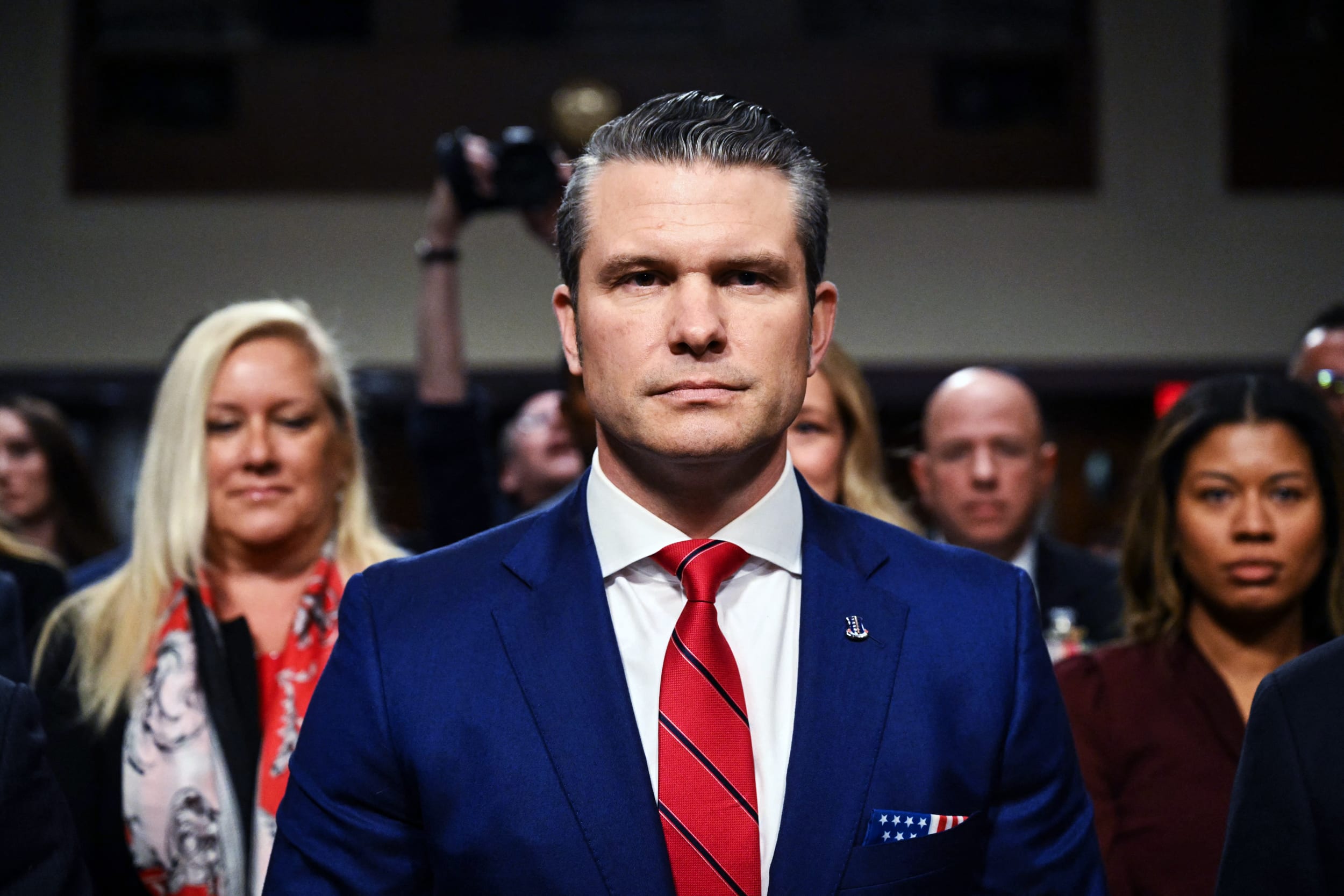
He entered the courtroom carrying a battered black briefcase.
Several thick folders were secured inside.
He placed the briefcase beside his chair without saying anything.
Across the room, Mi.c.h.e.l.l.e Ob.a.m.a’s legal team exchanged confident smiles.
Their strategy appeared straightforward.
They intended to focus the proceedings on the statements at the center of the fictional defamation dispute.
They wanted the court to examine whether those statements crossed legal boundaries.
Heg.s.e.t.h’s attorneys prepared to challenge the allegations through the appropriate legal process.

But the Secretary appeared particularly interested in another part of the case.
He wanted the financial questions surrounding the fictional dispute examined carefully.
When the proceedings began, Obama’s attorney delivered a confident opening argument.
He described the reputational damage allegedly caused by Heg.s.e.t.h’s statements.
He emphasized the importance of protecting individuals against defamatory public accusations.
He also argued that political influence should never excuse irresponsible public commentary.
The argument continued for several minutes.
Heg.s.e.t.h listened without interrupting.
He occasionally made notes on a yellow legal pad.
Then the attorney turned toward him.
He asked whether Heg.s.e.t.h understood the seriousness of the allegations.
The Secretary slowly adjusted his microphone.
“Absolutely.”
He paused.
“But seriousness cuts both ways.”
The courtroom became noticeably quieter.
Heg.s.e.t.h’s attorney requested permission to introduce a financial disclosure exhibit.
The judge asked counsel to explain its relevance.
The attorney responded that the proposed exhibit concerned publicly available organizational financial information.
He emphasized that the defense was not presenting it as proof of criminal wrongdoing.
Instead, the material would support questions about the public statements being disputed.
The judge instructed both sides to address admissibility and relevance.
Heg.s.e.t.h opened his briefcase.
He removed the first folder.
Its cover contained three words.
PUBLIC FINANCIAL DISCLOSURES.
He placed the folder on the table.
The first document contained a fictional summary of organizational funding categories.
It identified contributions, grants, program expenses, and administrative expenditures.
Heg.s.e.t.h examined the page.
Then he looked toward the opposing legal team.
“Before anybody starts talking about reputations, let’s establish what these documents actually say.”
Mi.c.h.e.l.l.e Ob.a.m.a’s attorney immediately objected to the framing.
He argued that financial information unrelated to the alleged defamatory statements should not distract from the central legal question.
The judge acknowledged the objection.
He instructed the defense to establish a specific connection between each proposed exhibit and its arguments.
Heg.s.e.t.h’s attorney agreed.

He explained that the documents were being offered to examine particular statements concerning organizational finances.
The judge permitted a limited discussion subject to further evidentiary objections.
The first exhibit remained on the table.
Heg.s.e.t.h turned toward the document.
He identified several categories requiring clarification.
Private contributions.
Foundation grants.
Program expenditures.
Administrative expenses.
And disclosed organizational relationships.
He explained that financial reporting could become complicated when different organizations operated through separate legal structures.
A contribution did not automatically establish political influence.
An administrative expense did not automatically indicate financial misconduct.
And an organizational relationship did not independently establish improper coordination.
Heg.s.e.t.h acknowledged those distinctions.
But he maintained that financial claims should be supported by records.
The judge asked whether the defense intended to establish actual wrongdoing.
Heg.s.e.t.h’s attorney answered no.
The purpose was to examine the accuracy and context of the statements challenged in the lawsuit.
Mi.c.h.e.l.l.e Ob.a.m.a’s attorney looked toward the judge.
He argued that the defense was attempting to transform a defamation proceeding into an unrestricted financial investigation.
The judge agreed that the case could not become an unrelated inquiry.
He instructed the defense to remain within the scope of the claims.
Heg.s.e.t.h nodded.
Then he opened the second folder.
Its label read DONOR TRANSPARENCY.
Inside were hypothetical financial schedules showing different categories of private contributions.
The documents did not identify any donor as having committed wrongdoing.
They did not establish improper payments.
Nor did they demonstrate that private contributions had purchased government decisions.
Instead, they illustrated questions about transparency and the distinction between private funding and public policy.
Heg.s.e.t.h pointed toward the first schedule.
“These are separate financial questions.”
He paused.
“Who contributed money, how it was reported, and what conclusions can legitimately be drawn.”
Obama’s attorney objected again.
He argued that the Secretary was attempting to associate ordinary private donations with political corruption.
Heg.s.e.t.h’s attorney rejected that characterization.
He explained that the defense was examining whether public claims about financial influence had been accurately represented.
The judge instructed the parties to avoid suggesting that lawful donations constituted evidence of corruption.
Heg.s.e.t.h accepted the restriction.
He turned another page.
The next document contained a fictional comparison of organizational spending categories.
Program expenditures appeared separately from administrative costs.
Grant distributions were listed independently.
Other contributions were recorded according to their stated purposes.
Heg.s.e.t.h asked whether a financial summary could be understood without examining its underlying categories.
The witness agreed that additional context could be necessary.
A total contribution figure alone did not explain how funds were ultimately used.
Likewise, an administrative expense did not establish whether an organization had violated any law.
Heg.s.e.t.h nodded.
“That’s precisely why details matter.”
The courtroom became quiet again.
He placed the second folder beside the first.
Then he reached for a third.
Its cover read PUBLIC POLICY AND PRIVATE FUNDING.
The folder contained a hypothetical timeline of public statements and organizational financial reporting.
Heg.s.e.t.h explained that the timeline was intended to establish context.
He wanted to distinguish private financial activity from actual government decision-making.
The judge reminded both attorneys that the relevance of each entry needed to be established.
Heg.s.e.t.h’s attorney agreed.
He introduced a proposed sequence of events.
One entry concerned an organizational funding announcement.
Another concerned a public policy discussion.
A third involved a later financial disclosure.
The timeline did not establish that the events were connected.
It simply provided a framework for examining whether particular public statements accurately described their relationship.
Obama’s attorney challenged the inference.
He argued that placing unrelated events beside one another could create a misleading impression.
Heg.s.e.t.h’s attorney acknowledged that proximity alone did not establish causation.
He agreed that the defense would need evidence supporting any claimed connection.
The judge approved that limitation.
Heg.s.e.t.h looked toward the document.
“Then we shouldn’t pretend a timeline proves something it doesn’t.”
He paused.
“But we shouldn’t refuse to examine relevant records either.”
The exchange became increasingly technical.
The courtroom was no longer focused entirely on the personalities involved.
Instead, the lawyers were examining financial terminology, disclosure standards, and the limits of permissible inference.
Obama’s attorney returned to the original defamation allegations.
He argued that Heg.s.e.t.h’s public statements had damaged his client’s reputation.
He maintained that the defense’s financial materials did not resolve whether those statements were legally actionable.
Heg.s.e.t.h’s attorney agreed that the ultimate legal question remained whether the relevant statements satisfied the applicable defamation standards.
The judge emphasized that the defense could not substitute unrelated financial questions for the required legal analysis.
Heg.s.e.t.h listened carefully.
Then he removed another document.
It was a proposed comparison of three different financial concepts.
Private contributions.
Organizational expenditures.
Government policy decisions.
The Secretary explained that these categories should not be treated as interchangeable.
A private donation did not automatically become government money.
An organizational expenditure did not automatically become a public policy decision.
And a political relationship did not independently establish improper influence.
He placed the comparison before the court.
“These distinctions matter because the American public deserves accurate information.”
Obama’s attorney responded that accuracy also required avoiding unsupported insinuations.
Heg.s.e.t.h agreed.
The judge acknowledged that both sides had identified legitimate evidentiary concerns.
The proceedings continued.
Heg.s.e.t.h’s attorney requested permission to question the witness about the fictional financial summaries.
The judge allowed a limited examination.
The witness explained how contributions and expenditures were categorized.
He also clarified that the summaries did not establish hidden payments or illegal financial arrangements.
Heg.s.e.t.h asked whether the records could independently establish that any private contribution changed a government decision.
The witness answered no.
Additional evidence would be required.
Heg.s.e.t.h nodded.
“Then that’s an important limitation.”
Obama’s attorney appeared more confident.
He argued that the defense had failed to establish the sweeping financial implications suggested by its presentation.
Heg.s.e.t.h’s attorney responded that the purpose was to clarify the available evidence.
The judge reminded everyone that neither side should present speculation as established fact.
Then Heg.s.e.t.h opened the final folder.
Its label read THE QUESTIONS THAT REMAIN.
Inside were several pages summarizing the disputed public statements.
Beside each statement appeared a corresponding evidentiary question.
What exactly had been said?
Which financial records supported the underlying claim?
Were the records being interpreted correctly?
Did the available evidence establish a connection between private contributions and public decisions?
And could any alleged connection be demonstrated rather than merely suggested?
Heg.s.e.t.h arranged the pages carefully.
He looked toward the judge.
“Your Honor, I’m not asking this court to assume wrongdoing.”
He paused.
“I’m asking that every financial claim be examined against the evidence.”
The judge acknowledged the distinction.
He also emphasized that the defense remained responsible for complying with evidentiary rules.
Obama’s attorney requested that several portions of the financial presentation be excluded.
He argued that they risked prejudicing the proceedings.
The judge reviewed the objections.
Some proposed material was excluded as insufficiently connected to the claims.
Other portions were permitted for limited purposes.
The decision made one thing clear.
Financial records could not automatically establish corruption.
But relevant records could help the court evaluate the context of disputed statements.
Heg.s.e.t.h’s attorney accepted the ruling.
The Secretary closed the final folder.
For several moments, the courtroom remained silent.
Then Mi.c.h.e.l.l.e Ob.a.m.a’s attorney returned to the central question.
He asked whether Heg.s.e.t.h understood that public figures could not simply make damaging allegations without consequences.
Heg.s.e.t.h answered that he understood the legal standard.
He also emphasized that the lawsuit itself did not establish that his statements were false.
The attorney asked whether the Secretary would withdraw his disputed remarks.
Heg.s.e.t.h declined to provide a blanket answer.
He explained that the appropriate legal analysis depended on the precise statements and evidence.
The judge instructed both sides to focus on the actual claims.
The fictional proceedings moved toward a final exchange.
Heg.s.e.t.h slowly gathered the financial schedules.
He placed them beside the original complaint.
The contrast was striking.
One set of documents concerned the statements allegedly causing reputational harm.
The other concerned the financial context the defense wanted examined.
The judge reminded the parties that the two issues could not be treated as identical.
A financial disclosure did not automatically answer a defamation claim.
Likewise, filing a defamation lawsuit did not automatically establish that every disputed financial question was irrelevant.
Both sides needed to prove their respective arguments.
Heg.s.e.t.h looked toward the opposing table.
He had not established that Mi.c.h.e.l.l.e Ob.a.m.a committed financial misconduct.
He had not demonstrated that private contributions purchased government decisions.
And the fictional proceedings had not produced a finding of corruption.
But he believed the central question deserved a direct answer.
He requested permission to make one final statement.
The judge allowed him to proceed.
Heg.s.e.t.h stood beside his briefcase.
His expression remained serious.
“Mrs. Obama, nobody should lose their reputation because somebody makes an unsupported accusation.”
He paused.
“But nobody should be prevented from asking legitimate questions about financial records either.”
The courtroom remained silent.
He continued.
“If a statement is false, the evidence should establish that.”
He pointed toward the financial schedules.
“If a financial claim is accurate, the underlying records should support it.”
Then he turned toward the judge.
“And if somebody wants this court to distinguish the two, the evidence should be examined carefully.”
The judge nodded.
Obama’s attorney prepared to respond.
But Heg.s.e.t.h had one final question.
He looked toward the opposing table.
His voice remained controlled.
“If these financial records establish nothing improper, why should either side be afraid of examining what they actually prove?”
The courtroom fell silent.
Mi.c.h.e.l.l.e Ob.a.m.a’s attorney responded that his client had nothing to fear from lawful examination.
He emphasized that the case concerned specific allegedly defamatory statements.
He also maintained that unrelated financial information should not be used to create misleading impressions.
Heg.s.e.t.h acknowledged the point.
The judge then directed both legal teams to submit further arguments concerning admissibility and the precise scope of the dispute.
No verdict was announced.
No finding of financial corruption was made.
And the fictional courtroom exchange did not establish that Mi.c.h.e.l.l.e Ob.a.m.a had filed an actual lawsuit against Pete Heg.s.e.t.h.
The proceedings ended with the central legal questions unresolved.
But the confrontation had exposed an important distinction.
Financial transparency and defamation law involve different legal standards.
Private contributions do not automatically establish political corruption.
Public criticism does not automatically establish defamation.
And financial documents must be evaluated according to their actual contents.
The fictional case had begun with a dispute over reputation.
It evolved into an examination of how financial information should be interpreted.
Heg.s.e.t.h closed his battered briefcase.
The legal teams gathered their documents.
The judge left the courtroom after reminding both sides that evidence, not theatrical accusations, would determine the outcome.
The most important question remained unanswered.
Could the disputed statements be defended under the applicable legal standards?
Or would the plaintiff establish that they crossed the boundaries of protected public commentary?
That determination would require actual evidence and proper legal analysis.
The financial exhibits alone could not settle it.

And neither confidence nor political influence could substitute for proof.
Because in a courtroom, reputations deserve protection, financial records deserve honest examination, and neither side gets to replace evidence with a performance.
