
The Congressional Letter That Put a Billion-Dollar Financial Connection Under Scrutiny
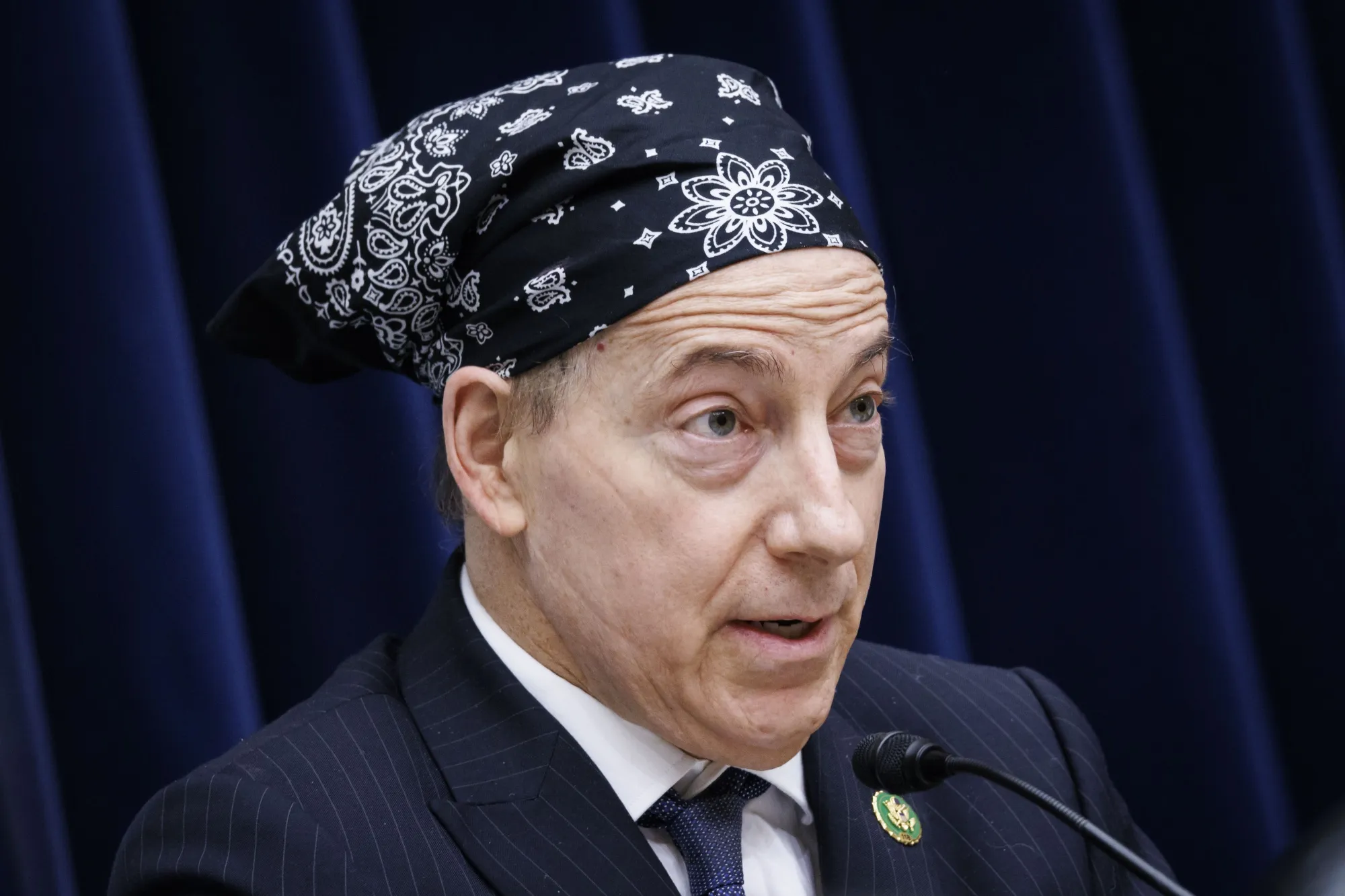
Congressman Jamie Raskin has joined two senior Democrats in demanding answers about a controversy involving advanced American artificial intelligence technology, suspected Chinese espionage, and Commerce Secretary Howard Lutnick’s family finances.
The investigation raises a question with potentially significant consequences for national security and public confidence in federal government decisions.
Did the Commerce secretary allow private financial interests to influence his handling of restrictions intended to prevent advanced American technology from reaching China?
On November 17, Raskin joined Representatives Gregory Meeks and Sydney Kamlager-Dove in sending a detailed letter to Brandon Lutnick, chairman of Cantor Fitzgerald.
Brandon is the son of Commerce Secretary Howard Lutnick, who previously led the investment firm before joining President Donald Trump’s administration.
The lawmakers demanded records concerning Cantor Fitzgerald’s substantial NVIDIA holdings, securities transactions, international business relationships, and communications involving federal export controls.
Their concerns centered on reports that the Commerce Department resisted restrictions involving Megaspeed, a Singapore-based company suspected of facilitating the diversion of advanced NVIDIA chips to China.
The financial connection made the inquiry particularly sensitive.
Before Howard Lutnick became Commerce secretary, Cantor Fitzgerald reportedly held more than 3.5 million NVIDIA shares, valued at over $1.3 billion.
By the end of March 2026, the firm’s reported holdings had declined substantially but still amounted to approximately $310 million.
Those figures raised questions about whether government decisions affecting NVIDIA could also affect the financial interests of a company controlled by Lutnick’s family.

The lawmakers have not established that Howard Lutnick improperly intervened to protect those interests.
But they want documents capable of determining whether such a conflict influenced federal decisions.
And a separate congressional inquiry announced on November 20 introduced another question about NVIDIA’s access to Commerce Department investigators.
The controversy is no longer limited to the suspected movement of restricted chips.
It now concerns the relationship between government enforcement, corporate influence, and family financial interests.
The NVIDIA Chip Trail That Led Investigators Toward China
The national security concerns began with advanced artificial intelligence processors manufactured by NVIDIA, one of America’s most important semiconductor companies.
These chips power computing systems capable of training and operating sophisticated artificial intelligence models.
Their capabilities also make them strategically important for scientific research, industrial development, and potentially military applications.
Washington has restricted exports of certain advanced chips to China because officials fear the technology could strengthen Chinese military and intelligence capabilities.
The restrictions are administered through federal export-control regulations overseen by the Commerce Department’s Bureau of Industry and Security.
But those controls become difficult to enforce when restricted technology moves through complex international business networks.
Megaspeed operates in the data center industry and has commercial relationships involving NVIDIA technology.
American authorities have examined whether the company facilitated the diversion of advanced chips to Chinese customers despite applicable export restrictions.
Reports concerning Megaspeed have described transactions involving billions of dollars in advanced AI technology.
Those reported transactions have not all been established as illegal diversions.
Determining whether export laws were violated requires examining the specific products, licensing requirements, intended recipients, and actual destinations.
Megaspeed has maintained that it complies with applicable laws, including American export-control requirements.
Nevertheless, the company’s activities attracted sustained attention from American investigators.
According to Reuters, the Commerce and Justice departments acknowledged that Megaspeed had been under investigation for approximately two years.
Commerce investigators requested NVIDIA sales records in May 2025.
American and Singaporean authorities subsequently conducted an on-site inspection involving Megaspeed in June 2025.
Investigators also interviewed Alice Huang, a former Megaspeed executive who later became central to a separate intelligence controversy.
The existence of these investigative steps established that federal authorities had been examining potential export-control concerns well before the latest congressional demands.
But the most significant disagreement involved what happened after officials identified those concerns.
Several federal agencies reportedly supported placing Megaspeed on a restrictive government trade list.
The Commerce Department did not immediately implement that action.
That decision became the focus of congressional scrutiny.
And the reasons behind it remain contested.
The Suspected Chinese Intelligence Operation Deepens the Crisis
The controversy escalated when reporting emerged about former NVIDIA chief executive Jensen Huang and his relationship with Alice Huang.
American intelligence officials reportedly suspected that Alice Huang had connections to China’s intelligence services.
Investigators examined whether the relationship formed part of an operation intended to obtain access to advanced American technology.
Jensen Huang subsequently acknowledged having extramarital relationships and resigned as NVIDIA’s chief executive in November 2026.

The allegations concerning Alice Huang’s intelligence connections remain contested.
China has denied that she was a spy.
The publicly reported suspicions do not independently establish that she committed espionage or that every transaction involving Megaspeed violated American law.
But the intelligence concerns intensified questions about the government’s handling of NVIDIA’s commercial relationships.
According to congressional accounts, White House and intelligence officials examined the suspected operation between September 2025 and March 2026.
The lawmakers questioned whether those warnings should have produced stronger restrictions on Megaspeed’s access to advanced chips.
The matter became especially sensitive because some officials reportedly favored stronger enforcement while the Commerce Department resisted immediate blacklisting.
Treasury Secretary Scott Bessent publicly indicated that four federal agencies had supported placing Megaspeed on the Entity List.
That list restricts specified exports to organizations presenting national security or foreign policy concerns.
The Commerce Department controls the relevant listing process.
Bessent’s comments therefore placed attention directly on Lutnick’s department.
Why had Commerce not taken the action supported by other agencies?
Were additional legal or evidentiary requirements preventing the designation?
Or had commercial considerations influenced the decision?
Those questions remained unanswered in the public record.
The dispute intensified because NVIDIA itself had communicated with officials involved in the investigation.
That development became the subject of another congressional letter.
And it raised concerns about whether a powerful technology company had received unusual access to government enforcement personnel.
Raskin Follows the Money Into Lutnick’s Family Business
The investigation’s most financially significant element concerns Cantor Fitzgerald.
Howard Lutnick spent decades leading the investment firm before becoming Commerce secretary in February 2025.
After his confirmation, he transferred his ownership interests to trusts benefiting his adult children.
His sons subsequently maintained control over the family’s business interests.
That arrangement created questions about the relationship between Lutnick’s official responsibilities and the financial interests of his relatives.
The Commerce Department has stated that Lutnick complied with his ethics agreement and divested his financial interests in Cantor Fitzgerald and related businesses.
Cantor Fitzgerald has also denied that its reported NVIDIA holdings demonstrate the personal financial exposure alleged by critics.
The firm says it holds no material proprietary NVIDIA position and that reported holdings primarily involve equity swaps conducted for clients.
It further maintains that it has no role in government export-control or blacklisting decisions.
Those responses are significant because reported securities holdings do not necessarily represent direct beneficial ownership of every share appearing in regulatory filings.
Financial firms may hold securities or related positions while conducting transactions for clients.
The economic exposure associated with those positions can differ substantially from the reported market value.
That distinction is one reason Raskin and his colleagues requested more detailed records.
They want information about NVIDIA transactions, financial exposure, client relationships, and communications potentially connecting the firm with government officials.
The November 17 letter requests records identifying NVIDIA securities trades executed by Cantor Fitzgerald beginning January 1, 2024.
It also seeks information concerning the individuals responsible for approving, directing, or advising on those transactions.
The lawmakers want to examine the firm’s business activities in China and Southeast Asia dating back to January 2020.
Those records could reveal whether Cantor Fitzgerald maintained relevant commercial relationships involving foreign data center projects.
The inquiry also seeks communications involving NVIDIA, Megaspeed, and federal export-control decisions.
One particularly important request concerns any communication between individuals involved in the firm’s investment decisions and federal government personnel.
That information could clarify whether private business representatives received nonpublic information or attempted to influence decisions affecting their financial interests.
But the request itself does not establish that such communications occurred improperly.
The relevant records must first be obtained and examined.
For now, the family financial connection raises questions about possible conflicts rather than proving one existed.
A Second Letter Raises Questions About NVIDIA’s Influence
On November 20, Reuters reported that Democratic lawmakers had opened another inquiry into NVIDIA’s relationship with Commerce Department investigators.
The inquiry followed reports describing communications between NVIDIA representatives and federal personnel examining Megaspeed.
According to Reuters, Commerce investigators had requested documents from NVIDIA concerning Megaspeed sales in May 2025.
In August 2025, NVIDIA contacted Commerce employees directly and requested a meeting involving an investigator.
The company reportedly told those officials that Commerce Under Secretary Jeffrey Kessler had authorized the contact.
That sequence raised questions about whether investigators were subjected to inappropriate corporate pressure.
Representatives Gregory Meeks and Sydney Kamlager-Dove requested additional documents from Lutnick to examine what happened.
Their concern focused on whether a major American corporation had been permitted to interfere with government enforcement activity.
The Commerce Department rejected the suggestion that its investigators had abandoned proper procedures.
A spokesperson for the Bureau of Industry and Security stated that enforcement operations followed applicable rules.
NVIDIA also defended its communications with government officials.
The company said it routinely consults with federal authorities to answer questions, provide information, and obtain regulatory guidance.
It expressed willingness to cooperate with Congress.
These responses created an important distinction between legitimate regulatory communication and improper interference.
Companies subject to federal investigations may have lawful reasons to contact regulators or provide information.
But attempts to obstruct enforcement or improperly influence investigative decisions could raise substantially different concerns.
Determining which interpretation applies requires reviewing the communications and understanding the circumstances surrounding them.
The November 19 letter reportedly requested answers and documents by December 1.
That deadline introduced a concrete next stage in the dispute.
The questions could be tested against documents rather than competing public characterizations.
And the findings could affect how lawmakers evaluate the Commerce Department’s independence in future export-control cases.
Republicans Join the Demand for Accountability
The scrutiny is not confined to Democratic lawmakers.
Republican congressional leaders have also expressed concern about NVIDIA’s activities and the administration’s handling of potential chip diversions.
Senator Tim Scott, chairman of the Senate Banking Committee, requested public testimony from both Howard Lutnick and Jensen Huang.
Scott warned that subpoenas could follow if witnesses declined to cooperate.
According to ABC News, the Commerce Department indicated that Lutnick had agreed to appear voluntarily before the committee.
A specific appearance date had not yet been established in that report.
House Republican committee leaders also requested testimony and transcribed interviews concerning Megaspeed, NVIDIA, and export-control enforcement.
The requests involved officials responsible for intelligence oversight, foreign affairs, and strategic competition with China.
Their involvement demonstrates that national security concerns extend beyond one political party.
Republican lawmakers want to determine whether restricted American technology reached Chinese entities and whether existing enforcement procedures were followed.
Democrats are additionally examining whether family financial interests and corporate relationships influenced official decisions.
Those inquiries overlap but are not identical.
A chip-export investigation could establish licensing violations without proving a personal conflict of interest.
A financial investigation could identify relevant business relationships without establishing illegal technology transfers.
And an intelligence investigation could uncover security vulnerabilities separate from either issue.
The distinction matters because the allegations involve different potential actors and legal responsibilities.
Each inquiry requires evidence appropriate to the conduct being examined.
Nevertheless, the combined scrutiny creates growing pressure for a detailed explanation from the Commerce Department.
The government must account for its handling of Megaspeed while addressing questions about corporate access and potential conflicts.
The congressional investigations now offer several opportunities for that explanation to be tested.
The December Deadline Could Reveal What Happened Behind Closed Doors
Raskin, Meeks, and Kamlager-Dove have demanded that Cantor Fitzgerald preserve records relevant to their inquiry.
Their request extends to business communications, electronic messages, and information stored on personal devices.
It also includes encrypted communications that might otherwise be difficult to recover.
The lawmakers requested written confirmation by December 1 that relevant records would be preserved.
That preservation demand is significant because disputes involving official decisions often depend on communications unavailable through public financial disclosures.
A securities filing may show the size of a reported position.
It may not explain who directed a transaction or what information influenced the decision.
A government announcement may identify a regulatory outcome.
It may not explain the internal disagreements leading to that outcome.
Communications between business representatives and government officials can help clarify those gaps.
But their meaning must be interpreted carefully.
Contact between private firms and regulators is not inherently improper.
Nor does a family relationship automatically establish that an official violated ethics requirements.
The essential questions concern financial exposure, decision-making authority, and any influence exercised over government action.
The lawmakers have also requested information about reported NVIDIA investments involving Donald Trump and Howard Lutnick.
Such records could help investigators distinguish personal financial interests from holdings maintained by relatives, trusts, or financial institutions.
That distinction could become central to any eventual finding.
For Lutnick, the Commerce Department’s defense emphasizes compliance with ethics requirements and the legitimacy of its enforcement procedures.
For Cantor Fitzgerald, the central response concerns the nature of its reported NVIDIA securities positions and its lack of authority over export restrictions.
For Raskin and his colleagues, the unresolved issue is whether those explanations withstand documentary scrutiny.
The next stage therefore depends on evidence rather than political declarations.
If the requested records establish that government decisions were influenced improperly, investigators could pursue additional oversight or legal action.
If they support the Commerce Department’s explanation, the inquiry could clarify why particular export-control decisions were made.
Either outcome would be more consequential than speculation based solely on the family’s financial connections.
The national security stakes remain substantial.
Advanced American AI chips can support technologies with significant economic and military applications.
Export controls are intended to prevent certain capabilities from reaching entities considered threats to American interests.
Those restrictions depend on enforcement decisions made consistently with law and national security requirements.
Questions about improper influence can therefore affect confidence in the system even before any misconduct is established.
That is why the financial records have become central to the investigation.
The controversy began with suspected Chinese intelligence activity and the possible diversion of sensitive technology.
It expanded into questions about NVIDIA’s communications with government investigators.
Then Raskin and his colleagues followed the financial connections surrounding the official responsible for export-control enforcement.
The resulting inquiry has not established that Howard Lutnick violated the law.
But it has identified specific records capable of clarifying whether private interests influenced government action.
The most important unanswered question is whether the Commerce Department’s decisions were driven by national security and lawful regulatory judgment, or improperly influenced by financial interests connected to those making them.
That question now sits at the intersection of corporate power, federal ethics, and American technological security.
And the December document deadlines provide the next concrete test of whether the evidence supports the allegations.
For Congress, the responsibility is to establish what actually happened.
For the companies and officials involved, the challenge is to provide records that explain their actions.
For the American public, the stakes extend beyond one secretary or one semiconductor manufacturer.
The issue is whether decisions controlling access to critical American technology are made according to national security requirements rather than private financial advantage.
The documents have been requested.
The explanations have been disputed.
And the next consequential findings will depend on what those records reveal.
