
American politics has become a battlefield where insults travel faster than legislation, and few political personalities embody that explosive reality better than Jasmine Crockett and Republican Senator John Neely Kennedy.
The Texas Democrat and Louisiana Republican have developed sharply conflicting political messages, turning their disagreements into another example of Washington’s increasingly vicious struggle over power, credibility, and public attention.
A sensational political narrative portrays Crockett humiliating Kennedy with the phrase, “You’re effectively peeing on yourselves,” before supposedly delivering a devastating twelve-word insult that leaves Republicans speechless.
But there is an important distinction between a viral political storyline and documented events. No verified congressional confrontation establishes that Kennedy personally received that remark or was silenced by such an exchange.
The documented hostility, however, is sufficiently fierce without embellishment. Kennedy has openly mocked Crockett’s political ambitions, while Crockett has built her national reputation challenging Republicans with confrontational language.
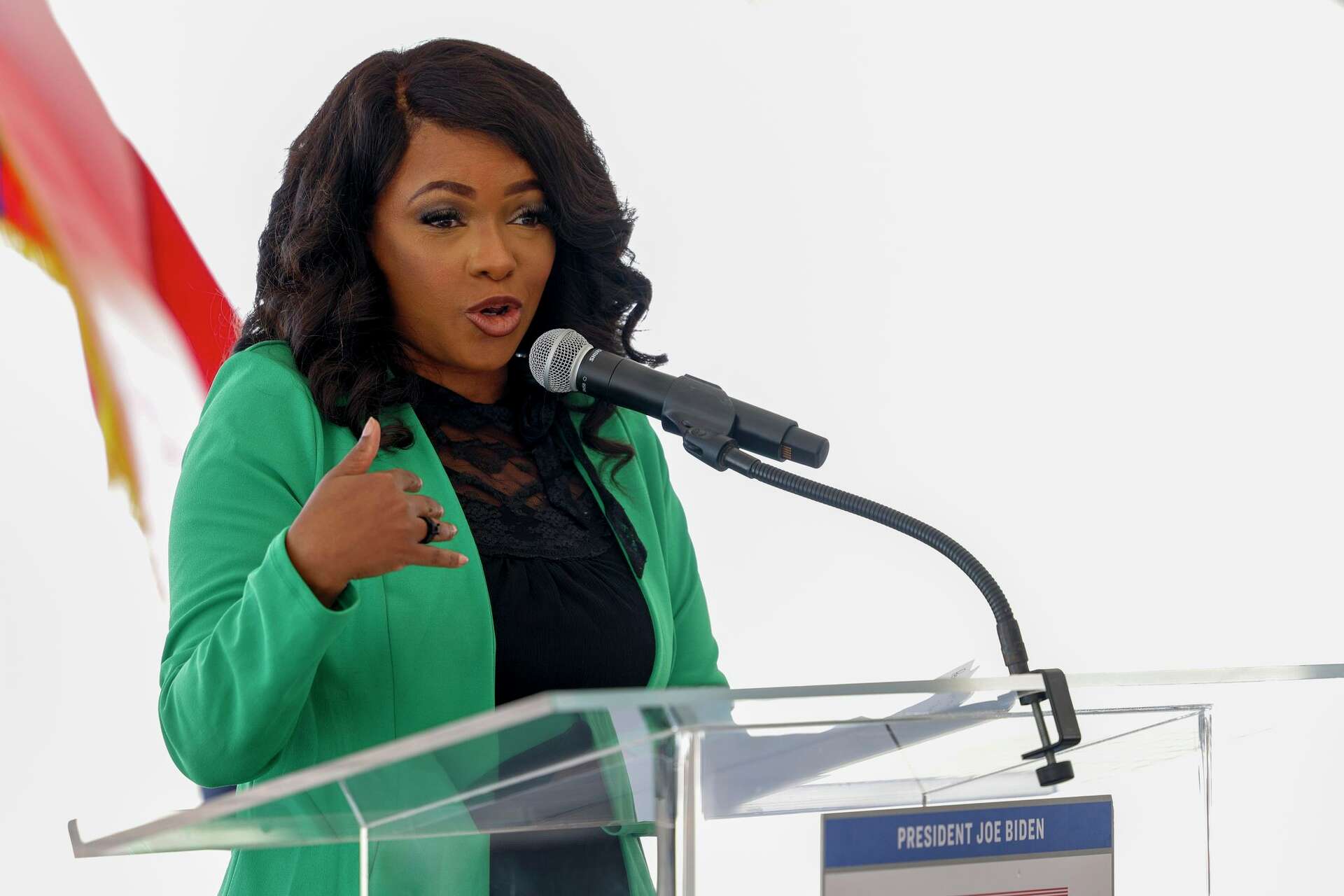
Kennedy’s Sharp Attack Ignites the Political Fight
The feud intensified when Kennedy publicly dismissed Crockett’s political ambitions during a December 2025 television appearance, questioning whether her combative message could attract enough Texas voters.
Kennedy argued that Crockett was wrong on major policy questions and suggested her approach would struggle outside the Democratic audiences that enthusiastically celebrate her attacks against Republicans.
He went further, telling viewers, “They need to tell her that the voices in her head are not real,” delivering an unmistakably personal jab rather than a conventional policy critique.
Kennedy also defended Americans’ freedom to make questionable political choices, using his familiar folksy humor to portray Crockett’s Senate aspirations as an exercise in terrible judgment.
For conservative audiences, the comments reflected Kennedy’s ability to ridicule political opponents without abandoning his recognizable Louisiana speaking style. For Crockett’s supporters, they represented another Republican relying on insults.
Crockett Refuses to Play Washington’s Polite Little Game
Crockett’s appeal rests partly on her refusal to communicate like a traditional Washington politician carefully measuring every word against an approved collection of establishment talking points.
The Texas Democrat speaks with the intensity of someone who believes Republicans have spent years weaponizing outrage while expecting Democrats to respond with carefully polished expressions of disappointment.
Her approach has a simple political message: Republicans cannot constantly insult their opponents and then act shocked when someone finally gives them a taste of their own medicine.
That argument resonates with Americans who have grown exhausted watching congressional hearings deteriorate into ideological performances while everyday concerns remain unresolved, including healthcare costs, housing affordability, and economic insecurity.
But Crockett’s aggressiveness also creates political vulnerabilities. Sharp language can energize supporters while giving opponents an opportunity to portray her as more interested in confrontation than governing.

The Hearing That Made Crockett a National Sensation
One of Crockett’s most recognizable confrontations occurred during a May 2024 House Oversight Committee hearing involving Republican Representative Marjorie Taylor Greene, not Senator Kennedy.
Greene criticized Crockett’s eyelashes during the proceedings, prompting an argument over personal attacks, congressional decorum, and whether committee rules were being applied consistently.
Crockett fired back with an alliterative description referencing a “bleach blonde bad built butch body,” creating a political spectacle that spread rapidly across social media platforms.
The confrontation illustrated how congressional proceedings can transform into entertainment almost instantly, with a short exchange generating more public attention than hours of substantive policy discussion.
Her defenders viewed the response as overdue resistance to Republican bullying. Critics argued that answering one personal insult with another merely dragged congressional standards further into the gutter.
Both interpretations reveal something important about today’s political atmosphere: Americans increasingly judge politicians not only by their legislative accomplishments but by their willingness to fight publicly.
The Republican Outrage Machine Meets Its Own Reflection
Crockett’s underlying argument challenges a familiar contradiction in modern partisan politics: political figures frequently celebrate aggressive rhetoric from allies while condemning nearly identical behavior from opponents.
Republicans who appreciate Donald Trump’s confrontational style may see Crockett’s remarks as disrespectful. Democrats who condemn Trump’s insults sometimes celebrate her equally cutting personal attacks.
That double standard is not unique to either party. Political outrage has become an increasingly selective commodity, distributed according to partisan loyalty rather than consistent standards.
The result is a remarkable political circus in which every faction insists its own insults are justified while describing the opposition’s language as proof of moral collapse.
And here is the uncomfortable truth: American voters have every reason to be tired of this bullshit, especially when theatrical confrontations replace serious explanations of public policy.

Kennedy’s Southern Wit Comes With Political Firepower
Kennedy has cultivated his own nationally recognizable political identity through folksy comparisons, blunt observations, and carefully timed remarks that often become headlines within minutes.
His political communication relies on presenting complex arguments in language ordinary Americans immediately understand, even when critics believe his metaphors oversimplify difficult policy disputes.
That style has made Kennedy particularly effective with conservative audiences who distrust elite political language and appreciate politicians willing to ridicule what they regard as Washington absurdities.
But insulting Crockett’s intelligence or mocking her ambitions does not automatically invalidate her arguments about government accountability, economic inequality, or the Trump administration’s decisions.
A devastating one-liner might win television coverage, but it cannot independently demonstrate that a policy is effective, constitutional, financially responsible, or beneficial to American families.
The same standard applies to Crockett. Calling Republicans foolish might generate applause, but a clever insult cannot substitute for evidence that their legislation will harm constituents.
The Stakes Extend Far Beyond Political Name-Calling
Behind these personal battles lies a serious disagreement about America’s direction, including immigration enforcement, presidential authority, federal spending, and the government’s responsibility toward vulnerable citizens.
Crockett has repeatedly criticized the Trump administration’s economic agenda, portraying Republican policy priorities as excessively favorable to wealthy Americans while leaving working families exposed.
Kennedy and other conservatives dispute that characterization, defending Republican policies through arguments involving economic growth, border security, fiscal priorities, and skepticism toward expansive federal government programs.
These disagreements deserve examination on their merits, rather than being reduced to whichever politician delivers the most embarrassing personal attack during a televised appearance.
For working Americans, the consequences are tangible. Political decisions influence household expenses, healthcare access, retirement security, government services, and the economic opportunities available to future generations.
None of those challenges becomes easier because one politician makes another look ridiculous in a viral video. The performance may be entertaining, but governing requires considerably more.
The Twelve-Word Humiliation That Cannot Be Verified
The most sensational version of the Crockett-Kennedy confrontation promises an unforgettable twelve-word humiliation that supposedly left the Louisiana senator visibly shaken before an astonished congressional audience.
Yet without a verifiable recording, official transcript, or reliable contemporary account, that dramatic description should not be presented as an established historical event.
That distinction matters because manufactured political encounters can exploit genuine public disagreements, mixing documented remarks with invented reactions until audiences struggle to separate reality from performance.
Kennedy’s actual criticism of Crockett is publicly documented. Crockett’s confrontational reputation is equally well established. Neither fact proves that the alleged face-to-face humiliation occurred.
Ironically, the unverified narrative illustrates exactly what makes modern political communication so volatile: an emotionally satisfying story can spread before anyone establishes whether it happened.
Americans deserve aggressive journalism, not invented congressional dialogue masquerading as breaking news. Those are different things, regardless of how spectacular the headline might sound.
Why Democrats Are Drawn to Crockett’s Aggressive Strategy
Crockett’s popularity among many progressive activists reflects broader dissatisfaction with Democrats who appear reluctant to confront Republican attacks using equally forceful political language.
Her supporters believe conventional political courtesy has often allowed Republican accusations to dominate public debate while Democrats spend valuable time defending themselves against hostile narratives.
From that perspective, Crockett’s sharp rhetoric is not simply entertainment. It represents a deliberate attempt to disrupt Republican messaging and demonstrate political confidence.
Her communication style also appeals to audiences accustomed to rapid exchanges on social platforms, where memorable language and emotional intensity frequently outperform lengthy institutional explanations.
However, the strategic question remains whether applause from loyal supporters can translate into support from independents, moderates, and voters who reject personal attacks regardless of party.
Winning an argument on social media and winning a competitive election require overlapping but distinctly different abilities, a lesson American politicians repeatedly discover under difficult circumstances.
The Political Price of Going Too Far
Crockett’s critics have pointed to earlier controversies as evidence that her language sometimes crosses lines that elected officials should approach with greater care.
Her 2025 remarks about Texas Governor Greg Abbott, including a nickname widely criticized as mocking his disability, generated backlash and complicated her public message.
The controversy demonstrated the dangers of political branding built around insults: what supporters initially applaud as fearless honesty can eventually become an uncomfortable political liability.
Kennedy faces a similar fundamental challenge when relying on provocative language. His supporters may enjoy his jokes, but critics can reasonably demand substantive answers behind the performance.
Both politicians operate within a system that increasingly rewards public conflict, incentivizing another clever insult whenever serious deliberation fails to produce comparable attention.
That incentive is politically convenient, but it is a lousy foundation for the thoughtful, accountable government Americans are repeatedly promised during election campaigns.
Washington’s Real Embarrassment Is Bigger Than Either Politician
The deeper embarrassment is not whether Crockett can verbally overpower Kennedy or whether Kennedy can invent another memorable insult about Democratic priorities.
It is that political communication increasingly resembles competitive humiliation, leaving voters to interpret outrage, sarcasm, and viral reactions as substitutes for meaningful political achievement.
Crockett deserves scrutiny for her policy positions and rhetorical excesses. Kennedy deserves the same examination, regardless of how skillfully he delivers his criticism.
Republicans should not demand civility only when Democrats attack them. Democrats should not celebrate personal insults while condemning identical behavior from their political opponents.
And journalists should not transform an unverified confrontation into a supposedly historic moment simply because the storyline guarantees enthusiastic clicks and angry comments.
The public deserves to know precisely what politicians said, where they said it, and what evidence supports the accusations being circulated in their names.
The Final Verdict: Washington’s Verbal War Is Far From Finished
Jasmine Crockett and John Neely Kennedy represent competing political styles that share one unmistakable characteristic: both understand the extraordinary power of language in contemporary American politics.
Their conflict reveals a political culture where mockery can establish national reputations, partisan outrage can dominate headlines, and political spectacle can overwhelm substantive congressional responsibilities.
Crockett’s most powerful response to Republican criticism will ultimately depend on whether she can connect fiery rhetoric to persuasive arguments and measurable political accomplishments.
Kennedy’s effectiveness will likewise depend on whether his memorable observations illuminate genuine policy problems rather than merely provide another round of conservative entertainment.
There is nothing inherently wrong with an aggressive political debate. Democracy benefits from intense disagreement, uncomfortable scrutiny, and representatives willing to challenge powerful officials.
But the moment political insults become more important than political truth, the public loses something far more valuable than any politician’s bruised ego.
Washington can keep trading verbal punches, manufacturing outrage, and celebrating each supposed knockout. The harder question is whether anyone is actually solving the problems Americans elected them to confront.
Because when the cameras switch off and the applause disappears, American families still have bills to pay, healthcare to navigate, and a government to hold accountable.
And no twelve-word insult, however devastating it sounds, can do that work for them.
