
Jim Jordan’s investigation into former Special Counsel Jack Smith has uncovered a far-reaching collection of subpoenas, phone records, financial information, and congressional communications that has intensified a national debate about government surveillance.
The Ohio Republican, who chairs the House Judiciary Committee, has accused federal investigators of using the Justice Department’s powers against political opponents during investigations connected to Donald Trump.
But the latest controversy goes beyond the former president and the Republican lawmakers whose phone records were obtained.
Newly released congressional materials raise questions about personal information belonging to thousands of Americans who participated in political activities.
The records include financial transactions, donor information, telecommunications metadata, and court-approved nondisclosure orders that prevented some individuals from learning their information had been requested.
Jordan and other Republican lawmakers argue that the documents reveal serious constitutional violations and an excessive use of federal investigative authority.
Smith disputes that characterization.
He maintains that investigators followed applicable laws, consulted Justice Department specialists, and sought records relevant to legitimate criminal investigations.
The competing explanations have produced an unusually significant congressional oversight dispute.
And the most consequential development emerged in October 2026, when Senate investigators disclosed that information associated with at least 639,000 Republican donors, voters, and supporters had been obtained.
How did an investigation into the 2020 election expand into such extensive financial and communications records, and were the government’s methods legally justified?
The Arctic Frost Investigation Behind the Controversy
The investigation began with federal efforts to examine attempts to overturn the 2020 presidential election.
The FBI investigation carried the internal code name Arctic Frost.
Its work eventually became connected to the federal election-interference prosecution led by Jack Smith after his appointment as special counsel in November 2022.
Investigators examined communications involving Trump, political advisers, attorneys, and individuals connected to efforts to challenge the election results.
The investigation included questions about attempts to influence government officials and the certification of electoral votes.
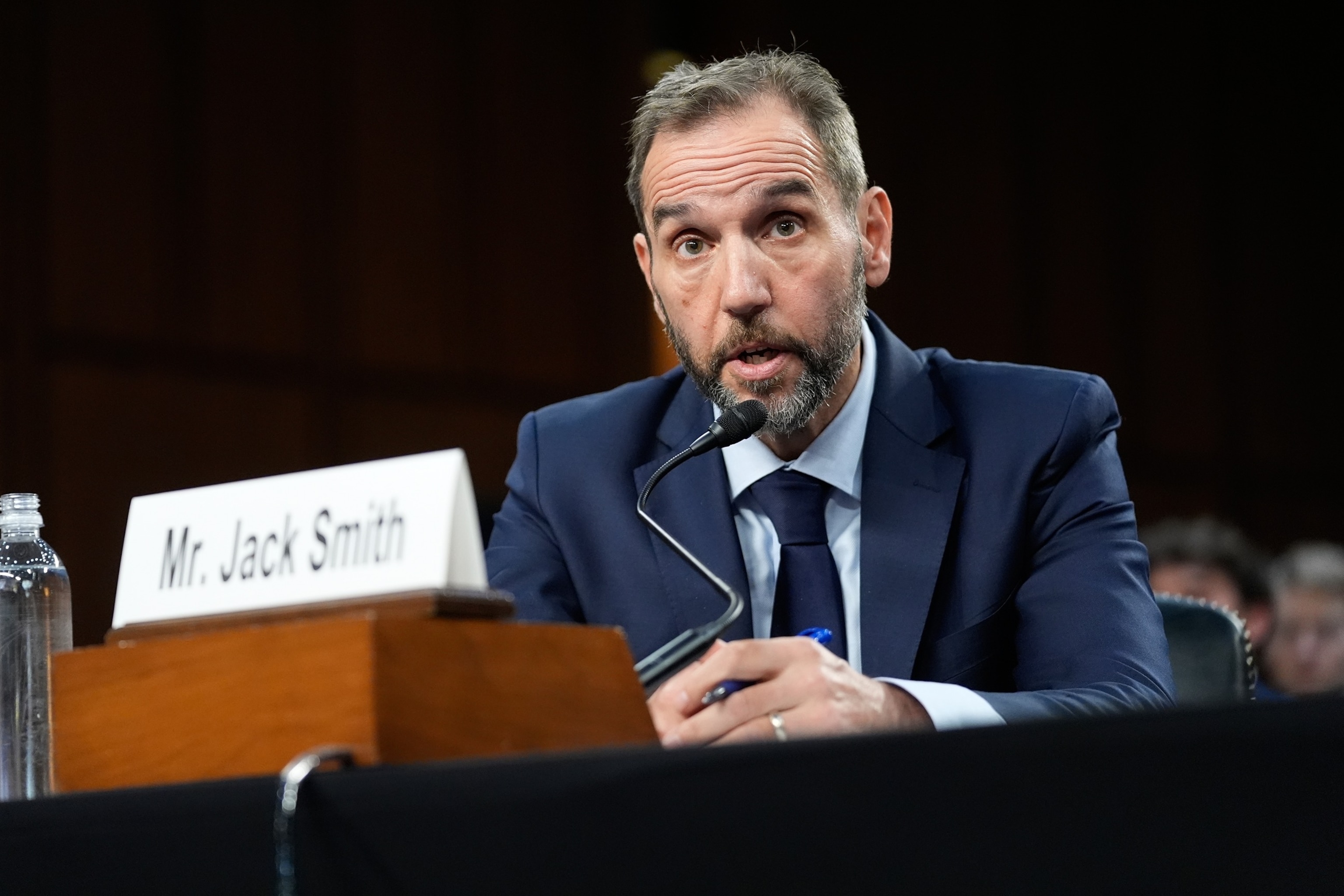
Smith argued that investigators had a legitimate responsibility to establish the facts surrounding possible criminal conduct.
Republican critics questioned the scope of the investigation and whether federal authorities had improperly targeted political activity protected by the Constitution.
That disagreement intensified after congressional investigators obtained records revealing subpoenas involving Republican lawmakers and political organizations.
The material showed that prosecutors had sought telecommunications information from companies providing phone services.
Certain subpoenas involved telephone numbers associated with members of Congress.
Others sought records concerning political organizations and people connected to Trump’s political activities.
The legal controversy centered partly on the methods used to obtain those records.
Federal investigators can issue grand jury subpoenas seeking information relevant to criminal inquiries.
However, the use of that authority may raise additional constitutional questions when records concern legislators, journalists, political donors, or protected communications.
Jordan argued that the investigative methods threatened those safeguards.
Smith maintained that the subpoenas served legitimate investigative purposes.
The dispute became increasingly serious when lawmakers learned that some records had been obtained without advance notice to the individuals involved.
The Phone Records That Sparked Congressional Alarm
In October 2025, Senator Chuck Grassley released information showing that federal investigators had obtained telephone metadata associated with eight Republican senators and one House member.
The records concerned communications around January 4 through January 7, 2021.
They included information identifying calls, their timing, and their duration.
The records did not include recordings of the telephone conversations themselves.
That distinction is essential.
Telecommunications metadata can reveal whom a person contacted and when communications occurred, even without exposing the words spoken.
Such information can help investigators reconstruct relationships, timelines, and patterns of communication.
But obtaining records belonging to elected lawmakers can raise significant questions about legislative independence.
The Constitution’s Speech or Debate Clause protects certain legislative activities from executive interference.
Republican lawmakers argued that obtaining congressional communications information risked intruding on those protections.
Jordan became one of the most prominent critics.
His committee examined how the subpoenas were prepared, what prosecutors understood about the telephone numbers, and how the records were handled.
Additional disclosures revealed that the government had sought records associated with more Republican lawmakers than initially identified.
In February 2026, Grassley’s committee reported identifying 84 subpoenas sent to major telecommunications providers.
Ten of those subpoenas requested toll records associated with 20 current or former Republican members of Congress.
The findings raised questions about whether investigators recognized the congressional connections before seeking the information.
Telecommunications companies also faced scrutiny.
They had received legally issued demands and, in some cases, court orders preventing disclosure.
The companies maintained that they reviewed the requests according to their legal obligations.
But lawmakers wanted to understand whether existing procedures adequately protected congressional communications.
The issue was no longer simply whether prosecutors could request phone records.
It concerned how investigators should proceed when those records could involve constitutionally protected legislative activity.
The Court Orders That Kept the Requests Secret
One of Jordan’s central criticisms involved nondisclosure orders.
These orders can prevent telecommunications providers from notifying customers that investigators have requested their information.
Federal authorities use such orders to protect ongoing investigations when disclosure could jeopardize evidence, witnesses, or investigative methods.
But their application to congressional communications created a difficult dispute.
Republican investigators argued that lawmakers had been denied a meaningful opportunity to challenge requests affecting their records.
The orders were issued through proceedings in which the government presented its request without an ordinary adversarial hearing involving the affected individuals.
Jordan questioned whether this process adequately protected the separation of powers.
He also challenged the justification for preventing notification.
In November 2025, Jordan joined Grassley and Senator Ron Johnson in seeking explanations from Chief Judge James Boasberg concerning nondisclosure orders.
The lawmakers wanted to understand how the judicial decisions had been reached.
Their inquiry reflected a concern extending beyond any particular subpoena.
How should courts evaluate secrecy requests when the information belongs to members of a separate constitutional branch?
Smith defended the use of nondisclosure orders as a standard investigative safeguard.
In written responses following his January 2026 congressional testimony, he explained that such orders can prevent evidence destruction or witness intimidation.
He also maintained that his office followed Justice Department policies when requesting telecommunications information.
Those explanations did not settle the disagreement.
Jordan and other Republican lawmakers continued questioning whether the orders were justified in the particular circumstances.
The distinction was significant.
A procedure may be commonly used in criminal investigations without being appropriate in every case.
But the existence of a sealed order also does not independently prove that investigators violated the law.
Determining whether particular requests were improper requires examining their legal basis, scope, and supporting evidence.
That was the constitutional question underlying the committee’s investigation.
Jordan’s September Report Raises the Stakes
On September 23, 2026, the House Judiciary Committee’s Republican staff released an interim report examining the Arctic Frost investigation and its treatment of congressional records.
The report argued that investigators had disregarded separation-of-powers protections by seeking lawmakers’ telephone information and obtaining nondisclosure orders.
It drew upon documents, interviews, and testimony collected during congressional oversight.
Jordan’s committee had also released transcripts of interviews with former prosecutors associated with Smith’s investigation.
Those materials allowed lawmakers to examine what investigators knew and why particular decisions were made.
The report alleged that prosecutors failed to respect constitutional safeguards.
Smith and former members of his team disputed allegations that their investigative decisions were politically motivated.
They maintained that subpoenas were issued to pursue relevant evidence.
The committee’s findings were consequential because they documented the questions Jordan believed remained unanswered.
But an interim staff report represents the conclusions of its authors.
It is not equivalent to a final judicial ruling establishing that every challenged subpoena was unconstitutional.
The legal debate required distinguishing congressional criticism from findings made through court proceedings.
Jordan’s investigation nevertheless produced concrete disclosures.
Federal investigators had obtained communications metadata associated with lawmakers.
They had used nondisclosure orders.
And records concerning political organizations and individuals had become part of the investigation.
The next disclosures significantly expanded the number of Americans potentially affected.
That development shifted attention from congressional privacy toward the personal information of ordinary political supporters.
Nearly 5,000 Donor Checks Reveal Another Layer of Data Collection
On September 29, 2026, Grassley’s Senate Judiciary Committee released findings concerning personal checks obtained during the Arctic Frost investigation.
According to the committee, investigators acquired at least 4,782 checks associated with people who had donated to Trump or Trump-aligned Republican entities.
Some contributions were reportedly as small as one dollar.
The checks contained information extending beyond the amounts contributed.
They could reveal account numbers, routing numbers, signatures, and residential addresses.
That made the disclosure especially significant for people who had never been accused of criminal wrongdoing.
The committee argued that federal investigators had obtained sensitive financial information about ordinary Americans through an investigation focused on political and election-related activities.
Smith acknowledged during congressional testimony that investigators had obtained financial records.
He maintained that the information was acquired for investigative reasons.
The disagreement concerned whether the scope was appropriately limited to evidence relevant to potential offenses.
Political donations are lawful activities protected by constitutional principles of expression and association.
Obtaining information connected to political contributions does not automatically establish unlawful surveillance.
But collecting sensitive details about uninvolved donors raises questions about necessity, proportionality, and privacy safeguards.
Investigators may have legitimate reasons to examine financial transactions when pursuing suspected crimes.
However, the relevance of financial records involving large numbers of individuals requires careful justification.
Grassley’s findings sharpened that debate.
They also introduced a question about how records were stored, shared, and protected after being obtained.
Even when information is lawfully collected, federal agencies retain responsibilities concerning its handling and potential disclosure.
The personal checks therefore became an important component of the broader oversight dispute.
But the next revelation involved a substantially larger group.
The 639,000-Person Disclosure Changes the Scale of the Investigation
On October 14, 2026, Grassley released a memorandum concerning additional information obtained by Smith’s office and the Justice Department.
According to the memorandum, investigators had acquired data associated with at least 639,000 Republican donors, voters, and supporters.
The records included names, physical addresses, email addresses, and other identifying information.
Some records also contained dates of birth and indications of political affiliation.
The material reportedly encompassed people across numerous states and territories.
The earliest donor contribution represented in the data dated back to 2005.
That detail was particularly significant.
The investigation concerned events surrounding the 2020 election, yet some collected information reached many years before that period.
Grassley’s committee questioned why such extensive historical data was necessary.
The disclosure also complicated the characterization of the investigation as limited to a relatively small number of political officials.
A broad set of personal information associated with political participation had entered the government’s possession.
But an important distinction remained.
Possession of a dataset does not demonstrate that investigators individually monitored every person named within it.
Nor does it establish that prosecutors listened to hundreds of thousands of private conversations.
The disclosed figures concerned information collection, not proof of continuous electronic surveillance of every individual.
Nevertheless, the scope of the data created a serious oversight question.
What justified obtaining information concerning such a large population, and how closely was that information connected to the criminal investigation?
The October findings brought the privacy implications into sharper focus.
They also demonstrated why Jordan’s criticism had developed beyond the original controversy involving congressional telephone records.
The investigation now concerned both legislative independence and the privacy interests of citizens whose information appeared in political datasets.
Jack Smith Answers the Surveillance Accusations
Smith publicly defended his investigative decisions during a January 22, 2026, House Judiciary Committee hearing chaired by Jordan.
He appeared before lawmakers and addressed accusations that his office had improperly targeted Trump and Republican officials.
Smith maintained that he had pursued criminal investigations based on evidence and applicable law.
He rejected the suggestion that political affiliation determined prosecutorial decisions.
When questioned about congressional telephone records, Smith explained that investigators sought non-content metadata.
He argued that those records were relevant to understanding communications among individuals connected to the conduct under investigation.
Smith also maintained that the practice was common in complex criminal cases.
In subsequent written answers, he explained that his office consulted Justice Department specialists concerning requests involving members of Congress.
Those responses were important because they addressed the investigative rationale behind the disputed subpoenas.
They did not eliminate lawmakers’ ability to question whether particular requests were sufficiently narrow.
But they provided a substantive defense rather than a denial that the records had been obtained.
The September 29 Senate hearing produced additional exchanges.
Smith acknowledged that investigators had acquired financial information.
He continued defending the investigative decisions as consistent with the responsibilities of federal prosecutors.
Senator Dick Durbin, a Democrat, also questioned Smith about the handling of congressional communications.
Durbin acknowledged legitimate concerns about lawmakers’ records while asking Smith to explain their relevance to the investigation.
Smith again distinguished metadata from the content of private conversations.
The disagreement remained substantial.
Republican critics argued that the methods were excessively broad and constitutionally intrusive.
Smith maintained that investigators followed legal requirements while gathering relevant evidence.
Those competing accounts placed the burden on a careful examination of specific records and decisions.
The essential question was whether prosecutors exceeded their authority, not whether the investigation involved sensitive information.
The Final Question: Who Protects Americans From Excessive Investigative Power?
The most consequential development in Jordan’s oversight campaign has been the accumulation of records showing how widely the investigation reached.
The original congressional controversy involved telephone metadata associated with Republican lawmakers.
Subsequent disclosures concerned nondisclosure orders, financial records, personal checks, journalists’ communications, and large datasets involving political supporters.
Each category raised different legal questions.
A telecommunications subpoena involves different requirements from a request for financial records.
Communications involving members of Congress can raise Speech or Debate Clause concerns.
Information associated with journalists can implicate protections for newsgathering and confidential sources.
Political donor records may raise privacy and freedom-of-association questions.
The law does not treat every category identically.
That is why the full documentary record matters.
Jordan argues that the cumulative evidence reveals serious misuse of federal investigative authority.
Smith maintains that the collection occurred during legitimate criminal investigations and complied with relevant procedures.
Neither assertion can replace a case-specific legal analysis.
The latest disclosures establish that investigators obtained substantial amounts of information.
They do not, by themselves, establish that Smith personally conducted an illegal operation to monitor every Republican voter or that a court has found him criminally responsible.
But the oversight controversy has identified concrete questions demanding answers.
Which information was necessary to investigate suspected crimes?
What legal standards authorized its collection?
Were the requests appropriately limited?
How were constitutional protections considered when congressional records were involved?
And what safeguards protected citizens whose personal information appeared in the materials?
Those questions extend beyond Jordan, Smith, and Trump.
Future administrations could face similar disputes when investigating politically sensitive conduct.
A standard protecting personal information under one president should remain relevant under another.
Likewise, legitimate criminal investigations should not become impossible simply because the evidence involves politically prominent individuals.
The challenge is maintaining both principles.
Jordan’s committee has pushed for greater transparency concerning the investigation’s methods.
The released documents provide material for continued congressional examination and potential legal scrutiny.
Smith’s testimony offers the opposing explanation that investigators acted within established law.
The final consequence has not been a verified moment in which the Justice Department’s entire position collapsed during a televised confrontation.
It has been a significant expansion of public knowledge about the investigative records collected during Arctic Frost.
The October disclosure concerning at least 639,000 people made the scale of that collection an especially important question.
But the central legal distinction remains essential.
Collecting extensive personal information is documented; proving that every act of collection was unlawful requires further evidence and legal analysis.
The most important unanswered question concerns the boundaries of federal investigative power when political activity, criminal allegations, and personal privacy intersect.
Jordan’s investigation has placed those boundaries under sustained congressional examination.
Smith has defended the decisions that brought the records into government possession.
And the public now has a more detailed account of the information involved.
Whether the disputed methods ultimately withstand legal and constitutional scrutiny will depend on the evidence supporting each investigative action.
The controversy is therefore not simply about one prosecutor’s career or one committee chairman’s accusations.
It concerns how the United States protects lawful political participation while preserving the government’s ability to investigate serious crimes.
That is the constitutional question at the center of the Arctic Frost records, and it remains unresolved.
