
John Kenne.d.y’s $240 Billion Fraud Challenge: The Government Spending Controversy Behind the Viral Claim
Washington is no stranger to political confrontations, particularly when government spending and allegations of financial waste enter the debate. But a viral story involving Louisiana Republican Senator John Kenne.d.y has drawn attention to a particularly striking figure: $240 billion.
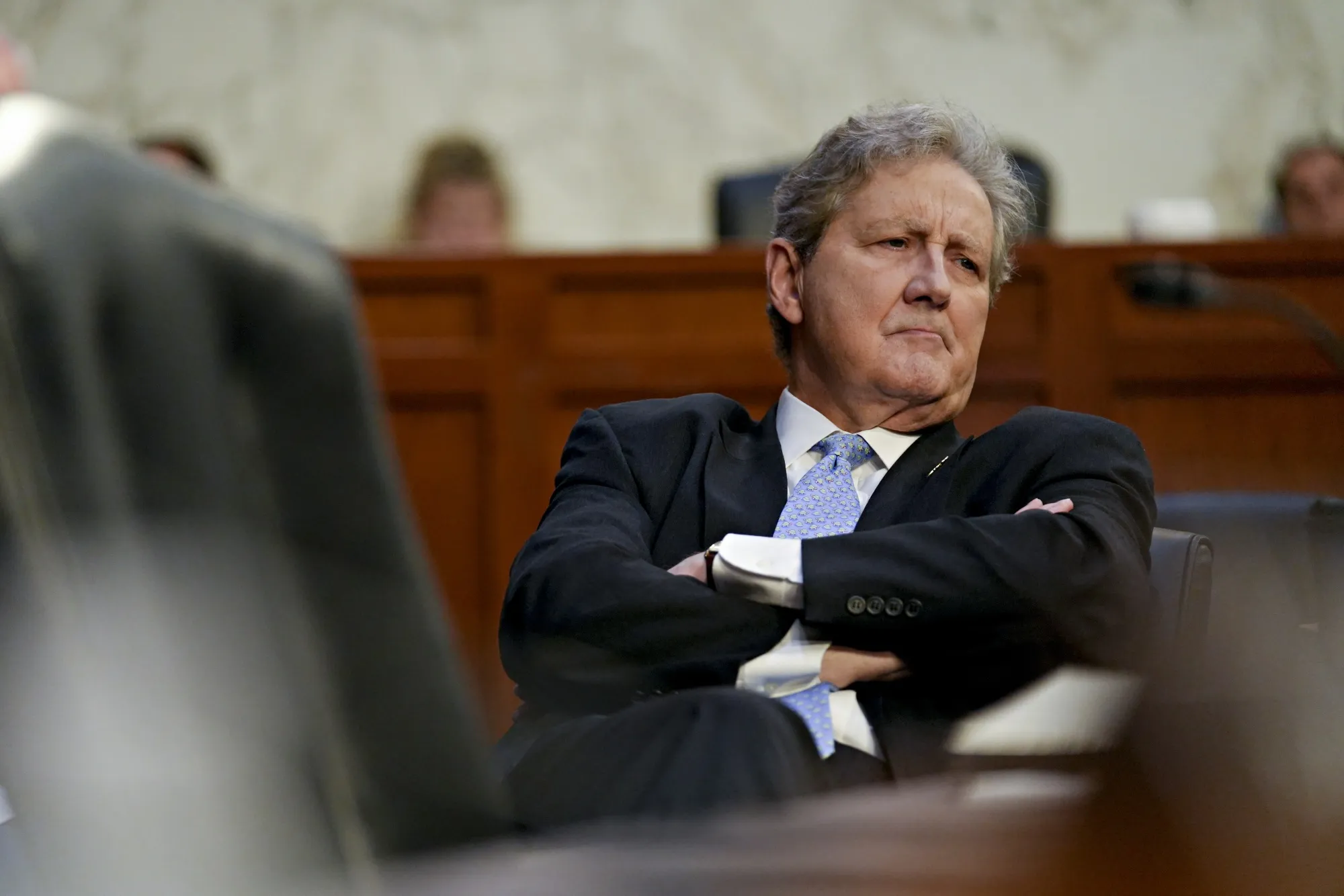
According to the circulating account, Kenne.d.y challenged fellow lawmakers to confront what he described as an enormous amount of government fraud. The story portrays a senator unwilling to accept another round of political promises, demanding immediate action while congressional leaders were allegedly preparing to leave Washington for the holidays.
The dramatic version describes a tense Senate chamber, a thick folder placed on the desk and a direct confrontation with members of Kenne.d.y’s own party. It suggests that the senator demanded an immediate vote to eliminate $240 billion in fraudulent government spending, leaving colleagues facing uncomfortable questions about accountability.

Yet the specific confrontation described in the viral post has not been independently verified. No confirmed transcript, official Senate record or reliable report has established that Kenne.d.y staged the alleged showdown or demanded the particular vote described.
Still, the underlying subject deserves serious attention. Government fraud, improper payments and ineffective spending programs have remained recurring concerns in Washington, crossing party lines and affecting debates over the federal budget.
The distinction between fraud and government waste is especially important. Fraud generally involves intentional deception to obtain money or benefits unlawfully. Improper payments can also result from administrative mistakes, insufficient documentation or eligibility errors. Waste, meanwhile, may involve spending that is legally authorized but delivers limited public value.
Combining all three categories into one enormous figure can create a misleading impression unless the underlying calculations are clearly explained.
Kenne.d.y has built much of his political reputation around his outspoken criticism of government spending, bureaucratic inefficiency and the way Washington manages taxpayer money. His style often relies on plain language, sharp questioning and memorable comparisons intended to make complicated financial issues accessible to ordinary Americans.
That approach has helped him attract attention during congressional debates, particularly when discussing federal expenditures and the consequences of government mismanagement.
The $240 billion figure in the viral story, however, requires a specific source. Without an identified audit, investigative report or official estimate, it is impossible to determine whether the amount refers to confirmed fraud, suspected losses, improper payments or projected savings from proposed reforms.
Those distinctions matter because a proposal to recover fraudulent payments is very different from a plan to reduce spending across federal agencies. The first concerns money allegedly obtained through unlawful conduct. The second may involve changes to programs, contracts, staffing or administrative priorities.
For lawmakers, the challenge is not simply identifying a large number and demanding cuts. They must establish where the money is going, which payments are improper, how losses occurred and what measures would prevent the same problems from returning.
That process can involve inspectors general, federal auditors, agency investigations and congressional oversight committees. Their findings can provide the evidence necessary to determine whether public money was stolen, incorrectly distributed or spent under programs that require reform.

The political implications are significant. Every dollar lost through fraud or serious administrative failure is a dollar that cannot be used effectively elsewhere. At the same time, aggressive spending reductions can create consequences for legitimate beneficiaries if the government fails to distinguish between fraudulent claims and people who qualify for assistance.
This is particularly important in healthcare, social services and federal assistance programs, where administrative mistakes can affect vulnerable households.
The viral story also raises a question about congressional priorities. If lawmakers genuinely believe that billions of dollars are being lost through fraud, should they prioritize investigations and recovery efforts before approving additional spending? And what level of transparency should taxpayers expect when politicians announce enormous potential savings?
Those are legitimate questions, regardless of party affiliation.
However, the claim that Kenne.d.y identified specific individuals during the final moments of a dramatic Senate confrontation remains unsupported by the available information. No verified list of names or corresponding evidence has been provided in the circulating account.
Ultimately, the real issue is larger than a viral clip or an alleged clash between Republican senators. It concerns whether Washington can demonstrate that public money is being managed responsibly and whether political leaders are willing to follow through on promises of financial accountability.
The $240 billion figure makes for a striking headline. But before it can serve as the foundation for a major political accusation, the public deserves to know exactly how it was calculated, which programs it concerns and how much money could realistically be recovered.
For taxpayers, the most important question is not who appeared uncomfortable during a Senate debate. It is whether the government can identify financial misconduct, recover money when possible and prevent future losses without sacrificing legitimate public services.
