
Senator John Kennedy’s criticism of Alexandria Ocasio-Cortez has become the centerpiece of a political controversy involving immigration enforcement, congressional responsibility, and accusations that Democratic lawmakers are encouraging people to evade federal authorities.
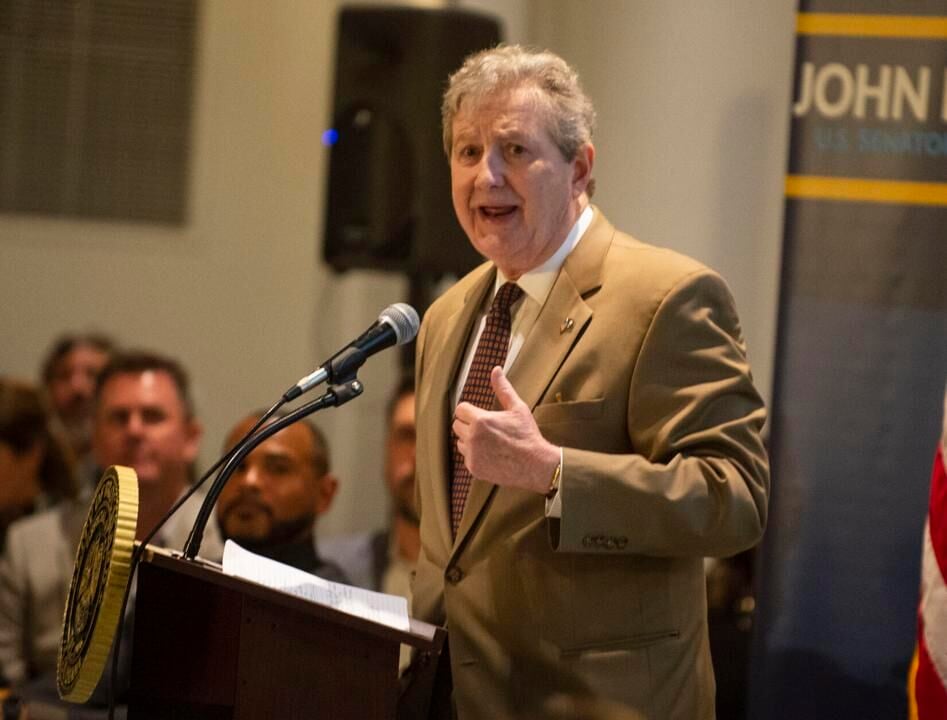
The Louisiana Republican, known for his blunt Southern humor and confrontational questioning, has repeatedly argued that immigration laws cannot simply be disregarded because elected officials disagree with them.
Now a dramatic account circulating online portrays Kennedy confronting Ocasio-Cortez with a highlighted federal criminal statute, supposedly exposing the legal consequences of helping undocumented immigrants avoid arrest.
The account describes a humiliating congressional confrontation, complete with sarcastic comparisons, an unexpected document, and a final remark that allegedly left Democratic lawmakers unable to respond.
But the available congressional record does not establish that Kennedy delivered the described speech, presented a highlighted criminal code, or confronted Ocasio-Cortez in that particular setting.
The verified controversy is nevertheless substantial, involving a February 2025 immigration-rights webinar, threatened Justice Department scrutiny, and Kennedy’s later criticism of Democrats opposing immigration enforcement.
At the center of the disagreement is a serious legal question: When does educating immigrants about their constitutional rights become unlawful interference with federal immigration enforcement?
Kennedy’s position emphasizes the government’s obligation to enforce immigration statutes, while Ocasio-Cortez argues that explaining constitutional protections is a legitimate responsibility of elected representatives.
The conflict originated on February 12, 2025, when Ocasio-Cortez’s congressional office hosted an online presentation explaining how people should respond when approached by Immigration and Customs Enforcement officers.
The event, titled Know Your Rights With ICE, was distributed through the congresswoman’s social media channels and featured immigration advocates discussing legal protections available during encounters with federal agents.
Participants received information concerning searches of homes, interactions with immigration officers, and the distinction between judicial warrants and other documents used during immigration enforcement.
The guidance emphasized that individuals should understand their constitutional rights rather than assume that every request from an immigration officer required immediate compliance.
Ocasio-Cortez did not personally lead the webinar, but her office organized it and subsequently promoted educational materials explaining protections under the Fourth Amendment.
Those materials attracted immediate criticism from Trump administration officials who argued that the presentation could make it more difficult for immigration officers to locate individuals subject to removal.
White House border enforcement adviser Tom Homan became the administration’s most prominent critic, questioning whether the webinar crossed the legal boundary between education and obstruction.
During a February 13 Fox News appearance, Homan said he had contacted the deputy attorney general to determine whether Ocasio-Cortez’s activities warranted further examination.
He questioned whether the advice constituted interference with immigration enforcement, while acknowledging that he was not a prosecutor and could not independently determine criminal liability.
Homan’s remarks immediately raised the political stakes because he was suggesting that a sitting congresswoman’s public educational activities might become the subject of federal investigation.
For Ocasio-Cortez, the suggestion was unacceptable. She maintained that informing constituents about constitutional protections was lawful and accused the administration of attempting to intimidate political opponents.
She responded publicly by suggesting that Homan should read the Constitution, turning the administration’s warning into another confrontation over immigration policy and civil liberties.
The exchange intensified on February 16, when Homan appeared on CNN and explained that he wanted Justice Department lawyers to clarify the legal boundaries of obstruction.
He distinguished physically interfering with an arrest from other conduct that might complicate enforcement, asking where prosecutors would draw the line when assistance was provided indirectly.
That distinction became crucial because federal law does prohibit certain forms of harboring, concealing, transporting, or shielding individuals who are unlawfully present in the country.
But determining whether a particular action violates those statutes requires examining the conduct involved, the defendant’s knowledge, and the applicable legal standards.
The controversy escalated on February 27, when Ocasio-Cortez formally requested clarification from Attorney General Pam Bondi about whether the Justice Department was investigating her.
In a letter released publicly the following day, she argued that threatened prosecution for explaining constitutional rights could violate fundamental protections for political expression.
She also questioned whether Homan’s public warnings represented an inappropriate attempt to use federal law enforcement power against a member of Congress.
Representative Ocasio-Cortez+1
The letter did not establish that the department had opened a criminal investigation. It demanded information about whether officials had taken action following Homan’s public statements.
In May 2025, Ocasio-Cortez renewed her defiance during a town hall in Queens, declaring that she would not retreat from informing constituents about their legal protections.
Homan responded by challenging the congresswoman to focus on legislation rather than efforts he believed made immigration enforcement more difficult.
Their disagreement demonstrated the political importance of the issue, particularly as the Trump administration expanded immigration operations and Democratic lawmakers questioned enforcement practices.
Kennedy entered the broader argument from a different position, emphasizing that federal immigration statutes remain binding regardless of ideological disagreements over their effectiveness or fairness.
The Louisiana senator has criticized Democrats associated with Ocasio-Cortez’s progressive political movement, accusing them of resisting lawful immigration enforcement while demanding government accountability elsewhere.
In a Senate statement concerning Department of Homeland Security funding, Kennedy argued that lawmakers should not treat immigration statutes as optional requirements.
He emphasized that Americans remain free to oppose particular laws and campaign to change them, but government officials must still recognize their legal force.
Kennedy also criticized what he described as efforts by progressive Democrats to weaken the agencies responsible for enforcing immigration restrictions.
His comments connected Ocasio-Cortez’s political faction to a broader dispute over whether Congress should provide adequate resources for Border Patrol and ICE personnel.
The statement established Kennedy’s opposition to progressive immigration policies, but it did not establish the extraordinary personal confrontation described in the circulating narrative.
U.S. Senator John Kennedy+1
That distinction matters because opposition to immigration enforcement funding is different from criminally helping a particular person evade lawful arrest or conceal their whereabouts.
The viral account attempts to connect those categories through a reference to federal statutes prohibiting the harboring of individuals unlawfully present in the United States.
The relevant provision is Section 1324 of Title 8 of the United States Code, which addresses certain forms of unlawful transportation, concealment, harboring, and assistance.
Among other restrictions, the statute prohibits knowingly or recklessly concealing, harboring, or shielding certain individuals from detection when their presence violates immigration law.
It also establishes penalties for conduct involving unlawful transportation and certain forms of encouraging or inducing violations of federal immigration requirements.
However, the existence of those prohibitions does not mean that distributing general information about constitutional rights automatically constitutes criminal harboring.
Federal prosecutors must establish the elements of a particular offense, including the required knowledge, conduct, and intent under the relevant statutory provision.
Judicial instructions addressing harboring offenses require evidence concerning an individual’s unlawful presence and the defendant’s participation in prohibited concealment or shielding.
A public presentation explaining constitutional search protections is not necessarily equivalent to secretly housing a fugitive, providing false identification, or physically obstructing an arrest.
The legal distinction is particularly significant because constitutional protections apply to people within the United States, including many individuals who are not American citizens.
The Fourth Amendment protects against unreasonable searches and seizures, although the scope of particular protections depends on the circumstances and the applicable law.
Immigration officers possess substantial enforcement authority, but their powers remain subject to constitutional limits and distinctions between different types of warrants.
Explaining those rules does not independently establish an intention to violate federal law, even if the information makes enforcement operations more complicated.
At the same time, officials may legitimately investigate situations involving deliberate obstruction, concealment, or conduct intended to prevent lawful enforcement actions.
The challenge is determining whether a specific activity actually crosses that legal threshold rather than assuming that criticism of immigration policy constitutes a criminal offense.
That is where Kennedy’s broader argument about government responsibility intersects with Ocasio-Cortez’s emphasis on constitutional protections, creating a substantive disagreement about enforcement and accountability.
Kennedy maintains that elected officials should respect the laws Congress has enacted, particularly when those laws govern border security and the removal of individuals without lawful status.
Ocasio-Cortez argues that respecting the Constitution includes ensuring that individuals understand their rights when federal agents conduct investigations or attempt arrests.
Those positions are not necessarily mutually exclusive because lawful immigration enforcement and constitutional protections are both components of the American legal system.
The disagreement concerns whether particular forms of assistance remain educational or become intentional interference with officers performing legally authorized duties.
The argument became politically charged because immigration enforcement was already a defining issue of Trump’s second administration, with Republicans demanding stronger action and Democrats questioning its consequences.
Supporters of aggressive enforcement argued that federal authorities needed sufficient resources to locate individuals subject to removal and prevent dangerous offenders from remaining unidentified.
Civil liberties advocates countered that enforcement priorities must not override constitutional safeguards or discourage people from seeking legal advice during encounters with government agents.
The controversy surrounding Ocasio-Cortez’s webinar provided a direct example of those tensions because its guidance concerned constitutional procedures used during immigration investigations.
Critics considered the presentation an attempt to frustrate deportations, while defenders argued that ordinary legal education should not become grounds for criminal suspicion.
Both interpretations require attention to what participants actually said and whether any specific instructions encouraged conduct prohibited by federal law.
The public record does not establish that Ocasio-Cortez was convicted of obstruction, charged with harboring, or judicially determined to have participated in a criminal conspiracy.
Nor does it establish that Kennedy presented evidence demonstrating she committed any such offense during a congressional hearing.
The alleged highlighted criminal code may be visually compelling, but no authenticated document production confirms the scene described in viral political commentary.
The same applies to the story’s claims about Democratic lawmakers becoming silent, Kennedy making remarks about elementary-school education, or an audience reacting in collective embarrassment.
Those details cannot be treated as established events without a recording, transcript, or other reliable evidence identifying precisely when and where they occurred.
The documented political disagreement, however, has consequences extending beyond the reputations of Kennedy and Ocasio-Cortez because it concerns the boundary between lawful dissent and unlawful conduct.
Members of Congress have responsibilities involving legislation, oversight, constituent assistance, and public communication, including explaining how federal law affects the communities they represent.
Those responsibilities do not authorize lawmakers to participate in criminal activity, but neither do they eliminate their right to criticize government practices or explain constitutional protections.
Congressional offices routinely distribute information concerning federal benefits, immigration proceedings, administrative appeals, and the legal obligations individuals face when interacting with government agencies.
The legitimacy of that assistance depends on its content and implementation rather than simply whether the information is politically controversial.
For immigration enforcement agencies, the practical challenge is conducting lawful operations while maintaining public confidence that agents respect constitutional and statutory restrictions.
For communities affected by immigration enforcement, access to reliable legal information can influence whether individuals understand official documents and respond appropriately to government requests.
For lawmakers, the challenge is debating enforcement priorities without misrepresenting legal rights or suggesting that ideological disagreement alone establishes criminal misconduct.
The political controversy has also highlighted the importance of accurately distinguishing civil immigration violations from federal crimes, especially in discussions involving undocumented immigrants.
Unlawful presence alone is generally treated differently from offenses involving illegal entry, illegal reentry, document fraud, or deliberate obstruction of federal agents.
Those distinctions affect the legal consequences individuals face and the government’s authority to prosecute particular conduct.
Kennedy’s broader demand for enforcement therefore raises legitimate questions about congressional funding, administrative capacity, and whether immigration laws are being consistently applied.
Ocasio-Cortez’s position raises equally consequential questions about access to legal information, protection against unreasonable searches, and the limits of government investigative authority.
Neither question can be resolved by an unverified confrontation involving theatrical gestures, supposedly devastating insults, or a highlighted page from the criminal code.
As of November 13, 2026, the available evidence supports Kennedy’s documented criticism of progressive immigration policies and Ocasio-Cortez’s defense of her office’s educational activities.
It does not establish that the senator personally accused her of criminal harboring during the alleged encounter or presented conclusive evidence of wrongdoing.
The most significant legal issue remains whether specific activities satisfy the elements of a federal offense, not whether a politician considers those activities irresponsible.
For Americans following the controversy, the practical stakes involve law enforcement authority, freedom of expression, constitutional protections, and the responsibilities of elected representatives.
The unresolved question is whether political leaders can maintain rigorous immigration enforcement while preserving the rights that federal law and the Constitution require officials to respect.
Kennedy’s warnings and Ocasio-Cortez’s objections demonstrate how sharply lawmakers disagree over that balance, even when both invoke the rule of law to defend their positions.
Ultimately, the controversy is not settled by a supposed moment of humiliation in the Senate. It depends on the actual statutes, verified conduct, and constitutional standards governing everyone involved.
