
Senator John Kennedy had listened to the accusations surrounding Alexandria Ocasio-Cortez for nearly twenty minutes before finally reaching for the heavily highlighted federal statute.
The controversy began with her decision to provide constituents with information about their rights during encounters with federal immigration officers.
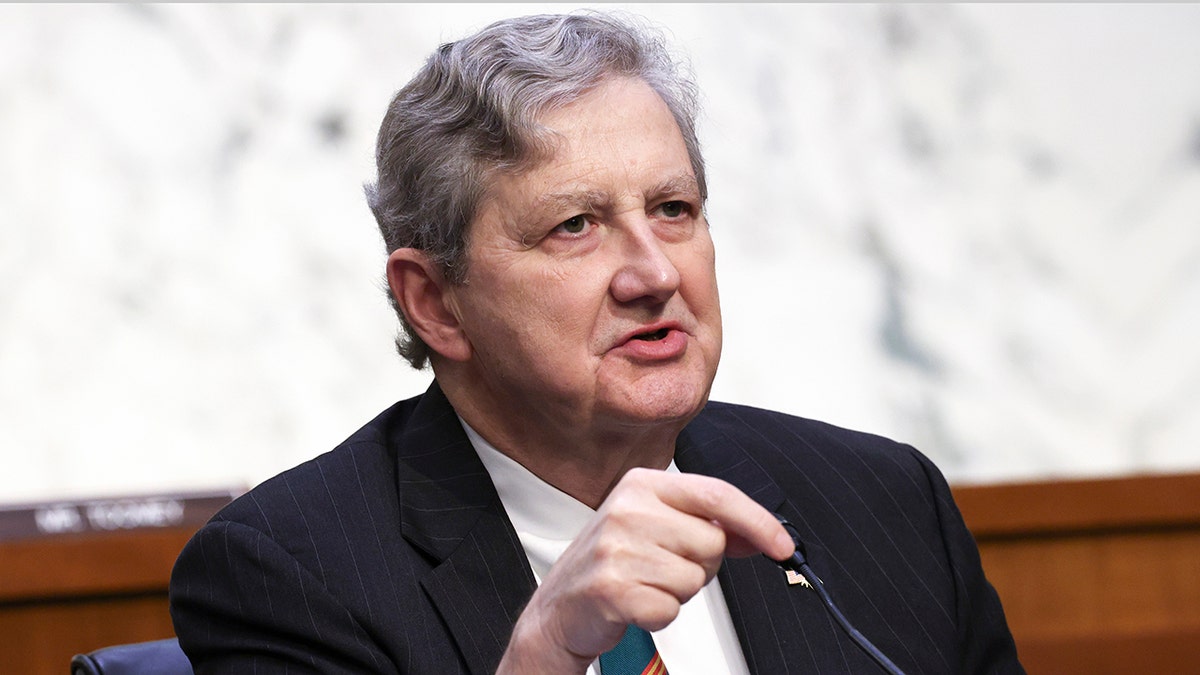
Critics accused the congresswoman of helping undocumented immigrants evade enforcement, while her defenders insisted that explaining constitutional protections was entirely lawful.
Kennedy adjusted his glasses, sighed, and examined the pages resting beside his microphone.
“Congresswoman, I have a question about something that seems painfully obvious to me.”
He paused before continuing.
“There’s a difference between explaining the law and helping somebody break it, isn’t there?”
Ocasio-Cortez leaned forward.
“Senator, informing people about their constitutional rights is not a crime.”
Kennedy nodded slowly.
“Well, that’s certainly true, but it wasn’t the question I asked.”
Several people in the room shifted in their seats.
Kennedy opened the document to a section containing federal criminal penalties for concealing or harboring people unlawfully present in the country.
But the most consequential detail wasn’t the highlighted language itself.

It was a handwritten question beside the statute that would force both politicians to confront a distinction neither could dismiss.
The Immigration Webinar That Started the Controversy
The political dispute had its roots in a real event from February 2025.
Ocasio-Cortez’s congressional office organized a Know Your Rights webinar for constituents concerned about immigration enforcement.
The presentation addressed legal protections and how individuals could respond during encounters with federal officers.
Following the event, Trump administration border official Tom Homan publicly questioned whether the congresswoman’s activities warranted investigation.
Ocasio-Cortez subsequently requested clarification from the Justice Department, arguing that communicating constitutional rights was protected political speech.
Those events became the foundation for a broader disagreement about immigration enforcement and congressional responsibility.
Representative Ocasio-Cortez
In the hearing room, Kennedy placed a summary of the controversy on the table.
“Congresswoman, you represent American citizens, and you’re paid with taxpayer dollars to perform that responsibility.”
Ocasio-Cortez immediately interrupted.
“And protecting constitutional rights is part of that responsibility.”
Kennedy raised one finger.
“Nobody’s arguing that the Constitution disappears when somebody has a problem with immigration law.”
He continued before she could respond.
“But I would suggest there’s a difference between explaining someone’s legal protections and actively assisting them in avoiding lawful enforcement.”
Ocasio-Cortez challenged the premise.
“Then show me where my office instructed anyone to commit a crime.”
Kennedy glanced down at the papers.
“That’s precisely what I intend to examine.”
The exchange had moved beyond competing political accusations.

Kennedy was asking whether the content of immigration guidance could cross a legal boundary.
Ocasio-Cortez was demanding evidence that her particular guidance had done so.
The distinction would become central to everything that followed.
Kennedy Opens the Federal Criminal Code
Kennedy removed several pages from a folder and positioned them beneath the microphone.
The first page contained excerpts from Title 8, Section 1324 of the United States Code.
The statute establishes criminal penalties for certain actions involving people who enter or remain in the United States unlawfully.
Its provisions address conduct including transportation, concealment, harboring, and shielding individuals from detection under specified circumstances.
Kennedy had highlighted the portion concerning knowingly concealing or harboring someone in violation of immigration law.
He looked toward Ocasio-Cortez.
“Congresswoman, you’ve read federal criminal statutes before, I assume?”
“Of course.”
“Good, because I was worried we’d need to begin with something simpler.”
A few spectators laughed.
Kennedy remained expressionless.
“Now, the statute doesn’t say somebody becomes innocent of criminal conduct just because they attach a compassionate explanation to it.”
Ocasio-Cortez answered immediately.
“And it doesn’t say providing accurate legal information constitutes harboring.”
Kennedy looked back at the document.
“That’s correct.”
The unexpected acknowledgment briefly changed the atmosphere.
Ocasio-Cortez continued.
“Then you understand why accusing my office of criminal conduct requires something more than political disagreement.”
Kennedy tapped the highlighted language.
“I understand that criminal allegations require evidence.”
He paused.
“But I also understand that a public official has responsibilities when describing conduct that could violate federal law.”
He then asked the question he had been building toward.
“Where, exactly, does legal education end and unlawful assistance begin?”
Ocasio-Cortez replied that the distinction depended on actual conduct, applicable law, and the facts surrounding an individual situation.
Kennedy nodded.
“Now we’re getting somewhere.”
Yet he was not ready to close the folder.
One Analogy Brings the Hearing to a Turning Point
Kennedy leaned back and removed his glasses.
“Congresswoman, asking someone involved in burglary for home security advice would strike most people as a peculiar arrangement.”
He allowed the comparison to settle.
“But suppose that person instead explains what the law prohibits and what protections homeowners possess.”
He leaned forward.
“That would be a different matter, wouldn’t it?”
Ocasio-Cortez looked directly at him.
“Yes, Senator, because explaining the law is not the same thing as committing a crime.”
Kennedy replaced his glasses.
“Exactly.”
He continued.
“So if someone gives lawful information, that’s one thing.”
“But if someone knowingly helps another person evade enforcement through criminal conduct, that’s something entirely different.”
Ocasio-Cortez agreed with that general distinction but rejected the implication that her webinar belonged in the second category.
“Then evaluate what was actually said instead of treating the existence of the webinar as evidence of wrongdoing.”
Kennedy reached for another document.
“That’s why I’ve got the material right here.”
The page contained a summary of the publicly described purpose of the webinar.
It explained that the event focused on constitutional protections and interactions with immigration enforcement officers.
Kennedy studied the language.
Then he asked whether the same legal protections applied regardless of a person’s immigration status.
Ocasio-Cortez explained that constitutional protections vary according to the right involved and the circumstances of enforcement.
She emphasized that unlawful immigration status did not eliminate every legal protection.
Kennedy accepted the distinction.
“But neither does the Constitution give anybody unlimited permission to interfere with lawful federal operations.”
Ocasio-Cortez agreed that actual obstruction and criminal assistance were separate matters.
The disagreement now concerned the evidence needed to place her conduct within either category.
That was a more difficult issue than the original political accusation suggested.
The Highlighted Statute Reveals a Crucial Legal Distinction
Kennedy turned the document around so Ocasio-Cortez could read the highlighted provision.
It was Section 1324(a)(1)(A)(iii), addressing certain forms of concealing, harboring, or shielding people from detection.
The language focused on conduct involving knowledge or reckless disregard of unlawful immigration status.
Kennedy pointed toward the page.
“This is federal law, Congresswoman.”
“Not a campaign slogan, not an internet argument, and certainly not something Congress can ignore because it’s politically uncomfortable.”
Ocasio-Cortez studied the passage.
“Then let’s examine the actual elements of the offense.”
Kennedy looked up.
“Go ahead.”
She noted that the government would need to establish legally relevant conduct and the necessary knowledge or intent.
She added that teaching someone about lawful rights was different from secretly concealing a person to prevent detection.
Kennedy agreed that the statute could not be applied without establishing the required elements.
That was consistent with the underlying legal framework, which addresses specific conduct rather than treating general legal education as criminal harboring.
ALIENS AND NATIONALITY+1
But he was not finished.
“Congresswoman, if somebody crosses that boundary, would you condemn it?”
“Yes, Senator, if they actually violate the law.”
Kennedy asked whether compassion could justify deliberately committing an offense.
Ocasio-Cortez answered that humanitarian concerns did not automatically erase criminal liability.
She added that those concerns could still inform lawful policy reform.
Kennedy allowed a moment of silence.
“Then our disagreement isn’t about whether the law exists.”
“It’s about whether the conduct you’re defending crossed the line.”
Ocasio-Cortez responded that no evidence presented in the exchange established that her webinar crossed it.
Kennedy glanced toward the next page.
That was the moment the legal challenge became a dispute about proof.
The Question Written in the Margin Changes the Confrontation
Kennedy finally revealed the handwritten note that had remained hidden beneath the highlighted statute.
It contained a single question.
What specific act establishes that the congresswoman committed, attempted, or assisted criminal harboring?
Ocasio-Cortez read the sentence.
Then she looked toward Kennedy.
“That’s exactly the question I’ve been asking.”
Kennedy did not immediately answer.
Instead, he removed the original controversy summary and placed it beside the statute.
The first document described the webinar and the political accusations that followed.
The second established the elements necessary for certain immigration-related criminal offenses.
But the documents did not contain evidence of Ocasio-Cortez physically harboring someone or arranging unlawful concealment.
Nor did they identify a specific act of criminal assistance committed through the webinar.
Kennedy examined both pages.
“Congresswoman, I can criticize how you approach immigration enforcement without claiming that criticism proves a felony.”
Ocasio-Cortez responded that political criticism was legitimate, but criminal accusations required evidence.
Kennedy continued.
“And I can demand that elected officials explain the difference between lawful guidance and unlawful interference.”
“Absolutely,” she replied.
“But you cannot skip the evidence simply because the accusation makes a compelling political headline.”
Kennedy paused.
“That’s fair.”
The response surprised several spectators who had expected the confrontation to end with an accusation.
But Kennedy shifted his attention toward a different responsibility.
“Then let’s examine whether your public messaging makes that boundary clear.”
Ocasio-Cortez answered that the purpose of her materials was to explain lawful protections.
Kennedy challenged her to acknowledge that public guidance should avoid ambiguity about illegal conduct.
She accepted the importance of accurate information while insisting that fear of political criticism should not prevent lawmakers from explaining constitutional rights.
The confrontation had reached a more consequential point.
Both lawmakers could now be judged against the same legal standard.
Neither political outrage nor compassionate intention could substitute for examining actual conduct.
Kennedy Delivers His Final Challenge
Kennedy gathered the documents into a neat stack.
“Congresswoman, you and I have very different ideas about immigration policy.”
Ocasio-Cortez nodded.
“That much is obvious.”
Kennedy continued.
“But we should at least agree that federal law means something.”
“We do.”
“And that constitutional rights mean something.”
“Absolutely.”
Kennedy leaned toward the microphone.
“Then we ought to stop pretending those two ideas are enemies.”
He paused before introducing one final question.
“If elected officials can explain constitutional protections, should they also explain the legal consequences of deliberately violating federal law?”
Ocasio-Cortez answered that accurate legal education should not misrepresent either rights or obligations.
Kennedy nodded.
“That’s the answer I wanted.”
She challenged him once more.
“Then will you acknowledge that the existence of my webinar is not evidence that I harbored anyone?”
Kennedy looked toward the highlighted document.
“The evidence presented here doesn’t establish that offense.”
The answer resolved the immediate allegation without ending the political disagreement.
Kennedy maintained that lawmakers should carefully distinguish lawful rights from unlawful conduct when discussing immigration enforcement.
Ocasio-Cortez maintained that explaining constitutional protections should not be treated as suspicious simply because the audience included undocumented immigrants.
The highlighted statute remained on the table.
Its language had established a potential criminal boundary, but the materials had not demonstrated that Ocasio-Cortez crossed it.
The distinction mattered because criminal statutes cannot be applied through analogy alone.
A prosecutor would need to establish the required conduct and mental state under applicable law.
Political disagreement, even when intense, could not replace those requirements.
Kennedy closed the folder and adjusted his glasses.
He had challenged the congresswoman to explain where legal education ends and criminal assistance begins.
Ocasio-Cortez had challenged him to establish that her actions met the elements of the offense.
Neither could resolve those questions simply by mocking the other’s political position.
The legal documents instead produced an outcome that altered the original confrontation.
They demonstrated that public officials could debate the responsibilities surrounding immigration enforcement without treating every controversial statement as criminal conduct.
The most consequential part of Kennedy’s presentation was therefore the question written beside the statute.
It required an identifiable act, not merely an accusation.
And it reminded both participants that federal criminal law contains requirements that political rhetoric cannot erase.
