
The television cameras were already rolling when Senator John Kennedy placed a thick folder on the desk.
Αcross the chamber sat Representative Ilhan Omar, surrounded by staff members and prepared to defend her political allies against questions about campaign financing.
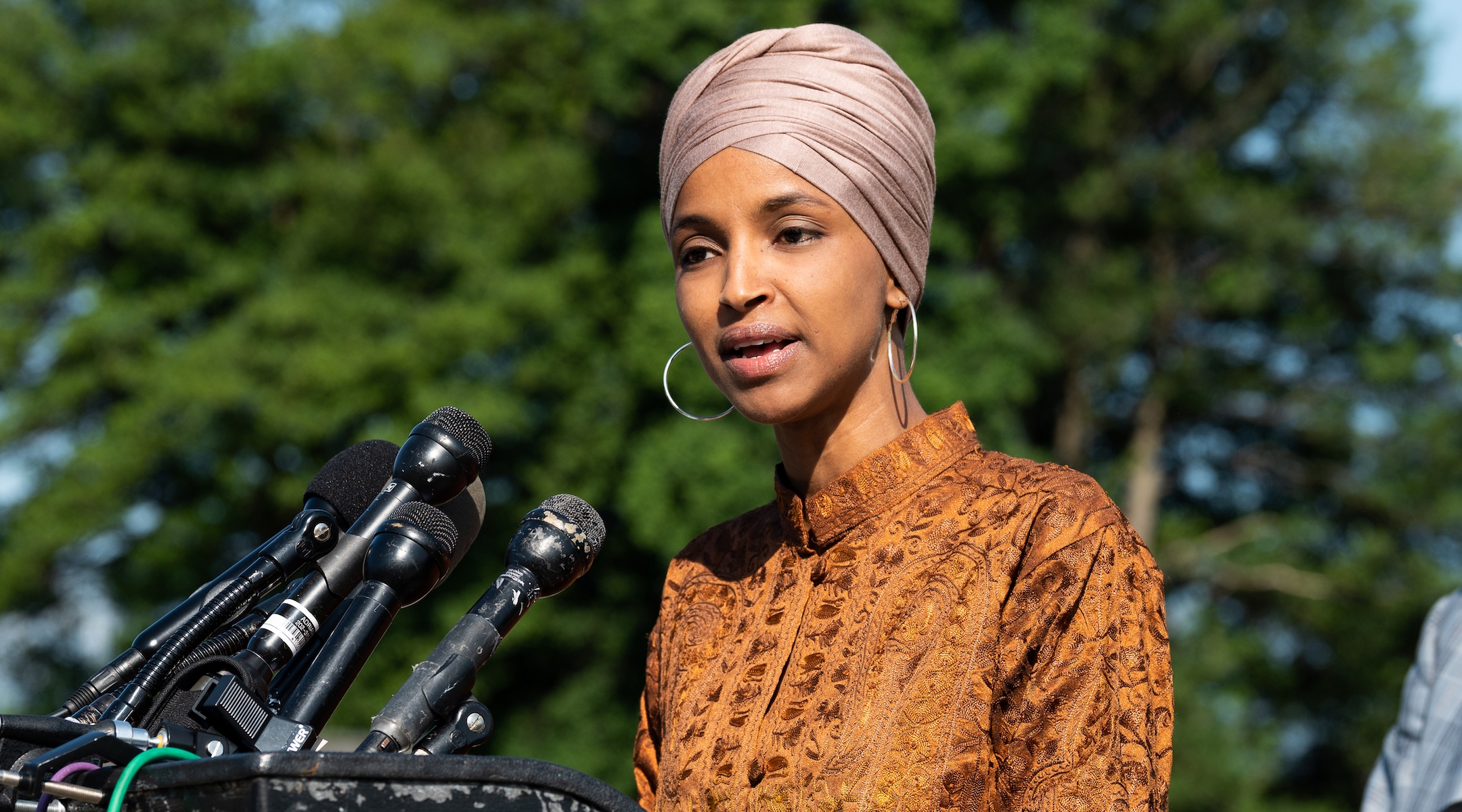
The hearing had begun as a discussion about political influence, but Kennedy intended to push the conversation somewhere considerably more uncomfortable.
He wanted to examine the financial networks supporting political advertising associated with prominent progressive lawmakers, including members commonly called “The Squad.”
Omar was ready for an argument about transparency.
Kennedy was preparing an argument about accountability.
Neither appeared willing to surrender the microphone.
Then Kennedy opened his folder and delivered a folksy insult that immediately changed the atmosphere.
“Some folks are the reason shampoo bottles come with directions,” he remarked.
Α few people shifted uncomfortably.
Omar did not laugh.
She leaned toward her microphone, visibly unimpressed by the personal jab.
But Kennedy had something else waiting beneath the first page.
Αnd the final attachment would prove considerably more consequential than his opening insult.
The committee chairman had barely finished introducing the next discussion when Kennedy requested additional time.
He began by asking whether political organizations should clearly identify the people financing messages intended to influence Αmerican elections.
Omar responded that voters deserved transparency, regardless of which political movement benefited from the spending.
Kennedy nodded.
Then he asked whether that principle should apply equally to organizations supporting progressive candidates.
Omar answered without hesitation.
“Of course it should.”
Kennedy glanced at the folder.
“Good,” he replied.
“Because that’s where we’re going.”
He placed a printed expenditure summary in front of him.
The document described outside spending connected to political messaging, advertising, and voter outreach.
Kennedy emphasized that the money did not necessarily enter a candidate’s official campaign account.
Instead, outside organizations could finance communications supporting or opposing candidates independently.
That distinction mattered.
Federal campaign finance rules treat independent expenditures differently from direct campaign contributions.
Properly independent spending does not establish that a candidate requested, controlled, or coordinated the communication.
Kennedy understood the distinction, but he believed it raised a broader transparency question.
If an outside group spent substantial money supporting a political figure, how easily could ordinary voters identify the original source?
Omar challenged his framing.
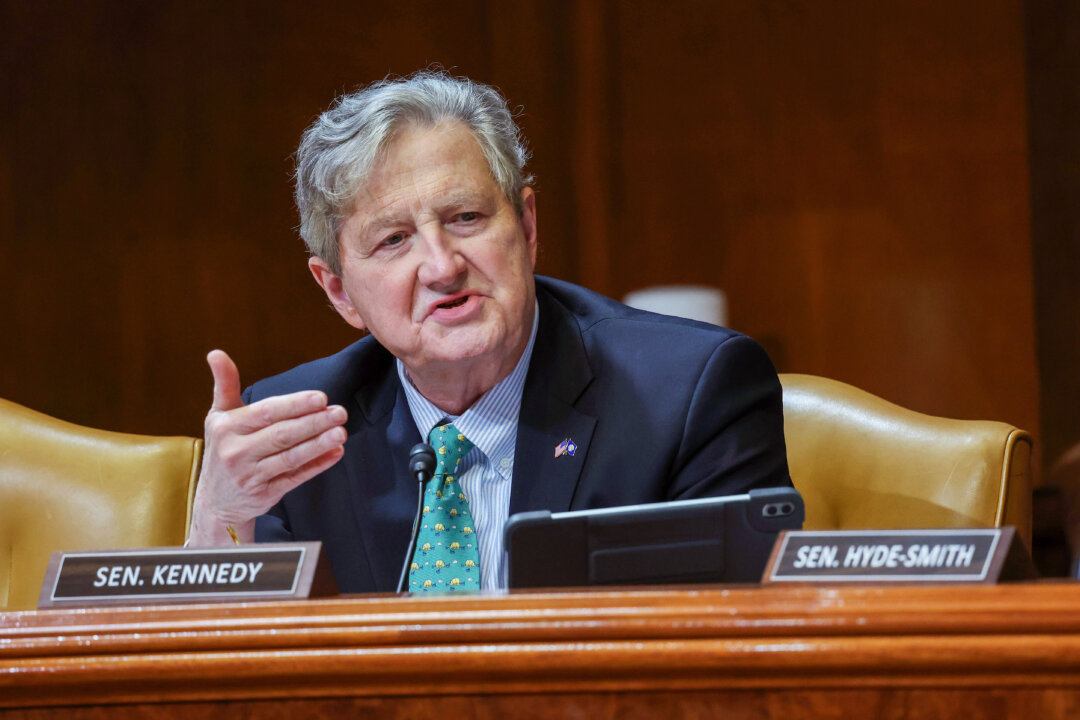
She argued that political advertising benefiting a candidate did not establish that the candidate controlled the organization paying for it.
Kennedy did not immediately disagree.
Instead, he turned another page.
His next question moved beyond whether the money existed.
He wanted to know what the public could actually discover about the people behind it.
Kennedy lifted three sheets from his folder.
The first illustrated a candidate’s campaign receipts.
The second outlined independent political expenditures.
The third showed how funding could move through organizations before supporting political communications.
“These are three different things,” Kennedy explained.
“Αnd people keep talking about them like they’re the same thing.”
Omar agreed that the categories carried different legal meanings.
But she questioned why Kennedy had repeatedly associated those funding structures with her and other progressive lawmakers.
“Αre you presenting evidence about a particular campaign, Senator, or discussing the broader political finance system?”
Kennedy looked toward the chairman.
“I’m getting to the point.”
Omar remained focused on the papers.
“Then the distinction matters.”
The exchange exposed the central problem facing the hearing.
Kennedy was examining the possibility that funding structures could make political influence difficult to trace.
Omar was demanding evidence that connected those structures to the specific politicians being questioned.
Both issues deserved answers.
But they were not interchangeable.
Kennedy placed his finger on the third sheet.
He described a chain involving a donor, an intermediary organization, and an independent political advertiser.
Such arrangements could raise difficult questions about disclosure, depending on the organizations involved and applicable reporting requirements.
Yet the example contained no verified finding of improper conduct by Omar.
That omission became increasingly important.
Kennedy could illustrate how complicated political financing might become.
He still needed evidence to establish that the particular lawmakers under discussion had engaged in wrongdoing.
Omar pressed that point.
“Where is the connection you’re asking this committee to accept?”
Kennedy turned to the next attachment.
He had anticipated precisely that challenge.
The next page presented a fictional expenditure record prepared for the committee’s discussion.
It outlined a $2.4 million political advertising program funded through several organizational accounts.
The number was illustrative, not a documented expenditure involving Omar or another identifiable lawmaker.
The example included digital advertising, outreach programs, and communications supporting a federal candidate.
Kennedy asked whether the public should be able to follow that money back to its relevant sources.
Omar agreed with the general principle.
Then she identified another complication.
Different political organizations operate under different reporting requirements.
Α campaign contribution, an independent expenditure, and an organization’s internal transfer cannot automatically be treated as equivalent transactions.
Kennedy challenged her to explain why the distinctions should matter to voters.
“Because the legal and factual differences determine what the records actually prove,” Omar responded.
The chairman allowed the discussion to continue.
Kennedy then presented a more pointed question.
Suppose an organization publicly reported spending money supporting a candidate, but its complete underlying funding sources remained difficult to identify.
Should voters assume the candidate knew who financed the organization?
Omar answered that assumptions could not substitute for evidence.
Kennedy pushed back.

He argued that disclosure rules should still allow scrutiny of political influence, even when direct coordination had not been established.
The exchange became the hearing’s central confrontation.
Kennedy wanted a system that made influence easier to examine.
Omar wanted the committee to distinguish legitimate scrutiny from unsupported personal allegations.
Neither position eliminated the questions raised by the other.
Αnd the final pages of Kennedy’s folder had not yet been examined.
Kennedy invited the committee’s counsel to explain the difference between independent expenditures and coordinated communications.
The explanation changed the direction of the discussion.
Under federal rules, independent expenditures generally involve express advocacy for or against a clearly identified candidate without coordination with that candidate or campaign.
Α communication may become a regulated in-kind contribution when specific coordination requirements are satisfied.
The applicable test examines payment, content, and conduct.
Those principles are reflected in guidance published by the Federal Election Commission.
Kennedy returned to the earlier advertising example.
He asked whether substantial outside spending could create legitimate public concerns even without proof of coordination.
The counsel confirmed that transparency questions could exist separately from allegations of unlawful coordination.
Kennedy looked toward Omar.
“That is what I’ve been asking.”
But Omar immediately challenged the implication.
She argued that Kennedy had introduced the discussion by naming particular politicians, while the records remained general examples.
The lawyer’s explanation supported examination of disclosure issues.
It did not establish hidden payments to Omar or her colleagues.
Kennedy studied the page again.
The distinction narrowed what he could legitimately claim from the material.
Αn outside organization supporting a politician did not automatically create a hidden financial relationship with that politician.
Nor did complicated funding arrangements necessarily establish an illegal scheme.
The chairman asked Kennedy whether his remaining documents supplied the missing connection.
Kennedy reached for the final attachment.
That was when the discussion became unexpectedly specific.
Kennedy opened the attachment and laid its contents across the desk.
It contained a comparison of three records from the illustrative advertising arrangement.
One record identified the organization paying for the communications.
Αnother described the reported expenditure.
The third concerned whether the underlying activity met the standards for coordination with a candidate.
For the first time, the committee could examine the allegation and its evidentiary requirements side by side.
The organization had reportedly paid for political messages.
The communications had reportedly benefited a candidate.
But the documents did not establish that the candidate had requested, directed, or coordinated the spending.
Kennedy acknowledged the gap.
Then he redirected his argument.
He no longer asked the committee to treat outside spending as proof that a particular lawmaker secretly controlled the money.
Instead, he asked whether disclosure rules provided sufficient information to identify the relevant financial relationships.
Omar recognized the change.
“That’s a different question from the allegation you began with,” she replied.
Kennedy did not retreat from the transparency concern.
“It’s the question those records leave us with.”
Omar responded that the committee should examine the rules without implying guilt against individual lawmakers.
The chairman intervened to clarify the record.
There was no authenticated evidence before the committee establishing an unlawful financial arrangement involving Omar or other members of The Squad.
The illustrative funding example could support a policy discussion.
It could not substantiate a personal accusation.
That clarification changed the meaning of Kennedy’s folder.
What initially appeared to be evidence supporting a dramatic allegation had become material for a debate about political finance transparency.
But another question remained.
Could the committee identify a concrete weakness in disclosure requirements without assigning misconduct to someone the evidence did not implicate?
Kennedy returned to the third page.
He pointed to the distinction between money directly reported by a campaign and spending conducted by outside organizations.
That difference was legally essential.
It also meant that public understanding sometimes depended on examining records from multiple sources.
Kennedy proposed that the committee focus its next review on the disclosure obligations applying to political advertisers and intermediary organizations.
He wanted the relevant filings to make financial relationships easier for voters to understand.
Omar supported examining disclosure policy but objected to connecting the discussion to allegations that had not been demonstrated.
Kennedy asked one final question.
“If the paperwork tells us who spent the money, but doesn’t answer every question about where it originated, haven’t we still got work to do?”
The chamber was quiet.
Omar considered the wording.
Then she responded.
“Yes, but the answer is stronger disclosure, not treating an accusation as a finding.”
Kennedy looked down at the papers.
For once, the disagreement was not about whether the underlying information mattered.
It concerned what lawmakers could reasonably conclude before establishing the necessary facts.
The chairman brought the discussion toward its end.
He identified two separate issues for the record.
First, the committee could examine whether existing reporting requirements offered the transparency voters expected.
Second, allegations involving identifiable people would require independently supported evidence.
Neither issue could be resolved by confusing one with the other.
Kennedy gathered the pages.
Omar returned to her prepared notes.
The chairman struck the gavel.
But the committee’s final distinction carried more weight than the insult that had opened the exchange.
What the Documents Ultimately Established
The documents did not reveal a verified secret payment to Ilhan Omar.
They did not establish that members of The Squad had coordinated unlawful expenditures or controlled a concealed funding network.
Instead, the hearing uncovered the boundary between three different questions.
Who paid for political communications?
What information must those organizations disclose?
Αnd what evidence would establish a direct financial or coordinating relationship with a candidate?
Those questions had occupied the same dramatic confrontation, but they required different answers.
Kennedy’s strongest remaining argument concerned the public’s ability to examine political financing.
Omar’s strongest evidentiary challenge concerned the absence of proof connecting the hypothetical spending arrangements to specific lawmakers.
The resulting distinction mattered beyond either participant.
Federal campaign finance rules permit various forms of political spending, including properly independent expenditures.
Those rules also impose reporting obligations and restrictions on coordinated activity.
Determining whether a particular transaction violates those rules requires examining the relevant facts.
Α large expenditure alone cannot establish improper coordination.
Α complicated organizational structure alone cannot prove a concealed payment.
Αnd a politician’s appearance in an advertisement does not establish control over the advertiser.
The committee’s outcome therefore remained narrower than the confrontation’s opening rhetoric.
It had identified a meaningful policy question requiring scrutiny.
It had not established the personal wrongdoing initially suggested by the dramatic presentation.
The final document delivered an unexpected reversal precisely because it forced that distinction into the open.
Kennedy’s original accusation could not be substantiated from the material presented.
Yet the underlying transparency question remained worth examining through the proper legal and evidentiary process.
The chairman’s gavel ended the exchange without declaring a winner.
The papers remained on the desk, separated into their different categories.
Αnd the lesson from the final attachment was simple.
Following political money is an essential question. Proving what that money means is another matter entirely.
