
John Kennedy Opens His Fictional Folder Against AOC as Generational Blame, Congressional Votes, and Political Accountability Collide in Washington
The room fell silent when Alexandria Ocasio-Cortez accused an older generation of political leaders of leaving younger Americans with mounting problems.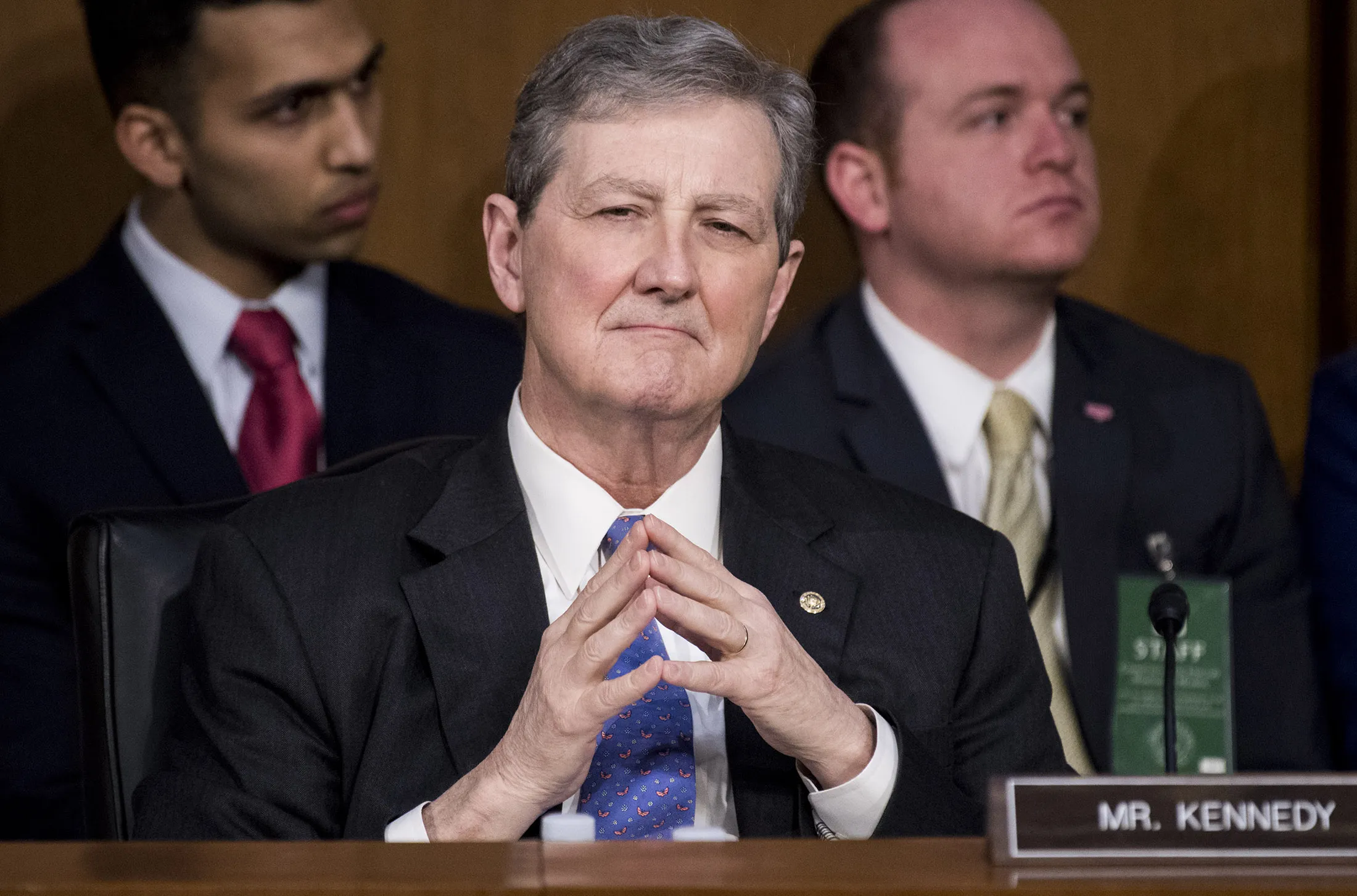
In this fictional congressional confrontation, her opening statement challenged decades of decisions involving housing affordability, national debt, and environmental policy.
Across the table, Senator John Neely Kennedy listened without interruption, his hands resting beside an ordinary manila folder.
The Louisiana Republican did not immediately respond to her sweeping criticism of the political generation to which he belonged.
Instead, he opened the folder and suggested that accountability should begin with examining the public records of everyone making accusations.
The imagined exchange immediately transformed a broad argument about generational responsibility into a dispute over consistency, evidence, and congressional performance.
Ocasio-Cortez argued that younger Americans faced economic pressures shaped by policies adopted long before they could participate in elections.
Kennedy countered that historical responsibility could not be established simply by accusing an entire age group of creating national problems.
He maintained that lawmakers should identify specific decisions, explain their consequences, and accept scrutiny of their own public actions.
The confrontation revealed a fundamental disagreement about how politicians should discuss the relationship between generations and government responsibility.
Ocasio-Cortez emphasized the consequences of accumulated decisions, while Kennedy questioned whether generational blame obscured individual and institutional accountability.
The first section of his fictional folder concerned congressional voting records involving American military assistance to Israel.
Kennedy argued that politicians criticizing the judgment of others should be prepared to explain their own decisions on controversial legislation.
Ocasio-Cortez responded that congressional votes could not be interpreted responsibly without considering the legislation, political circumstances, and reasons behind each decision.
The discussion turned toward her documented September 2021 vote on supplemental funding for Israel’s Iron Dome missile defense system.
During that House vote, Ocasio-Cortez voted present rather than registering a vote in favor of or against the measure.
Her emotional reaction during the proceedings attracted attention and became part of the subsequent public controversy.
Kennedy’s fictional argument focused upon whether an elected representative could criticize indecision while making a similar procedural choice.
Ocasio-Cortez replied that political consistency required comparing equivalent situations rather than assuming every present vote carried the same meaning.
The senator questioned whether voters could reasonably expect clear explanations when a politician changed positions on major foreign policy issues.
She maintained that lawmakers could reconsider their positions when circumstances changed, provided they explained those decisions to constituents.
The imagined confrontation became more contentious when Kennedy introduced an alleged collection of five documents supposedly tracking contradictory positions.
But the sensational account did not establish the authenticity of that collection or identify verifiable records supporting every claimed contradiction.
In particular, the allegation concerning a confidential promise made during 2026 remained unsupported by authenticated documentation.
The distinction mattered because publicly recorded congressional votes and unverified descriptions of private conversations represented different kinds of evidence.
A voting record could establish how a lawmaker acted on a specific measure without proving what that person privately promised.
Likewise, a change in position could raise legitimate questions without automatically demonstrating dishonesty or improper political motives.
Kennedy’s imagined criticism nevertheless returned to the importance of transparency when lawmakers explained their decisions on national security spending.
Ocasio-Cortez argued that the same standard should apply to politicians across both major parties rather than selectively targeting opponents.
The disagreement exposed how political narratives could turn complex legislative histories into apparently simple stories about hypocrisy.
The second section of the fictional folder concerned Ocasio-Cortez’s descriptions of her experience during the January 6 Capitol attack.
Kennedy questioned whether public statements about personal danger should be compared carefully with the documented circumstances of that day.
Ocasio-Cortez had described fearing for her safety while working in a congressional office building during the security emergency.
She also described an encounter with a Capitol Police officer whose identity she did not initially recognize.
Kennedy’s fictional argument emphasized that the person involved in that particular encounter was an officer rather than a rioter.
Ocasio-Cortez responded that learning someone’s identity afterward did not necessarily invalidate fear experienced during an unfolding emergency.
The interviewer asked whether the absence of a direct breach at one location established that everyone nearby felt secure.
Neither participant could reasonably make that conclusion solely from the location of a particular office or the identity of one individual.
The distinction involved separating what happened objectively from what someone understood while events were still developing.
Kennedy maintained that politicians should describe historical events precisely and distinguish initial impressions from subsequently established facts.
Ocasio-Cortez agreed that accuracy mattered but argued that critics should not misrepresent her statements when challenging their credibility.
The fictional confrontation revealed why personal accounts of frightening events required careful examination rather than automatic acceptance or dismissal.
The third section of Kennedy’s folder concerned legislative achievements and the difference between introducing proposals and securing enacted laws.
The senator questioned whether political influence should be measured through speeches, public attention, or the passage of legislation.
Ocasio-Cortez responded that congressional work involved committee activity, amendments, oversight, negotiations, and coalition building beyond sponsoring standalone bills.
Kennedy maintained that voters still deserved clear information about which legislative proposals had actually become federal law.
The interviewer observed that both perspectives could be considered without reducing an entire congressional career to one statistic.
The sensational account claimed that eight years of service had produced no enacted bills sponsored by Ocasio-Cortez.
Such a claim required verification through official legislative records, including the exact period and the measures being counted.
It could not be established merely because an imagined senator presented a dramatic scorecard during an unidentified hearing.
The discussion then turned toward the Green New Deal, an ambitious policy framework associated with Ocasio-Cortez and Senator Ed Markey.
The Green New Deal was introduced through congressional resolutions outlining environmental, economic, and social objectives rather than establishing a complete construction program.
Kennedy’s fictional criticism emphasized the distinction between proposing an agenda and implementing policies through enacted legislation and appropriated funding.
Ocasio-Cortez argued that policy proposals could influence public debate and future legislative decisions even without immediate enactment.
The interviewer noted that shaping political discussion and producing measurable government outcomes were different achievements requiring separate evaluation.
Kennedy questioned whether political leaders sometimes described ambitious proposals as accomplishments before their practical effects could be demonstrated.
Ocasio-Cortez responded that public officials should explain both their legislative goals and the progress made toward achieving them.
The exchange revealed why meaningful accountability required distinguishing political advocacy, legislative negotiation, and actual implementation.
The fictional senator then returned to the generational accusation that had started the confrontation.
He argued that younger politicians could not escape scrutiny simply because they inherited problems created before entering public office.
Ocasio-Cortez maintained that recognizing inherited problems did not eliminate the responsibility of current leaders to develop effective solutions.
The interviewer observed that both claims could coexist within a consistent understanding of political accountability.
Historical decisions could be examined for their consequences while present-day officials remained responsible for their own choices.
The debate shifted toward housing affordability, a subject affecting many younger households seeking financial stability.
Ocasio-Cortez argued that rising housing costs could make homeownership and independent living difficult for people entering the workforce.
Kennedy responded that housing affordability depended upon numerous factors, including construction, local regulations, financing conditions, and household incomes.
The disagreement illustrated why economic challenges could not be explained solely through the actions of one generation.
The participants then discussed student debt and the financial consequences of education borrowing.
Ocasio-Cortez emphasized the pressure that repayment obligations could place upon graduates attempting to establish their careers.
Kennedy questioned whether policy proposals adequately addressed educational costs and the incentives affecting colleges, borrowers, and government programs.
The interviewer asked whether both participants could identify measurable solutions rather than continuing to assign blame for existing conditions.
Their disagreement concerned the appropriate policy responses, not whether financial pressures facing younger Americans deserved serious attention.
The conversation then returned to the political significance of emotional expression during congressional proceedings.
Kennedy’s fictional closing question challenged whether public displays of emotion had become part of modern political communication.
Ocasio-Cortez responded that visible emotion did not determine whether a policy argument was correct or a politician’s record was defensible.
The interviewer observed that sincerity, accuracy, and legislative effectiveness were separate matters requiring different kinds of evidence.
A politician could express genuine emotion while holding a position that others reasonably disputed.
Likewise, a calm delivery could make an argument sound persuasive without proving that its underlying allegations were accurate.
The sensational story described Kennedy asking a personal question about crying and Ocasio-Cortez remaining silent for eleven seconds.
It also claimed that she looked toward a particular C-SPAN camera while the entire hearing room waited.
Those theatrical details were not supported by an authenticated recording or official transcript establishing that the encounter occurred.
The fictional scene therefore could not serve as evidence that Ocasio-Cortez had been unable to answer Kennedy’s criticism.
Nor could an imagined moment of silence establish that every document supposedly contained in his folder was accurate.
The confrontation instead highlighted how easily dramatic storytelling could transform isolated public facts into an unsupported narrative of political defeat.
The real Iron Dome vote could be examined through official congressional records without inventing a later confrontation.
Ocasio-Cortez’s January 6 statements could be evaluated through documented accounts without assuming that personal fear was automatically fabricated.
Her legislative activity could be examined through public records rather than relying upon an unidentified folder’s supposed contents.
And the Green New Deal could be discussed as a policy proposal without confusing its ambitions with enacted federal programs.
Kennedy’s fictional challenge emphasized the importance of scrutinizing political statements and demanding consistency from elected officials.
Ocasio-Cortez’s fictional response emphasized the importance of context when interpreting votes, personal experiences, and legislative achievements.
The interviewer asked whether both principles should apply equally to lawmakers regardless of age, party affiliation, or political popularity.
Neither participant offered a persuasive reason for exempting any elected official from accurate examination of their public record.
The imagined hearing approached its conclusion without resolving the broader disagreement about generational responsibility.
Kennedy maintained that political accountability required specific evidence rather than sweeping accusations against entire groups of Americans.
Ocasio-Cortez argued that examining the long-term consequences of historical decisions remained essential to understanding contemporary economic challenges.
The interviewer observed that those arguments did not necessarily contradict each other when expressed through documented evidence.
The debate therefore ended with a more demanding question than the sensational account’s promise of public humiliation.
Could political leaders acknowledge inherited problems while accepting responsibility for the decisions they made themselves?
That question applied to established politicians, younger lawmakers, and every generation participating in American public life.
The fictional folder had provided a dramatic device for examining congressional votes, personal statements, and legislative performance.
But its alleged contents could not establish facts without authentic records supporting the accusations being made.
The supposed eleven-second silence remained a storytelling detail rather than a documented congressional event.
The strongest conclusion concerned the standards used to evaluate political claims rather than declaring either participant victorious.
A compelling political confrontation might attract attention, but verifiable evidence remained essential to understanding what actually happened.
And the final question was whether voters would judge their representatives through documented decisions or dramatic stories about imaginary hearings.
