
Joy Behar and Nancy Mace: The Real Television Feud Behind the Viral “KKK Barbie” Claim
A heated political dispute involving Nancy Mace and the hosts of ABC’s The View has once again drawn attention to the increasingly confrontational relationship between politicians and daytime television personalities. Online posts have described an explosive moment in which Joy Behar allegedly called the South Carolina congresswoman “KKK Barbie,” only for Mace to respond with a pointed 17-word statement about her achievements at The Citadel and in Congress. But there is no verified evidence that this exchange ever happened.
The alleged insult and comeback do not appear in credible reporting or an authenticated broadcast transcript. There is no confirmed footage of Behar using the phrase, no recording of Mace delivering the quoted response, and no evidence that the studio fell silent following such an encounter. Nevertheless, the viral story draws attention to a genuine history of tension between Mace and the television program.
One of the clearest examples came in January 2025, after Mace clashed with Democratic Representative Jasmine Crockett during a House Oversight Committee meeting. The disagreement began during a discussion involving civil rights and transgender issues. Crockett criticized Mace’s political messaging and suggested that she was repeatedly emphasizing transgender issues to attract attention and campaign support.

Crockett then used the colloquial expression “child, listen” while continuing her criticism. Mace interrupted, taking particular offense at the word “child.” She insisted that she was not a child and declared that if Crockett wanted to take the disagreement outside, they could do so. The exchange quickly became one of the most widely discussed moments from the congressional meeting.
The following day, the incident became a subject of discussion on The View. Joy Behar watched the footage and joked that the confrontation sounded like something that could happen on the program itself. Her co-hosts, including Whoopi Goldberg and Sara Haines, also weighed in, questioning Mace’s interpretation of Crockett’s language and criticizing the escalation.
Behar’s comments went beyond the immediate exchange. She suggested that Mace was particularly interested in appearing on television and even invited the congresswoman to come onto the program. Alyssa Farah Griffin described the congressional confrontation as a “clown show,” while Sunny Hostin raised questions about how anger and aggressive behavior are interpreted differently depending on the race and gender of the person involved.
The discussion was sharp, personal and politically charged. However, it was not the confrontation described in the viral post. Behar did not call Mace “KKK Barbie,” and Mace did not deliver the alleged 17-word response during the segment.
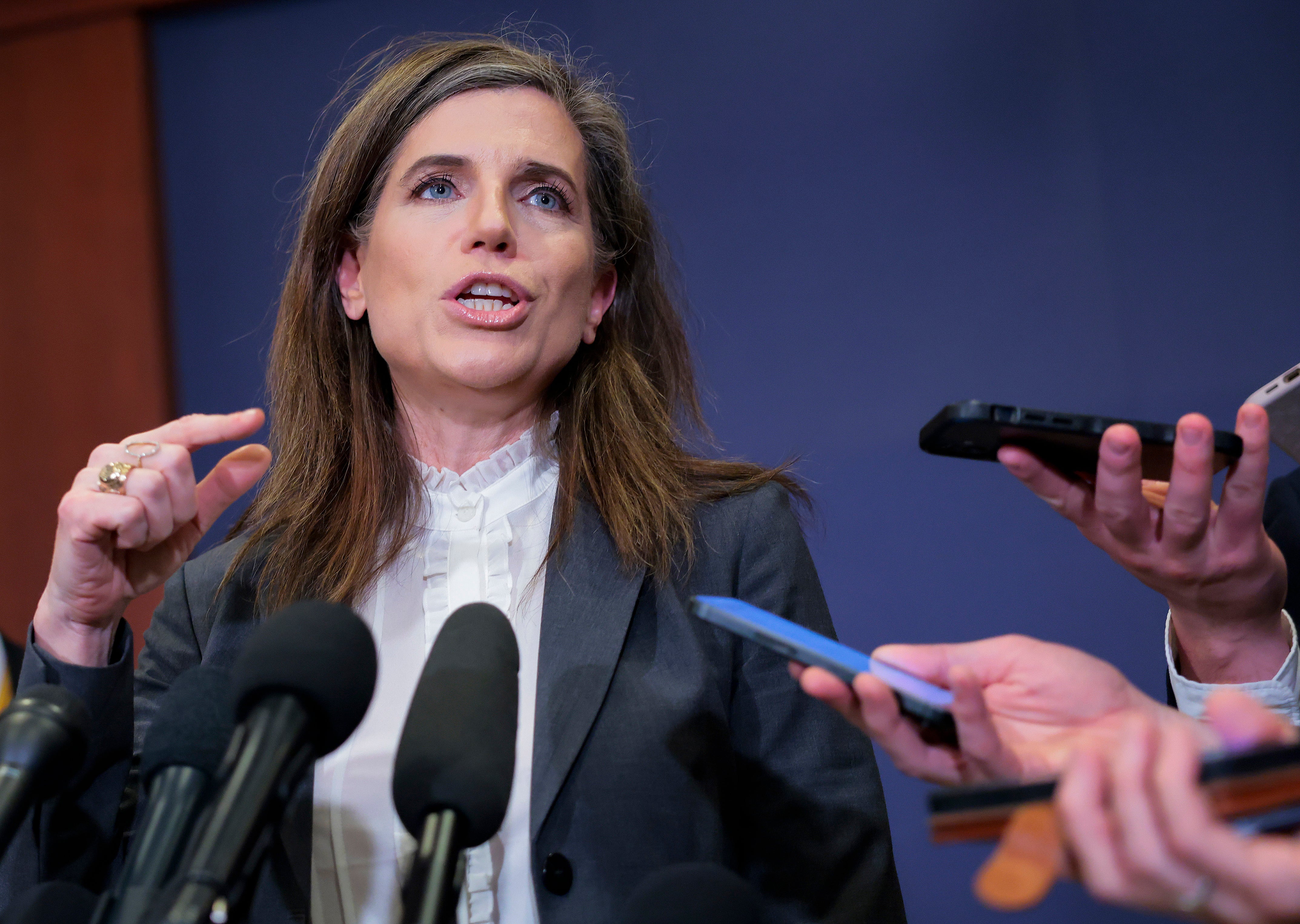
The relationship between Mace and the program had already experienced friction before that January 2025 discussion. In October 2023, Mace appeared on The View and became involved in a tense exchange with Whoopi Goldberg over abortion rights. Their disagreement demonstrated how quickly discussions between the congresswoman and the panel could move from policy arguments to direct personal confrontation.
Another significant episode occurred in September 2024, when the program hosted professor Michael Eric Dyson. His appearance followed a heated CNN exchange with Mace over her pronunciation of Vice President Kamala Harris’s name. During that CNN discussion, Dyson challenged Mace’s pronunciation and connected it to a broader history of racial disrespect. Mace rejected the implication that her pronunciation reflected racist intent.
The disagreement continued beyond the television appearance. Mace later introduced private messages from Dyson into the congressional record, drawing further attention to their relationship and the accusations exchanged during the dispute. When Dyson appeared on The View, the hosts questioned him about those messages and his earlier confrontation with Mace.
These incidents help explain why stories about Behar and Mace can attract immediate attention. Their political positions are often sharply different, and the format of The View encourages direct exchanges between hosts and guests with opposing perspectives. For Mace, appearances and discussions involving the program have provided opportunities to defend her positions before a national audience. For the hosts, her statements have frequently become subjects of criticism and debate.
Mace’s background at The Citadel is also a genuine part of her public biography. In 1999, she became the first woman to graduate from the institution’s Corps of Cadets program. She later entered politics and was elected to the U.S. House of Representatives, where she has become a prominent Republican voice in debates involving social issues, congressional oversight and party politics.
That background is likely why the fabricated comeback sounds convincing to some readers. The statement combines a real achievement with a sharp contrast between political service and television commentary. It is designed to sound like a concise personal defense, but there is no reliable evidence that Mace actually said those words to Behar.
The distinction between documented exchanges and invented quotations is particularly important when political disagreements are circulated through short social media posts. A real television segment can be edited into a dramatic clip, while an entirely fictional quotation can be presented as though it were taken directly from a live broadcast. Once repeated across multiple pages, the story may begin to look like established news even when its central details cannot be verified.
The documented relationship between Nancy Mace and The View already contains enough genuine disagreements to explain the public interest. There was the 2023 argument with Goldberg, the 2024 controversy involving Dyson, and the January 2025 panel discussion following Mace’s confrontation with Crockett. Each episode involved different participants, different statements and distinct political issues.
What connects them is the growing overlap between American political debate and entertainment television. Congressional disputes are replayed on daytime programs, television commentary becomes part of political campaigns, and individual remarks can quickly become national talking points. In that environment, the line between reporting, opinion and viral fiction can become difficult for audiences to recognize.
For now, the alleged “KKK Barbie” insult and Mace’s supposed 17-word response remain unsupported. The real story is a series of documented disagreements between a Republican congresswoman and the hosts of a prominent daytime television program—not a verified live confrontation in which Behar delivered that particular insult and Mace silenced the studio.
The actual exchanges are worth examining on their own terms. They reveal how disagreements over race, gender, political identity and public responsibility continue to shape conversations both inside Congress and on American television.
