
A.O.Cwas still smiling when Senator John Kenn.e.d.y placed a government voting record on the studio desk.
The Louisiana senator had barely spoken during the first five minutes of their heated televised exchange.
A.O.Chad challenged his questions repeatedly, dismissing his criticism as another predictable attack against progressive policies.
She believed the conversation would revolve around familiar disagreements over government spending, infrastructure, and political priorities.
But Kenn.e.d.y had prepared a different approach.
Inside a black folder sat an official congressional voting record dated November 5, 2021.

Kenn.e.d.y carefully removed the document and placed it beneath the studio lights.
Then he pointed toward one particular entry.
The name A.O.Cappeared beside a recorded vote against the Infrastructure Investment and Jobs Act.
For the first time, their confrontation moved away from broad political arguments and toward a specific legislative decision.
Kenn.e.d.y leaned forward.
“Congresswoman, you spend a lot of time talking about rebuilding America’s infrastructure.”
He paused, keeping his finger on the document.
“Then explain why your name appears in the opposition column when Congress voted on this infrastructure legislation.”
A.O.Cimmediately recognized the vote.
She had publicly explained her decision years earlier.
But Kenn.e.d.y was not interested in letting the question disappear beneath another exchange of partisan slogans.
He slid a second document across the desk.
It contained the final House vote totals.
The legislation had passed by 228 votes to 206.
Thirteen Republicans supported the bill, while six Democrats opposed it.
A.O.Cwas among those six Democrats.
Kenn.e.d.y looked toward the moderator.
“Those aren’t my numbers. Those are the House’s recorded votes.”
The room grew quiet.
Then he turned back toward Ocasio-Cortez.
“I’m asking about a decision you actually made, not something somebody claimed you said.”
The congresswoman straightened in her chair.
She explained that her opposition involved the legislative strategy surrounding President Biden’s broader domestic agenda.
The infrastructure legislation had originally been connected politically to a separate package known as Build Back Better.
That proposal contained additional priorities involving housing, childcare, healthcare, immigration, and climate policy.
Progressive lawmakers feared that passing the infrastructure legislation separately would weaken support for those additional measures.
A.O.Cargued that her vote reflected those concerns.
Kenn.e.d.y listened without interrupting.
Then he tapped the voting record again.
“So your objection wasn’t necessarily to every road, bridge, or transportation project in the bill.”
She answered that the legislation contained worthwhile investments, but its broader political context mattered.
Kenn.e.d.y nodded.
“Then let’s talk about that context.”
The moderator leaned forward.
The argument was becoming more specific than either politician’s opening remarks had suggested.
Kenn.e.d.y placed another document beside the first.
It summarized the infrastructure legislation’s funding priorities.
The package included substantial investments in transportation networks, public transit, water systems, broadband infrastructure, and other projects.
Kenn.e.d.y pointed toward the transportation provisions.
He argued that infrastructure improvements could benefit working families regardless of their political affiliations.
He questioned whether withholding support from the legislation had created unnecessary risks for those investments.
A.O.Crejected the suggestion that her decision represented opposition to improving infrastructure.
She explained that lawmakers frequently negotiate over multiple interconnected pieces of legislation.
Supporting an overall policy objective did not automatically require voting for every proposal presented under that objective.
Kenn.e.d.y acknowledged that lawmakers could oppose legislation for strategic reasons.
But he wanted to examine the consequences of the particular strategy she had chosen.
“Did voting against this bill make the other priorities you wanted more likely to become law?”
The question shifted the confrontation again.
A.O.Cresponded that the progressive caucus had sought guarantees concerning the larger legislative agenda.
She argued that negotiating leverage could disappear when one portion of a package passed ahead of another.
Kenn.e.d.y asked whether the strategy had succeeded.
The moderator requested that the policy analyst clarify the legislative timeline.
The analyst explained that the bipartisan infrastructure legislation passed the House in November 2021.
President Biden signed it into law later that month.
The broader Build Back Better proposal encountered serious difficulties in the Senate.
A revised legislative package eventually emerged through the Inflation Reduction Act of 2022.
But that legislation differed significantly from the original Build Back Better proposal.
Kenn.e.d.y examined the timeline.
Then he returned his attention to Ocasio-Cortez.
“So the infrastructure bill passed anyway, and the larger package changed substantially.”
The congresswoman acknowledged the legislative outcome.
But she disputed the suggestion that one vote explained the entire negotiation’s result.
Numerous lawmakers, institutional rules, and political disagreements shaped the legislative process.
Kenn.e.d.y agreed that responsibility could not be assigned through a single voting record.
Nevertheless, he argued that legislators should explain how their political strategies affected their stated policy goals.
A.O.Ccountered that those explanations also needed to acknowledge the full legislative circumstances.
The moderator placed both documents side by side.
One showed the recorded vote.
The other explained the strategic disagreement behind it.
The central question had become unavoidable.
Was Ocasio-Cortez’s vote inconsistent with her infrastructure priorities, or was it a calculated attempt to secure additional investments?
Kenn.e.d.y leaned toward the microphone.
“Congresswoman, ordinary Americans don’t always have the luxury of waiting for Washington’s perfect political arrangement.”

A.O.Cresponded that working families also needed affordable housing, healthcare, childcare, and climate protections.
She argued that separating those priorities from infrastructure negotiations risked weakening the larger agenda.
Kenn.e.d.y asked whether lawmakers had communicated those tradeoffs clearly to voters.
She maintained that she had publicly explained her decision.
The senator reached into the folder again.
This time, he removed an official statement from her congressional office.
The document explained why she opposed advancing the infrastructure legislation without its companion bill.
It identified concerns about immigration reform, public housing investments, and meaningful climate legislation.
Kenn.e.d.y studied the statement.
Then he asked a question that complicated his original argument.
“So you did tell your constituents why you voted no.”
A.O.Cnodded.
Kenn.e.d.y acknowledged that the explanation existed.
But he maintained that voters could still question whether the strategy had produced the desired results.
The congresswoman agreed that elected officials should defend their decisions.
She challenged Kenn.e.d.y to apply the same standard to every member of Congress.
The moderator moved toward the next subject.
But Kenn.e.d.y raised his hand.
He had one more document.
And this one would change the direction of their fictional confrontation.
The final document was another section of the same congressional roll call.
Kenn.e.d.y had highlighted the six Democrats who opposed the infrastructure legislation.
But the complete record also contained the names of the 200 Republicans who voted against it.
A.O.Cleaned forward.
“Senator, why don’t we look at the entire opposition column?”
Kenn.e.d.y glanced toward the page.
The moderator asked the production team to display the full voting record.
The screen revealed that most House Republicans had opposed the legislation.
Only thirteen Republicans joined the Democratic majority in supporting its passage.
A.O.Cpointed toward the figures.
“If opposing this bill means opposing infrastructure, does that accusation apply to every Republican who voted no?”
Kenn.e.d.y paused before responding.
He explained that lawmakers could reject legislation for different reasons.
Some opposed its spending levels.
Others questioned the package’s priorities or broader economic consequences.
A.O.Cnodded.
“Then you’re acknowledging that a vote against legislation doesn’t automatically mean opposing everything the legislation addresses.”
Kenn.e.d.y considered her response.
The moderator recognized that both politicians were now confronting the same underlying problem.
A congressional vote could demonstrate a lawmaker’s position on a specific legislative proposal.
But it did not automatically establish every belief or motivation behind that decision.
Kenn.e.d.y returned to the original question.
He maintained that Ocasio-Cortez’s constituents deserved to know whether her legislative strategy had achieved its objectives.
The congresswoman agreed.
But she insisted that the same standard should apply to Republicans who opposed the infrastructure package.
The exchange had reached a turning point.
Kenn.e.d.y had established a documented fact about Ocasio-Cortez’s voting history.
She had voted against the infrastructure legislation in November 2021.
But the record also showed that opposition came from lawmakers across different political factions.
The reasons behind those votes required examination rather than assumption.
Kenn.e.d.y placed the final document beneath the camera.
“Then let’s ask the question that matters.”
The studio became quiet.
“Can you identify what your strategy actually accomplished for the people you represent?”
A.O.Cexplained that her position had centered on protecting the broader legislative agenda.
She acknowledged that the final outcome fell short of several progressive objectives.
However, she argued that negotiations had drawn public attention to important issues affecting working families.
Kenn.e.d.y listened carefully.
Then he asked whether raising awareness was sufficient when lawmakers also possessed the responsibility to make legislative decisions.
A.O.Cresponded that elected officials had to balance immediate achievements against longer-term negotiating goals.
The moderator requested a final assessment from the policy analyst.
The analyst explained that the infrastructure legislation passed despite Ocasio-Cortez’s opposition.
Consequently, her individual vote did not prevent the package from becoming law.
The broader Build Back Better negotiations ultimately produced a different legislative result.
Determining whether the strategy improved or weakened those negotiations required examining several political decisions.
The voting record alone could not resolve that question.
Kenn.e.d.y accepted the explanation.
But he maintained that lawmakers should be prepared to discuss the practical results of their strategies.
A.O.Cagreed that legislative outcomes deserved scrutiny.
She also argued that political criticism should acknowledge the actual reasons lawmakers provided for their votes.
The moderator prepared to end the fictional confrontation.
Then Kenn.e.d.y returned to the document that had started everything.
The November 5, 2021, roll call remained visible on the studio screen.
It was not a secret document.
It was not a leaked communication.
And it did not establish hidden corruption or personal misconduct.
It was an official congressional record showing how elected representatives voted on a consequential legislative proposal.
Its significance came from the questions surrounding that decision.
Why had six Democrats opposed legislation supported by most of their party?
Why had thirteen Republicans supported legislation opposed by most House Republicans?
And how should voters evaluate legislators whose strategic decisions produced complicated political outcomes?
Kenn.e.d.y looked toward A.O.Cone final time.
“Congresswoman, here’s what I’d like every voter to consider.”
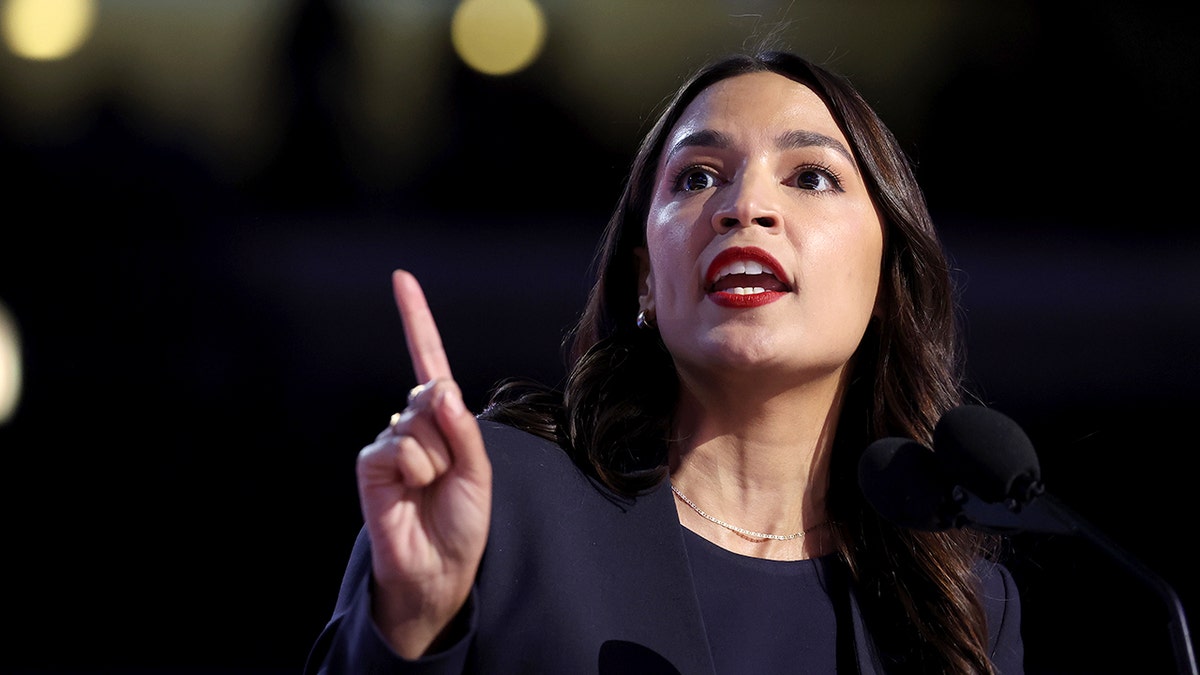
He tapped the original roll call.
“Would you make the same decision again, knowing exactly how those negotiations ended?”
The question lingered.
A.O.Cresponded that lawmakers must evaluate decisions according to the information and circumstances available at the time.
She maintained that her priorities concerning housing, healthcare, and climate policy remained important.
Kenn.e.d.y acknowledged her answer.
But he emphasized that elected representatives remained accountable for the consequences of their votes.
The moderator brought the exchange to a close.
No authenticated secret files had emerged.
No personal scandal had been established.
Instead, Kenn.e.d.y’s documents exposed a genuine legislative decision that carried important political consequences.
A.O.C had defended her vote through an argument about broader legislative priorities.
Kenn.e.d.y had challenged whether that strategy delivered the results its supporters wanted.
Both positions remained open to public examination.
But the final development gave the confrontation an unexpected significance.
The same government record that supported Kenn.e.d.y’s question also complicated any simplistic accusation against Ocasio-Cortez.
Hundreds of lawmakers had opposed the legislation for different reasons.
And understanding those reasons required more than pointing toward a single column of names.
The decisive issue was not whether the voting record existed.
It was whether elected officials could explain the relationship between their promises, their decisions, and the consequences.
Kenn.e.d.y closed the folder.
A.O.Cgathered her prepared remarks.
The red studio light remained illuminated as the moderator delivered the closing announcement.
The voting record stayed on the screen until the broadcast ended.
Its numbers were unchanged.
Its political implications remained contested.
And the question at the center of the confrontation had never been more relevant.
When politicians promise to fight for ordinary Americans, shouldn’t voters demand an explanation of what their votes actually accomplished?
