
“Let’s not play games anymore!” — Judge Ana Reyes confronts Trump’s top DOJ lawyer as contradictory golf course claims trigger an ethics inquiry
A federal courtroom dispute over Donald Trump’s plans to rebuild a historic Washington golf course became a serious examination of government transparency.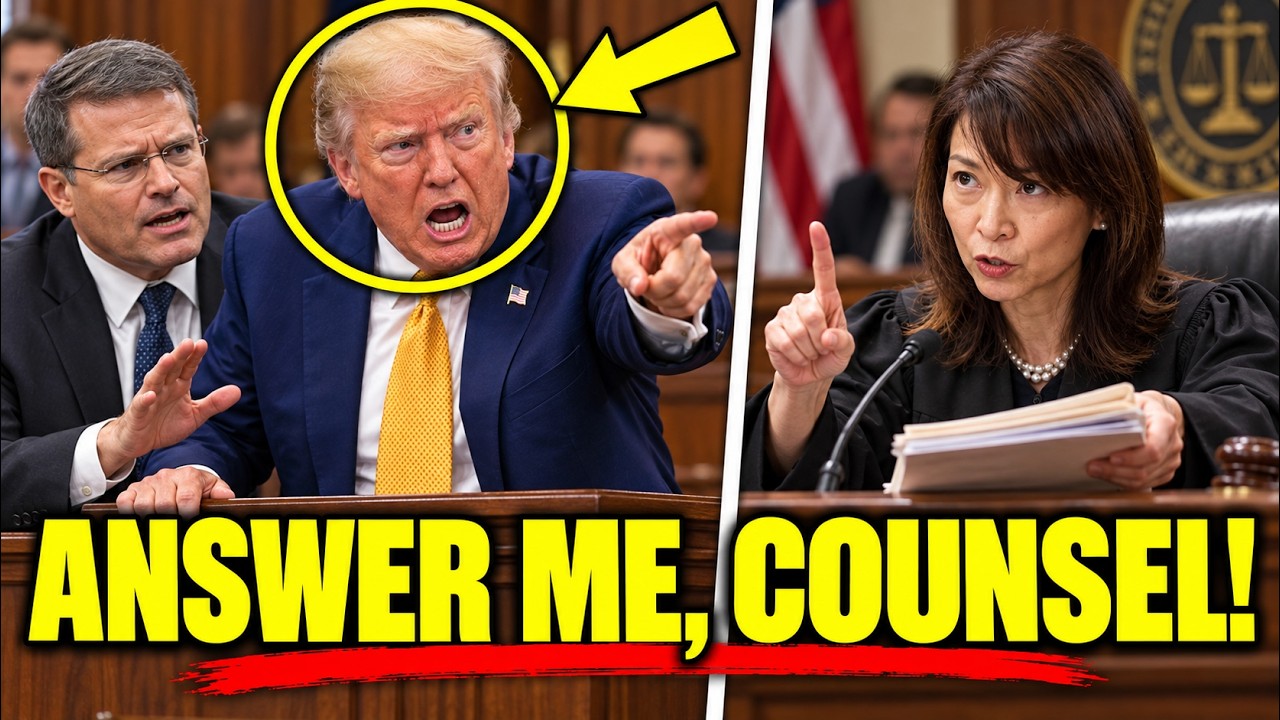
On October 30, 2026, U.S. District Judge Ana Reyes confronted Associate Attorney General Stanley Woodward over conflicting explanations of the administration’s redevelopment plans.
The dispute centered on East Potomac Golf Links, a century-old public recreation facility near some of the capital’s most recognizable landmarks.
Trump had publicly announced that the course would close on November 15 to make way for an ambitious renovation.
But Justice Department lawyers had previously insisted that no definite closure plan existed.
That contradiction became the focus of an unusually tense hearing.
“Let’s not play games anymore, Mr. Woodward.”
Reyes demanded a straightforward explanation of the president’s public statements and the government’s earlier representations to her court.
Woodward argued that presidential statements could provide direction to executive agencies without establishing that specific operational decisions had been finalized.
But when the discussion turned toward executive privilege, the judge challenged his interpretation of the doctrine.
“That is quite an extraordinary view of executive privilege.”
The confrontation soon moved beyond the interpretation of Trump’s social media posts.
Reyes announced an inquiry into whether Justice Department attorneys and other government officials had provided misleading information or omitted material facts.
Then a subsequent judicial decision introduced even more consequential evidence about the administration’s actual plans.
The court identified a documented proposal for a championship golf course, connected that proposal to the removal of hundreds of trees, and refused to lift its restrictions.
By November 7, Reyes had also identified a former federal prosecutor she intended to appoint to assist with the ethics investigation.
The controversy had evolved from a disagreement about a public golf course into a question about the government’s duty of candor before a federal judge.
Were the administration’s lawyers describing an unfinished proposal, or had their explanations obscured decisions already being implemented?
1. Trump’s golf course redevelopment begins with a dispute over public land
East Potomac Golf Links occupies a prominent location on Hains Point, a peninsula extending into the Potomac River in Washington.
The public facility has served local golfers for more than a century, providing affordable access to a recreational landscape with significant historical value.
Established in the early twentieth century, the complex developed into an important part of Washington’s municipal golfing tradition.
Its layout includes multiple courses serving players with different abilities, schedules, and financial circumstances.
In 2020, the National Links Trust entered a long-term agreement intended to improve East Potomac and two other public golf facilities.
The nonprofit’s approach emphasized restoration, public accessibility, and preserving the recreational character of existing courses.
Trump’s administration later pursued a different vision.
The president supported replacing the existing configuration with a championship-style facility designed by prominent golf architect Tom Fazio.
Supporters argued that the project would transform an aging public course into a destination capable of attracting prestigious tournaments.
They also maintained that substantial redevelopment could improve the appearance and condition of federally managed land.
Opponents questioned whether the proposed changes would preserve affordable access for ordinary golfers.
They also raised concerns about historic preservation, environmental damage, and the administration’s compliance with established federal procedures.
The DC Preservation League and two local golfers brought a lawsuit challenging the redevelopment effort.
Their legal claims involved the government’s authority to alter the site and its obligations under environmental and historic-preservation law.
Those issues eventually brought the project before Judge Reyes.
The case initially concerned whether the administration could proceed with substantial alterations before completing the required legal reviews.
But government statements about the existence of a redevelopment plan soon became just as important as the project itself.
And the removal of hundreds of trees created a new dispute over whether construction-related work had already begun.
2. Hundreds of trees disappear as the court questions the administration’s explanation
During October 2026, federal contractors removed hundreds of trees from East Potomac as the administration advanced work on the site.
Government officials characterized the activity as vegetation management within the National Park Service’s existing responsibilities.
The plaintiffs argued that the tree removal was actually preparation for replacing the historic course with Trump’s proposed championship design.
That distinction was legally significant.
Routine maintenance and major redevelopment can trigger different obligations under federal environmental law.
If tree removal represented an independent maintenance decision, the administration could argue that it fell within ordinary park-management authority.
If the work formed part of a larger redevelopment project, courts could examine whether required environmental assessments had been improperly divided.
Judge Reyes became concerned that the government was undertaking irreversible changes before the underlying legal issues could be resolved.
She ordered restrictions on further tree removal and required advance notice of other potentially irreversible work.
The administration disputed the plaintiffs’ characterization of the activity and challenged the court’s intervention.
But the controversy grew when Trump’s own public statements appeared to describe a project that government lawyers had characterized as unfinished.
On October 18, Trump publicly discussed plans for a championship course and announced a November 15 closure date.
The next day, government attorneys maintained that no definite plan existed to close the course on that date.
The discrepancy created an evidentiary problem that could not be resolved simply by debating whether trees required maintenance.
The president appeared to be announcing a definite timetable.
His lawyers were telling the court that the relevant government decision had not been finalized.
Reyes wanted to understand whether these were genuinely different stages of administrative decision-making or inconsistent descriptions of the same operational plan.
The judge’s October 26 opinion examined those contradictions while addressing the plaintiffs’ request for preliminary relief.
She ultimately found sufficient grounds to restrict additional tree removal while the lawsuit continued.
The court’s findings also linked the work already performed to the broader course redevelopment.
That connection would become even more important after the administration submitted its design proposal to federal planners.
3. The November 15 closure claim produces a tense courtroom confrontation
The October 30 hearing placed Woodward, the Justice Department’s third-highest-ranking official, directly before Judge Reyes.
She wanted to establish when the administration had actually decided to close East Potomac Golf Links.
The question appeared straightforward because Trump had publicly supplied a specific date.
Woodward nevertheless distinguished the president’s announcement from the formal steps required for an agency to implement the closure.
He explained that a presidential statement could direct an agency toward a particular result without establishing a completed administrative decision.
Reyes challenged the distinction because Trump’s announcement was not framed as a tentative possibility.
The president had publicly described the closure as something that would happen, rather than something he merely hoped might occur.
Woodward initially characterized Trump’s statement using language suggesting that the course should close.
The judge immediately corrected that wording.
She emphasized the difference between describing an intention and announcing a definite future action.
Then she delivered the remark that became the hearing’s defining exchange.
“So let’s not play games anymore, Mr. Woodward.”
Reyes insisted that the government address the president’s actual words rather than substitute softer language.
The confrontation continued as she questioned whether ordinary English allowed the government’s interpretation.
Woodward eventually agreed that Trump’s statement, read literally, announced the November 15 closure.
But he maintained that determining the legal significance of the announcement required distinguishing presidential direction from agency implementation.
The discussion became more contentious when Woodward suggested that interpreting the president’s intentions could implicate executive privilege.
Reyes questioned why a publicly published presidential statement would require such protection.
Her response emphasized the unusual nature of the government’s position.
“That is quite an extraordinary view of executive privilege.”
The legal significance of the exchange extended beyond the president’s choice of wording.
Executive privilege can protect certain confidential presidential communications, but a public announcement presents a different question.
The court was asking about statements Trump had already made available to everyone.
Reyes was not demanding disclosure of an unidentified private conversation simply to determine what those public words meant.
The disagreement therefore concerned the government’s ability to explain its own actions consistently.
And as the hearing continued, another disclosure raised questions about what administration officials already knew.
4. The unfinished plan defense becomes harder to reconcile with newly disclosed documents
During the October 30 proceedings, government attorneys acknowledged that officials had been preparing a submission to the National Capital Planning Commission.
The planning commission reviews significant federal development proposals affecting the capital’s physical environment and nationally important landscapes.
Woodward indicated that work on the submission had been underway for several weeks.
That disclosure immediately raised another question for Reyes.
If the administration had been preparing a detailed redevelopment submission, why had the court previously received assurances that no definite plan existed?
The issue was particularly important because the earlier representations had influenced how the court assessed requests to restrict government activity.
Government attorneys maintained that their statements distinguished planning discussions from finalized agency decisions.
That distinction can have legitimate legal significance because agencies frequently evaluate proposals before adopting a binding course of action.
But the court was concerned that the administration had already taken physical steps consistent with implementing the proposed redevelopment.
Hundreds of trees had been removed, and presidential announcements had identified a specific closure date.
Later on October 30, the Department of the Interior submitted the concept proposal to the National Capital Planning Commission.
The document described a championship-style golf course designed by Fazio Design.
It also connected the new design with changes to the landscape and the removal of trees.
For the court, that connection strengthened the evidence that tree removal and redevelopment were components of a single project.
The distinction mattered under the National Environmental Policy Act, which requires federal agencies to evaluate certain environmental consequences before proceeding.
An agency generally cannot avoid required review simply by treating connected components of a larger project as unrelated activities.
The government argued that its vegetation management activities were legally separate from decisions about the eventual course design.
Reyes rejected that separation in her preliminary assessment, identifying evidence that the removal supported the broader redevelopment.
The newly filed proposal also showed that the president’s preferred design had moved beyond general public discussion.
Officials had prepared a document identifying a specific architectural direction and presenting it to the federal planning authority.
That development did not automatically prove that Justice Department attorneys had intentionally misled the court.
It did establish additional facts that required their earlier statements to be examined.
The dispute had shifted from what Trump meant by his announcement to what government officials knew while their lawyers were addressing the judge.
5. Reyes orders an ethics inquiry instead of accepting the explanations
By the end of the October 30 hearing, Reyes had decided that the questions about government representations required formal examination.
She announced an inquiry into whether Justice Department and Interior Department attorneys had violated professional obligations during the litigation.
The investigation would examine potentially misleading statements, omissions, and the circumstances surrounding the government’s handling of information.
One issue involved whether the government had provided adequate advance notice before contractors removed large numbers of trees.
Another involved representations made by National Park Service officials about the administration’s redevelopment plans.
The judge also wanted to examine whether government lawyers had influenced the contents of declarations submitted by agency officials.
Those questions concerned the legal duty of candor owed by attorneys appearing before a federal court.
Lawyers cannot knowingly make false statements of material fact to a tribunal or conceal information when professional rules require disclosure.
But an ethics investigation is not the same as a finding that misconduct occurred.
The court must determine what attorneys knew, when they learned it, and whether their representations violated applicable professional standards.
A statement that later proves inaccurate does not automatically establish intentional deception.
Important distinctions can exist between a misunderstanding, an incomplete explanation, negligent conduct, and knowingly misleading a judge.
Reyes acknowledged that no final finding of professional wrongdoing had been made.
Nevertheless, she considered the concerns serious enough to justify an independent review of the government’s conduct.
She also ordered preservation of relevant documents, protecting materials that could help establish the chronology of decisions and communications.
The Department of Justice maintained that it would continue implementing the president’s policy agenda.
Administration officials disputed the judge’s criticisms and defended their authority over the federally managed property.
Those responses demonstrated that the government was not conceding the misconduct allegations.
But the court’s inquiry created a separate problem for the administration beyond defending the golf course redevelopment.
Its lawyers now faced questions about their own handling of the litigation.
The project could remain disputed on environmental grounds while government attorneys simultaneously faced scrutiny over what they had told the court.
6. A former Trump-era prosecutor emerges as the proposed investigator
On November 7, Reyes identified former U.S. Attorney Jessie Liu as the person she intended to appoint as a special master.
The proposed appointment represented an important development in the court’s effort to investigate possible professional misconduct.
A special master can assist a federal judge with specific factual or procedural matters requiring independent examination.
Liu previously served as U.S. attorney for the District of Columbia during Trump’s first administration, from 2017 until 2020.
She also held other senior federal legal positions and subsequently returned to private practice.
Her background made the proposed appointment notable because she had substantial Justice Department experience under the same president.
Reyes proposed that Liu examine possible ethical violations by Justice Department or Interior Department counsel through October 31, 2026.
The judge also indicated that the investigation would be conducted at government expense if the proposed appointment proceeded.
The parties were given until November 13 to submit written responses concerning the selection.
That procedural opportunity mattered because the proposed appointment had not yet become an uncontested final decision.
Government lawyers could object to the appointment or challenge whether an ethics inquiry was justified.
If appointed, Liu would assist the court in developing an account of the relevant statements, communications, and decisions.
Her role would not be to decide whether Trump’s preferred golf course design was aesthetically appropriate.
The investigation would focus on the conduct of attorneys and the information supplied during the proceedings.
That distinction separated the ethics inquiry from the underlying environmental and historic-preservation claims.
A special master’s findings could inform further judicial decisions, but appointment alone would not prove wrongdoing.
The proposal nevertheless demonstrated that Reyes intended to pursue the questions beyond the heated October 30 exchange.
And a new ruling two days later provided additional documentary support for her concerns about the redevelopment itself
7. The November 9 ruling delivers the most consequential answer so far
On November 9, Reyes issued another significant decision in the litigation.
The administration had asked her to suspend the preliminary injunction while it pursued an appeal.
Granting that request could have allowed the government greater freedom to proceed with work affected by the court’s restrictions.
Reyes denied the motion.
Her written opinion examined the administration’s argument that tree removal constituted ordinary management rather than implementation of a redevelopment plan.
The judge pointed to the October 30 concept proposal as evidence contradicting that characterization.
The proposal identified a championship-style course designed by Tom Fazio and described landscape modifications associated with that plan.
Reyes concluded that the record supported her earlier findings connecting the tree removal to the broader project.
She also emphasized that the administration had not adequately confronted those findings in its request for relief.
The opinion rejected the attempt to treat the court’s involvement as unnecessary interference with routine management.
In the judge’s assessment, the evidence concerned substantial redevelopment of a historic public recreation site.
Her decision therefore preserved the restrictions on further tree removal while the litigation continued.
That was a concrete legal consequence independent of the unresolved ethics investigation.
The government had sought greater freedom to proceed during its appeal, but the district court refused to grant that relief.
The opinion did not permanently prohibit every possible renovation of East Potomac Golf Links.
Nor did it determine that all government attorneys involved had violated professional standards.
It established that the injunction would remain in place under the circumstances presented to the court.
The ruling also provided a clearer answer about whether a redevelopment plan existed.
The court found that the administration had developed a specific proposal and that the removal of trees was connected to its implementation.
That finding materially weakened the government’s effort to separate its physical activities from the larger project.
Yet the separate question of professional misconduct remained subject to further investigation.
As of November 13, the proposed special-master process had reached its deadline for written responses, without a verified final misconduct finding.
The planned November 15 closure also remained a source of uncertainty because notice of an intended closure did not resolve every legal restriction.
The broader lesson of the case is institutional rather than architectural.
A president may promote a redevelopment project, but federal agencies must still comply with applicable laws and judicial orders.
Government attorneys also have independent professional duties when explaining those actions to a court.
The judge’s responsibility is to evaluate the record rather than accept public announcements or legal assurances without examination.
In this dispute, Trump’s statements, government filings, and physical changes at the golf course created questions that demanded specific answers.
The resulting proceedings moved from a courtroom disagreement about wording to an investigation into the conduct of government lawyers.
The most important development was not the judge’s sharp rebuke, but the combination of a formal ethics inquiry and a ruling preserving restrictions on the project.
Reyes had not determined that the attorneys intentionally deceived her, but she had refused to leave the contradictions unexplored.
And the November 9 opinion made clear that the court regarded the redevelopment proposal as real, not merely an undefined presidential aspiration.
Trump’s golf course plan remains entangled in litigation, while the government faces a separate question it cannot resolve through architectural plans: what did its lawyers know, and when did they know it?
