
MARKWAYNE MULL.I.N MOCKED BERN.I.E SANDERS BEFORE A STUNNED SENATE — THEN ONE QUESTION TURNED THE ENTIRE HEARING UPSIDE DOWN
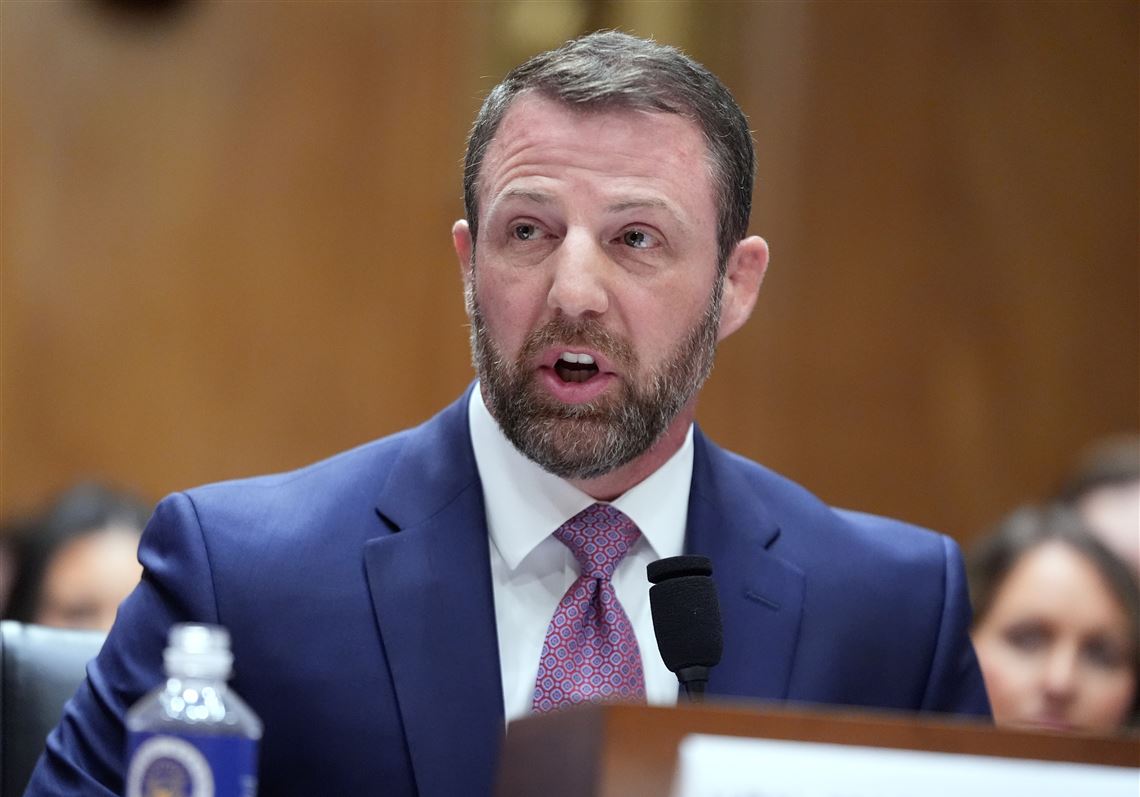
The atmosphere inside the Senate hearing room was already tense when Senator Markwayne Mull.i.n turned toward Bern.i.e Sanders with a smile that immediately attracted attention from lawmakers seated nearby.
Mull.i.n appeared confident, speaking with the kind of sharpness that suggested he was prepared for another heated political exchange.
Across the table, Sanders remained relatively still, his hands resting beside a thick stack of papers and several handwritten notes.
The disagreement had been building around a familiar subject: the growing gap between corporate executive compensation, ordinary workers’ wages, and the rising cost of American healthcare.
Mull.i.n questioned Sanders’ criticism of corporate America, arguing that businesses operated in a competitive environment and that executive compensation reflected responsibility, performance, and market conditions.
“Senator Sanders, I think sometimes you make this sound much simpler than it actually is,” Mull.i.n remarked.
He continued, suggesting that criticizing successful businesses was considerably easier than explaining how companies should operate in an increasingly competitive economy.
A few people around the room smiled.
Mull.i.n appeared comfortable with the direction of the conversation.
But Sanders was not smiling.
He looked directly at Mull.i.n, waited for the senator to finish, and slowly adjusted the papers in front of him.
“Well, Senator Mull.i.n, I appreciate your explanation,” Sanders began.
“But I would like to talk about the people who actually make these companies successful.”
Mull.i.n leaned back.
“Go ahead.”
Sanders lifted one sheet of paper.
“Let’s start with compensation.”
He paused.
“When a chief executive receives tens of millions of dollars in annual compensation, nobody seems particularly concerned about whether that person can afford groceries.”
The room became quieter.
“But when an ordinary worker asks for a higher wage, suddenly we’re told that the company cannot afford it.”
Mull.i.n immediately responded.
“That’s not how the economy works, Senator.”

Sanders looked at him.
“Then explain it to the workers.”
The exchange became more direct.
Sanders argued that Americans working full-time should not have to struggle to afford basic necessities while executives and shareholders benefited from enormous financial rewards.
Mull.i.n challenged the comparison, emphasizing that executive compensation and employee wages were determined by different responsibilities and economic considerations.
“You’re comparing two completely different positions,” Mull.i.n said.
Sanders shook his head.
“I’m comparing two people working in the same economy, Senator.”
He placed the paper on the table.
“One person can receive an extraordinary compensation package, while another person working forty hours a week worries about whether their paycheck will cover the rent.”
Mull.i.n interrupted.
“Businesses have expenses. They have employees, investments, equipment, and responsibilities. You can’t simply take money from one place and put it somewhere else.”
Sanders responded immediately.
“Nobody is saying that businesses have no expenses.”
He leaned closer to the microphone.
“I’m asking why the people who produce the wealth are so often the people who struggle the most to afford the necessities of life.”
Several lawmakers began taking notes.
Sanders turned another page.
“And healthcare is perhaps the clearest example.”
The discussion shifted toward insurance premiums, deductibles, prescription medication, and the financial pressure experienced by American families.
Sanders described a situation in which workers could hold full-time jobs and still face enormous medical bills.
He questioned why healthcare remained financially difficult for so many households despite the enormous resources available within the American economy.
Mull.i.n pushed back.
“Senator, you’re talking about healthcare as though there is one simple solution. That’s not realistic.”
Sanders answered without raising his voice.
“I have been discussing this issue for decades. I understand that there are complicated questions.”
He paused.
“But I also understand something very simple.”
He looked directly at Mull.i.n.
“When someone becomes seriously ill, they should be worried about getting better, not about whether they are going to lose their house.”
The room became noticeably quieter.
Mull.i.n shifted his position and began explaining his concerns about government involvement, insurance competition, and the financial consequences of expanding federal healthcare programs.
Sanders listened.
Then he raised another question.
“Senator, let me ask you something.”
Mull.i.n nodded.
“If a company can afford to reward its highest executives with extraordinary compensation, why is it so difficult to discuss making healthcare more affordable for the people working inside that company?”
Mull.i.n responded that executive pay was determined by corporate governance and market conditions, while healthcare financing involved a much broader system.
Sanders acknowledged the distinction.
But he returned to the central issue.
“That is precisely why we’re here. Because the system is complicated, and ordinary Americans are paying the price.”
The discussion continued.
Mull.i.n argued that government policies could create unintended economic consequences, particularly when businesses faced higher labor and healthcare expenses.
Sanders countered that the existing arrangement also carried substantial consequences, especially for workers who struggled with medical costs and stagnant wages.
Neither senator appeared willing to retreat.
Then Mull.i.n made another pointed remark about Sanders’ longstanding criticism of wealthy executives and large corporations.
“Senator, you’ve spent a lot of time criticizing successful people. At some point, shouldn’t we also talk about how to create more successful businesses?”
Sanders looked up.
“Absolutely.”
He paused.
“But successful businesses should not require unsuccessful lives for the people working in them.”
The statement brought the conversation back to the human consequences of economic policy.
Sanders began discussing the difference between corporate profitability and the financial security of ordinary employees.
He argued that economic growth should be evaluated not only through stock market performance, but also through wages, housing affordability, access to healthcare, and the ability of working families to save money.
Mull.i.n disagreed with the implication that corporate success necessarily came at the expense of employees.
He emphasized that private businesses created jobs, developed products, and supported communities through investment and economic activity.
Sanders acknowledged those contributions.
Then he asked whether those benefits were being distributed fairly.
“Senator Mull.i.n, nobody is suggesting that every successful business is doing something wrong.”
He turned another page.
“But if the economy is performing so well, why are so many working families still struggling to pay for healthcare?”
Mull.i.n began responding.
Sanders continued.
“Why are so many people worried about prescription medication? Why are families delaying medical appointments because they cannot afford the bill?”
The senator stopped for a moment.
“And why is it considered unreasonable to ask whether the wealthiest corporations and individuals should contribute more toward solving these problems?”
Mull.i.n answered that higher taxes and additional regulation could affect investment and economic growth.
Sanders challenged that argument, insisting that the country had to consider the cost of leaving families without affordable access to medical treatment.
The disagreement had become more than a debate about corporate salaries.
It was now a confrontation over what economic success should actually mean.
For Mull.i.n, the central concern was maintaining a competitive business environment while avoiding policies that could create additional financial burdens.
For Sanders, the central concern was ensuring that economic prosperity translated into meaningful improvements in ordinary people’s lives.
The chairman eventually attempted to move the discussion toward the next topic.
But Sanders requested one final opportunity to make his point.
He gathered his papers, looked toward Mull.i.n, and spoke slowly.
“Let me leave you with one question.”
Mull.i.n turned toward him.
“Go ahead.”
“Do you believe that someone working full-time in the United States should be able to afford basic healthcare without facing financial disaster?”
Mull.i.n answered that he supported affordable healthcare but disagreed with Sanders’ preferred approach to achieving it.
Sanders nodded.
“Then perhaps we should begin by agreeing that the problem deserves more than another argument about political philosophy.”
The exchange continued briefly before the hearing moved forward.
There was no established finding of wrongdoing, no sudden criminal revelation, and no documented collapse of the proceedings.
But the disagreement illustrated a fundamental division in American politics: whether economic policy should primarily protect market flexibility or place greater emphasis on the financial security of workers and their families.
As the senators gathered their documents, Mull.i.n continued speaking with colleagues.
Sanders remained focused on his notes.
The cameras kept recording.
And somewhere beyond the hearing room, millions of American workers continued facing the same questions that had dominated the discussion.
How much should executives earn?
Who should pay for healthcare?
And what should happen when working hard is still not enough to guarantee a financially secure life?
The hearing had moved on, but those questions had not disappeared.
Because the most uncomfortable part of the debate was perhaps not how much America’s largest corporations could afford to pay their executives — but how many ordinary workers still could not afford to get sick.
