
“Maybe you should talk to your boss!” — Jasmine Crockett challenges Pam Bondi’s Tesla warning and exposes Trump’s January 6 pardons
A warning from Attorney General Pam Bondi turned into a confrontation about political speech, federal law enforcement, and Donald Trump’s presidential pardons.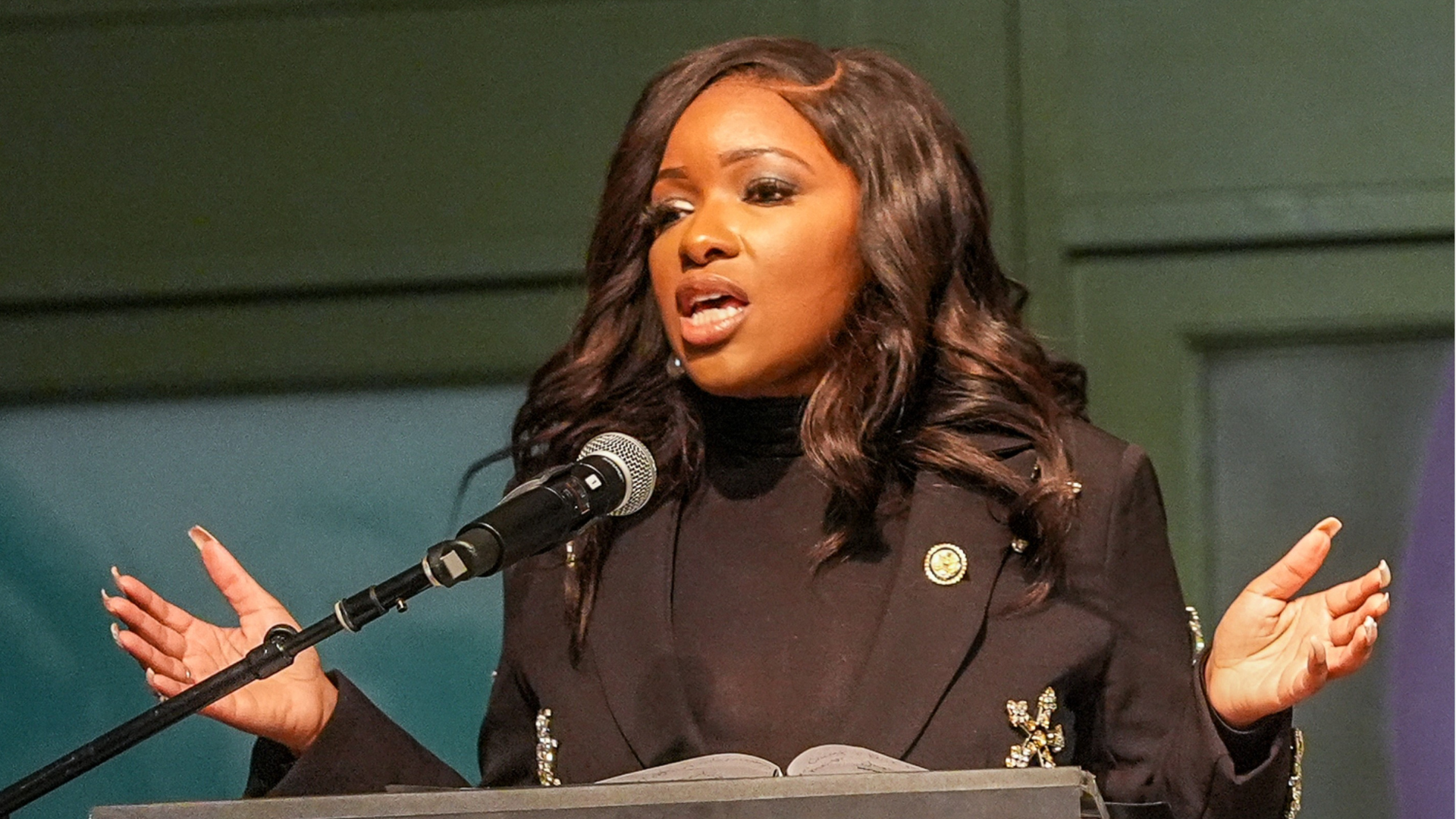
On March 23, 2025, Bondi publicly cautioned Democratic Representative Jasmine Crockett over remarks supporting protests against Elon Musk and Tesla.
Her warning was direct and unmistakable.
“Tread very carefully.”
Bondi argued that political rhetoric surrounding Tesla had become dangerous amid reports of vandalism, arson, and threats against company property.
But Crockett refused to accept the suggestion that supporting demonstrations meant endorsing attacks or intimidation.
Appearing on MSNBC shortly afterward, the Texas congresswoman defended her support for nonviolent protest and rejected allegations that she promoted violence.
Then she redirected the controversy toward President Donald Trump.
“So Pam Bondi, if you have an issue with terrorism, maybe you should talk to your boss about locking back up those guys that he let out that participated in January 6.”
The response introduced a different question about political consistency.
Why was the attorney general publicly warning a congresswoman over protest rhetoric while serving a president who had granted sweeping clemency to January 6 defendants?
The exchange quickly became about more than Tesla, Musk, or a single politician’s choice of words.
It raised questions about the distinction between lawful demonstrations and criminal attacks, the boundaries of political speech, and the treatment of politically motivated violence.
The most consequential detail was that both politicians were responding to real events, but they were emphasizing different conduct.
And the documents surrounding the controversy reveal exactly where their arguments diverged.
RealClearPolitics+2
1. The Tesla protest that triggered Bondi’s warning
The controversy began with growing demonstrations against Elon Musk and his prominent role in the Trump administration.
Musk had become closely associated with the Department of Government Efficiency, an initiative intended to reduce federal spending and restructure government operations.
His involvement attracted criticism from opponents concerned about federal workforce reductions, agency restructuring, and the influence of private business leaders.
One response was the Tesla Takedown movement, which organized demonstrations targeting the company’s public image and commercial performance.
Organizers encouraged participants to protest outside dealerships, reconsider Tesla ownership, and express opposition through lawful economic pressure.
A major nationwide day of action was planned for March 29, 2025, with hundreds of demonstrations anticipated.
Crockett participated in a virtual event supporting the movement shortly before the planned demonstrations.
During the event, she expressed a desire to see Musk politically and financially challenged through the campaign.
Her reference to Musk being taken down attracted attention because the language could be interpreted differently when separated from its surrounding explanation.
Crockett explicitly described the effort as nonviolent and said participants should not engage in attacks or property destruction.
Her support centered on protests and consumer decisions intended to put economic pressure on Tesla and its leadership.
However, the demonstrations occurred against a backdrop of genuine criminal incidents involving Tesla facilities and vehicles.
Federal authorities were investigating attacks involving incendiary devices, vandalism, and damage to company property.
That context became central to Bondi’s response.
The attorney general argued that public officials needed to exercise caution when speaking about a movement associated in public debate with escalating hostility.
But the existence of criminal attacks did not independently establish that Crockett had encouraged them.
The distinction between the movement’s stated nonviolent activities and separately investigated crimes would become the most important issue in the dispute.
2. Pam Bondi warns Crockett as the Justice Department announces serious charges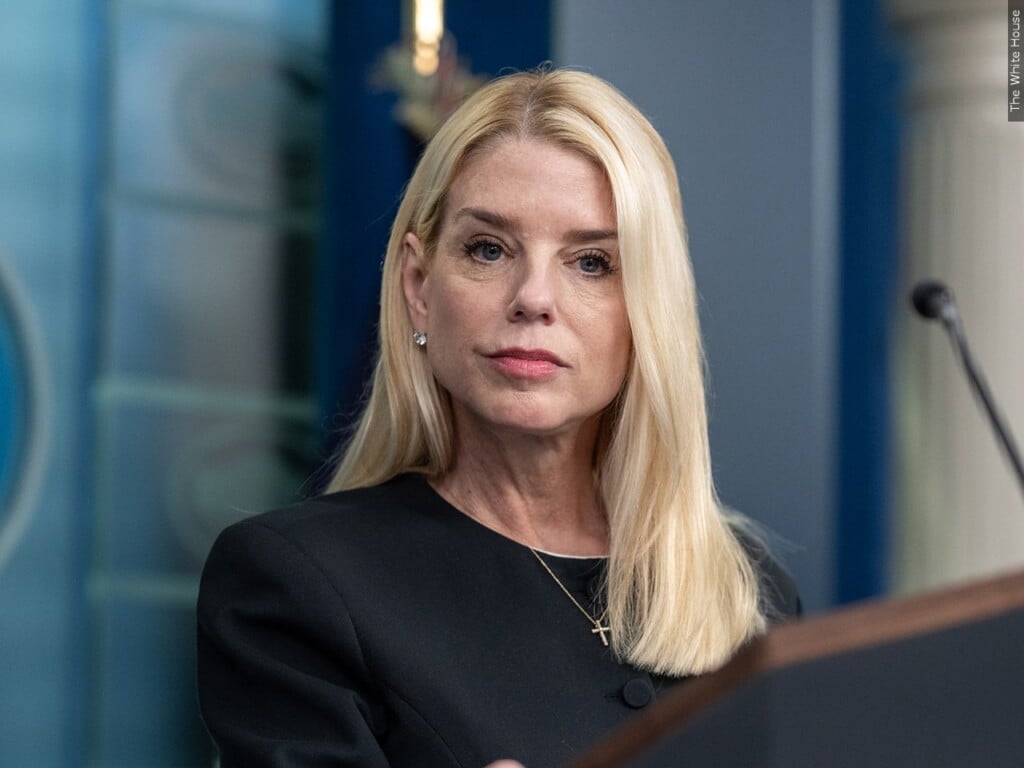
Before Bondi publicly warned Crockett, the Justice Department had already announced federal charges involving attacks on Tesla property.
On March 18, 2025, Bondi issued a statement describing recent violent attacks against Tesla facilities as domestic terrorism.
The department said investigators were pursuing those responsible, including possible participants in planning or financing criminal activity.
Two days later, on March 20, the Justice Department announced charges involving three individuals accused of attacking Tesla property.
The allegations involved incendiary devices used against vehicles and charging equipment in Oregon, Colorado, and South Carolina.
The department described serious penalties that could follow convictions under the relevant criminal statutes.
These were specific allegations involving alleged criminal behavior, not merely participation in political demonstrations.
The distinction matters because setting property on fire can expose people to injury and constitutes conduct fundamentally different from peaceful picketing.
Bondi defended the department’s response as necessary to protect Tesla owners, employees, businesses, and members of the public.
On March 23, appearing on Fox News, she turned her attention directly toward Crockett.
Bondi warned the congresswoman to exercise caution and said the government would protect Musk and Tesla owners.
Her language suggested concern that heated political rhetoric could contribute to an increasingly dangerous environment surrounding the company.
Critics interpreted the warning as an attempt to intimidate an elected official who had publicly endorsed lawful political opposition.
Supporters of Bondi’s position viewed her remarks as a warning against rhetoric that might be interpreted as encouraging violence.
Those interpretations reflected a real disagreement about the relationship between public speech and unlawful conduct.
But neither interpretation eliminated the importance of examining Crockett’s actual words in their original setting.
The Justice Department’s March 20 announcement identified specific alleged arson offenses, while Crockett’s stated position supported nonviolent protest.
The key evidentiary question was whether any statement by Crockett amounted to encouragement of criminal activity rather than protected political advocacy.
United States Department of Justice+2
3. Crockett responds on MSNBC and rejects the accusation of supporting violence
Crockett’s response came during an MSNBC interview with host Alex Witt on March 23, 2025.
Witt asked the congresswoman about Bondi’s warning and the controversy surrounding her support for the Tesla Takedown movement.
Crockett responded by emphasizing the difference between supporting demonstrations and encouraging violence against individuals or businesses.
She insisted that her political position had been misrepresented by critics who focused on isolated portions of her remarks.
Her defense was rooted in the distinction between lawful political opposition and criminal conduct.
Crockett maintained that participants should follow local laws and exercise their constitutional rights without engaging in violence.
She also said she welcomed the financial pressure being placed on Tesla as consumers and protesters responded to Musk’s political activities.
That statement reflected her opposition to Musk’s role in the administration, not an endorsement of attacking company property.
The distinction became particularly important because Bondi’s warning had placed Crockett’s rhetoric within the broader context of criminal incidents.
Crockett rejected the connection and argued that the administration was attempting to discourage criticism through public warnings.
When Witt asked what the attorney general’s caution meant, Crockett said she interpreted it as an attempt to intimidate her into silence.
She broadened her criticism to include the administration’s treatment of legal challenges, judges, and political opponents.
Those were Crockett’s political accusations, not findings established by the interview itself.
Nevertheless, her response directly challenged the implication that her endorsement of economic protests should be treated like support for destructive attacks.
The exchange then reached its decisive political turning point.
Instead of continuing to defend only her own remarks, Crockett introduced the administration’s response to the January 6 Capitol attack.
Her comparison redirected attention toward the attorney general’s responsibility to enforce federal law consistently.
And it put President Trump’s presidential clemency decisions at the center of the argument.
RealClearPolitics+1
4. The January 6 pardons become Crockett’s central challenge to Trump
Crockett’s response drew upon one of the most consequential actions Trump took when he returned to the presidency.
On January 20, 2025, Trump issued a proclamation granting sweeping clemency to defendants connected with the January 6, 2021, Capitol attack.
The proclamation commuted the sentences of fourteen named individuals and granted broad pardons to others convicted of offenses connected with the events.
It also directed the attorney general to pursue dismissal of remaining pending charges involving conduct associated with January 6.
The order was publicly available through the White House, providing a specific presidential action against which Crockett framed her criticism.
Trump characterized the clemency decision as an effort to correct injustices and promote national reconciliation.
Critics objected that the sweeping action also benefited defendants convicted of serious offenses, including crimes involving violence.
That disagreement became central to Crockett’s response because Bondi had emphasized the need for severe consequences for attacks against Tesla.
Crockett questioned the consistency of such language when the president had recently extended clemency to January 6 defendants.
Her argument did not require showing that the Tesla incidents and the Capitol attack were legally identical.
Instead, she challenged what she perceived as a difference in the administration’s willingness to emphasize punishment across politically charged situations.
The comparison involved an important legal distinction.
A presidential pardon does not necessarily establish that the person receiving it was innocent or that the underlying conduct was lawful.
Rather, the Constitution gives presidents broad authority to grant clemency for federal offenses, subject to constitutional limits.
That authority can be exercised even when a person’s conviction involved serious criminal conduct.
Likewise, an attorney general’s decision to investigate suspected arson does not become unlawful merely because a president granted clemency in unrelated cases.
The more precise question concerns the political and institutional consistency of the administration’s approach to accountability.
Crockett suggested that Bondi should address Trump’s clemency decisions before accusing her of promoting dangerous behavior.
Bondi’s argument concerned preventing and prosecuting attacks against Tesla property.
Crockett’s response concerned whether similar public concern about violent conduct had informed the administration’s treatment of January 6 defendants.
The confrontation therefore involved two different government powers: the Justice Department’s responsibility to prosecute crimes and the president’s constitutional authority to grant clemency.
Neither power eliminated the need to examine the specific facts and legal circumstances involved.
But placing them side by side exposed the central disagreement that made Crockett’s response politically significant.
The White House+1
5. Bondi escalates the dispute by demanding an apology
The confrontation did not conclude with the two politicians’ competing television appearances on March 23.
On March 24, Bondi publicly renewed her criticism of Crockett and demanded an apology.
Appearing on Fox News, the attorney general argued that Crockett’s rhetoric was encouraging violence and should be unequivocally condemned.
Bondi also called for an apology to Texans, Americans, and Tesla shareholders who could be affected by the controversy.
Her new remarks represented a significant escalation from the earlier warning.
Instead of merely urging caution, Bondi accused Crockett of contributing to a dangerous political environment.
That accusation was disputed by Crockett’s explicit statements supporting nonviolent demonstrations.
The underlying issue was whether rhetoric aimed at economically damaging a company could reasonably be connected to unrelated criminal attacks.
The distinction is important because public criticism, boycotts, and lawful demonstrations are ordinarily protected forms of political expression.
Property destruction, threats of unlawful violence, and arson are different forms of conduct that can trigger criminal liability.
Determining whether a particular statement crosses a legal boundary depends on its content, context, and the relevant constitutional standards.
Under established First Amendment principles, advocacy of political change cannot automatically be punished simply because the language is aggressive or unpopular.
The Supreme Court’s incitement doctrine generally requires advocacy directed toward producing imminent unlawful action that is likely to occur.
That framework makes context especially important when examining a phrase describing a public figure being politically or economically defeated.
Crockett’s surrounding statements emphasized lawful protest, while Bondi focused on the potential danger created by increasingly hostile rhetoric.
Their disagreement therefore could not be resolved simply by isolating the most confrontational sentence from either television appearance.
It required comparing the actual statements, the separately documented attacks, and the available evidence linking particular speakers to illegal conduct.
Bondi’s demand also gave the controversy a more concrete consequence.
The attorney general had publicly challenged an elected member of Congress to apologize for speech the congresswoman maintained was protected and nonviolent.
Yet the reporting examined does not establish that Crockett was charged with a crime for her participation in the Tesla Takedown event.
Nor does it establish that she organized, financed, or instructed anyone to carry out the attacks identified by the Justice Department.
Those evidentiary limitations matter because allegations of promoting political violence have implications extending beyond ordinary partisan disagreement.
The renewed demand intensified the public dispute, but it did not establish a criminal connection between Crockett’s advocacy and the attacks.
The Independent+2
6. The criminal cases reveal why peaceful protest and property attacks must remain separate
The most important documentary evidence behind Bondi’s concern was the Justice Department’s announcement concerning suspected attacks on Tesla facilities.
Federal prosecutors described incidents involving incendiary devices, damaged vehicles, and other conduct potentially endangering people and property.
Those allegations were serious enough to justify criminal investigations and, where supported by sufficient evidence, prosecution through the courts.
However, the documents did not establish that every person participating in Tesla Takedown demonstrations was involved in criminal activity.
They also did not demonstrate that the nationwide protest movement had collectively authorized or coordinated the violent incidents.
This distinction is essential when assessing both Bondi’s warning and Crockett’s response.
A political movement can organize lawful demonstrations while separate individuals commit crimes against businesses associated with the same controversy.
The existence of the crimes does not automatically establish responsibility among people who participated only in legal political advocacy.
Likewise, peaceful protesters cannot excuse vandalism or arson merely because they share the perpetrators’ opposition to a public figure.
Both propositions can be true without contradiction.
Federal authorities have a responsibility to investigate serious attacks, and citizens retain the right to protest governmental policies and corporate conduct peacefully.
Later criminal proceedings further demonstrated that the violence surrounding Tesla was not simply an abstract political accusation.
In February 2026, a defendant in Nevada pleaded guilty to offenses involving arson and weapons connected with a March 2025 attack.
In October 2026, the Justice Department reported that he had received a five-year prison sentence for the attack on a Tesla facility.
That case provided a concrete example of criminal accountability for destructive conduct.
It did not, however, establish a connection between the defendant’s actions and Crockett’s statements during the earlier protest event.
The distinction reinforces why individual responsibility must be established through evidence rather than assumed from broad political associations.
Bondi’s concerns about attacks against Tesla property addressed genuine incidents requiring law enforcement attention.
Crockett’s defense concerned her own political speech and her stated support for peaceful demonstrations.
The two positions addressed overlapping circumstances but different questions of responsibility.
And their disagreement over those questions explains why the January 6 comparison became so consequential.
United States Department of Justice+2
7. The final consequence: a warning about Tesla becomes a broader argument over equal accountability
The dispute began with Crockett’s support for a protest movement opposing Musk’s political influence and Tesla’s commercial interests.
It escalated when Bondi warned the congresswoman about her rhetoric amid investigations into attacks against Tesla vehicles and facilities.
Crockett rejected the implication that she supported violence and argued that the administration was attempting to intimidate political critics.
She then invoked Trump’s January 6 clemency proclamation to question the consistency of the attorney general’s public position.
Bondi responded by demanding an apology and continuing to associate Crockett’s rhetoric with the broader atmosphere surrounding attacks on Tesla.
The decisive distinction was between the actions each politician could document and the broader conclusions each wanted the public to draw.
Bondi could point to criminal investigations and federal charges involving serious attacks against Tesla property.
Crockett could point to her own nonviolent protest statements and the official presidential proclamation granting extensive January 6 clemency.
Those records supported different parts of the dispute without establishing every accusation made during the television exchanges.
There is no need to attribute a private confrontation, secret admission, or undocumented legal finding to either politician to understand the controversy.
The public statements, criminal charging documents, and presidential clemency order provide a sufficiently clear account of what happened.
The conflict also reveals why comparisons involving politically motivated violence require precision.
The January 6 attack involved criminal offenses committed during an attempt to disrupt the certification of a presidential election.
The Tesla incidents involved attacks against commercial property amid protests concerning Musk’s relationship with the administration.
Those circumstances were not identical, and the legal consequences depended on individual conduct and applicable law.
Yet Crockett’s comparison raised a recognizable question about how political leaders discuss accountability when different groups are involved.
Bondi emphasized protecting people and businesses from criminal destruction.
Crockett emphasized protecting lawful protest while questioning the message conveyed by Trump’s sweeping pardons.
The argument therefore concerned both the enforcement of criminal law and the political meaning of presidential decisions.
Importantly, the attorney general’s authority to prosecute offenders and the president’s authority to grant clemency operate through separate constitutional mechanisms.
That separation prevents a simple conclusion that one government’s decision automatically invalidates the other.
Nevertheless, the administration’s decisions remain legitimate subjects for public debate, congressional scrutiny, and questions about consistency.
The final development was Bondi’s March 24 demand for an apology, which showed that Crockett’s television response had not ended the disagreement.
Bondi continued challenging the congresswoman’s language, while Crockett’s earlier statements remained a public rejection of any association with violence.
No verified exchange establishes that either politician persuaded the other to change her position.
Instead, the confrontation produced a documented disagreement over political advocacy, criminal accountability, and presidential clemency.
Crockett’s response shifted the spotlight from her protest rhetoric to Trump’s January 6 pardons, but it did not resolve the legal questions surrounding Tesla attacks.
The lasting issue was whether the government could protect people from political violence without treating peaceful opposition as evidence of criminal wrongdoing.
That distinction was the most consequential question left by the confrontation, extending beyond Crockett, Bondi, Trump, or Tesla.
The controversy ended without a concession, but with a clear test of principle: criminal acts require evidence and accountability, while peaceful political protest remains protected.
