
Michelle Obama and John Kennedy: The Viral Lawsuit Story Raises Questions About Political Accountability
A dramatic story circulating across social media claims that former First Lady Michelle Obama filed a defamation lawsuit against Republican Senator John Kennedy, only for a surprise witness to undermine her case in a matter of seconds. The narrative promises a courtroom confrontation, a decisive jury verdict and an extraordinary legal reversal. Yet the most important detail is missing: credible evidence that the lawsuit ever took place.
The story has been repeated in different versions, often with increasingly elaborate descriptions of alleged courtroom testimony. Some posts refer to a multimillion-dollar claim, while others introduce a witness identified as Thomas Riley, whose supposed testimony is presented as the decisive moment in the proceedings. The accounts describe a trial that ended in Kennedy’s favor, but they do not provide the basic information needed to establish that such a trial occurred.

No verifiable court docket, authenticated transcript or judicial ruling has been identified to substantiate the central claims. Nor has reliable independent reporting confirmed that Michelle Obama brought the alleged defamation action against the senator. Without those records, the supposed testimony and courtroom verdict cannot responsibly be presented as facts.
The story nevertheless touches on a genuine issue in American political life: the legal boundaries surrounding public criticism of prominent political figures. Members of Congress regularly make forceful statements about public institutions, charitable organizations, political opponents and individuals who occupy positions of influence. Such statements can generate controversy, but controversy alone does not establish defamation.
Under American law, defamation claims generally require a plaintiff to demonstrate that a false statement of fact was published to another person and caused legally recognizable harm. When the plaintiff is a public official or public figure, the constitutional standard is particularly demanding. In many circumstances, the plaintiff must establish that the speaker acted with actual malice, meaning knowledge that the statement was false or reckless disregard for whether it was true.
That standard reflects a central principle of American constitutional law: political debate must leave considerable room for criticism, even when the language is harsh or deeply unpopular. The protection does not give public figures unlimited permission to make false factual accusations. It does, however, recognize that public discussion would be seriously restricted if every disputed political statement automatically became grounds for a successful lawsuit.
This distinction is especially important when social media turns legal language into entertainment. A headline announcing that a case has been dismissed may sound definitive, but an actual dismissal requires a court order or another documented legal outcome. A claim that a witness changed the course of a trial requires a transcript, reliable reporting or other evidence establishing what happened.

The absence of those details is not a minor technical problem. It goes to the heart of whether the event existed in the first place.
John Kennedy, the Republican senator from Louisiana, is widely known for his sharp questioning and distinctive public speaking style. His political remarks frequently attract attention, particularly when he challenges officials or criticizes government spending and institutional decisions. That public profile makes him a natural subject for viral political content, but it does not establish that every dramatic confrontation attributed to him actually happened.
Michelle Obama, meanwhile, remains a prominent public figure whose political influence and public appearances continue to attract national attention. Her position as a former First Lady has made her a frequent subject of political commentary, praise and criticism. However, her public prominence should not be used as a substitute for evidence when claims are made about her legal actions.
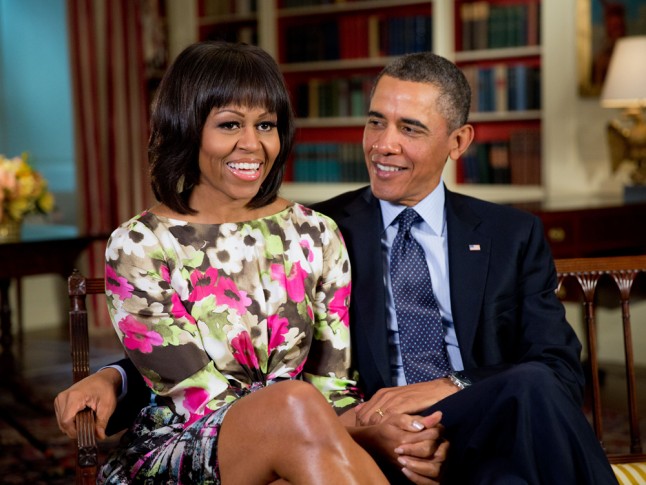
The alleged case illustrates how fabricated courtroom narratives can borrow the language and structure of genuine legal reporting. References to testimony under oath, surprise witnesses, jury deliberations and final judgments create an impression of documentary certainty. Yet without identifiable court records, those details remain elements of an unverified story.
Readers can evaluate such claims by asking a few basic questions. Which court heard the case? What was the docket number? Who represented the parties? Was a complaint filed, and where can the judgment be examined? If a story describes a major public trial but cannot supply these details, its dramatic presentation should not be mistaken for reliable reporting.
There is also a broader responsibility for political commentators and publishers. Public debate depends on the ability to challenge powerful individuals and institutions, but it also depends on an accurate account of what those individuals have actually said and done. Invented legal victories and fictional courtroom exchanges can distort public understanding just as easily as misleading political statements.
For now, the alleged Michelle Obama lawsuit against John Kennedy, the supposed testimony from Thomas Riley and the claimed jury victory remain unsupported by verifiable evidence. The story may continue circulating because it offers a simple and emotionally charged narrative, but repetition does not turn an allegation into a documented legal event.
The more important issue is not who supposedly won a courtroom confrontation that cannot be verified. It is whether political information shared with the public meets the basic standards of evidence, accuracy and accountability. In a media environment where a dramatic headline can travel farther than a court document, that distinction matters more than ever.
