
“One sentence changed the entire room!” — Senator John Kennedy confronts Ilhan Omar with five words that expose a deeper political disagreement
The chamber had been filled with sharp political arguments, competing accusations, and growing frustration when Senator John Kennedy finally reached for his microphone.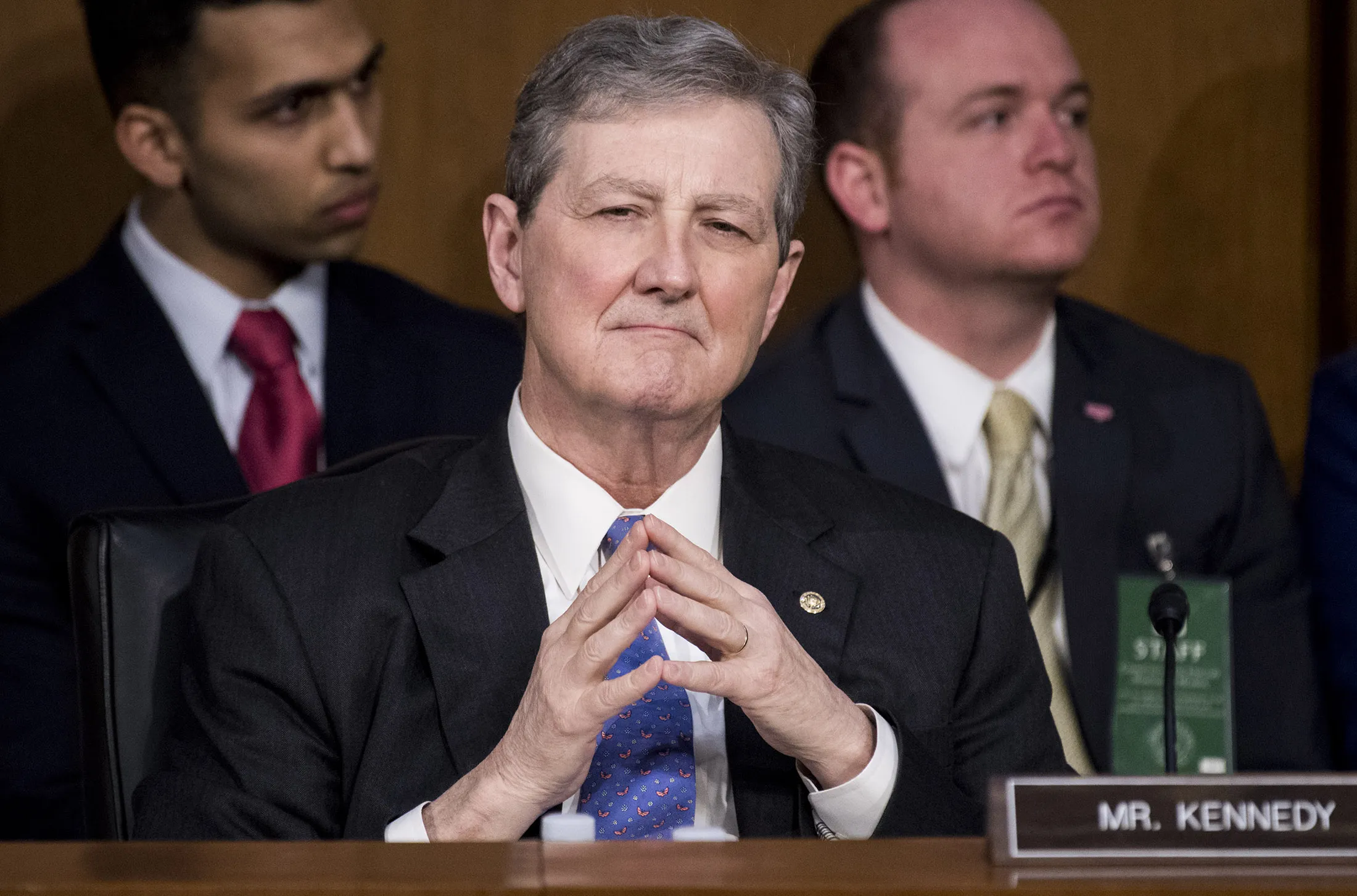
Across the room, Representative Ilhan Omar was preparing to defend her position against criticism from lawmakers who questioned her approach to congressional accountability.
The atmosphere had already become tense, but the most consequential exchange had not yet begun.
Kennedy listened as Omar challenged the way Republicans used congressional investigations to criticize political opponents without consistently applying the same standards to themselves.
Then he leaned forward.
He did not raise his voice or attempt to interrupt her with a lengthy speech.
Instead, he asked a question that brought the entire disagreement into focus.
“If your accusation is true, where is the evidence that proves it?”
Omar immediately challenged the premise, arguing that demanding accountability was not the same as claiming a court had already established wrongdoing.
But Kennedy was not finished.
He looked toward the documents on the table and delivered five words.
“A charge needs actual evidence.”
The sentence changed the direction of the confrontation because it forced both lawmakers to distinguish political criticism from a claim requiring factual proof.
Omar refused to accept that distinction as a reason to abandon congressional oversight.
Kennedy insisted that investigations should establish facts rather than begin with conclusions and search for support afterward.
The disagreement was now about something more important than either politician’s rhetorical style.
Who gets to decide when a political accusation becomes an established fact, and what happens when the evidence is incomplete?
1. The confrontation begins with a disagreement over congressional accountability
The hearing had been organized to examine how lawmakers evaluate allegations involving executive authority, government spending, and the responsibilities of public officials.
Members from both parties arrived with prepared statements, documents, and questions intended to challenge their opponents’ interpretations.
Omar argued that congressional oversight should extend to government officials regardless of which political party controlled the White House.
She emphasized that elected representatives had a responsibility to investigate concerning conduct before it became impossible to correct.
Kennedy agreed that oversight was necessary but questioned how lawmakers distinguished legitimate investigations from accusations driven primarily by partisan objectives.
His objection centered on the language used when discussing conduct that had not been conclusively established.
Omar responded that congressional investigations existed precisely because lawmakers sometimes needed to obtain evidence that executive agencies had not voluntarily provided.
The distinction appeared narrow, but its consequences were substantial.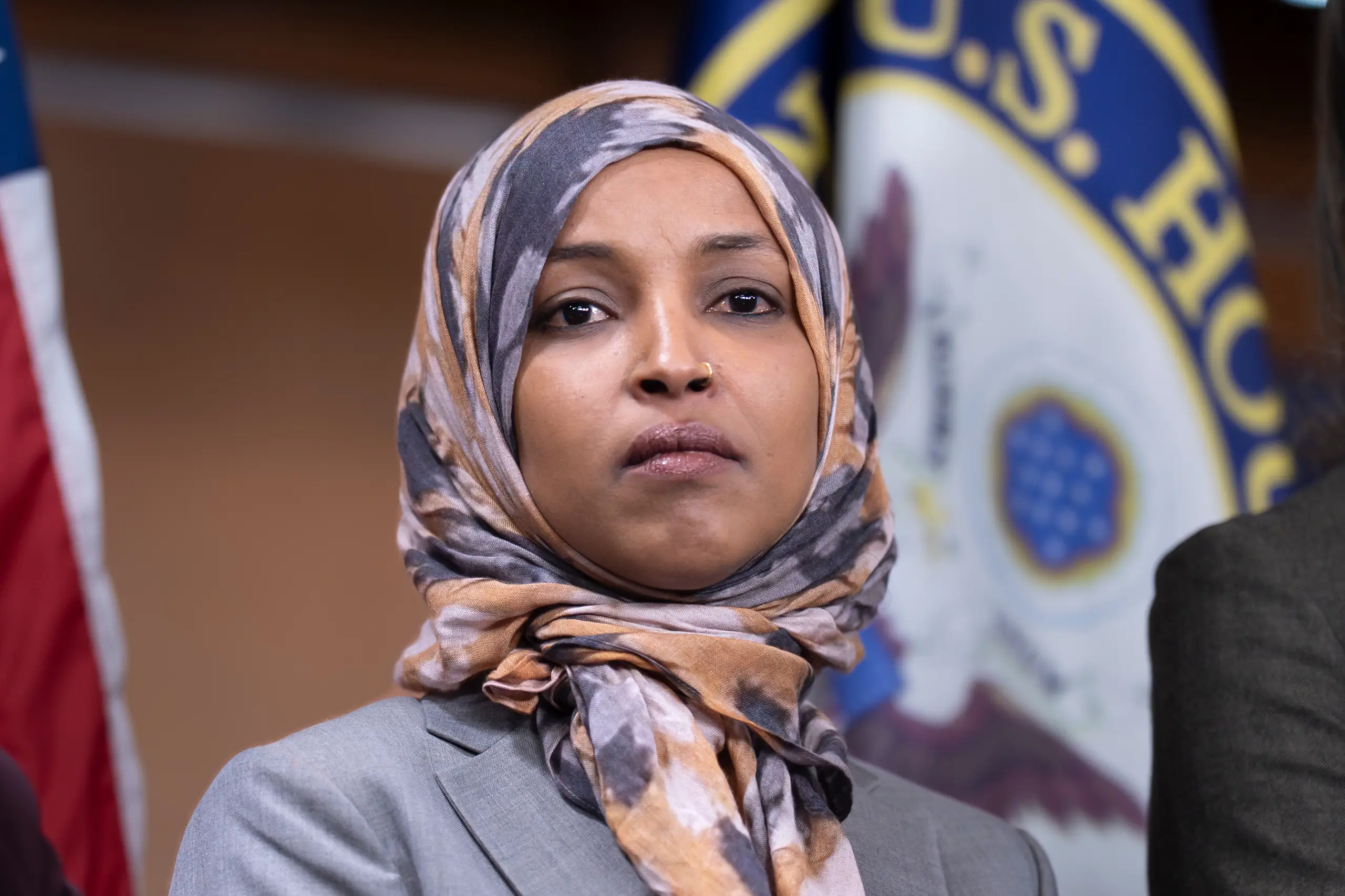
Kennedy wanted allegations clearly separated from verified findings.
Omar argued that uncertainty could justify investigation rather than silence.
Neither position automatically contradicted the other, but the politicians disagreed about how those principles should be applied.
As the exchange continued, Kennedy identified a statement in Omar’s prepared remarks that he believed went beyond the evidence presented.
He asked whether the statement represented an established finding or her interpretation of the available information.
Omar answered that it reflected her assessment and that she wanted additional records before reaching a final conclusion.
Kennedy immediately returned to the distinction.
If a statement remained an assessment, he argued, it should not be presented as though an investigation had already confirmed it.
Omar countered that his interpretation risked placing unreasonable limits on lawmakers attempting to raise legitimate concerns.
The room had moved from broad partisan disagreement into a specific question about the obligations of public officials when making serious allegations.
And Kennedy was preparing to put that question into a form that could not be avoided.
2. Kennedy’s first question forces a distinction between suspicion and proof
Kennedy placed the relevant document in front of him and returned to the microphone.
He asked whether Omar could identify a final investigative finding supporting the conclusion under discussion.
Omar explained that the available information justified further examination but did not establish every detail of the disputed conduct.
Kennedy acknowledged her answer before asking a more precise question.
“Are you asking Congress to investigate, or are you asking Americans to accept a conclusion before the investigation is finished?”
Omar replied that she was asking Congress to fulfill its responsibility to uncover information that the public deserved to understand.
She rejected the suggestion that demanding documents meant she had already determined the outcome.
Kennedy responded that his concern was not the request for records.
It was the language politicians sometimes used when communicating unresolved allegations to the public.
He argued that citizens could struggle to distinguish a pending investigation from a proven finding when lawmakers presented both with equal certainty.
Omar challenged him to explain why that principle should apply differently when Republicans were investigating Democratic officials.
The question complicated Kennedy’s argument.
He answered that the same evidentiary requirements should apply regardless of the party or political figure involved.
Omar pressed him on whether he would publicly correct members of his own party when their accusations exceeded the evidence.
Kennedy said the principle would be meaningless if it applied only to political opponents.
The answer created an opening for Omar.
She asked whether he would support requiring congressional committees to clearly identify the evidentiary status of allegations before publishing official conclusions.
Kennedy hesitated, recognizing that such a requirement could affect investigations conducted by members of both parties.
Then he returned to the central issue.
“A charge needs actual evidence.”
The five words were not proof that Omar had committed misconduct or that any separate political allegation was true.
They expressed Kennedy’s proposed standard for distinguishing an accusation from an established finding.
Omar did not abandon her argument.
Instead, she demanded that he apply the same rule to his own political allies.
That response would become the turning point of the debate.
3. Omar challenges whether Kennedy’s standard applies equally to Republicans
Omar moved away from defending her prepared remarks and began questioning the consistency of Kennedy’s proposed standard.
She argued that congressional investigations frequently begin with testimony, unanswered questions, and documents that require further examination.
If lawmakers could not discuss their concerns until every issue was resolved, she asked, how could oversight function effectively?
Kennedy distinguished discussing concerns from publicly announcing that wrongdoing had already been proven.
He maintained that Congress should be able to investigate without treating uncertainty as certainty.
Omar agreed with that narrower distinction but argued that elected officials also had an obligation to explain why investigations were necessary.
The exchange became increasingly specific.
Kennedy suggested that an allegation should be accompanied by the evidence presently supporting it and a clear acknowledgment of unresolved questions.
Omar asked whether the same practice should apply when lawmakers accused executive officials of abusing their authority.
He answered affirmatively.
She then asked whether the principle would also apply to accusations concerning members of Congress.
Again, Kennedy agreed.
That answer changed the direction of the exchange because Omar had secured a broader commitment than a defense of one particular investigation.
Kennedy’s proposed standard would restrict the language used by both parties when presenting disputed allegations.
But applying the standard consistently would require more than a verbal commitment.
Omar wanted to know who would enforce it and whether committee leadership would be willing to correct misleading public statements.
Kennedy acknowledged that congressional rules could establish expectations without guaranteeing perfect compliance by every member.
The discussion now concerned the practical limits of institutional accountability.
A procedural rule could require accurate descriptions of evidence, but it could not automatically eliminate political exaggeration.
That reality complicated the idea that one memorable sentence could resolve the entire disagreement.
Both lawmakers had identified principles they considered important.
Now they needed to determine whether those principles could produce a meaningful change.
4. A document on the table reveals the real weakness in the argument
The turning point came when a committee clerk provided both lawmakers with a draft summary of the material under discussion.
The document contained separate sections for verified records, disputed interpretations, and questions requiring additional information.
Kennedy immediately pointed toward the section identifying unresolved allegations.
He argued that the document itself demonstrated why those allegations should not be described as final conclusions.
Omar examined the summary and identified a different issue.
Several important questions remained unanswered because the committee had not yet obtained the requested records.
She argued that the absence of those materials could not reasonably be interpreted as proof that no further investigation was necessary.
Kennedy agreed that missing information could justify additional inquiries.
But he maintained that the document should describe those inquiries accurately rather than suggest they had already established misconduct.
The disagreement began shifting from abstract political rhetoric toward the specific language of an official congressional document.
Omar proposed changing the summary to identify each claim according to the evidence supporting it.
Kennedy suggested adding a separate explanation describing which conclusions remained provisional.
Both proposals would give readers more information about what the committee actually knew.
But Omar identified another potential problem.
If the committee labeled certain questions unresolved without explaining why essential documents were unavailable, readers might misunderstand the investigation’s progress.
Kennedy responded that the summary should disclose those limitations as well.
For the first time, the lawmakers were examining a practical way to improve the accuracy of the committee’s public reporting.
The document had not established that either politician was entirely correct.
It had revealed that their competing concerns addressed different weaknesses in the same process.
Kennedy wanted the committee to avoid treating allegations as proven.
Omar wanted the committee to avoid treating unanswered questions as though they had already been disproven.
The distinction mattered because both errors could mislead the public.
And the next disagreement concerned whether political leaders would accept a procedure capable of exposing those errors.
5. The confrontation becomes a test of political consistency
Kennedy proposed that future committee summaries clearly separate confirmed facts, disputed claims, and outstanding requests for information.
He argued that the approach would allow lawmakers to criticize government conduct without overstating what the available evidence established.
Omar supported greater clarity but demanded that the requirement apply equally to majority and minority members.
She warned that any system controlled exclusively by one party could become another tool for limiting political criticism.
Kennedy acknowledged that concern and suggested that the underlying documents should remain accessible to committee members from both parties.
The proposal introduced a genuine institutional complication.
Some records could involve confidentiality restrictions, national security concerns, or legally protected information.
Making every document publicly available would therefore not always be possible.
Omar argued that those restrictions made accurate summaries even more important because the public could not independently examine every source.
Kennedy agreed that the committee needed to identify relevant limitations without disclosing protected information.
But the lawmakers still disagreed about the language used in public statements outside formal committee reports.
Kennedy believed public officials should voluntarily observe the same distinction between allegations and findings.
Omar questioned whether voluntary expectations would change behavior when sensational accusations attracted substantial political attention.
Her challenge introduced a practical issue that Kennedy’s original five-word statement had not resolved.
Evidence standards might be easy to endorse in principle but difficult to enforce when political incentives favored dramatic accusations.
Kennedy responded that the difficulty of enforcing a standard did not eliminate its value.
Omar maintained that the principle needed consequences if leaders expected the public to take it seriously.
Neither politician could resolve that disagreement through another memorable phrase.
The question now required an institutional response rather than a personal rhetorical victory.
And the committee’s next action would determine whether the confrontation produced anything beyond public attention.
6. The decisive development comes from the committee’s next decision
After the exchange, the committee chair examined the competing proposals concerning the presentation of evidence.
The clerk was directed to prepare a revised summary separating established findings from allegations requiring additional verification.
The revision would also identify outstanding requests for documents and explain which questions remained unresolved.
That decision represented a limited but meaningful response to the dispute.
It did not establish wrongdoing by any public official.
Nor did it determine that every accusation discussed during the hearing lacked merit.
Instead, the decision changed how the committee would present its current understanding of the available information.
Kennedy’s concern about unproven conclusions was reflected in the requirement to distinguish allegations from verified findings.
Omar’s concern about incomplete investigations was reflected in the requirement to identify missing evidence and outstanding questions.
Both elements mattered because a report can mislead readers either by overstating a conclusion or by concealing an important limitation.
The committee also agreed to preserve the existing draft so members could compare its language with the revised version.
That created a record of what had changed and why the revision had been considered necessary.
The decision did not erase the politicians’ broader disagreements about congressional oversight.
Kennedy continued emphasizing the importance of evidentiary precision.
Omar continued emphasizing the importance of obtaining records and investigating potential abuses of authority.
But the hearing had produced something more concrete than an exchange of accusations.
A disputed document would be revised to provide readers with clearer information about the status of the committee’s findings.
That was the direct consequence of the confrontation.
The result was not a dramatic collapse of one politician’s career or an admission that every argument made by the other side was correct.
It was an institutional decision responding to a real weakness in how unresolved allegations could be communicated.
And that outcome gave Kennedy’s five words a significance beyond their immediate rhetorical effect.
7. The final consequence reveals what one sentence could and could not accomplish
The hearing ended with Kennedy and Omar still disagreeing about several aspects of congressional oversight and political accountability.
Neither had abandoned their broader positions, and neither had accepted the other’s interpretation of every disputed issue.
But the confrontation had forced them to address a question that political rhetoric often leaves unresolved.
How should Congress communicate serious allegations when some evidence is established, some remains disputed, and important information is still missing?
Kennedy’s five-word statement provided one part of the answer.
“A charge needs actual evidence.”
The sentence emphasized that accusations should not be presented as proven findings without sufficient factual support.
Omar’s response supplied an equally important challenge concerning the responsibilities of lawmakers conducting investigations.
A lack of completed findings does not automatically mean that unresolved questions should be ignored.
The revised committee document reflected both distinctions.
Verified conclusions would be identified clearly, while outstanding allegations would remain open for additional investigation.
The decision also established a practical consequence by requiring the committee to explain the evidentiary status of its claims.
That development was more meaningful than the dramatic reactions suggested by the original viral headline.
The outcome did not establish that Kennedy had ended Omar’s political career or proved that she was incapable of answering him.
It showed how a sharp confrontation could expose weaknesses in the way politicians present evidence to the public.
The debate also illustrated the limits of a single rhetorical moment.
A memorable sentence can identify a problem, but resolving that problem requires additional facts, procedures, and institutional decisions.
Kennedy’s challenge pressed Omar to distinguish her concerns from established findings.
Omar’s questions pressed Kennedy to apply his standard consistently, including when accusations came from his political allies.
Neither demand could be satisfied simply by claiming victory over the other.
The committee’s revised reporting process became the most consequential result because it addressed the substance of the disagreement.
Readers would receive clearer distinctions between facts, allegations, and unanswered questions.
Lawmakers would also face greater pressure to explain the status of evidence when presenting controversial claims.
The broader political conflict remained unresolved, but the immediate dispute had produced a measurable change.
Kennedy’s five words did not end a career; they exposed a question that every congressional investigation must confront: what does the evidence actually establish?
And Omar’s response ensured that the same question would apply to both sides of the political divide.
