
Republicans lost Congress on November 3. But instead of preparing a quiet exit, some Senate conservatives are demanding one final legislative offensive.
Their message is unmistakable: use the power they still possess before Democrats take the gavels in January.
And on the other side of Washington’s growing confrontation stands Alexandria Ocasio-Cortez, already preparing for a very different battle over presidential power.
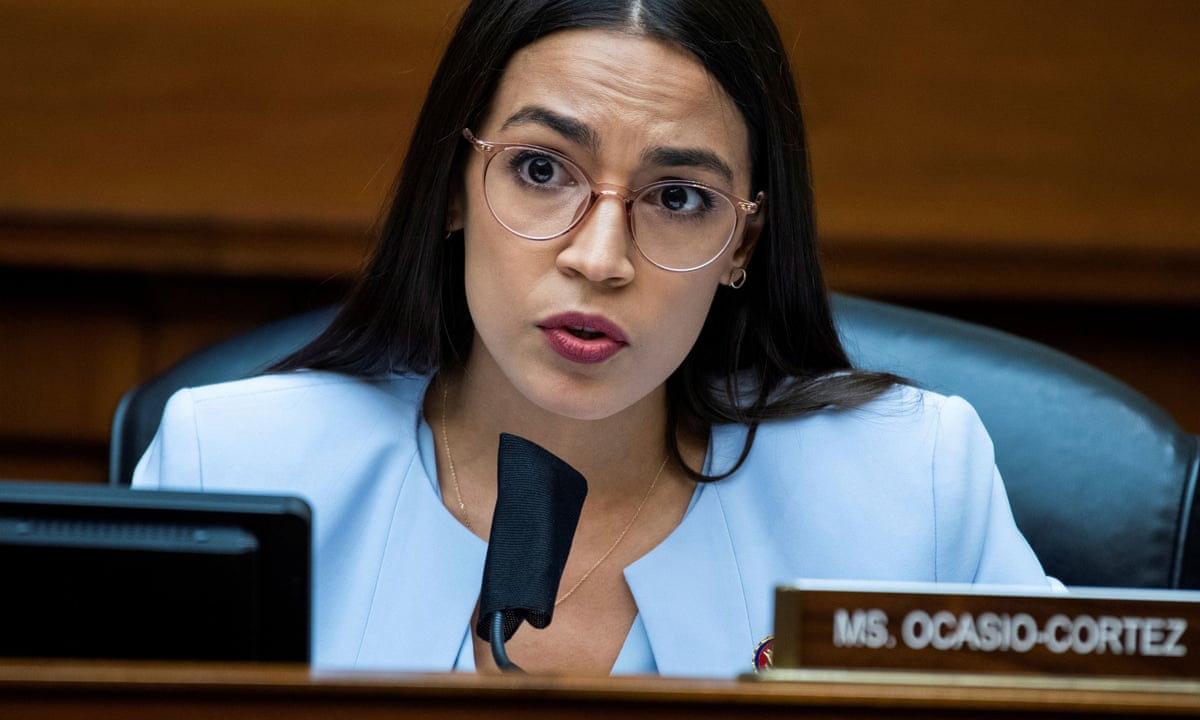
Eight words from AOC’s recent warning capture the tension ahead: “We should leave all options on the table.”
She delivered that warning during a November 10 CNN interview about possible investigations and impeachment, not as a direct response to the Republican legislative strategy.
But the competing political agendas reveal how explosive the transition could become.
For Republicans, the next several weeks represent the final opportunity to advance priorities under their existing congressional majorities.
For Democrats, January represents the beginning of a new era of committee leadership, oversight authority, and legislative control.
And neither party appears particularly interested in making the transition comfortable for the other.
The conflict began taking shape after Democrats delivered sweeping midterm victories, capturing both chambers of Congress and reshaping the balance of power.
Ordinarily, an electoral defeat of that magnitude might encourage some politicians to spend several weeks reconsidering their strategy.
Not this group of Senate Republicans.
Florida Senator Rick Scott called for lawmakers to remain at work through major holidays, including Thanksgiving, Christmas, and New Year’s.
His message was essentially a demand to replace the traditional congressional holiday schedule with an extended final push.
Louisiana Senator John Kennedy was equally determined, arguing that Republicans should pursue another reconciliation bill before their majorities disappeared.
Kennedy rejected the idea that a difficult legislative fight should be abandoned simply because success was uncertain.
“Some people worry about losing, I worry about not trying.”
That statement exposed the central disagreement inside Republican leadership.
Some lawmakers wanted to prioritize judicial confirmations and essential legislation, while others pressed for a far more ambitious final package.
Kennedy wanted additional defense funding, anti-fraud legislation, and other Republican policy priorities considered through reconciliation.
He also expressed interest in revisiting election legislation and addressing funding needs involving the nation’s aviation infrastructure.
But behind the urgency was a major procedural obstacle.
Reconciliation allows qualifying budget legislation to advance without overcoming a traditional Senate filibuster, but it does not permit lawmakers to bypass every legislative restriction.
Election-related provisions, particularly voter-identification requirements, could face significant challenges under Senate rules restricting nonbudgetary measures.
And Republicans would still need enough votes from their own members to advance the package.
That makes the proposed overtime session something more complicated than a simple race against the calendar.
It is also a race against Republican divisions, institutional rules, and the political consequences of legislation introduced after a major electoral defeat.
For Democrats, the spectacle presents a remarkable contradiction.
Voters have chosen new congressional majorities, but the outgoing lawmakers still have the legal authority to act before those changes take effect.
That is not a constitutional loophole. It is how congressional transitions operate.
Still, the political optics can be brutal when a defeated party begins discussing ambitious last-minute legislation that its incoming opponents strongly reject.
And AOC’s broader political argument makes that tension especially sharp.
Throughout the election campaign, Ocasio-Cortez criticized Republicans over living costs, housing affordability, healthcare expenses, and policies she believed favored wealthy interests.
Her message emphasized a fundamental question: whether Washington was actually making life more affordable for working Americans.
Now Democrats face an opportunity to demonstrate what their alternative governing priorities might accomplish.
But AOC’s ambitions for the coming Congress do not stop with economic legislation.
During her CNN interview, she discussed potential investigations involving members of the Trump administration, including Defense Secretary Pete Hegseth.
She suggested that Democrats could pursue extensive oversight, including subpoenas and investigations following available evidence.
When asked whether impeachment of President Trump could be considered, she refused to rule it out.
Her eight-word statement left the range of possible congressional responses deliberately broad.
That did not mean impeachment proceedings had begun, or that any allegation had already been proven.
It meant AOC wanted the incoming Congress to retain the authority to investigate alleged wrongdoing without announcing premature limits.
And that creates a striking political contrast with the Republicans demanding urgent legislative action.
One side wants to accomplish as much as possible before surrendering congressional control.
The other is preparing to use its approaching majority to scrutinize government decisions made during Republican control.
The political irony is difficult to miss.
Republicans are worried about running out of time. Democrats are preparing to take charge of the congressional timetable.
But winning an election doesn’t erase laws already passed, and obtaining investigative authority doesn’t guarantee that an investigation will uncover misconduct.
Both parties therefore face a more complicated challenge than their most dramatic public statements might suggest.
Kennedy must persuade Republican colleagues that another legislative gamble is worth the risk.

AOC and her Democratic allies must demonstrate that investigations can produce meaningful accountability rather than another endless round of partisan confrontation.
And the American public has every reason to judge both approaches against real-world results.
A holiday work schedule won’t automatically reduce grocery bills, and a televised congressional hearing won’t automatically improve household finances.
But both could become politically consequential if they produce substantial legislation or credible evidence of misconduct.
That is why the approaching transition deserves attention beyond the obvious partisan arguments.
Republicans may still be able to advance judicial nominees whose influence could extend for decades.
They may also attempt legislation affecting spending, taxation, and other policy priorities before the new Congress takes office.
Democrats, meanwhile, could inherit those decisions while launching investigations into executive-branch conduct and developing their own legislative agenda.
The resulting conflict would involve more than two parties arguing over the results of an election.
It would become a struggle over which institutions can shape federal policy, and how aggressively each party should exercise its remaining or incoming authority.
Kennedy’s demand for action and AOC’s insistence on keeping oversight options open represent sharply different approaches to that struggle.
Kennedy wants Republicans to stop behaving like a defeated majority before their term actually ends.
AOC wants Democrats to approach the next Congress without prematurely surrendering tools that could be important for accountability.
Neither position automatically establishes which party will emerge politically stronger.
That depends on what legislation advances, what investigations uncover, and whether voters believe their elected representatives are addressing the issues that matter.
The most immediate deadline belongs to Republicans. Their control of Congress will expire when the new lawmakers are seated in January.
Democrats have a different challenge: transforming an impressive electoral victory into a record that withstands scrutiny after the celebrating ends.
And there is one final irony that neither side should ignore.
Republicans could work through every holiday and still fail to pass Kennedy’s proposed package.
Democrats could launch highly publicized investigations and still struggle to convince Americans that their own economic priorities are receiving sufficient attention.
Washington’s most dramatic announcements have a habit of sounding much simpler than the work required to fulfill them.
But the stakes of the coming weeks remain unusually high.
Republicans want one last chance to shape the future before January. Democrats are preparing to exercise the power voters just gave them.
And AOC’s eight words leave the next phase of the confrontation open-ended.
Will Republicans use their final weeks to leave a lasting legislative legacy—or will January bring a much bigger political reckoning?
