
Sheldon Whitehouse and John Kennedy: The Viral Senate Showdown That Confuses Two Very Different Political Battles
A supposedly career-ending confrontation between Senator Sheldon Whitehouse and Senator John Kennedy has been circulating online, promising a devastating five-word revelation that allegedly left the Louisiana Republican speechless. The story describes a dramatic Senate encounter, a stunned audience, and a single sentence that supposedly destroyed Kennedy’s political credibility.
But the details do not match any clearly documented confrontation between the two senators. Instead, the viral narrative appears to blur together separate political episodes involving Whitehouse, John Neely Kennedy, and Robert F. Kennedy Jr.
The distinction matters because the Senate has witnessed several memorable exchanges involving these political figures, but not necessarily the one described in the circulating post.

One of the most widely reported moments involving Sheldon Whitehouse occurred on January 29, 2025, during Robert F. Kennedy Jr.’s confirmation hearing to become secretary of Health and Human Services. Whitehouse, a Democratic senator from Rhode Island, used his questioning time to challenge Kennedy over his previous public statements about vaccines and vaccine safety.
Whitehouse argued that Kennedy’s history of questioning established vaccine science had created serious public concern. He pressed the nominee to make an unequivocal commitment that he would not describe vaccines as medically unsafe when medical evidence established their safety.
Then came the sentence that attracted national attention: “Frankly, you frighten people.”
It was a short, direct criticism, delivered during a hearing that was already drawing intense attention because of Kennedy’s controversial record on public health issues. The remark became one of the most recognizable moments of the confirmation process.
However, the person Whitehouse was addressing was Robert F. Kennedy Jr., not Senator John Neely Kennedy of Louisiana. The two men share a surname, but they are different public figures with different political careers and responsibilities.
The exchange also had a substantive policy context. Whitehouse raised concerns about vaccine misinformation, the measles outbreak in Samoa, and the potential consequences of Kennedy’s views if he became responsible for federal health policy. Kennedy had previously promoted claims about vaccines that public-health authorities and scientific organizations have disputed.
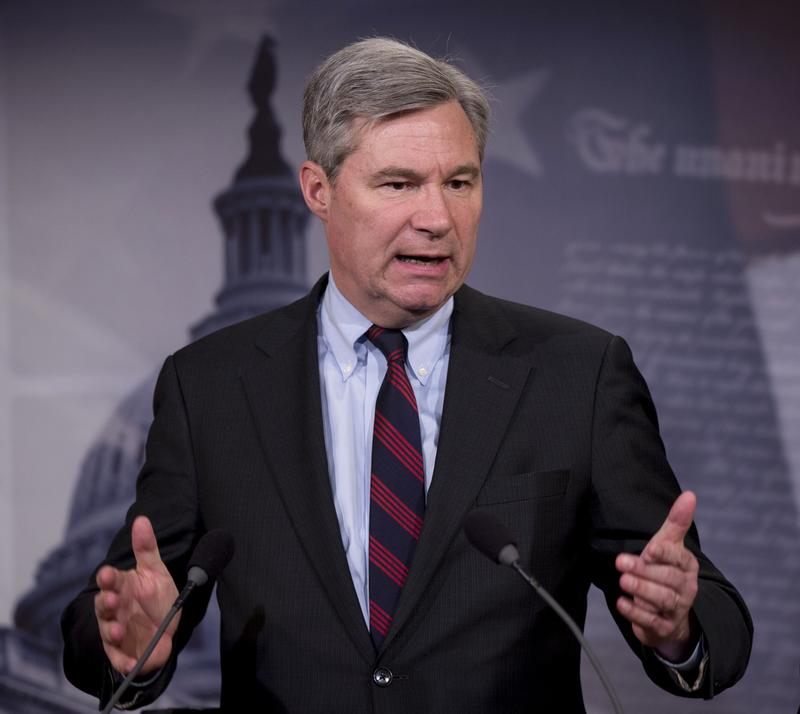
PBS NewsHour’s coverage of the hearing documented Whitehouse’s criticism and the exchange over vaccine safety. The report described the senator’s concerns about the nominee’s past statements, while also identifying the broader debate surrounding his confirmation.
The hearing was contentious, but it did not involve John Neely Kennedy being publicly humiliated by Whitehouse.
There is another historical episode that may help explain why the names have become entangled. In December 2017, John Kennedy questioned Matthew Petersen, then a nominee for a federal district court judgeship, during a Senate Judiciary Committee hearing. Kennedy asked a series of basic questions about courtroom experience and legal procedure, including whether Petersen knew what a motion in limine was.
Petersen struggled to answer several questions and acknowledged that he lacked substantial trial experience. The exchange quickly attracted national attention and became one of the most widely circulated videos involving Kennedy during that period.
Interestingly, Sheldon Whitehouse helped bring attention to the episode by sharing the video on social media. His post highlighted Kennedy’s questioning of the judicial nominee, even though Whitehouse was not the person confronting Kennedy in the hearing.
The Washington Post reported on the exchange and noted how Whitehouse’s post helped push the video into wider public circulation. The incident demonstrated that political figures can become connected to a viral controversy without actually being opponents in the central exchange.
These two documented episodes offer a plausible explanation for the confusion in the latest viral story. One involved Whitehouse criticizing Robert F. Kennedy Jr. during a confirmation hearing. The other involved John Neely Kennedy questioning a judicial nominee, with Whitehouse sharing the footage afterward.
Combining those separate events into a fictional confrontation between Whitehouse and Senator Kennedy creates a dramatic narrative, but it changes the underlying facts.
That does not mean the political disagreements between Whitehouse and John Kennedy are insignificant. Both senators have participated in major congressional debates and have served on committees dealing with issues such as judicial nominations, federal oversight, and government accountability.
In fact, the two senators have also worked together on matters of congressional oversight. In December 2022, Whitehouse and Kennedy jointly released a report examining executive privilege and the importance of congressional oversight. Their cooperation illustrated that political disagreements do not prevent lawmakers from pursuing shared institutional concerns.
Their relationship is therefore more complicated than the simple rivalry suggested by viral headlines. They belong to opposing political parties, but their congressional records include both disagreements and instances of bipartisan cooperation.
The larger lesson concerns the way political clips and social-media captions can transform separate events into a single sensational story. A memorable sentence from one hearing can be attached to the wrong Kennedy. A video from another year can be presented as evidence of a confrontation that never occurred. And an exaggerated description of a political exchange can quickly become accepted as fact when viewers do not have access to the original recording.
The real question is not whether Sheldon Whitehouse has delivered sharp criticism in the Senate. He has. Nor is it whether John Kennedy has participated in memorable and sometimes uncomfortable hearings. He has done that as well.
The question is whether the specific five-word revelation described in the viral post was actually directed at Senator John Kennedy.
The available documented episodes do not support that claim. Whitehouse’s widely reported remark, “Frankly, you frighten people,” was directed at Robert F. Kennedy Jr. during his 2025 confirmation hearing. The viral story appears to have transferred that confrontation to a different political figure.
In Washington, a single sentence can become a headline, a short video can become a national controversy, and a familiar surname can create confusion between entirely different people. But political reporting still depends on one essential principle: the identity of the person involved matters just as much as the words spoken.
