
Sheldon Whitehouse confronts Ted Cruz over T.r.u.m.p’s billionaire backers before a financial revelation challenges the Republican working class narrative
The Senate hearing room fell into an uncomfortable silence when Senator Sheldon Whitehouse placed a thick financial folder directly in front of Ted Cruz.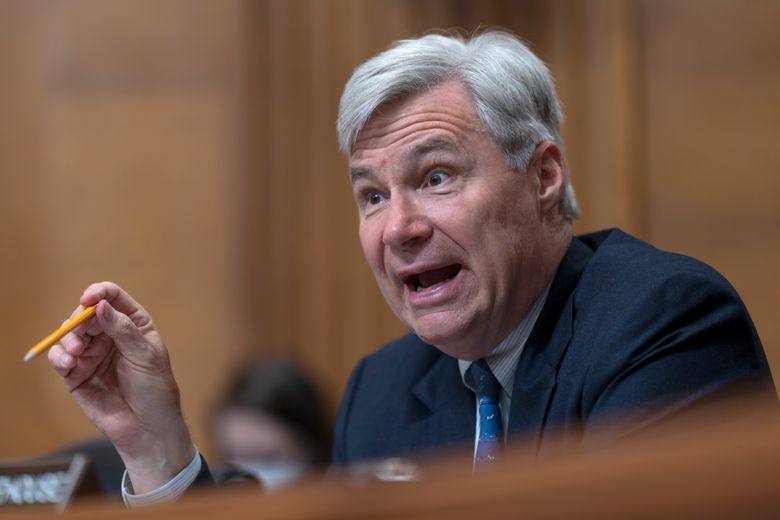
What began as a disagreement over Donald T.r.u.m.p’s economic legacy had escalated into a confrontation about billionaire donors, corporate tax reductions, and judicial influence.
Cruz had been defending conservative economic policies, arguing that lower taxes, domestic energy production, and reduced government regulation could benefit American workers.
Whitehouse had prepared a different argument, supported by congressional revenue estimates, political spending records, and documents concerning organizations involved in judicial confirmation campaigns.
But the most consequential evidence was not the enormous financial chart positioned behind the senators.
It was a single-page comparison illustrating the difference between what politicians promised working families and what their economic policies actually delivered.
Whitehouse opened the folder and directed attention toward a series of figures concerning T.r.u.m.p’s signature tax legislation.
Cruz maintained that the economic benefits of lower taxes extended beyond wealthy investors and major corporations.
Whitehouse challenged that claim, asking whether politicians should evaluate tax policy according to its intended benefits or its measurable consequences.
The confrontation would eventually reach a question about wealthy donors and political independence that neither side could resolve through campaign slogans.
The opening confrontation turns toward T.r.u.m.p’s economic legacy
Cruz began by defending the economic philosophy that shaped Republican tax policy during T.r.u.m.p’s first administration.
He argued that businesses needed competitive tax rates to encourage investment, expand operations, and create employment opportunities.
Whitehouse acknowledged that tax incentives could influence corporate decisions, but questioned whether those incentives automatically produced proportional benefits for ordinary workers.
He challenged Cruz to distinguish between economic growth forecasts and the actual distribution of benefits after legislation took effect.
Cruz maintained that policies should be evaluated through employment, wages, investment, and broader economic performance rather than isolated revenue figures.
Whitehouse agreed that those measurements mattered, but argued that federal revenue losses and distributional effects also deserved examination.
The discussion sharpened when Whitehouse introduced the Tax Cuts and Jobs Act of 2017.
The legislation reduced the federal corporate income tax rate from 35 percent to 21 percent, permanently changing the rate applicable to corporate taxable income.
Whitehouse emphasized that the corporate provision differed from many individual tax provisions enacted as part of the same legislation.
Cruz defended the reduction as an effort to improve American competitiveness and encourage businesses to invest domestically.
Whitehouse challenged whether improved competitiveness necessarily translated into increased purchasing power for every working family.
The question exposed a central disagreement between the senators.
Cruz emphasized incentives for employers and investors.
Whitehouse emphasized the relationship between those incentives and measurable outcomes for households across different income levels.
Both acknowledged that tax legislation could affect businesses, workers, investors, and federal finances in different ways.
But Whitehouse wanted to determine whether political descriptions of the legislation had adequately communicated those differences.
He turned toward the first financial document.
Its headline figure concerned the expected federal revenue consequences of T.r.u.m.p’s tax legislation.
The trillion-dollar tax estimate changes the argument
Whitehouse placed a congressional budget comparison beside Cruz’s prepared remarks.
The original legislative estimates projected that the 2017 tax changes would substantially reduce federal revenue during the following decade.
The Joint Committee on Taxation estimated a revenue reduction of approximately $1.456 trillion during fiscal years 2018 through 2027.
That amount represented a projected fiscal effect compared with the relevant baseline, not a direct transfer of that sum to individual corporations.
Whitehouse emphasized the distinction before challenging Cruz over the political implications.
He argued that legislation affecting federal revenue on such a scale required careful examination of who benefited and how those benefits were distributed.
Cruz responded that lower taxes could encourage investment and economic activity that generated benefits beyond immediate government revenue calculations.
Whitehouse acknowledged that possibility.
But he questioned whether indirect economic benefits should be presented as guaranteed improvements without reliable evidence demonstrating the results.
Cruz argued that the legislation needed to be assessed alongside economic conditions and other policy changes.
Whitehouse agreed that isolating the effects of a single law could be difficult.
He then introduced another document examining the different ways corporations could use additional after-tax income.
Businesses might increase investment, expand production, raise wages, reduce borrowing, or distribute funds to shareholders.
Those decisions could affect different groups of Americans in different ways.
Whitehouse argued that claims about helping working families needed to consider the actual distribution of those outcomes.
Cruz challenged whether shareholder benefits and worker benefits should automatically be treated as competing interests.
Whitehouse acknowledged that companies could create value for multiple groups simultaneously.
But he maintained that a business-friendly tax policy could not be declared a working-class success solely because the intended economic mechanism sounded persuasive.
The disagreement moved toward a broader question about accountability.
If the legislation was expected to produce substantial wage increases, what evidence would demonstrate that those expectations had been fulfilled?
Cruz emphasized that economic analysis required considering long-term effects.
Whitehouse agreed.
Then he challenged whether lawmakers should revise their public claims when independent evidence complicated earlier predictions.
The exchange had reached its first meaningful turning point.
The fiscal estimates did not prove that the tax legislation had failed.
But they demonstrated why politicians needed to distinguish economic promises from measurable results.
Whitehouse closed the tax document and introduced another set of financial records.
This time, the subject was the political spending surrounding judicial appointments.
The dark money chart brings Supreme Court nominations into focus
Whitehouse unrolled a large chart describing the financial networks that had participated in campaigns surrounding Supreme Court nominations.
The diagram identified political advocacy organizations, substantial contributions, and major advertising campaigns associated with judicial confirmation battles.
Its largest section concerned the Judicial Crisis Network, a conservative advocacy organization active during several significant Supreme Court nomination disputes.
The organization had participated in expensive campaigns involving Merrick Garland, Neil Gorsuch, and Brett Kavanaugh.
Whitehouse questioned whether the public possessed enough information about the financial interests supporting those campaigns.
Cruz challenged the implication that spending money on judicial advocacy established corruption.
He argued that political organizations across the ideological spectrum possessed rights to advocate for nominees and participate in public debate.
Whitehouse acknowledged that lawful political spending did not establish an improper judicial appointment.
The constitutional process still required presidential nomination and Senate confirmation.
But he argued that transparency remained important when organizations spent substantial sums attempting to influence the selection of lifetime federal judges.
Cruz maintained that donor privacy could protect individuals against harassment or retaliation because of their political beliefs.
Whitehouse acknowledged the constitutional concerns surrounding political association.
Then he directed attention toward a financial disclosure involving the Judicial Crisis Network.
The organization had reported receiving approximately $17.9 million from a single unidentified contributor during its 2017 reporting period.
The unusually large contribution had attracted congressional attention because its original source was not publicly identified through that disclosure.
Whitehouse questioned whether voters should have greater visibility into the sources financing major judicial advocacy campaigns.
Cruz responded that anonymity did not automatically demonstrate an attempt to purchase influence.
Whitehouse agreed.
But he argued that the absence of proven corruption did not settle every question about the adequacy of financial reporting requirements.
The confrontation now concerned a difficult institutional balance.
Political organizations could legitimately advocate for judicial nominees.
But substantial undisclosed funding could complicate efforts to understand the interests participating in those campaigns.
Whitehouse returned to the chart.
The next section concerned another issue closely connected to public confidence in the judiciary.
The judicial ethics comparison raises a deeper transparency question
Whitehouse introduced a separate document examining concerns about judicial ethics and financial disclosure requirements.
The exhibit distinguished political spending surrounding judicial appointments from personal financial relationships involving sitting justices.
Those categories operated under different legal and ethical standards.
A contribution to an advocacy organization did not automatically establish that a Supreme Court justice had accepted improper compensation.
Likewise, a justice’s participation in a controversial ruling did not demonstrate unlawful influence merely because wealthy donors preferred the outcome.
Whitehouse acknowledged those limits before discussing the importance of public disclosure.
He argued that financial transparency could help identify potential conflicts while protecting judicial officials against allegations unsupported by evidence.
Cruz challenged whether congressional investigations might become instruments for pressuring judges over decisions that politicians disliked.
Whitehouse acknowledged that judicial independence required protection against improper political interference.
But he questioned whether independence also required credible procedures for addressing legitimate financial disclosure concerns.
The distinction mattered.
A judge could exercise independent legal judgment while remaining subject to applicable ethical obligations.
And the public could examine significant financial relationships without assuming that every relationship demonstrated wrongdoing.
Cruz maintained that accusations needed to be supported by specific evidence.
Whitehouse agreed that evidence was essential.
He then challenged whether incomplete financial reporting could make it harder to determine whether applicable rules had been satisfied.
The question connected the judicial ethics debate with the earlier discussion about anonymous political contributions.
Both involved the public’s ability to evaluate financial relationships affecting powerful institutions.
But the legal requirements were different.
Whitehouse emphasized that distinction before returning to the central confrontation.
The documents demonstrated the scale of outside political spending surrounding judicial confirmations.
They did not prove that Cruz had personally purchased judicial appointments or that specific justices had exchanged decisions for financial benefits.
That was not the conclusion Whitehouse intended to establish.
Instead, he wanted to examine whether politicians would support meaningful transparency when politically influential organizations operated within complicated financial structures.
Cruz defended the importance of applying consistent legal standards.
Whitehouse agreed.
Then he introduced the financial ledger that would become the center of the final exchange.
The final financial ledger separates political influence from actual misconduct
Whitehouse placed a single-page comparison directly between himself and Cruz.
The document organized political financial relationships into four distinct categories.
The first identified reported campaign contributions.
The second described independent political spending and lobbying expenditures.
The third recorded policy positions supported by elected officials.
The fourth concerned evidence required to establish an unlawful exchange involving financial support and official action.
Whitehouse directed attention toward the final category.
A wealthy contributor could support a politician because of agreement over taxation or government regulation.
That contribution did not automatically establish that the politician had promised a particular vote in return.
Similarly, a corporation could benefit from legislation without having unlawfully purchased its passage.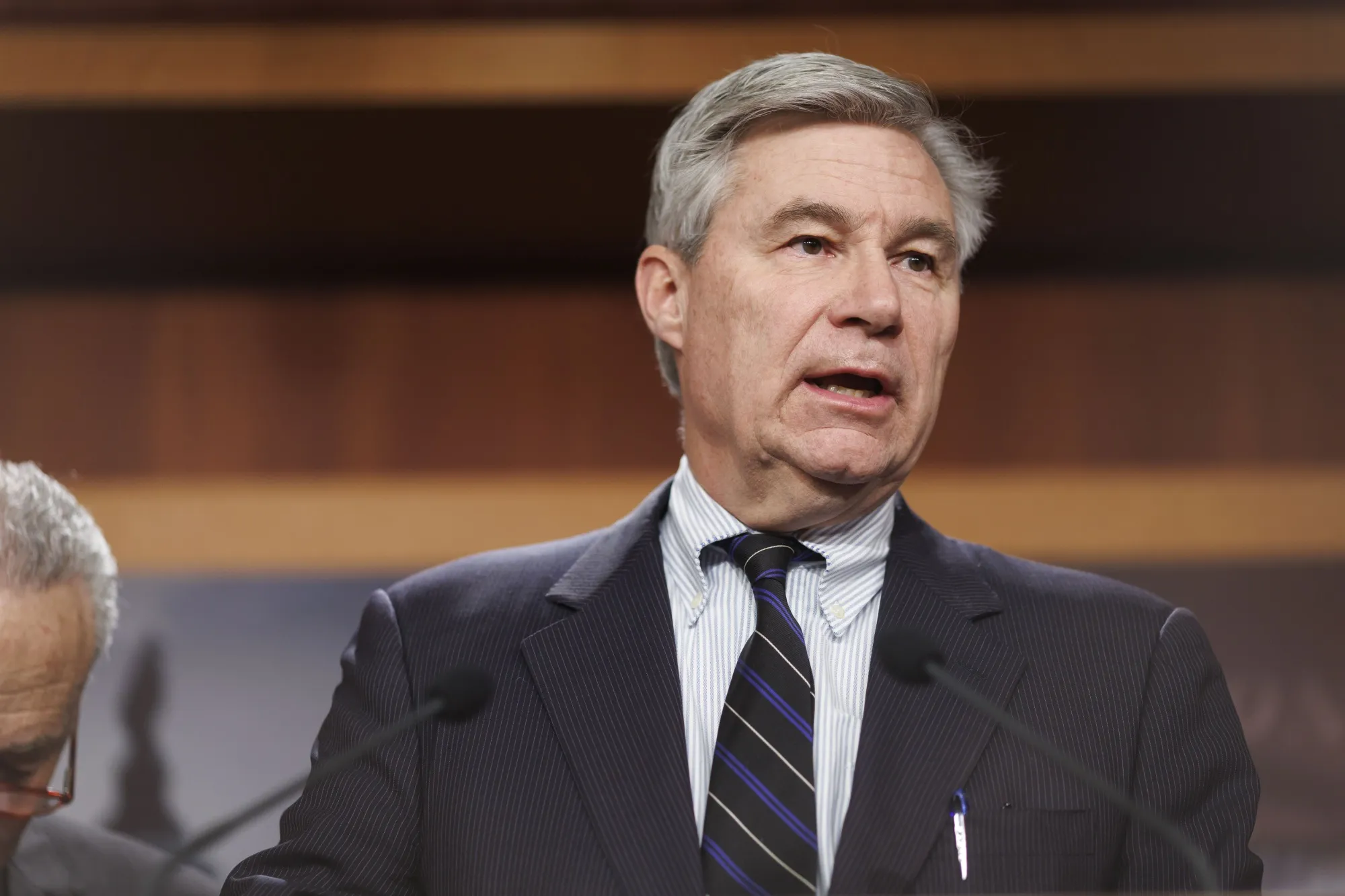
Cruz challenged whether Whitehouse’s earlier language risked encouraging voters to assume precisely that kind of improper exchange.
Whitehouse acknowledged that claims of bribery required evidence beyond shared political interests.
But he maintained that financial transparency could help voters understand which interests were actively supporting particular candidates and policies.
Cruz responded that campaign finance reporting already established substantial disclosure obligations.
Whitehouse agreed that many contributions and expenditures were publicly reported.
He then questioned whether the differing rules governing nonprofit advocacy and independent spending left important information unavailable.
The disagreement concerned the scope and consequences of disclosure.
Some political participants valued anonymity because they feared retaliation.
Others argued that large-scale political spending required greater transparency because of its potential influence on government decisions.
Neither consideration could be dismissed without examining the applicable legal framework.
Whitehouse returned to the ledger.
The document revealed that financial records could support conclusions about contributions, expenditures, and organizational relationships.
But those records could not automatically establish the personal motives of every contributor or politician involved.
Cruz acknowledged that distinction.
Whitehouse then connected the political finance discussion to T.r.u.m.p’s tax legislation.
He argued that voters should be able to examine whether influential donors supported policies from which they might benefit economically.
Cruz maintained that such relationships could reflect legitimate agreement rather than corruption.
Whitehouse agreed.
But he questioned whether politicians should welcome consistent scrutiny of those relationships instead of treating every inquiry as an attack.
The confrontation had reached a more substantial question than the original accusations suggested.
Could lawmakers defend their independence while supporting disclosure standards that allowed the public to evaluate significant financial interests?
Whitehouse closed the ledger.
He had reached the final question.
Whitehouse delivers the closing challenge about working families and wealthy contributors
Whitehouse looked toward Cruz and returned to the economic promises surrounding the T.r.u.m.p administration.
Cruz had argued that lower taxes and reduced regulation could improve economic opportunities for American workers.
Whitehouse had challenged whether the benefits of those policies were distributed in the way supporters frequently described.
The documents had also examined substantial political spending surrounding judicial nominations and the limitations of certain donor disclosure requirements.
Whitehouse acknowledged that the evidence did not establish unlawful payments to Cruz or prove that Supreme Court justices had been purchased.
But he maintained that questions about economic distribution and political funding remained legitimate subjects for public scrutiny.
Then he delivered his closing challenge.
“Senator Cruz, if your policies truly put working families first, why shouldn’t voters see who finances the campaigns promoting them?”
The question did not establish that Cruz had personally concealed illegal donations.
It challenged whether transparency standards should apply consistently to influential political organizations, regardless of their ideological positions.
Cruz responded that financial disclosure needed to respect constitutional protections and avoid politically selective enforcement.
Whitehouse acknowledged that concern.
But he argued that voters also needed reliable information about major political expenditures to evaluate competing claims concerning government accountability.
The distinction became the confrontation’s decisive point.
Protecting lawful political participation did not automatically require eliminating transparency.
Demanding transparency did not justify assuming that every wealthy contributor had engaged in misconduct.
And criticizing corporate tax reductions did not establish that politicians supporting those reductions had acted unlawfully.
The evidence supported a narrower but meaningful conclusion.
Large financial interests participated in American political debates through multiple lawful channels.
Tax legislation could affect those interests in ways that deserved careful economic analysis.
And the rules governing disclosure determined how much information voters could obtain about the financial relationships involved.
Whitehouse emphasized that public trust depended partly on making those relationships understandable.
Cruz maintained that public trust also depended on protecting lawful advocacy against unsupported accusations.
Their disagreement remained substantial.
But the financial ledger had established why neither concern could responsibly be ignored.
The confrontation ends with a broader question about political accountability
The room gradually returned to its ordinary activity as Whitehouse gathered the financial documents.
The confrontation had begun with a sweeping accusation that wealthy donors controlled Republican economic and judicial policies.
But the records supported a more complicated examination of political influence.
The 2017 tax legislation substantially reduced corporate income tax rates and produced significant projected federal revenue effects.
Conservative advocacy organizations participated in expensive judicial confirmation campaigns, sometimes receiving large contributions from unidentified donors.
Campaign finance laws imposed different reporting requirements on direct contributions, independent expenditures, and certain nonprofit organizations.
Those facts raised legitimate questions about transparency and political influence.
They did not establish that Cruz had personally accepted a bribe or sold a legislative vote.
Nor did they demonstrate that T.r.u.m.p’s tax legislation had been secretly exchanged for campaign contributions.
And they did not prove that Supreme Court appointments had been unlawfully purchased by billionaire political donors.
Those conclusions required specific evidence beyond financial associations and policy agreement.
Whitehouse’s argument emphasized the public’s interest in understanding powerful economic relationships surrounding government decisions.
Cruz’s response emphasized the importance of protecting political participation and evaluating allegations according to established legal standards.
Both positions involved questions that extended beyond Republican politics.
Major donors and advocacy organizations participated in political activity across ideological lines.
Politicians could support policies favored by wealthy contributors without necessarily engaging in misconduct.
But the existence of lawful explanations did not eliminate every concern about the transparency of political financing.
The final ledger demonstrated why responsible oversight required precise distinctions.
A contribution could establish financial support.
A lobbying expenditure could demonstrate an effort to influence government policy.
A legislative vote could reveal a politician’s position.
But a claim of corruption required evidence establishing an improper exchange or another violation of applicable law.
Those categories could not responsibly be collapsed into one accusation.
The same evidentiary discipline applied to economic promises.
A tax reduction could encourage business investment.
But claims about its benefits for working families required analysis of actual economic outcomes and distributional consequences.
A politician could defend lower taxes through a coherent economic philosophy.
But that philosophy could not substitute for reliable evidence about how the legislation affected different groups.
The final confrontation therefore produced no verified confession or formal finding of misconduct.
Its more meaningful consequence was a clearer understanding of the relationship between economic policy, political spending, and public accountability.
The documents showed why taxpayers deserved accurate explanations of major fiscal decisions.
They also demonstrated why voters needed reliable information about substantial political expenditures.
And they established why allegations of improper financial influence required evidence beyond the existence of wealthy supporters.
The closing question remained unresolved.
How much transparency should the law require from organizations spending enormous sums attempting to influence elections, legislation, and judicial appointments?
And how could those requirements protect legitimate political association while allowing the public to evaluate potential conflicts?
Those were questions lawmakers from both parties needed to confront.
The debate could not be settled through accusations of hypocrisy alone.
It required clear standards, consistent enforcement, and a willingness to distinguish documented financial relationships from unsupported allegations of corruption.
The central challenge for Washington is ensuring that powerful financial interests remain accountable to the public without treating lawful political participation as proof that government decisions have been bought.
