
“SHOW ME THE MONEY!” Sheldon Whitehou.s.e Challenges Ted C.r.u.z’s Energy Allegations in Explosive Senate Showdown Over Dark Money
Washington witnessed a remarkably sharp political confrontation when Republican Senator Ted C.r.u.z and Democratic Senator Sheldon Whitehou.s.e faced off over allegations of hidden financial influence in America’s energy and environmental battles.
The subject was explosive: money, fossil fuels, foreign influence, environmental litigation, and the competing political organizations fighting to shape the future of American energy.
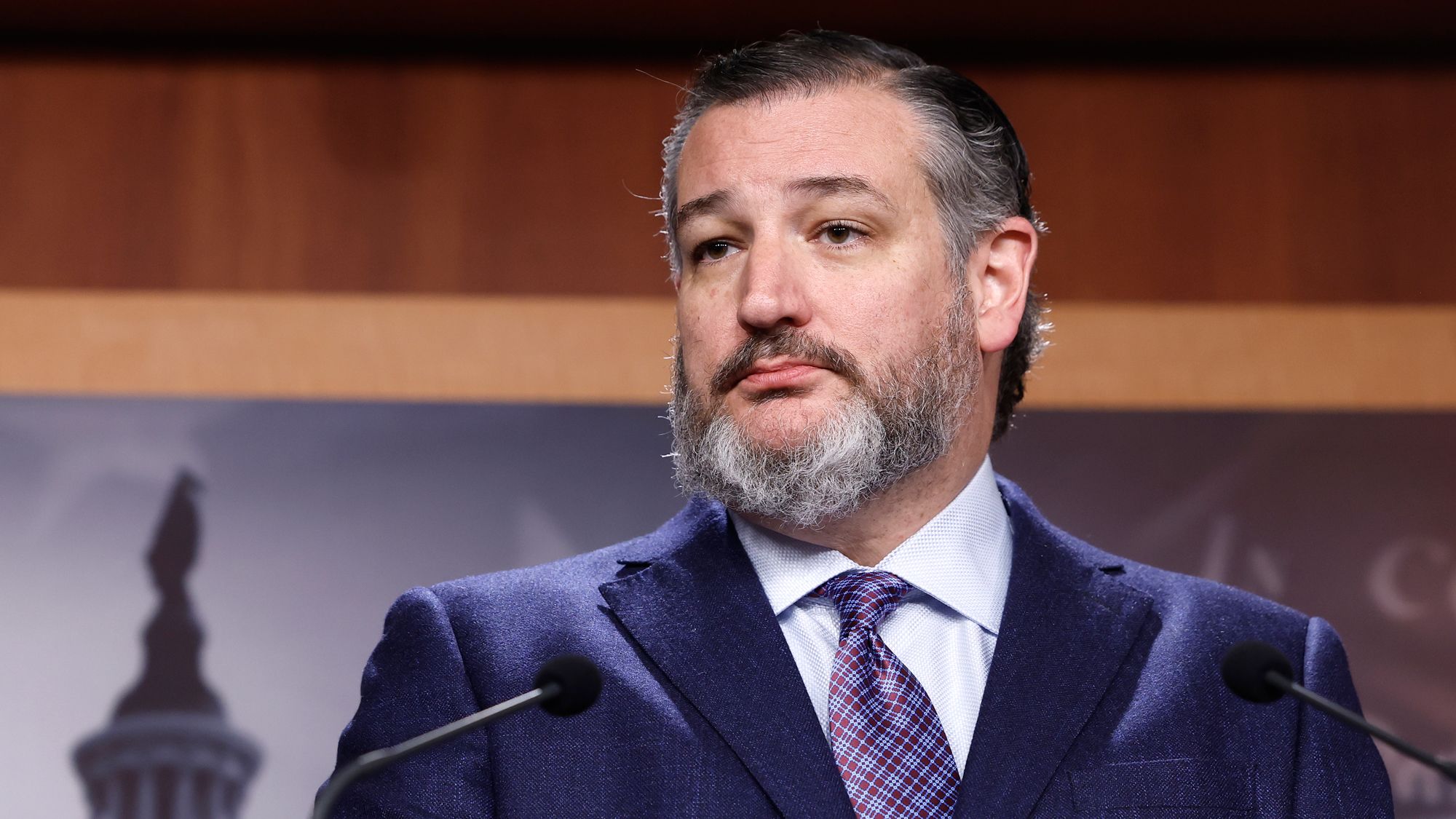
C.r.u.z entered the hearing with an aggressive argument.
He claimed that foreign financial networks, including organizations allegedly connected to Chinese interests, were supporting American environmental groups that pursued lawsuits against domestic energy producers.
Whitehou.s.e, however, was not prepared to let those accusations dominate the proceedings without a challenge.
As the senior Democratic member of the subcommittee, he delivered a forceful response, turning the discussion toward the financial influence of the fossil fuel industry itself.
The confrontation quickly became a battle over a fundamental question: Who was really using money and political influence to shape America’s energy policies?
And, perhaps more importantly, where was the evidence?
CRUZ OPENS WITH A SERIOUS ACCUSATION
Ted C.r.u.z began the hearing by presenting a sweeping account of what he described as a coordinated campaign against American energy independence.
His argument involved three major allegations.
First, he claimed that money associated with Chinese interests was flowing into American climate advocacy organizations.
Second, he argued that environmental lawyers were using litigation to financially weaken American oil and gas producers.
Third, he questioned whether organizations involved in judicial education were improperly influencing judges who might later hear climate-related cases.
C.r.u.z presented charts and financial figures to support his argument.
He specifically highlighted Energy Foundation China, claiming that it had provided more than $12 million to American climate advocacy organizations since 2020.
He also identified organizations including the Natural Resources Defense Council, Rocky Mountain Institute, and World Resources Institute.
His argument was that financial relationships deserved greater scrutiny because organizations receiving money could participate in litigation affecting major American industries.
C.r.u.z then raised another concern.
He argued that the organizations involved in climate litigation were benefiting from complicated financial structures that made their original contributors difficult to identify.
For the Texas Republican, this represented a threat to American energy security and the independence of the judiciary.
His opening statement left little doubt about the direction of the hearing.
He wanted lawmakers to investigate what he characterized as a foreign-backed campaign against American energy producers.
But Whitehou.s.e believed the hearing was overlooking a much larger financial picture.
WHITEHOUSE: “THIS HEARING IS A PERFECT DISPLAY OF PROJECTION.”
When Whitehou.s.e began his opening statement, he immediately challenged the premise of the hearing.
His actual words were pointed:
“This hearing is a perfect display of projection; blaming your adversary for what you are doing.”
He then turned the allegations back toward the fossil fuel industry.
Whitehou.s.e argued that the industry had benefited from decades of secretive financial support for political advocacy and public messaging.
He maintained that the consequences were being felt by ordinary Americans through higher utility bills, pollution, and the economic costs associated with climate change.
Rather than accepting C.r.u.z’s description of environmental organizations as the central source of financial influence, Whitehou.s.e wanted lawmakers to examine the resources available to the fossil fuel industry.
His response was not simply a political disagreement.
It was a direct challenge to the financial assumptions underlying the hearing.
WHITEHOUSE: “LET’S EXAMINE THE FACTS.”
The senator then organized his response around three issues: lobbying, dark money, and energy policy.
On lobbying, Whitehou.s.e argued that the fossil fuel industry had spent substantially more than environmental organizations and renewable energy interests combined.
He cited a comparison claiming that fossil fuel lobbying expenditures were approximately ten times greater.
He also criticized the influence of special-interest spending following the Supreme Court’s 2010 Citizens United decision.
On dark money, Whitehou.s.e highlighted his own DISCLOSE Act.
The legislation seeks greater transparency in political spending so that Americans can identify the financial interests behind election-related expenditures.
Whitehou.s.e argued that Republicans had repeatedly opposed the measure.
His criticism was straightforward: lawmakers demanding financial transparency from environmental organizations should also support disclosure requirements applying to political spending across the board.
This was the central contradiction he wanted the committee to examine.
If hidden financial influence was genuinely a concern, why should the investigation focus on only one side of the political debate?
CRUZ PUSHES BACK: WHAT ABOUT THE MONEY FROM CHINA?
C.r.u.z did not abandon his argument.
He maintained that foreign financial influence was a serious concern and that organizations involved in environmental litigation deserved scrutiny.
He repeatedly returned to the possibility that money associated with Chinese interests could support organizations challenging American energy producers.

Whitehou.s.e questioned whether the hearing had actually demonstrated the allegations being made.
He argued that the committee was treating financial relationships as evidence of a coordinated foreign operation without adequately establishing the necessary connections.
At one point, C.r.u.z complained that Democratic members had not addressed the Chinese funding allegations in their opening remarks.
Whitehou.s.e responded with a brief exchange that became one of the memorable moments in the official transcript.
C.r.u.z suggested that the Democrats had avoided the subject.
Whitehou.s.e replied that they had addressed it by calling it a conspiracy.
The exchange continued.
Whitehou.s.e delivered another pointed observation:
“Saying it more loudly doesn’t make it more true.”
C.r.u.z answered:
“Actually, in Washington, sometimes it does.”
It was a revealing moment because it captured the contrasting approaches of the two senators.
C.r.u.z emphasized the seriousness of the allegations and the need for investigation.
Whitehou.s.e emphasized the difference between making an accusation and demonstrating that the accusation was supported by evidence.
Neither senator abandoned his position.
THE DARK MONEY QUESTION TURNED BACK ON THE FOSSIL FUEL INDUSTRY
As the hearing continued, Whitehou.s.e returned repeatedly to the financial resources available to fossil fuel interests.
He argued that major energy companies and associated political organizations had spent enormous sums influencing public policy.
He also challenged the idea that environmental advocacy organizations represented the dominant financial force in the debate.
His argument extended beyond direct contributions.
He discussed lobbying, political expenditures, nonprofit organizations, and the broader ecosystem of groups supporting fossil fuel interests.
Whitehou.s.e believed that any serious investigation of political influence needed to examine all those financial relationships.
The senator also connected the financial debate to his longstanding criticism of the fossil fuel industry’s historical response to climate science.
He argued that companies had known about the risks associated with greenhouse gas emissions while supporting efforts to obstruct meaningful climate action.
Those allegations are part of a wider public and legal debate, with energy companies and their defenders disputing aspects of the accusations.
But Whitehou.s.e’s central demand remained consistent.
If lawmakers wanted to investigate secretive financial networks, they should examine every significant source of political influence.
THE EXCHANGE BECOMES EVEN MORE PERSONAL
The confrontation became more heated when the hearing moved toward questions involving climate litigation and the possibility of criminal responsibility for corporate conduct.
C.r.u.z questioned witness David Arkush about arguments concerning whether fossil fuel companies could face criminal prosecution for certain conduct involving climate-related harms.
The questioning became increasingly confrontational.
At one point, C.r.u.z challenged Arkush over whether people using fossil fuels could themselves be implicated under the legal theories being discussed.
Arkush attempted to explain the distinction between an ordinary consumer using a product and a company allegedly misleading the public about its dangers.
But the exchange was repeatedly interrupted.
Whitehou.s.e intervened.
He objected to the interruptions and asked C.r.u.z to allow the witness to finish answering.
C.r.u.z responded with sarcasm, suggesting Whitehou.s.e could sing or recite poetry while the witness answered.
The moment demonstrated how far the hearing had moved beyond a conventional discussion of financial disclosure.
The senators were now arguing over the conduct of the hearing itself, the treatment of witnesses, and the legal foundations of climate-related litigation.
Whitehou.s.e continued defending the witness’s opportunity to explain his position.
C.r.u.z continued challenging the legal arguments.
The disagreement illustrated a broader conflict over whether climate litigation represented legitimate accountability or an attempt to impose political objectives through the courts.
THE MONEY BEHIND THE POLITICAL ARGUMENT
One particularly important part of the hearing involved a discussion of ExxonMobil’s financial resources.
Whitehou.s.e referred to the company’s enormous daily revenue while discussing the comparative financial power of the fossil fuel industry.
A subsequent written response clarified an important numerical mistake: the figure of approximately $1 billion per day referred to revenue, not profit.
That distinction matters.
Revenue represents money received from business operations before expenses.
Profit represents what remains after relevant costs are deducted.
Nevertheless, the comparison became part of the larger discussion about the financial resources available to major energy companies.
Whitehou.s.e argued that one major corporation could generate financial resources on a scale that challenged the suggestion that environmental advocacy organizations were the dominant financial force.
The witness, David Arkush, also questioned why the committee was concentrating so heavily on environmental organizations while giving less attention to the financial influence of major fossil fuel companies.
This was precisely the issue Whitehou.s.e wanted to bring into the spotlight.
WHITEHOUSE’S BIGGER MESSAGE: TRANSPARENCY SHOULD APPLY TO EVERYONE
Toward the later stages of the hearing, Whitehou.s.e returned to his DISCLOSE Act.
He emphasized that his proposal was not designed to expose only conservative donors or Republican political organizations.
His stated objective was to make political funding more transparent across the political spectrum.
He argued that voters should be able to discover who was financing organizations seeking to influence elections and public policy.
This position directly challenged the suggestion that his criticism of conservative financial networks was simply partisan opposition.
However, opponents of disclosure legislation have raised legitimate constitutional concerns.
The First Amendment protects political association, and excessive disclosure requirements can discourage individuals from supporting controversial causes.
The Supreme Court’s 2021 decision in Americans for Prosperity Foundation v. Bonta reinforced the importance of protecting donor privacy against overly broad government collection requirements.
That legal context makes the dispute more complicated than a simple argument about whether politicians should reveal financial information.
The real challenge is determining how to promote transparency while respecting constitutional freedoms.
THE QUESTION WASHINGTON STILL HAS TO ANSWER
The June 25 hearing did not produce a definitive resolution of the competing allegations.
C.r.u.z continued to argue that foreign financial influence and climate litigation represented serious threats to American energy interests.
Whitehou.s.e continued to argue that the fossil fuel industry possessed enormous political influence and that the hearing failed to examine that influence with sufficient seriousness.
Their disagreement was documented in the official Senate record.
It was not a live television confrontation, and there is no verified evidence that Whitehou.s.e delivered a final sentence that left C.r.u.z speechless.
But the actual exchange was revealing enough.
It demonstrated how competing financial narratives can dominate political discussions even when the underlying evidence remains disputed.
It also exposed an uncomfortable problem for American democracy.
When politicians accuse their opponents of benefiting from hidden financial networks, the public needs more than dramatic charts and confident speeches.
It needs transparent records, verifiable financial relationships, and evidence that can withstand independent examination.
And that brings the entire confrontation back to the question Whitehou.s.e repeatedly raised.
Who is funding the organizations attempting to influence America’s energy policies?
How much money is moving through nonprofit networks?
Are the same disclosure standards being applied to both political sides?
And if lawmakers genuinely want to eliminate dark money, will they finally agree to a system that applies equally to everyone?
The Senate hearing ended.
The accusations did not.
And the battle over who controls the financial machinery behind American energy policy remains far from settled.
